
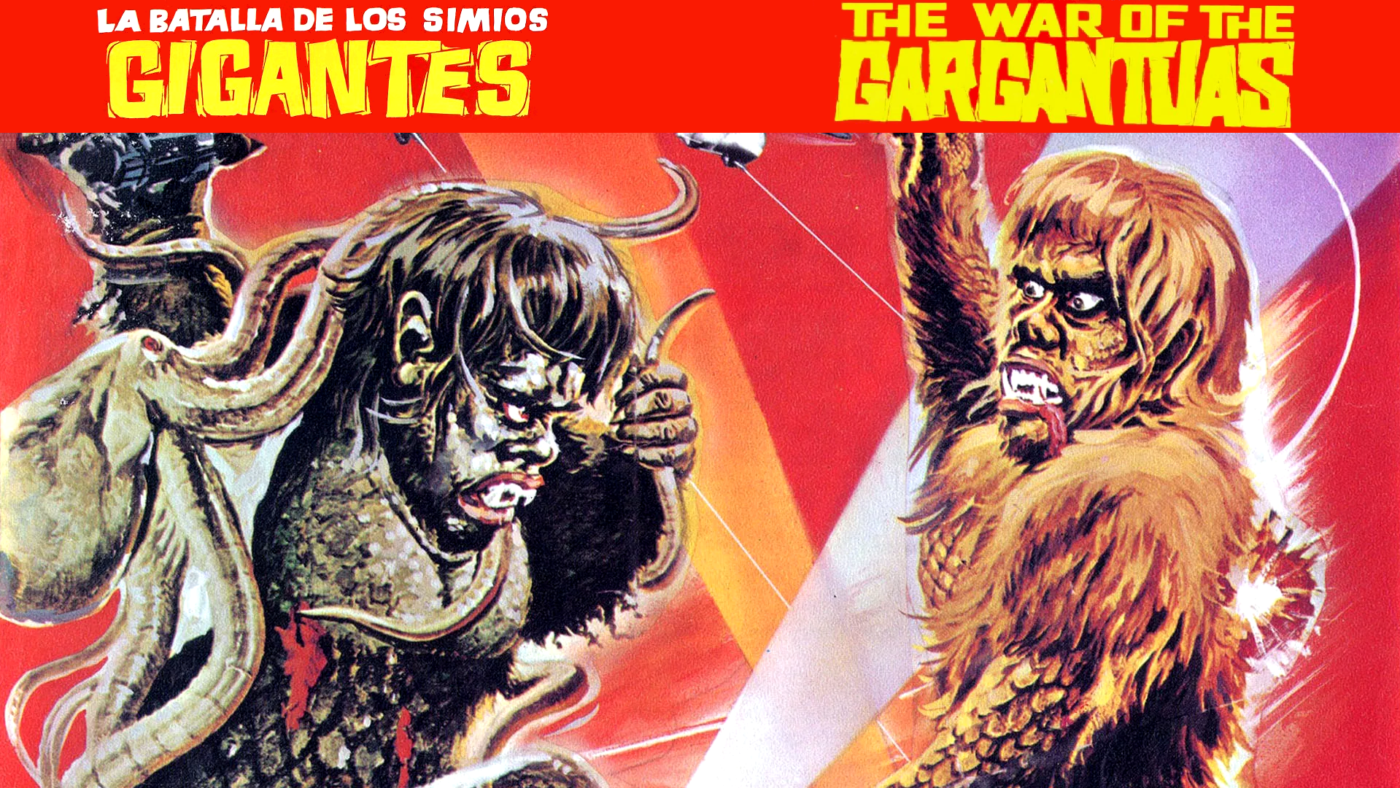

Although Toho's star monster is undoubtedlygodzilla, the company never stopped creating other monsters that eventually ended up crossing over with the Godzilla franchise, thus creating a shared universe that reached its peak in films likeDestroy All Monsters (1968), where many of the existing monsters appeared in a battle that would affect different parts of the world.
The crossover fever in the Godzilla franchise began withKing Kong vs Godzilla(1962), an extremely profitable film for the company (it was the highest-grossing film in the saga for decades), so Toho managers did not hesitate to launch a sequel, although it would arrive in a somewhat particular way. Instead of crossing both monsters again, they opted to have Godzilla continue on his way, facing other monsters of the company (like Mothra or Rodan) while Kong would go on to have his own solo Japanese film known asKing Kong escapes(1967).
Although perhaps the strangest thing of all is that there is another movie that apparently has nothing to do withKing Kong vs Godzilla, but in reality it owes a lot to it, since it was created based on ideas discarded from it. That movie wasFrankenstein Conquers the World(1965), which also had a sequel in 1966, but it was not an exact sequel either,but rather had a slight relationship with it, which was diluted as the project progressed.
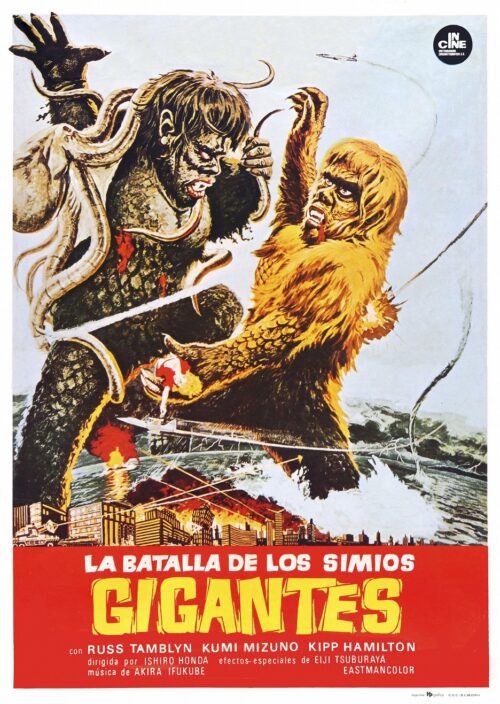
That supposed sequel was known in Japan asFurankenshutain no kaiju Sanda tai Gaira (Frankenstein's Monsters: Sanda vs. Gaira), in the United States asWar of Gargantuasand in Spanish likeThe War of the GargantuaseitherBattle of the Giant Apes. The name change in the West completely separated this film fromFrankenstein Conquers the World, which is not necessarily a bad thing, since the story has nothing to do with it.
This film was created by Toho's “old guard”: the director wasIshiro Honda(responsible for the debut films of Godzilla, Rodan and Mothra, among many others), the person in charge of the special effects was Eiji Tsuburaya (who, in addition to doing effects for films of the aforementioned monsters, was also the creator of Ultraman) and the music was in charge of Akira Ifukube, a regular composer of the genre and creator of unforgettable songs such as that ofgodzillawaveMonster Zero March.
The film begins on the high seas, where a ship is attacked by a giant octopus. The astonished sailor who sees how tentacles are going to end his life is even more surprised to see that a humanoid figure emerges from the bottom of the sea and attacks the octopus. After the initial relief, the human finds that the situation has actually gotten worse, sinceThe ape-like monster is eating its companions.
The next morning, that sailor turns out to be the only survivor and is investigated by the authorities, who obviouslyThey can't believe that a hairy, humanoid-looking monster has appeared out of nowhereand has eaten his companions. But it matters little what the authorities think, because thatgiant green ape is still hungry and every time the sun goes down, it comes out of hidingmarine to attack coastal areas.
![[HorrorScience] Battle of the Giant Apes – War of Gargantuas (1966)](https://combogamer.com/wp-content/uploads/2026/05/War-of-Gargantuas-verde-1024x436.jpg)
After several incidents, journalists resort togiant ape specialist laboratoryto ask them why their giant ape attacks people, when it has never done so before, which surprises the protagonists, since they insist that the giant ape they raised worshiped humans, and that it also went to live in the mountains and died.
A new incident with the green ape reveals that it is moving away from the light, so the armyprepare a trapto permanently eliminate it. Strange as it may seem, the plan works and the poor animal suffers something never seen before, in what seem to be the last moments of its life. Just then, a huge roar comes out of the mountains anda second giant brown ape appears,who removes the army's traps to save his dying “brother.”
After the appearance of the brown ape, scientists confirm their theory that the monster that attacked the ships was not their ape, but they don't really know where the other one came from either. The army is clear, both apes are a threat and will be destroyed. What humans don't know is thatThe coexistence between both monsters has revealed that they are not as similar as they believed, because the brown ape feels disgusted and furious when he sees that the green one eats his beloved humans, which sparks a battle between them.
![[HorrorScience] Battle of the Giant Apes – War of Gargantuas (1966)](https://combogamer.com/wp-content/uploads/2026/05/War-of-Gargantuas-ambos.jpg)
When evaluating this film I would like to clarify from the beginning thatWho doesn't like Kaiju Eiga?(giant monster movies) or Japanese movies from the 60s-70s,You're not going to find any charm in this movie.Sin embargo, los que sí tengan afición por el género, aunque sea de manera casual, pueden llevarse una grata sorpresa.
Lo primero realmente positivo de esta película es queel papel de los humanos es bastante limitado y el foco se encuentra en los monstruos. Esto puede parecer lo habitual del género, pero creedme, no es así, hay películas de Godzilla donde los monstruos aparecen escasamente (para ahorrar costes) y casi todo se centra en los humanos. En esta ocasión, la película equilibra la balanza a favor de los monstruos, lo cual es positivo por dos motivos.
El primero y más obvio es el espectáculo; los disfraces de simio gigante son menos limitantes para los actores que van dentro, de manera que se pueden hacer escenas más variadas sin que el resultado sea malo o extraño. Las escenas de monstruos son bastante variadas, pues los vemos en el mar, en un aeropuerto y en la montaña. Precisamente en esa última localización es donde veremosuna de las escenas más míticas del largometraje,cuando el ejército le tiende una trampa al simio verde, donde los efectos de Tsuburaya lucen increíblemente bien.
![[HorrorScience] Battle of the Giant Apes – War of Gargantuas (1966)](https://combogamer.com/wp-content/uploads/2026/05/War-of-Gargantuas-paseo.jpg)
El segundo motivo para celebrarla ligera aparición humana es que no es especialmente útil en la película, lo cual es bastante grave, pues los científicos protagonistas son responsables de la creación del simio marrón. En lugar de informarnos sobre el motivo de los experimentos con el simio del simio, si su aumento de tamaño fue casual o provocado, por qué se alejó de los humanos a los cuales consideraba su familia y cómo sucedió su supuesta muerte, la película solo nos muestra diálogos vagos, sin ningún tipo de explicación. Y con respecto al simio verde, es todavía peor, pues de él sólo tenemos una vaga teoría de su origen y encima no tiene sentido, pues de ser cierto habrían aparecido más durante la película (algo que los protagonistas mencionan, pero en ningún momento tiene uso práctico en la misma). Además, si ya se conocía públicamente la existencia de un simio gigante, ¿por qué las autoridades marítimas no creen al pescador que les dice que un simio gigante acató a su barco?
En otras películas de monstruos, los protagonistas desconocen el origen de los mismos, de manera que entiendo que se ignore o solo se expongan teorías; es una manera de ignorar el origen en la trama y dar la visión de alguien que simplemente se ha encontrado con ellos. Pero en esta película tenemos a un grupo de científicos especializados en simios gigantes, y no sabemos absolutamente nada de por qué existe ese grupo o de dónde han salido los simios.
![[HorrorScience] Battle of the Giant Apes – War of Gargantuas (1966)](https://combogamer.com/wp-content/uploads/2026/05/War-of-Gargantuas-simio-joven-1024x576.png)
Así que, como veis,el punto fuerte de la película son sus escenas de monstruos y el débil es su guion, no por lo que sucede, sino por lo que no nos cuentan. Además, el final es un tanto brusco o forzado (aunque lamentablemente, es habitual en otras producciones contemporáneas del género). Es bastante triste pensar que con un par de diálogos, podríamos haber obtenido una mejor historia, pero en lugar de eso veremos a los protagonistas ir de aquí para allá dando paseos y soltando vagas explicaciones con poco o nulo sentido.
En ese sentido, y por ridículo que parezca,la relación entre ambos simios, pese a no tener diálogos, es mucho más lógica y comprensible que la de los doctores protagonistas. Ambos simios no conocían la existencia del otro, pero en el momento en el cual se cruzan se alían al ser de la misma especie, uno cuida del otro, hasta que sus prioridades chocan y esa desavenencia los hace situarse en bandos contrarios e irreparables.
![[HorrorScience] Battle of the Giant Apes – War of Gargantuas (1966)](https://combogamer.com/wp-content/uploads/2026/05/War-of-Gargantuas-simios-peleando.jpg)
Pese a sus fallos,La batalla de los Simios Giganteses un producto notablemente más interesante que sus otras películas “hermanas” (King Kong vs GodzillaandFrankenstein Conquers the World)y a día de hoy sigue siendo un espectáculo único, lo cual le ha hecho ganarse a pulso el estatus de película de culto.
Curiosities
- En Japón, el monstruo verde se llama Gaira y el marrón Sanda. En occidente se les conoció simplemente como Gargantuas o simios gigantes.
- Quentin Tarantino definió esta película como «la película perfecta de monstruos gigantes».
- Tab Hunter iba a interpretar al Dr. Steward, pero fue reemplazado. Se consideró a Nick Adams para el papel (quien ya apareció en películas comoGodzilla vs Monster ZeroandFrankenstein Conquers the World), pero el productor (Henry G. Saperstein) prefería a Russ Tamblyn, quien finalmente consiguió el puesto. Más tarde Saperstein se arrepintió de elegirlo, ya que dio muchos problemas durante el rodaje.
- Según la productora, Tamblyn dio muchos problemas debido a sus diálogos, pues los improvisaba porque decía que el guion era malo. El propio Tamblyn dijo que los diálogos que él dijo no aparecen en la versión final, ya que fueron regrabados sin su consentimiento.
- Esta es la tercera película en la cual aparece el pulpo gigante (Oodako), tras haberlo hecho enKing Kong vs GodzillaandFrankenstein Conquers the World. Eiji Tsuburaya quería hacer escenas con un pulpo gigante y no quedó contento con el resultado en las dos películas anteriores, así que lo volvió a intentar en este, logrando un resultado notablemente superior.
- Escenas de esta película fueron usadas en otros largometrajes comoGodzilla vs Gigan(1972) yGodzilla Against MechaGodzilla(2002).
- Scooby Doo homenajeó esta película en el episodioBattle of the Humungonauts.
- En esta película aparecen por primera vez los cañones MASER, que posteriormente serían habituales en la franquicia degodzillay de los cuales existe incluso merchandising.
![[HorrorScience] Battle of the Giant Apes – War of Gargantuas (1966)](https://combogamer.com/wp-content/uploads/2026/05/War-of-Gargantuas-MASER-CANNON.jpg)
Related Articles
![[HorrorScience] Obsession: turning the classic "be careful what you wish for" into a nightmare](https://combogamer.com/wp-content/uploads/2026/07/obsession-poster-300x169.jpg)
![[HorrorScience] Backrooms: the A24 film that turned an internet creepypasta into a horror phenomenon](https://combogamer.com/wp-content/uploads/2026/07/backrooms-poster-300x169.jpg)
![[HorrorScience] Victor Crowley (Hatchet IV): The fourth installment that arrived without warning](https://combogamer.com/wp-content/uploads/2026/06/victor_crowley-poster-300x169.jpg)
![[HorrorScience] Number 23 (2007)](https://combogamer.com/wp-content/uploads/2026/05/El-numero-23-banner-largo-300x169.jpg)
![[HorrorScience] Hokum: When a bitter writer meets an Irish witch](https://combogamer.com/wp-content/uploads/2026/06/hokum-poster-300x169.jpg)
![[HorrorScience] The man who could cheat death](https://combogamer.com/wp-content/uploads/2026/04/The-man-cheated-death-banner-300x165.png)