

Table of Contents
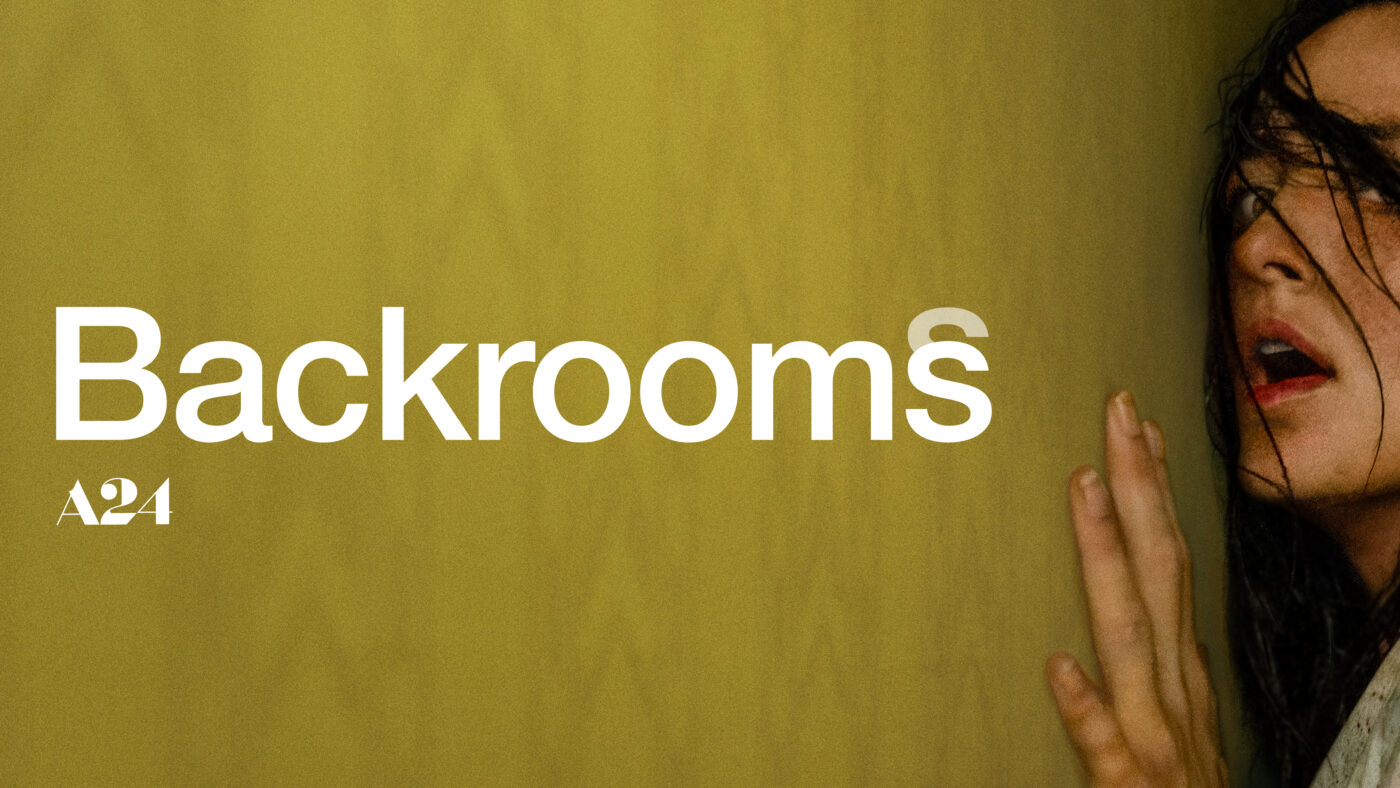
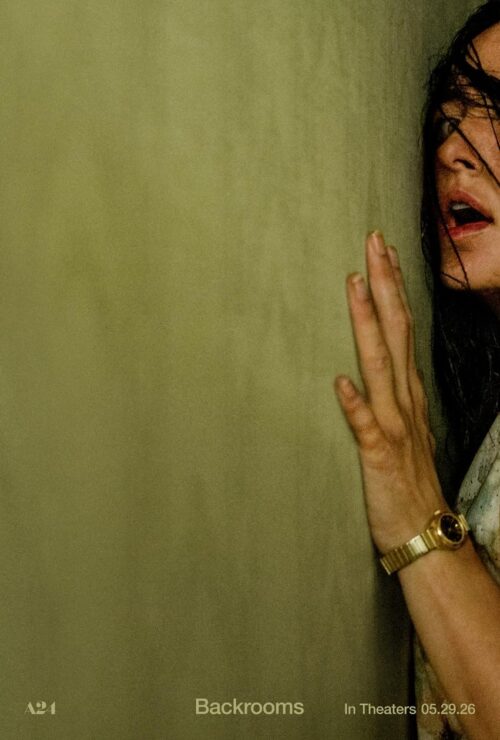
There are few times when an image taken from an internet forum ends up becoming one of the highest-grossing horror movies of the year, but that's exactly what happened with Backrooms. What started out as a simple photograph of an empty office, with yellow walls and wet carpet, uploaded toa 4chan thread in 2019, today it is an A24 production starring two Oscar nominees and directed by someone who, when he filmed it, was not yet twenty-one years old. As a fan of creepypastas and liminal spaces for quite some time (related: my analysis ondreamcoreand theHorrorScience from Exit 8), I really wanted to sit down and see how all this translated to the big screen, so let's go in parts.
From a 4chan thread to a YouTube phenomenon
For those who are not involved in the subject, Backrooms were born as a purely digital urban legend. The original idea described a place you could arrive at by accident, as if reality had a programming error (a "noclip," to use video game slang) that expelled you into an endless labyrinth of abandoned office rooms, lit by endlessly humming fluorescent tubes. No explicit monsters at the beginning: the fear was in the feeling of emptiness and being trapped in a place that seems too similar to something everyday.
The person who gave audiovisual form to that idea was Kane Parsons, a boy from California who at that time was uploading animations made in Blender to his Kane Pixels channel. In January 2022 he published a short film in found footage format called "The Backrooms (Found Footage)", and the reaction was immediate: millions of views and a legion of followers asking for more episodes. A24, the studio behind titles like Hereditary and Midsommar, noticed this phenomenon and ended up offering Parsons to direct his own film adaptation, something that made him the youngest director in the studio's history.
The starting point: a life that was already falling apart
The film chooses to begin in a rather clever way, with a direct nod to the mythology that creepypasta followers already knew: a recovered video, dated 1990, in which a group of researchers from the fictitious Async Research Institute review the material recorded by a certain Naren Warne. This researcher, during an expedition to that extradimensional space, became separated from his group and ended up being chased by a presence that barely insinuates itself between the yellow corridors. That prologue, filmed with the shaky aesthetic of a VHS camera, works almost like a letter of introduction to the rules of the universe: no one explains anything to you here, and what you see is always a little less than what you would need to see to feel safe.
Only after that does the story settle in the present and focus on Clark (Chiwetel Ejiofor), an architect who failed to make a career and ended up as the owner of a run-down furniture store, with the thematic excuse of piracy included even in the name of the store. Clark goes through a contentious separation from his wife, whom we never see on screen but whose shadow is felt in every mention, and increasingly relies on alcohol to cope with the nights he spends sleeping in his own business. To process all this, she regularly sees Dr. Mary Kline (Renate Reinsve), a therapist who apparently has everything under control, but who carries her own unresolved history: an agoraphobic mother who kept her locked up for a good part of her childhood and who ended up institutionalized, and mourning the demolition of the building where she grew up, of which only a piece of cement remains with the marks of her childhood hands.
What's interesting is that the movie takes its time before sending anyone into the maze. There are entire scenes dedicated to showing the day-to-day life of the furniture store, to a ridiculous television commercial that Clark films dressed as his own pirate mascot, and to the therapy sessions where Mary tries, without much success, to get Clark to break those repetitive patterns that she describes as "loops" inherited from childhood. That entire initial stretch builds characters with their own weight, something that is greatly appreciated in a film that could have settled for being a simple excuse to show yellow hallways.
When reality begins to fail
The break comes in the most domestic way possible. One night, sleeping in the tent, Clark notices that the lights are flickering for no apparent reason and the TV is distorting on its own. When checking the circuit breaker box he finds a crack in the wall that emits a glow that shouldn't be there. Crossing it leaves you on the other side: in a space of identical rooms, low ceilings and corridors that lead nowhere recognizable. There he finds remains belonging to Naren, the investigator from the prologue, and manages to escape back to the store when something that is never fully shown begins to chase him.
When Clark tries to tell this to Mary, she interprets it as another symptom of his emotional deterioration, a way of justifying her own breakdown after the divorce. In need of evidence, Clark convinces his employee Kat (Lukita Maxwell) and her boyfriend, Bobby (Finn Bennett), to accompany him with a camera to document what he found. It is in this section where the film allows itself its most tense scenes: Bobby enters a corridor with an unnatural inclination and ends up dragged by something that can barely be distinguished in the shadows, while Clark and Kat run after him and end up separated in an area of the maze that none of the three had explored before. The handheld camera, the ambient sound of the fluorescent lights, and that constant feeling of seeing only a fraction of what is really happening make these minutes feel genuinely uncomfortable, in the best possible way for a film of this genre.
In the background, interspersed with this entire story, appears the figure of Phil (Mark Duplass, well known for the film sagaCreep), an Async employee who observes a good part of these events through surveillance cameras installed at different points in the space. Through him the film begins to hint that this corporation previously manufactured MRI machines and that, for reasons that are never fully explained, it ended up coming across the Backrooms until it became its main line of research. It is a detail that connects directly with the mythology that Parsons had been building since his YouTube videos, and that those who followed that series will immediately recognize.
Mary crosses to the other side
When Clark doesn't show up at his office again, Mary decides to investigate on her own and ends up finding the same passage he used to enter. From there, the film begins to show the more personal and introspective side of the Backrooms: the spaces that Mary walks through are not generic, but are shaped by her own memories and traumas, as if the place were imperfectly reconstructing fragments of its past. She sees again, deformed and slightly wrong, the building where she lived as a girl, the walls covered with newspapers that her mother used to cover the windows, and situations that she once experienced as protection and that now read, with distance, as an early form of confinement.
It is in this section where the film makes its true interest clearer: not so much explaining what the Backrooms are, but rather using them as a kind of distorted mirror of the mind of those who pass through them. Mary encounters strange, silent versions of people and objects that seem like poorly made copies of reality, almost as if someone had tried to recreate a familiar place from a secondhand description. The film never fully confirms whether this is supernatural, a scientific phenomenon that not even Async herself can understand, or a manifestation of each character's mind, and that ambiguity is deliberately maintained until the final sections, which we prefer not to advance here.
What I can say without spoiling anything is that the climax brings together Clark, already quite deteriorated psychologically after so much time in the labyrinth, with Mary who came there looking to save him but who ends up facing much more concrete threats than she expected. The resolution, supported by the constant presence of Async as a force that observes but rarely intervenes, leaves the door quite open for future installments, something that Parsons himself confirmed was part of the plan from the beginning.
My impressions
What I liked most about Backrooms is that it doesn't try to explain everything. There is a huge temptation, when you adapt something that was born from the collective imagination of thousands of internet users, to want to give it a classic script structure with clear answers. Parsons chooses the opposite: he bases the entire film on the feeling of strangeness, on that dream logic where you recognize a place but at the same time you know that something doesn't fit. That decision is evident in the production design, which was built on a real set of almost 30,000 square feet in which, according to several crew members, it was easy to get lost even when awake and with the script in hand.
The bond between Clark and Mary also gives it an emotional weight that I didn't expect to find in a movie based on a creepypasta. It is not just "two people trapped in a labyrinth", but two people who carry their own traumas and who, somehow, end up facing the emptiness of the Backrooms as a mirror of their own personal emptiness. Ejiofor and Reinsve maintain that balance quite well between the physical terror of the place and the most intimate drama of the characters.
As a critic, I agree with part of the specialized press that the film relies too much on mystery and leaving open questions, which can work against those looking for a more forceful resolution. Even so, as a piece of atmospheric horror and as an exercise in world-building born purely from the Internet, it seems to me to be a quite remarkable achievement, especially considering that behind the camera there was someone who just a few years ago was recording these same hallways with a homemade camera in his family home.
Curiosities
- The concept of the Backrooms was born from a single photograph published in 2019, accompanied by a text that warned about "leaving reality by accident" and ending up trapped in a maze of yellow rooms.
- Kane Parsons was just 16 years old when he began experimenting with the idea that would later become his web series, and just 20 when the film was released.
- Before dedicating himself to Backrooms, Parsons had become known for his videos inspired by Attack on Titan, recreating scenes from the manga with animation in Blender.
- The director confessed that Portal, the Valve saga, was a direct influence on the atmosphere of the film, to the point of saying that he still dreams of being inside the Aperture Enrichment Center.
- Given the rumors that Parsons had not really directed the film due to his young age, his own actor Mark Duplass came out to publicly deny it, ensuring that the young director had total control of the filming.
- The set built for filming took up about 30,000 square feet, and according to the crew, it was so labyrinthine that it was easy to get lost in it even off camera.
- Backrooms became the best premiere in A24's history worldwide, surpassing even the studio's more established productions.
Related Articles
![[HorrorScience] Obsession: turning the classic "be careful what you wish for" into a nightmare](https://combogamer.com/wp-content/uploads/2026/07/obsession-poster-300x169.jpg)
![[HorrorScience] Victor Crowley (Hatchet IV): The fourth installment that arrived without warning](https://combogamer.com/wp-content/uploads/2026/06/victor_crowley-poster-300x169.jpg)
![[HorrorScience] Number 23 (2007)](https://combogamer.com/wp-content/uploads/2026/05/El-numero-23-banner-largo-300x169.jpg)
![[HorrorScience] Hokum: When a bitter writer meets an Irish witch](https://combogamer.com/wp-content/uploads/2026/06/hokum-poster-300x169.jpg)
![[HorrorScience] The man who could cheat death](https://combogamer.com/wp-content/uploads/2026/04/The-man-cheated-death-banner-300x165.png)
![[HorrorScience] Sai: a disturbing masterpiece of recent Japanese horror](https://combogamer.com/wp-content/uploads/2026/05/sai-poster-300x169.jpg)