
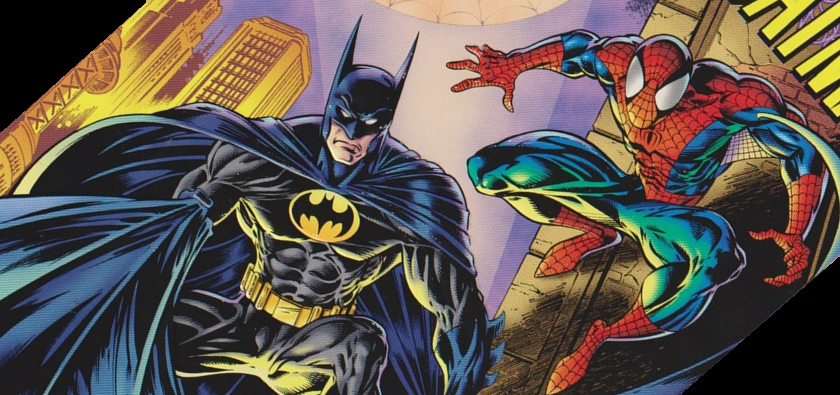

In the 90s, many comics appeared “Crossover” style between Marvel and DC Comics, where their most famous heroes allied themselves with each other to combat a common evil. In previous articles I have talked about some of them as Batman VS Daredevil (1997) or the ambitious Marvel VS DC (1996)
This time I have chosen the comic Spider-man and Batman: Disordered Minds (Disordered Minds), where the Marvel wall-crawler and the guardian of Gotham meet to stop their most psychopathic and mentally unstable enemies: Carnage (Matanza) and the Joker.
![[Article] Spider-Man and Batman: Disordered Minds (1995)](https://combogamer.com/wp-content/uploads/2020/11/Spiderman-Batman-comic-1-portada-673x1024.jpg)
Although in Marvel Vs DC It was established that both worlds are separate universes and you can only go from one to the other under very specific circumstances (or with the help of Access, which can travel between the two at its own will), in this type of comics with a few pages, life is not complicated with different universes and it is simply assumed that Spider-man's New York and Batman's Gotham are a couple of hours' drive away.
The good thing about these comics is that you can see characters you like together, and the bad thing is that the scripts are not usually particularly original or elaborate, to the point that they usually follow these simple steps:
1- The heroes meet and confront or refuse to ally for whatever reason.
2- The villains ally themselves as soon as they meet.
3- The heroes recognize their initial mistake, join forces and win.
I understand that making a story of a few pages with two different heroes may require certain sacrifices in the script, but even so, we must recognize that It's quite sad that practically all crossovers are the same in development, and I'm sorry to say that Spider-man and Batman: Disordered Minds, does not deviate even one bit from that path.
The comic begins by playing with the similarity of the origin of Spider-man and Batman, since both Peter Parker and Bruce Wayne had to rethink their lives when an ordinary guy ended the lives of their loved ones.
![[Article] Spider-Man and Batman: Disordered Minds (1995)](https://combogamer.com/wp-content/uploads/2020/11/Spiderman-Batman-comic-1-Joker-Tio-Ben-661x1024.jpeg)
I think we all agree that the fact that Spider-man and Batman do not kill their enemies is what keeps them in the line of heroes, but many would also think that if these stories were true, it would be much better to "get rid of them forever" certain enemies, who not only have a hobby of causing indiscriminate killings, but also have the facility to escape from their prison whenever they want.
In this comic we are planet a “non-violent” solution to ending psychopaths like Joker and Carnage, who have not suffered any type of improvement despite the psychological treatment they have received for years and who seem that the time they spend locked up is voluntary (when they get tired, they escape). That solution consists of implanting a chip in the brains of these characters (come on, a modern lobotomy) to leave them meek and cowardly (in the brainwashing style of the Clockwork Orange).
![[Article] Spider-Man and Batman: Disordered Minds (1995)](https://combogamer.com/wp-content/uploads/2020/11/spiderman-batman-comic-1-dr-bryar-joker-reformado.jpg)
Obviously Spider-man and Dr. Kafka (criminal psychologist in the Spider-man universe) are opposed to this, but they cannot prevent Dr. Cassandra Briar from having the chip implanted in the evil Cletus Kasady, who will be the guinea pig for the new containment method for repeat homicidal maniacs.
Once in Gotham City, Dr. Briar applies the same system to the Joker, who, like Carnage, ends up being a sad-looking cowardly man. When they are transferring both characters, the inevitable happens: Carnage was pretending and escapes with the Joker, without any of the heroes being able to prevent it.
![[Article] Spider-Man and Batman: Disordered Minds (1995)](https://combogamer.com/wp-content/uploads/2020/11/Spiderman-Batman-comic-1-heroes-1.jpg)
Here we reach the moment in which both heroes do not reach an agreement to address the situation, since although Spider-man proposes a collaboration between the two, Batman is much more reluctant and practically kicks Spider-man out of “his city.”
And what about our beloved demented killers? Well, after freeing the Joker from his chip (thanks to his symbiote), Carnage explains that he pretended all the time so he could meet the Joker, of which he is a big fan for his random and ruthless murders. Obviously the Joker owes himself to his fans and quickly allies himself with Carnage, since they both have common interests... right?
Batman (thanks to Alfred's sarcasm) realizes that he has been an idiot by rejecting Spider-man's help, because Carnage is a villain he has never fought against and needs the wall-crawler's help, so it will be up to him to find Spider-man to (now) form an alliance.
For their part, the villains begin to see that they are not so similar, Carnage only wants to slash, kill and mutilate, he doesn't care who or how, but the Joker is more classic and theatrical, he wants to make crazy plans with stupid artifacts that can cause a great shock to society, obviously both characters are not mentally capable of accepting the differences between them and their alliance is broken in a moment.
And there comes the final part, when the heroes decide to put an end to their lunatic enemies until the next comic.
![[Article] Spider-Man and Batman: Disordered Minds (1995)](https://combogamer.com/wp-content/uploads/2020/11/Spiderman-Batman-comic-1-Batman-vs-carnage-660x1024.jpg)
The script of Spider-man y Batman: Mentes Desordenadas no sorprenderá absolutamente a nadie (pese a que DeMatteis usa con relativo acierto al Joker para hacer referencias populares tan típicas del guionista). Sin embargo, yo creo que lo gracioso de estos cómics es ver hasta donde se han dejado llevar con las concesiones para los fans más veteranos de cada personaje.
En este caso, el “fan-service” no se hace esperar y en las primeras páginas vemos las pesadillas de Peter Parker y Bruce Wayne, donde se “muestra” al Joker como asesino del tio Ben y a Carnage como asesino de los padres de Batman. Obviamente esto no es nada literal, simplemente es una manera de explicar el origen de los personajes usando un punto común y metiendo personajes del universo contrario como si fuese un sueño premonitorio.
La relación entre ambos villanos, con Carnage de fan acérrimo y el Joker como celebridad veterana es tan graciosa, como creíble. Carnage es un personaje que fue creado en los años 90 y el Joker lleva matando desde los años 40, de manera que desde el punto de vista del lector del cómic, tiene todo el sentido del mundo que el joven Cletus Kasady viese en el Joker un ejemplo a seguir (especialmente si tenemos en cuenta que en algunos cómics se ha mostrado que Kasady era un sádico desde niño).
![[Article] Spider-Man and Batman: Disordered Minds (1995)](https://combogamer.com/wp-content/uploads/2020/11/Spiderman-Batman-comic-1-Carnage-Joker-amigos.png)
La decepción del Joker al ver los métodos “directos y nada teatrales” de Carnage, también se puede interpretar (desde el punto de vista del lector) como el cambio que hubo en los cómics entre finales de la década de los 80 y la década de los 90, cuando muchos cómics cambiaron su tono colorido y aventurero por un aspecto más duro, oscuro y violento. El Joker no pertenece a ese mundo, fue creado en la época en la cual los cómics eran coloridos y los planes para cometer sus delitos eran tan particulares como curiosos, de ahí que no le parezca adecuado (ni meritorio) el recurrir a lo simple y banal como método de ejecución.
![[Article] Spider-Man and Batman: Disordered Minds (1995)](https://combogamer.com/wp-content/uploads/2020/11/Spiderman-Batman-comic-1-Joker-Carnage-traicion.jpg)
La relación entre ambos héroes no es tan interesante, pero aun así tiene su encanto, ya que el bueno de Spider-man actúa como un adolescente al ver a Batman (recordemos que este cómic nos muestra a Spider-man tal y como eran en los 90, adulto y casado con Mary Jane, así que sus años de adolescente quedaron muy atrás). Batman, por su lado, se muestra insensible y extremadamente tosco, algo que casa bastante bien con la imagen del personaje.
Si lo pensamos, Spider-man es el típico héroe que se pararía a firmar autógrafos o echarse fotos con sus fans, pero Batman no perdería un minuto con ellos e incluso los intimidaría, de manera que es correcto (y gracioso) que se les muestre tan distantes.
![[Article] Spider-Man and Batman: Disordered Minds (1995)](https://combogamer.com/wp-content/uploads/2020/11/Spiderman-Batman-comic-1-heroes-2-1024x950.jpg)
El resto del cómic no esconde demasiadas cosas curiosas que señalar, aunque hay algunos momentos muy graciosos (como cuando Spider-man usa la luz de su cinturón y el Joker lo compara con la Bat-Señal).
En términos generales nos encontramos con un cómic con un dibujo más que aceptable (Mark Bagley no defrauda), pero que flojea en guión, al igual que muchos otros de su estilo (es una pena que DeMatteis no use su particular talento para contar historias extravagantes y se ciña al guión básico).
Al fin y al cabo, este cómic solo existe por dos motivos: para cumplir nuestro sueño de niños, de ver dos héroes que nos gustan en la misma aventura y para rascar algo de dinero rápido en un momento en el cual tanto Marvel como DC Comics tenían ciertos altibajos económicos. En vuestra mano queda juzgar si una cosa compensa la otra.
![[Article] Spider-Man and Batman: Disordered Minds (1995)](https://combogamer.com/wp-content/uploads/2020/11/Spiderman-Batman-comic-1-Spiderman-y-Joker.jpg)
Related Articles
![[Review] The Moth by Steve Rude](https://combogamer.com/wp-content/uploads/2026/01/La-Polilla-The-Moth-Steve-Rude-BANNER-300x156.png)
![[Playing…] Our 2025 games (whether or not they were released that year)](https://combogamer.com/wp-content/uploads/2026/01/Especial-2025-portada2-300x169.jpg)
![[Playing…] Marvel Super Heroes VS Street Fighter](https://combogamer.com/wp-content/uploads/2025/04/Marvel-SH-Vs-Street-Fighter-banner-revista-300x149.jpg)
![[Article] The "comics of the year" (2024 special)](https://combogamer.com/wp-content/uploads/2025/01/Los-comics-del-ano-2024-1-300x169.jpg)
![[Review] Superlópez (2018)](https://combogamer.com/wp-content/uploads/2024/03/Superlopez-pelicula-portada-300x200.jpeg)
![[Very Top] Five disappointing movies and series](https://combogamer.com/wp-content/uploads/2024/10/Peliculas-decepcinantes-portada-300x225.jpg)