


Table of Contents
I had been hearing about Michael Brough for years as that designer that other designers admire. The kind that makes games so compact they look like a math puzzle disguised as a video game, with tiny boards and rules so cryptic you swear at first it's a joke. But then you start to unravel the skein and you realize that there is no joke: he is a genius.
868-BACK, published by Finji and released on May 28, is the sequel to that868-HACKwhich in 2013 became a cult classic on mobile devices. Now, more than a decade later, Brough returns with a game that not only honors the legacy of the original, but expands on it into a much more ambitious experience. And after having dedicated several hours to it (and several humiliating defeats), I can say that this game has made me feel exactly how those 90s movies made me imagine what it felt like to be a hacker: cool, intelligent and, above all, terribly vulnerable at the right moment when greed wins you over.
A Small Board, a Universe of Decisions
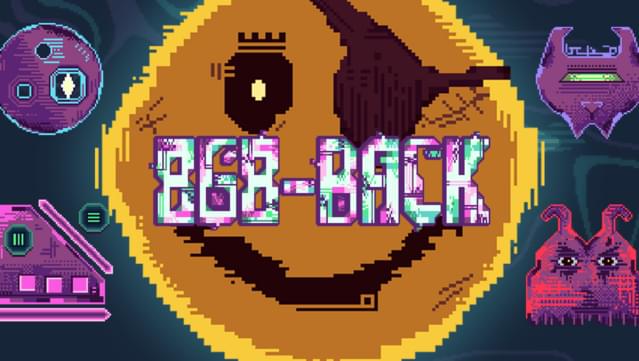
The first thing you see when you open 868-BACK is a 6x6 board, a smiley face that represents you, and an interface that looks like it was designed by a teenager in MS-DOS. The tutorial is short, abrupt and presented by a "script kiddie" who mercilessly gives you the basics and leaves you to your own devices. At first, you feel lost. But that apparent simplicity is a hook. Behind those crude pixels lies a gameplay system that combines the tension of the best roguelikes with the depth of a modern board game.
The goal is always the same: infiltrate corporate servers to steal data and dismantle digital capitalism, one megacorporation at a time. In each match, you progress through eight servers, but the path is not linear. Between servers, you make decisions that affect your route and the challenges you will face. An entire campaign spans 19 in-game days, and if you get disconnected too many times, all your progress is lost and you have to start from scratch. It's relentless, but that same pressure is what turns every decision into a moment of cold sweat.
On the board, you move in turns, collecting resources, obtaining "progs"—the programs that act as your special abilities—and facing enemies that appear out of nowhere. The twistiest, yet most brilliant twist is that every item or point you collect immediately spawns more enemies on the map. You need tools to survive, but getting them brings more danger. It's a vicious cycle that forces you to measure every move: do you take that tempting resource and risk unleashing chaos, or let it pass and survive another turn? It's an impossible balance, and more often than not, greed wins.
And believe me, I have failed a lot. Every death has been from seeing a bunch of points within my reach and thinking “yeah, I'm good enough for this,” only to be devoured by the consequences of my own ambition. But each failure has also taught me something new about how the system works. That's the real hook of the game: each game is a lesson disguised as a defeat.
Beyond the Board: Progs, Risks and an Addictive Rhythm
The "progs" are the soul of the strategy. They are bits of code that you steal from the corporations themselves and use them as weapons or tools. Some allow you to push enemies through walls, others turn you into a chess piece jumping all over the board, and there are some so strange that I don't even fully understand after several hours. The funny thing is that each program has a cost and an associated risk. Using corporate technology against its owners can have unforeseen consequences, creating a constant tug-of-war between playing it safe or risking everything for a bigger advantage.
And then there's the meta-game. Between runs, you can unlock new skills and upgrade your arsenal, but there's no permanent progression that will make it easier for you into the next game. Every time you start, you are on equal terms with the system, and it all depends on your ability to adapt to what the game throws at you. It is pure roguelike, without compromises.
One of the design decisions I liked the most is how the game rewards experimentation. At first, the board feels claustrophobic; Every square seems like a dead end. But the more you play, the more you begin to understand the possibilities. You discover ways to push yourself across the map's boundaries, use terrain to your advantage, and combine progs in ways you never imagined. It's as if the game tells you: "the rules are simple, but what you do with them is up to you." And every time you achieve a combination that gets you out of a bind, the feeling of power is immense.
Nineties Cyberpunk Aesthetic with a Sound that Puts You in the Environment
In the visual section, 868-BACK is a true homage to the hacker movies of the 90s. The crude pixels, the aggressive color palettes, the loading screens with cryptic text and that "dodgy burrito" that you can get as a resource (yes, you read that right) evoke the entire imagination ofSwordfishandThe Lawn Cutter. But the game doesn't just copy an aesthetic; he embraces it with affection and integrates it into his design. Each visual element has a clear function: enemy icons, danger indicators, glow-in-the-dark resources. The interface, despite the amount of information it handles, never feels cluttered, and works perfectly with both mouse and controller.
The soundtrack is another high point. Heavy bass and synths envelop you in an atmosphere of constant urgency. The sound effects, from the humming of servers to the beeping of data you steal, are designed to keep you on your toes. And when you manage to beat a particularly difficult server, the music rewards you with a brief respite before launching into the next challenge. It's a small detail, but it contributes greatly to the feeling of being inside a hacker movie.
What I took away after several hours
868-BACK is not an easy or forgiving game. It is a game that requires patience, attention and a good dose of self-criticism. Don't expect a deep story or characters with dramatic arcs. The plot is there as an excuse: you are an anonymous hacker fighting megacorporations to recover the Mainframe, period. The characters are archetypes and the dialogues are minimal. The real "content" is in the mechanical interaction, in the sweat of your brow as you decide whether to take a chance on powerful prog or walk away with what you've got.
That doesn't mean it lacks narrative depth. As you progress, you unlock pieces of history about why the original Hacker disappeared and what secrets the Mainframe hides. But it never becomes the main focus. And that's fine. Because the real reward of 868-BACK isn't watching the end credits; It's that moment when, after failing again and again, you finally achieve a combination of moves that allows you to get out of a tight spot with a satisfied smile. It is the pleasure of solving a puzzle where the pieces move on their own and each of your decisions is the beginning or the end of your run.
After so many hours and so many frustrating reboots, it's clear to me that 868-BACK is one of the most addictive experiences I've had this year. Not for everyone: If you're looking for fast-paced action or a scripted story with memorable characters, this isn't for you. But if you are a fan of pure roguelikes, the kind that force you to think and rethink every move, and if you like the cyberpunk aesthetic of the 90s, this game will absorb you. And although the introductory price may seem high for what at first glance is a 6×6 board, the number of hours you can lose—and enjoy—trying to master its systems more than justifies the investment.
There is only one thing that still bothers me: after several sessions, I have found occasional moments where the interface becomes a little slow when displaying the results of the fights, nothing that ruins the experience, but enough to notice it. I have also read in some forums that some combinations of progs can be too powerful, unbalancing certain encounters, although in my experience it all depends on how you use them and the context of each game. Nothing that can't be solved with a few adjustments.
868-BACKIt is now available on PC (Steam, GOG, Humble) from May 28. If you like brain challenges, retro aesthetics, and the feeling of being a hacker in a B-movie, I recommend it without hesitation. If not, at least check out the demo. You may discover that the joy of hacking lies not in the special effects, but in the constant tension between what you want and what you can afford.
«The Mainframe is lost, and you may be the only person who can still fight the MegaCorps. You're lucky."
— Official description on Steam.
Related Articles
![[Analysis] Celestial Return: Losing the dice is also losing the game](https://combogamer.com/wp-content/uploads/2026/07/celestialreturn_keyart-300x182.jpg)
![[Analysis] Mixtape: the narrative adventure that turns a 90s mixtape into an unforgettable video game](https://combogamer.com/wp-content/uploads/2026/07/mixtape-poster-300x160.png)
![[Analysis] Scholar Adventure: Mystery of Silence — A Journey to an Abbey that Whispers Secrets](https://combogamer.com/wp-content/uploads/2026/06/Scholar-Adventure-Mystery-of-Silence_poster-300x169.png)

![[Analysis] OUTBLAST — When 2000s Arcade Puts on the VR Goggles (and Still Unimpressed)](https://combogamer.com/wp-content/uploads/2026/06/OUTBLAST-poster-300x172.jpg)
![[Analysis] NODE: The Last Favor of the Antarii — Program Every Leap to Save the World](https://combogamer.com/wp-content/uploads/2026/06/NODE-poster-300x169.jpeg)