

Table of Contents
- The game borrows heavily from Lovecraft, although not always in the most obvious ways
- The first half of the game is clearly the strongest
- The gameplay has two completely different faces
- The combat quite breaks the identity that the game had been building
- Visually still impressive considering the size of the project
- The exploration manages to convey isolation quite effectively
- The most interesting thing is that horror works best when the game leaves room for imagination.
- Conclusion: an irregular game, but with a powerful atmosphere
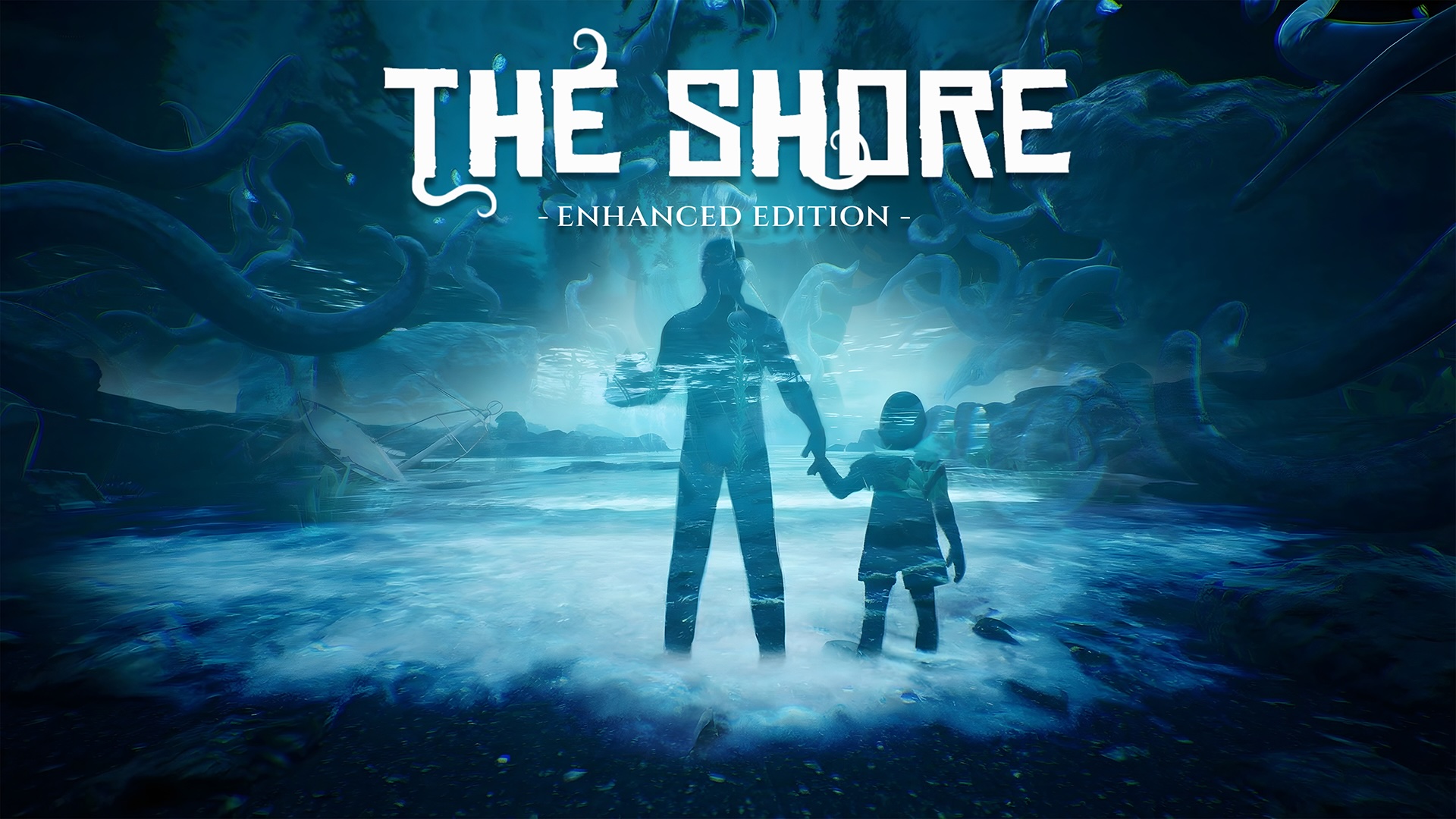
The Shore starts with a fairly straightforward premise: a man wakes up after a boat accident and discovers that his daughter has disappeared. From there begins a desperate exploration through an island full of ruins, corpses, strange symbols and creatures that seem straight out of a Lovecraftian nightmare.
But the further the story goes, the more evident it becomes that The Shore isn't interested solely in telling a literal quest.
The island functions almost as an emotional manifestation. A space built around guilt, grief and psychological deterioration. Many scenes seem to constantly move between reality, memories and hallucinations without fully confirming where one thing ends and the other begins.
That ends up becoming one of the game's greatest narrative strengths.
Not because the story is extremely complex, but because it maintains a permanent feeling of uncertainty. Even when gigantic creatures or rituals involving cosmic entities appear, the focus remains on Andrew and how he slowly begins to lose mental stability.
The game borrows heavily from Lovecraft, although not always in the most obvious ways
It's easy to stick with just the giant monsters or the visual references to Cthulhu and other entities. But several other reviews agree on something important: what The Shore really captures is the feeling of insignificance.
The island constantly conveys the idea that the protagonist is entering a place that should never have existed for human beings.
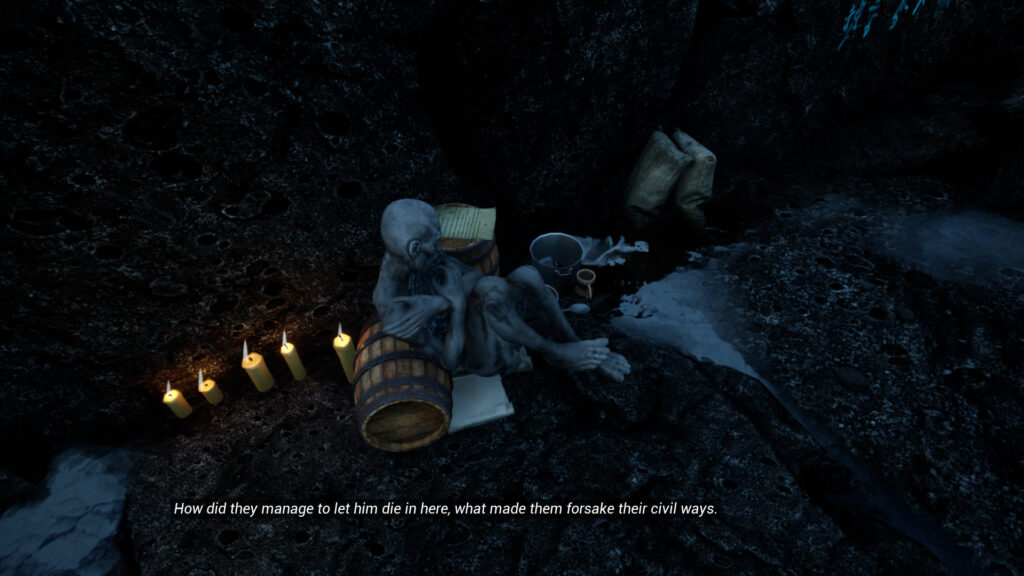
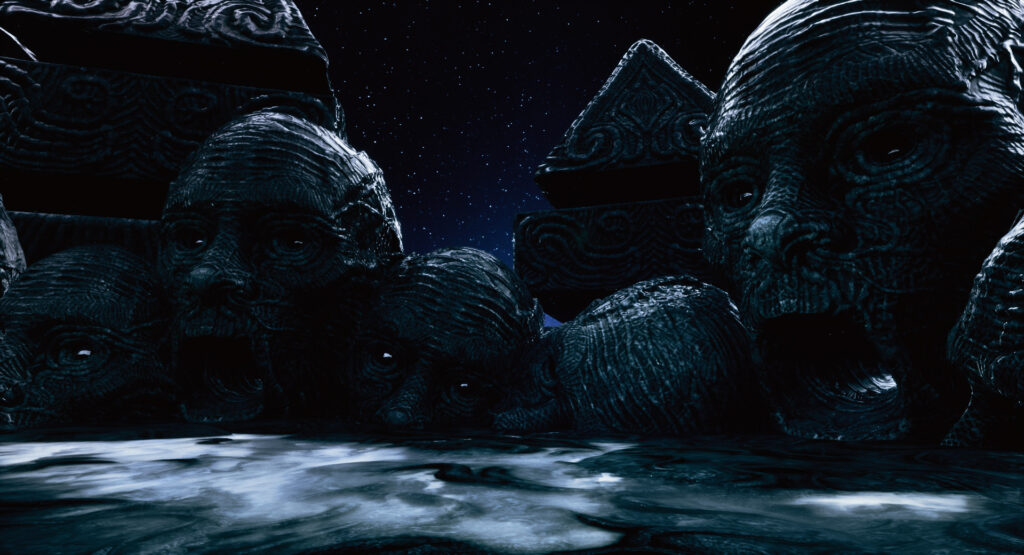
There are impossible structures. Caverns where space seems to warp. Gigantic statues hidden under the ocean. And creatures that don't always react immediately to the player, as if they barely register their presence.
That helps a lot to build the atmosphere.
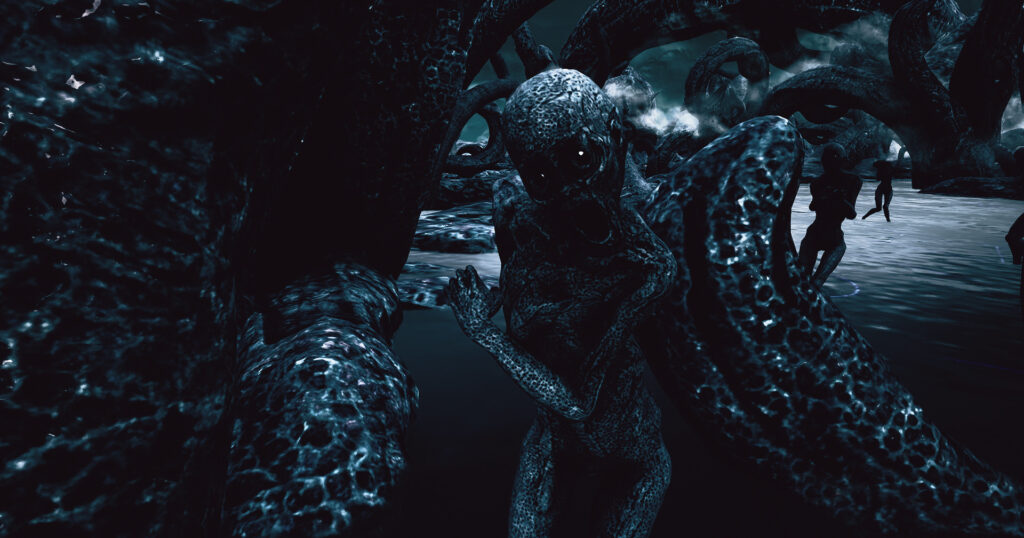
At several points, simply advancing through certain scenarios already generates more tension than the enemy encounters themselves. The Shore works quite well with the fear of the unknown and especially the fear of scale. Many of the creatures don't seem designed to “attack” the player in the traditional sense. Rather, they function as constant reminders that Andrew is facing something completely outside his understanding.
The first half of the game is clearly the strongest
Something that is mentioned repeatedly in both reviews and player reviews is that The Shore builds mystery much better than it handles the final answers. And I agree.
The first few hours work very well because the game takes time to leave open questions. What really happened on the island? What relationship do the creatures have with Andrew? How much of what we see is real?
The problem appears when the narrative tries to become more concrete.
Without going too much into direct spoilers, the outcome ends up simplifying part of the psychological ambiguity that made the initial journey interesting. Some ideas related to guilt and trauma remain somewhat superficial, especially considering the much more disturbing tone that the game builds throughout the exploration.
It doesn't mean the story is bad. It just leaves the feeling that it could have gone much deeper into certain emotional and psychological aspects.
![[Analysis] The Shore: cosmic horror, guilt and an island where each step seems to push the protagonist towards madness](https://combogamer.com/wp-content/uploads/2026/05/the_shore_02-1024x555.jpg)
The gameplay has two completely different faces
Until about halfway through the adventure, The Shore functions primarily as a walking simulator with puzzles and environmental exploration.
And that's where it feels best.
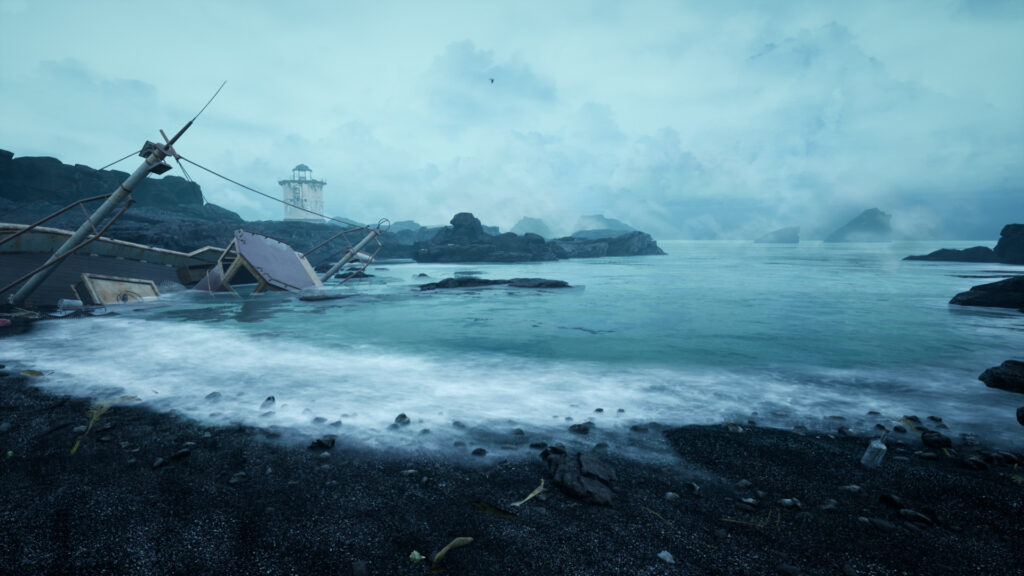
Walking along abandoned beaches, descending into caverns full of strange symbols or investigating ruins while listening to impossible sounds in the distance fits perfectly with the type of horror that the game proposes.
The puzzles do not seek extreme complexity either. They are generally based on observing the environment, activating mechanisms or interpreting visual patterns. Sometimes they can be too simple, although I personally think that the game did not need particularly complex puzzles either because the exploration already supports a large part of the experience.
The issue changes when combat appears.
The combat quite breaks the identity that the game had been building
This is probably the most criticized aspect.
At one point Andrew obtains ancient artifacts that allow him to directly confront some creatures. The narrative idea makes sense: going from a helpless victim to someone capable of partially resisting cosmic horror.
The problem is that the mechanics never end up feeling comfortable.
The controls during fights are rigid, the confrontations feel repetitive, and certain enemies seem designed more as artificial obstacles than interesting threats. Several battles end up reduced to shooting energy while running in circles avoiding fairly basic attacks.
The worst thing is that these sequences break precisely what worked best: vulnerability.
Before the fight, The Shore conveyed a constant feeling of fragility. The player advanced feeling that any gigantic entity could easily destroy him. When the game introduces more action-oriented mechanics, some of that tension disappears.
![[Analysis] The Shore: cosmic horror, guilt and an island where each step seems to push the protagonist towards madness](https://combogamer.com/wp-content/uploads/2026/05/the_shore_04-1024x576.jpg)
Visually still impressive considering the size of the project
Something that really stands out is the technical merit of the game, especially considering that much of it was developed by practically a single person.
And there really are visually spectacular moments.
The gigantic creatures appear on an impressive scale. The use of lighting helps a lot to create atmosphere. And certain settings—especially those involving underwater structures or hidden temples—make for some pretty memorable images.
Plus, the sound design does a lot of quiet work.
Distorted voices, echoes inside caves, distant noises and ambient music constantly help to sustain that feeling of psychological discomfort. The setting is easily the strongest part of the game.
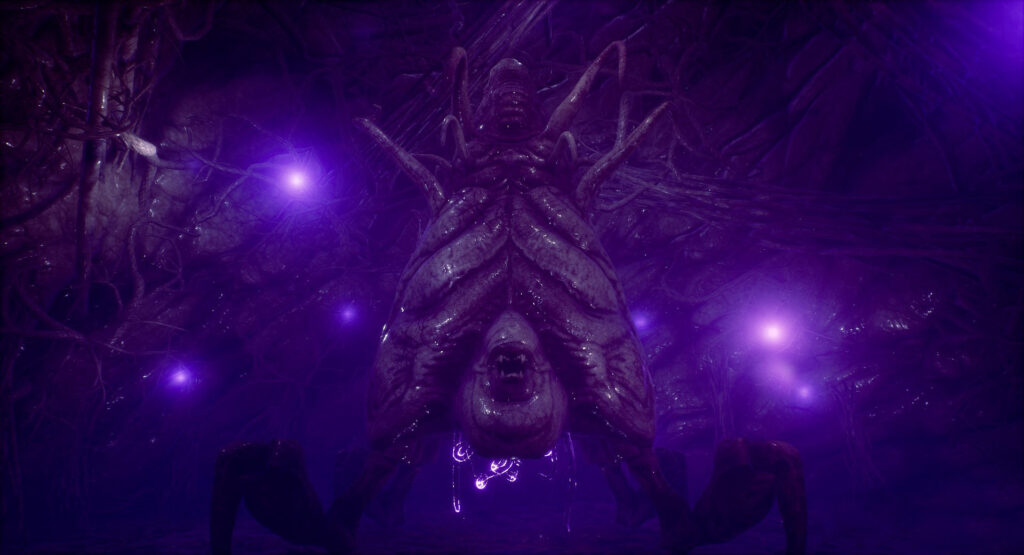
The exploration manages to convey isolation quite effectively
One of the most interesting aspects of the game's design is how it uses empty space.
The Shore rarely fills the map with constant activities or enemies. There are long segments where you just walk around listening to the ocean and looking at destroyed structures.
That's clearly not going to work for everyone, and it's normal that some players who come into this game knowing nothing will find certain parts too slow.
But that awkward calm ends up helping the overall atmosphere a lot. The game needs silence for creature appearances or more surreal moments to really have an impact.
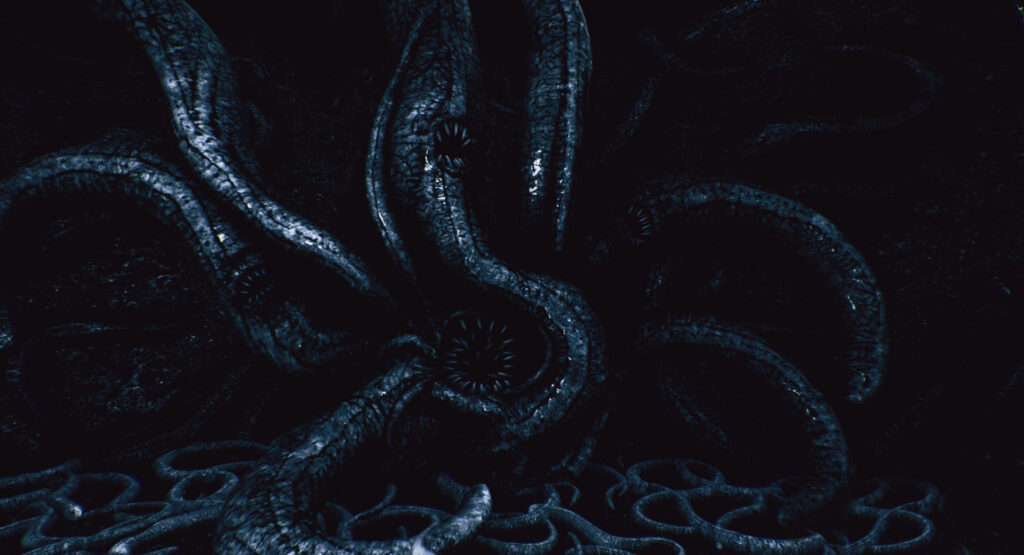
The most interesting thing is that horror works best when the game leaves room for imagination.
The most effective scenes are not necessarily the confrontations or the most explicit revelations.
Many times the game is more disturbing when it barely shows fragments. A gigantic shadow moving underwater. Strange sounds behind a wall. An impossible statue slowly appearing in the fog.
That's where it really gets close to the kind of cosmic horror it's clearly trying to portray.
Porque el miedo en The Shore rara vez nace de “perder” contra enemigos. Nace de la sensación de estar entrando demasiado profundo en algo que la mente humana simplemente no puede procesar completamente.
Conclusion: an irregular game, but with a powerful atmosphere
The Shore tiene problemas evidentes.
El combate nunca termina de funcionar bien. Algunas ideas narrativas quedan menos desarrolladas de lo que prometían. Y hay momentos donde el ritmo se vuelve inconsistente.
Pero aun así, consigue algo bastante difícil dentro del horror lovecraftiano: transmitir escala, incomodidad y deterioro psicológico sin depender solamente de referencias superficiales a Lovecraft.
La isla se siente hostil. Las criaturas generan presencia real. Y el viaje emocional de Andrew, aunque imperfecto, logra sostener buena parte de la experiencia.
No es un juego revolucionario ni especialmente refinado. Tampoco intenta reinventar el género. Pero cuando deja que la exploración, el sonido y la atmósfera hablen por sí solos, The Shore alcanza momentos genuinamente inquietantes.
Especialmente en esas escenas donde parece que el protagonista ya no está buscando únicamente a su hija, sino intentando descubrir si todavía queda algo de cordura dentro de él.
Related Articles
![[Analysis] Mixtape: the narrative adventure that turns a 90s mixtape into an unforgettable video game](https://combogamer.com/wp-content/uploads/2026/07/mixtape-poster-300x160.png)
![[Analysis] Scholar Adventure: Mystery of Silence — A Journey to an Abbey that Whispers Secrets](https://combogamer.com/wp-content/uploads/2026/06/Scholar-Adventure-Mystery-of-Silence_poster-300x169.png)
![[Analysis] OUTBLAST — When 2000s Arcade Puts on the VR Goggles (and Still Unimpressed)](https://combogamer.com/wp-content/uploads/2026/06/OUTBLAST-poster-300x172.jpg)
![[Analysis] NODE: The Last Favor of the Antarii — Program Every Leap to Save the World](https://combogamer.com/wp-content/uploads/2026/06/NODE-poster-300x169.jpeg)
![[Analysis] Echo Generation 2 — When a Sequel Risks Everything](https://combogamer.com/wp-content/uploads/2026/06/Echo-Generation-2-poster-300x169.jpg)