
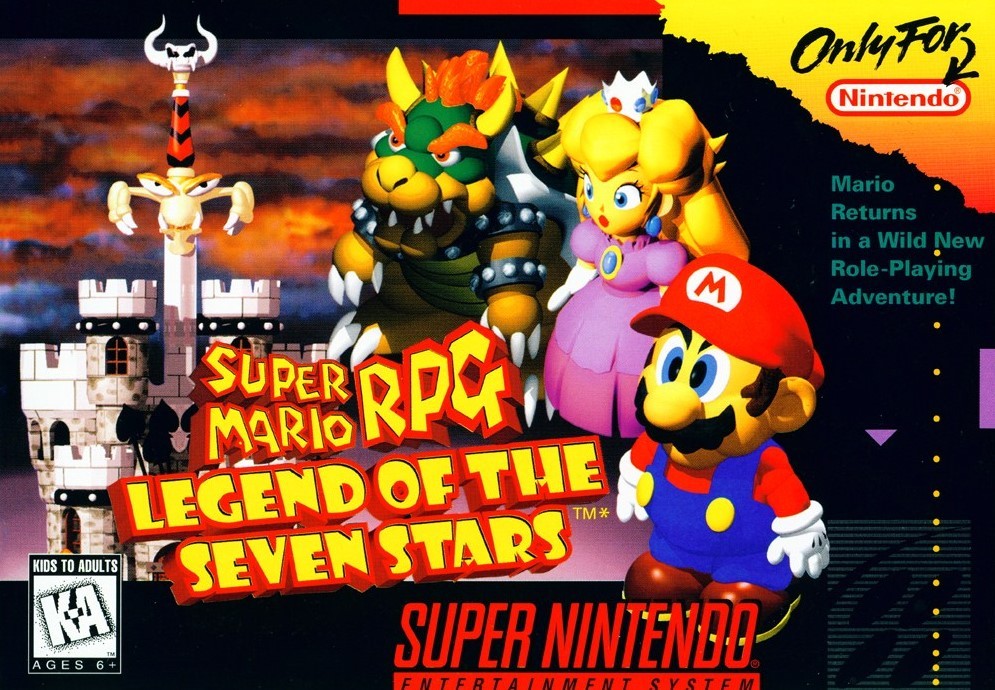

There was a time when about 90% of the games that fell into my hands were Super Mario. That percentage would be even higher if it included the platform genre in general. Since I got hold of Super Mario Land, most of the plumber's main titles were adding to the catalog of platforms available at that time: GameBoy and Nintendo 64. Despite everything, I felt that I had missed the most genuine part of the franchise, that is, the one that included the original saga of Super Mario Bros. By chance, a kid from another class was selling his old Super Nintendo with, nothing more and nothing less than Super Mario All Stars + Super Mario World. A “pack” that was completed with Super GameBoy and the ultra-difficult (and also extremely original) Plok. Next to nothing! Although I don't remember the figure, for a poor guy like me back then to be able to purchase all that, it would have had to have been at a very affordable price. Blessed era before the retro market bubble. However, I didn't stop there, because I would buy those same games again, but in their GameBoy Advance format. I wasn't too smart there, but it was Super Mario, and I thought it was worth it.
It was also at that time when I had my first RPG game, Pokémon Blue, which would be followed by Yellow and Gold. Years later I began to get tired of the plumber franchise, as I saw that it repeated the same patterns for each title it released (despite the fact that it innovated in everything else). Thus, I gradually opted for adventure games to the detriment of platforms.
Now, what would have happened if I got to know Super Mario RPG, the first plumber title that incorporated so many new elements? He would surely have been the happiest in the world. In any case, “it is never too late if the joy is good”, so, after having enjoyed it recently, I am ready to relate my experience. Something that is also quite timely to whet your appetite while we wait for its remake to arrive for Switch.
The game starts with the same routine which led me to get tired of him. Peach, the usual damsel in distress, is kidnapped for the umpteenth time by Bowser, the usual villain (riding the same flying vehicle we saw in Super Mario World). Mario, as usual, goes to the castle of his eternal archenemy to save her. After a scuffle on top of some large ceiling lamps, in a turn-based combat that constitutes a small outline of what happens later, we manage to throw the platform on which he was standing into the void. Despite his resistance, it was done: Bowser had been defeated once again. Mario was about to free her, but at that moment a huge tremor shakes the castle to its foundations. That's when everything we thought we knew about the conventions of the franchise falls apart. A colossal sword falls from the sky and pierces the castle from part to part, somehow managing to get the plumber thrown out of it, ending up in his own house, hanging from his coat rack. Confused by what happened, He returns to Bowser's Castle again, only to discover that it has a new owner.. That fearsome sword has a life of its own and claims to be a member of the gang of Smithy. After making it clear that Mario is no more welcome than during Bowser's reign, knock down the bridge so that you cannot access it again.
Super Mario RPG It was forged under the mold of two colossi of the moment. On one hand, nintendo, owner of the franchise, which provided the wonderful fantasy universe that so many of us grew up with. Master of countless styles, but standing out especially for his legendary platform titles, his stamp will be present in various elements that we will see later. From another, Square (current Square Enix), a giant of the RPG genre which, at the time of the development and launch of this title (1996), already had a whopping six final fantasy (and with the legendary seventh installment already on the horizon), as well as many other exponents of the genre, highlighting Chrono Trigger and the saga Manna. With such a resume, one can only hope for the best.
![[Playing…] Super Mario RPG: Legend of the Seven Stars](https://combogamer.com/wp-content/uploads/2023/09/Super-Mario-RPG-Secuestro-de-Peach-1024x894.png)
Among all the new features that this title incorporates, I will start with the first thing that catches the eye: the graphics, which directly impact part of the gameplay. Unlike all the other exponents of the plumber franchise up to that point (except, in some details, Yoshi's Island), in this title we find some pre-rendered graphics what they offer some three-dimensional feeling. This is reinforced with its overhead perspective (the resource used by most games that at that time went beyond mere lateral scrolling), something that we would not see again until the arrival of the saga Mario & Luigi. Personally, that aesthetic seems strange to me, although, in fact, it is that tension between the elements of Mario's world and those textures and colors seemingly unrelated things that makes it so attractive.
From this top-down perspective, we will have to explore the world around us, searching for the secret that will allow us to defeat Smithy and his henchmen. Something that nos facilita la exploración, pero que nos dificulta en los momentos en los que entra en juego un componente plataformero que aquí también hace acto de aparición. Los chicos de Square no se olvidaron de aquello que hizo célebre al fontanero, sus saltos, hecho que por sí solo le hace destacar entre otros exponentes del RPG. Esto se aprecia desde el acceso a determinadas partes del mapa hasta el mismo hecho de obtener ítems y monedas de bloques elevados que en esta ocasión tienen aspecto de cofres, en una síntesis visual entre ambos estilos. El problema es que desde esa vista a mí se me hace difícil calcular el salto en los momentos en los que se requerirá de precisión, lo cual eleva a un nuevo nivel de desafío una experiencia que ya creíamos dominada.
![[Playing…] Super Mario RPG: Legend of the Seven Stars](https://combogamer.com/wp-content/uploads/2023/09/Super-Mario-RPG-plataformas-1024x888.png)
Pasemos ahora al sistema de combate, que no deja de ser el meollo de todo RPG. Nos encontramos ante un sistema combate por turnos, pero con elementos a tiempo real que le otorgan un considerable dinamismo y nos sacan de nuestro tradicional papel de meros observadores del resultado de nuestras decisiones. Cuando nos toca, podremos utilizar un ataque normal (A), defender (B), realizar un ataque especial (Y) o utilizar un ítem del inventario (X). Ahora bien, de nosotros depende el resultado que tengan nuestras acciones ofensivas. Para un ataque normal, si pulsamos A justo cuando nuestro golpe impacta contra el enemigo, le infligiremos más daño. Con los specials, en ocasiones pasa algo semejante, aunque en ese caso varía de las instrucciones que nos dé el juego (con las bolas de fuego de Mario debemos pulsar Y repetida y rápidamente, para su Supersalto hay que presionarlo justo cuando caiga sobre la cabeza del enemigo para repetir varias veces el proceso, etc.).
En Super Mario RPG no nos llevarán a combates aleatorios al caminar en zonas de presencia enemiga, sino que esa pantalla aparecerá cuando nos topemos con uno. Además, muchas veces son relativamente fáciles de eludir (de todos modos, huelga decir que en este tipo de juegos, cuantos más combates libremos, mejor), aunque en ocasiones atacan a traición (y hasta alguno se oculta dentro de un bloque de objetos) o están ubicados de tal manera que son imposibles de sortear. Los combates, por lo general no resultan difíciles en exceso, sobre todo si vamos bien equipados con objetos de curación (champiñones) y de recuperación de puntos de flor (veremos en el siguiente párrafo en qué consisten), además de que a veces obtendremos bonificaciones, como turnos extra o recuperación de vida. Eso sí, el hecho de ignorar cuánta vida le resta al enemigo añade incertidumbre a los combates, especialmente contra los jefes. Tampoco habremos de preocuparnos demasiado de farmear experiencia, al menos en comparación con otros títulos.
![[Playing…] Super Mario RPG: Legend of the Seven Stars](https://combogamer.com/wp-content/uploads/2023/09/Super-Mario-RPG-Enemigos-8-1024x896.png)
Como viene siendo habitual, los personajes cuentan con una serie de estadísticas. En este caso son los puntos de vida, ataque, defensa, ataque mágico y defensa mágica. Además, están los puntos de flor que consumen los ataques especiales, y que son comunes para todo el equipo. También se cumple con la tradición de personalizar las estadísticas con armas para mejorar el ataque, armaduras para la defensa y accesorios que nos confieren algún atributo, como inmunidad a ciertos cambios de estado (envenenamiento, sueño, silencio de habilidades especiales, miedo o transformación en objeto inanimado). Pero, además, con cada subida de nivel podemos elegir entre lograr una mejoría adicional en ataque/defensa, puntos de vida o ataque/defensa mágicos.
Frente al mundo abierto que suelen lucir muchos RPGs, aquí se conserva el formato de los juegos de Mario. Si en los títulos ordinarios de la franquicia tenemos un mapa en el que van apareciendo distintos niveles seleccionables conforme los vamos completando, unidos por un camino, en Super Mario RPG sucede lo mismo, pero con zonas de desplazamiento cenital a explorar. El guardado no es automático ni puede realizarse en cualquier momento, sino que hay distintos bloques para salvar la partida repartidos por el mundo (así como posadas para recuperar energía). No suelen estar demasiado distanciados los unos de los otros, lo cual vendrá muy bien a quienes no le puedan dedicar demasiado tiempo seguido al juego.
![[Playing…] Super Mario RPG: Legend of the Seven Stars](https://combogamer.com/wp-content/uploads/2023/09/Super-Mario-RPG-barriles-1024x890.png)
A eso último también contribuye su moderada duración. Ahora bien, este título tampoco es ajeno a las distintas misiones secundarias y secretos ocultos en el mapeado, por lo que podremos alargarla en función de cuánto queramos exprimir su contenido. Eso incluye minijuegos donde habremos de emplear toda nuestra habilidad en lo que a botoneo se refiere. Un par de ejemplos serían como las carreras de Yoshis (alternar A y B siguiendo el ritmo de la música, algo a lo que nunca le pillé el truco) o recolectar monedas en el Río Midas. En este último obtendremos una moneda rana por cada 80 normales, que distinguiremos por su color verde, y que nos darán acceso a objetos especiales.
En conclusión, como título forjado bajo el cuño de dos colosos del momento, Nintendo y Square, Super Mario RPG constituye una síntesis de lo mejor de las obras de ambas compañías. Square, que en ese momento ya tenía un currículim de juegos envidiable, aporta al maravilloso universo de fantasía con el que tantos crecimos su amplia experiencia en el RPG, demostrando el carácter camaleónico de su buen hacer. Tiene el mérito de haber sabido introducir por vez primera todo lo que define al género (estadísticas de combate de rigor, equipamiento, ítems de recuperación, etc.), no sólo sin desvirtuar la esencia de la franquicia, sino haciendo que esas mecánicas queden como algo completamente natural. Ese plus de personalización de tales o cuales estadísticas al subir nivel o la inclusión de elementos de combate a tiempo real al sistema por turnos (pulsar A en el momento justo en los ataques normales o usar el Y de tal o cual manera en algunos especiales) son, en mi opinión, los mayores aciertos. También destacaría el mantenimiento del carácter familiar y desenfadado de los juegos del fontanero, que permea en su apartado gráfico prerrenderizado (pese a lo extraño que resulte en un principio en un juego de Mario), en el sencillo y simpático argumento y en una música muy del estilo del fontanero, aunque, eso sí, con ciertos toques medievalizantes. Tampoco olvida aquello que hizo famoso a Mario, sus saltos, elemento que lo distingue de muchos RPGs, aunque a mí me cueste saltar con la perspectiva cenital.
![[Playing…] Super Mario RPG: Legend of the Seven Stars](https://combogamer.com/wp-content/uploads/2023/09/Super-Mario-RPG-Poblado-1024x888.png)
Este título de SNES fue tardío. Salió en 1996, el mismo año que Super Mario 64. Además, en su momento no llegó a Europa. Por lo tanto, no pude probar en su momento este maravilloso soplo de aire fresco para la franquicia, que quizás me hubiese hecho volver a apreciarla en otra de sus nacientes facetas. Pero dicen que “nunca es tarde si la dicha es buena”. Y vaya si es buena.
Related Articles
![[Analysis] NODE: The Last Favor of the Antarii — Program Every Leap to Save the World](https://combogamer.com/wp-content/uploads/2026/06/NODE-poster-300x169.jpeg)
![[Analysis] Echo Generation 2 — When a Sequel Risks Everything](https://combogamer.com/wp-content/uploads/2026/06/Echo-Generation-2-poster-300x169.jpg)
![[Playing…] Yan魇: Parasomnia — A Journey to the Spirits of Southeast Asia](https://combogamer.com/wp-content/uploads/2026/06/Yan_-Parasomnia-poster-300x172.jpg)
![[Analysis] Clockwork Ambrosia understands something that many modern metroidvanias seem to have forgotten: shooting can also be fun](https://combogamer.com/wp-content/uploads/2026/05/clockwork_ambrosia-poster-300x169.jpg)
![[Playing…] Shin Megami Tensei V: the original version of the Pokémon-style game in an apocalyptic world](https://combogamer.com/wp-content/uploads/2025/11/Shin-Megami-Tensei-V-Portada-300x158.jpg)
![[Analysis] REPLACED: a cyberpunk journey that catches the eye, but does it stay in the memory?](https://combogamer.com/wp-content/uploads/2026/04/Replaced_Keyart_Landscape_16x9-300x169.jpg)