

Table of Contents
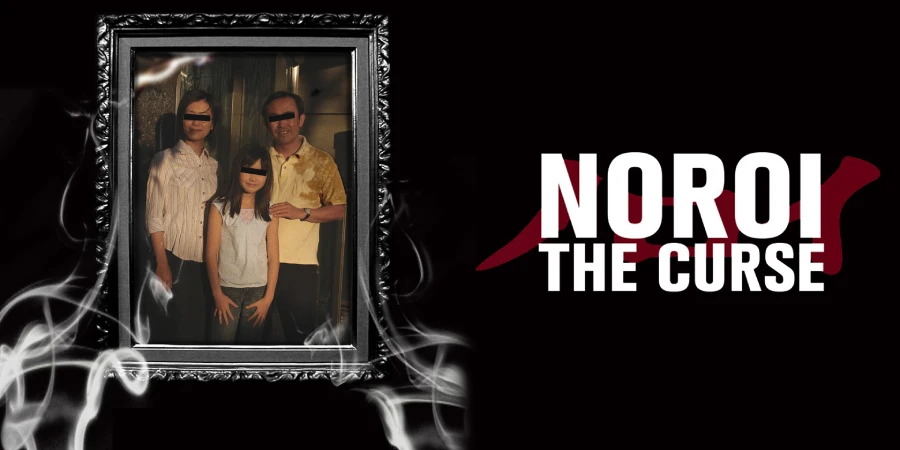
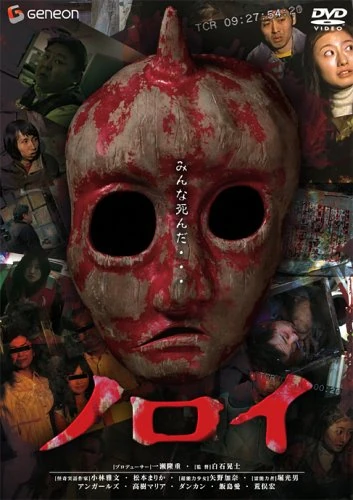
Before thefound footagebecame an almost exhausted formula by repeating itself in dozens of cheap productions, there was a Japanese film that took that format to a level of ambition rarely seen:Noroi: The Curse. Released in 2005 and directed by Kōji Shiraishi, it is not the kind of horror that relies on immediate scares or a premise that is easy to summarize in a sentence. It is, instead, an almost two-hour puzzle that requires patience, attention and the willingness to let yourself be carried away by a structure as chaotic in appearance as it is meticulously calculated behind.
A director who had already been flirting with the format
Kōji Shiraishi did not arrive in Noroi by chance. Born in Fukuoka in 1973, the director had already been working in the field of mockumentary for a couple of years before, with the direct-to-video seriesHonto ni Atta! Noroi no Video, a kind of testing laboratory where he polished that particular mix between the aesthetics of paranormal reportage and Japanese folkloric horror that he would later perfect in his first feature film for cinemas. That previous experience is noticeable in every editing decision of Noroi: The Curse, a film that presents itself directly as the finished documentary of a missing researcher, and that uses that premise to jump shamelessly between different recording formats, testimonies, real television programs and hidden camera material.
One investigator, three cases, and a curse that connects them all
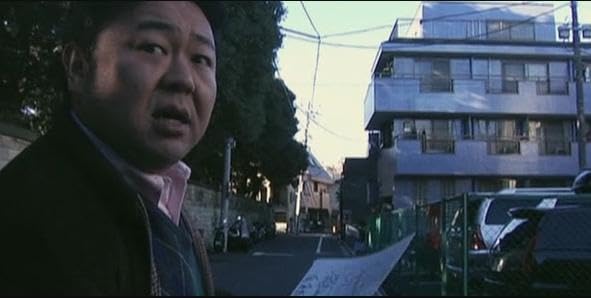
The film follows Masafumi Kobayashi, an investigator of paranormal phenomena with several books published on the subject, who begins this documentary by investigating a fairly everyday complaint: a neighbor claims to hear baby cries coming from the house next door, inhabited by a woman named Junko Ishii. What in any other television program would have remained a curious anecdote, in Kobayashi's hands becomes the first thread of an investigation that branches out in increasingly disturbing directions.
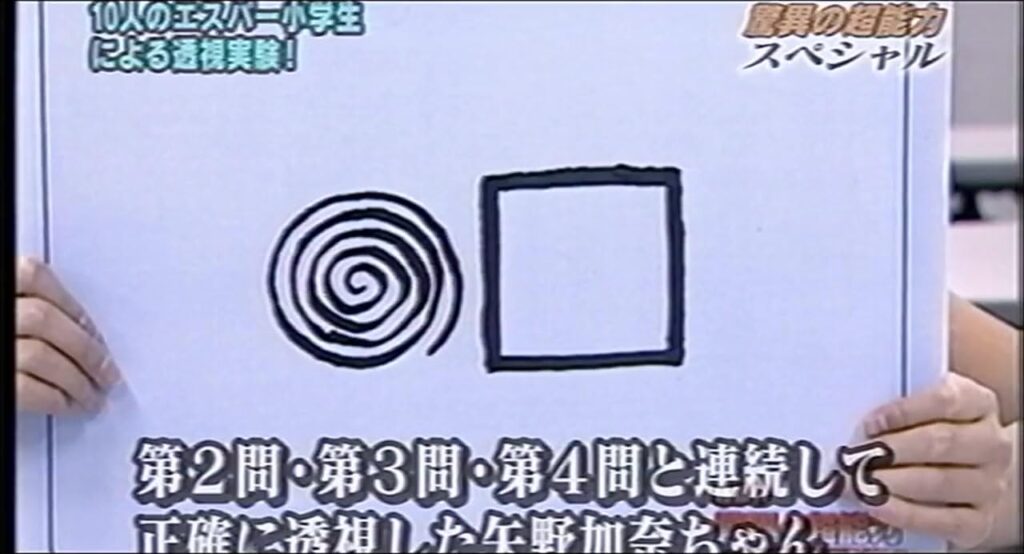
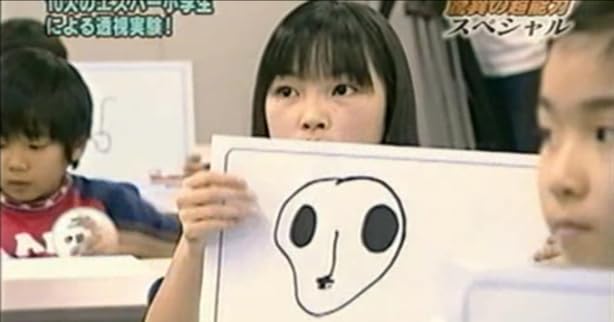
At the same time, a variety show tests a group of children with supposed psychic abilities, and only one of them, a girl named Kana Yano, demonstrates a genuine gift: in front of cameras, she manages to materialize water from a lake along with hair that turns out to belong to a newborn. Shortly after that television appearance, Kana begins to appear exhausted and exhibit erratic behavior, until she finally disappears. Her parents tell Kobayashi about the visit of an eccentric medium, Mitsuo Hori, a deeply unstable man who is always covered in aluminum foil to protect himself, according to him, from spiritual radio waves, and who claims that Kana was taken away by "ectoplasmic worms."
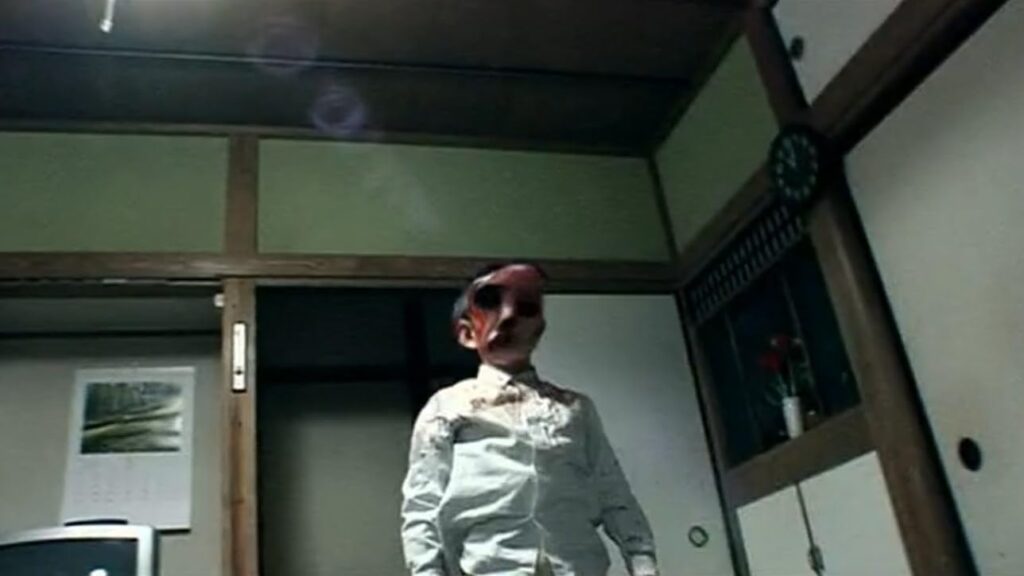
Added to these two lines of investigation is a third: actress Marika Matsumoto, playing herself, begins to experience increasingly disturbing episodes after participating in a recording near an abandoned shrine. She begins, without realizing it and while she sleeps, tying threads and cables in patterns of intertwined ties, until one night, with a camera recording her while she rests, a voice is clearly heard whispering a name: Kagutaba.
A submerged village and a demon that no one wanted to remember
That name is the key that ends up uniting the three cases. Kobayashi consults a local historian, who explains that Kagutaba is a demonic entity summoned decades ago by the inhabitants of a small village called Shimokage, located in an area that ended up being flooded in 1978 to build a dam. Before that, the villagers performed an annual ritual to keep the entity happy, after having locked it up for disobeying their own designs. With the village under water and no one to continue these ceremonies, the seal that kept Kagutaba quiet began to weaken, releasing its influence on anyone who had any link, direct or indirect, with that ancient cult.
From there, Kobayashi's investigation becomes increasingly dangerous. He discovers that Junko Ishii worked at a hospital where she participated in clandestine abortions, and begins to piece together what she could be using those stolen fetuses for. The appearance of an ancient scroll, which shows the original ritual in which a medium was fed baby monkeys, confirms his worst suspicions: someone is trying to recreate that ceremony with human material, seeking to restore Kagutaba to all her strength. With Marika increasingly affected by episodes of possession, and with Hori insisting that the situation is getting out of control, the group ends up traveling to the dam that buried Shimokage, ready to attempt one last ritual to reverse whatever has been set in motion. What they find there, and what Kobayashi ends up discovering about the true destiny of Kana and Junko, I prefer to leave for those who have not yet seen the film, because the final section of Noroi: The Curse is, with justice, one of the most talked about and disturbing closing sequences in all of Japanese horror cinema.
A slow pulse that knows exactly when to press
What I liked most about Noroi: The Curse, revisiting it today, is how well calculated its fragmented structure is. Shiraishi allows himself to intersperse seemingly inconsequential material, such as a fragment of a children's program or a television interview with no direct relationship to the plot, and yet, when one looks back, everything ends up falling into place with an almost obsessive precision. It is a film that requires patience: there are stretches of slow, almost bureaucratic investigation that can feel long for those looking for constant scares, and it is no coincidence that a good part of the critics agree that its last third is, by far, the most intense and murky of the entire film.
That decision to build terror from the patient accumulation of clues, rather than banking on immediate impact, is probably the reason why Noroi: The Curse has aged so well and remains a must-see almost twenty years later. The use of the mockumentary format never feels like a simple low-budget trick: Shiraishi takes advantage of it to justify time jumps, abrupt cuts between different cameras, and a constant feeling of watching something that was edited after the worst was over, which adds an extra layer of fatalism to the entire experience. For anyone who enjoys Japanese folk horror, those stories where an entire community carries a collective guilt that ends up awakening something that should have been buried, Noroi: The Curse remains one of the pinnacles of the genre, and one of those films that is best seen without knowing too much beforehand.
Curiosities of Noroi: The Curse
- Marika Matsumoto plays a fictional version of herself, and her participation in the plot is directly supported by her real fame as an actress and presenter on Japanese television.
- The cast includes the late idol and television personality Ai Iijima, as well as the comedy duo Ungirls, both playing themselves within the fiction of the documentary.
- The name of the demon Kagutaba is composed of kanjis that refer to the ideas of tool, spirit and evil, a detail that reinforces its origin within folklore invented specifically for the film.
- At almost two hours long, Noroi: The Curse is noticeably longer than most Japanese horror productions of the time, something that Shiraishi himself defended as necessary to sustain the complexity of its structure.
Related Articles
![[HorrorScience] Dangerous Animals – Dangerous Animals (2025)](https://combogamer.com/wp-content/uploads/2026/06/Dangerous-Animals-banner-horizontal-300x169.jpg)
![[HorrorScience] Obsession: turning the classic "be careful what you wish for" into a nightmare](https://combogamer.com/wp-content/uploads/2026/07/obsession-poster-300x169.jpg)
![[HorrorScience] Backrooms: the A24 film that turned an internet creepypasta into a horror phenomenon](https://combogamer.com/wp-content/uploads/2026/07/backrooms-poster-300x169.jpg)
![[HorrorScience] Victor Crowley (Hatchet IV): The fourth installment that arrived without warning](https://combogamer.com/wp-content/uploads/2026/06/victor_crowley-poster-300x169.jpg)
![[HorrorScience] Number 23 (2007)](https://combogamer.com/wp-content/uploads/2026/05/El-numero-23-banner-largo-300x169.jpg)
![[HorrorScience] Hokum: When a bitter writer meets an Irish witch](https://combogamer.com/wp-content/uploads/2026/06/hokum-poster-300x169.jpg)