

Table of Contents
- A familiar plot in a renovated setting
- Tributes that become imitation
- Impressive aesthetics, but lack of substance
- Solid performances in underdeveloped characters
- Between psychological horror and body horror
- The shadow of the original
- Conclusion: A tribute that fails to shine with its own light
- Some curiosities about "The First Omen"
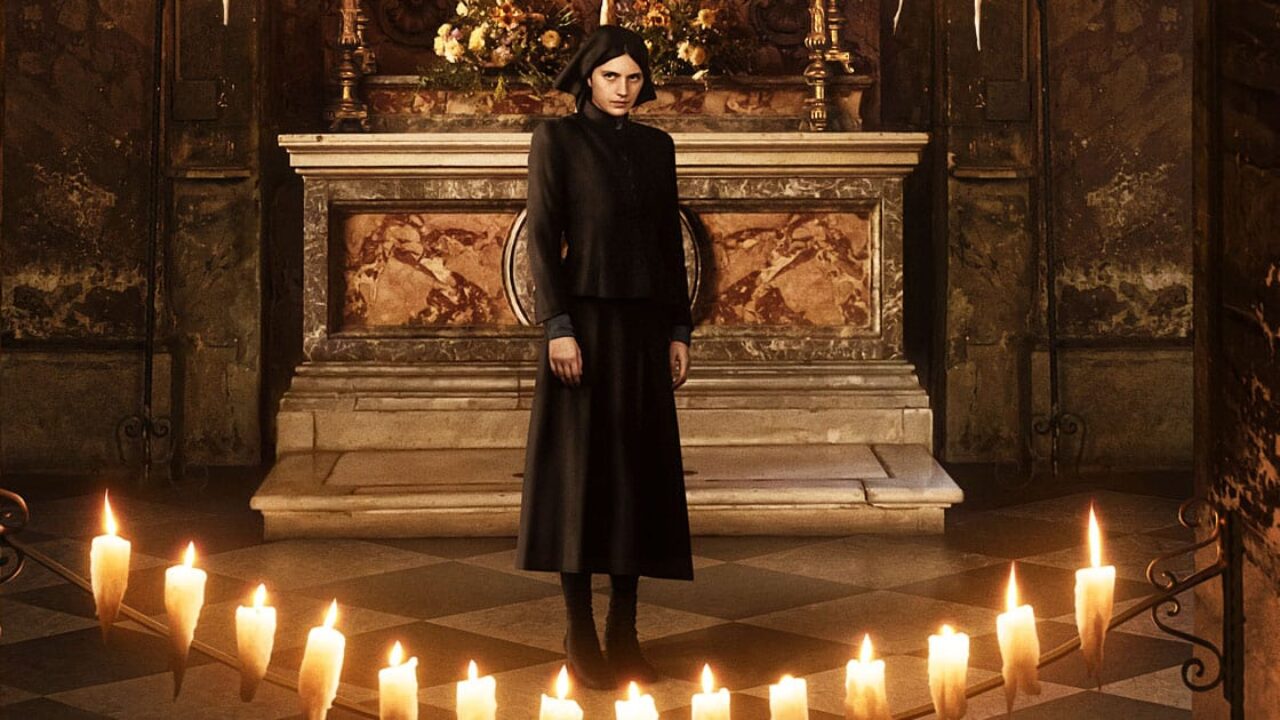
"The First Omen", directed by Arkasha Stevenson, stands as a prequel intended to explore the origins of the infamous Damien Thorn. However, what could have been an opportunity to reinvent and delve into the mythology of the saga, ends up being an exercise in imitation that lacks the spark and originality that made "The Omen» from 1976 an instant classic.
A familiar plot in a renovated setting
The film follows Margaret (played by Nell Tiger Free), a young American novice who travels to Rome to take the habit. Set in 1970, the plot plunges us into a world of ecclesiastical conspiracies and dark rituals that will eventually lead to the birth of the Antichrist. While the setting of 1970s Rome provides an interesting backdrop, with its student unrest and social tension of the time, the narrative itself feels overly familiar to those familiar with the saga.
Tributes that become imitation
As the plot unfolds, it becomes clear that Stevenson and his team have taken the safe route, recreating iconic scenes from the original film rather than forging a path of their own. One of the most blatant examples of this lack of originality is the recreation of the famous priest's death scene in the original. While in 1976 this scene was shocking and novel, here it feels like a forced homage that lacks the impact and surprise of the original.
The film is full of these "winks" to the work of Richard Donner, from the presence of Father Brennan (which plays on fans' nostalgia) to the chase and death scenes that, although technically well executed, lack the innovation and emotional impact of their original counterparts.
Impressive aesthetics, but lack of substance
There is no denying that "The First Omen" is visually stunning. The decision to shoot in 35mm gives the film a texture and warmth that perfectly complements the 1970s setting. Aaron Morton's cinematography masterfully captures the oppressive atmosphere of Rome, with its narrow streets and imposing churches.
However, this visual beauty fails to compensate for the lack of depth in the narrative. The film remains on the surface of the themes it tries to address, such as corruption within the Church and the role of faith in an increasingly secular world. These elements, which were treated with greater subtlety and depth in the 1976 original, here feel more like a backdrop than an integral part of the story.
Solid performances in underdeveloped characters
The cast does an admirable job with the material they are given. Nell Tiger Free gives a compelling performance as Margaret, capturing the character's internal struggle between her faith and the horrible truths she discovers. Bill Nighy, as Cardinal Lawrence, brings his usual charisma and presence to a role that, unfortunately, is not as well developed as it could be.
However, despite these strong performances, the characters overall lack the depth and development that could have elevated the film. Margaret, in particular, despite being the protagonist, fails to fully capture the audience's sympathy the way the Thorns did in the original.
Between psychological horror and body horror
"The First Omen" attempts to combine the psychological horror of the original with more modern elements of body horror. Some of these scenes are effective and disturbing, reminiscent of 70s Italian giallo cinema. However, at times the film seems to rely too much on the visual impact of the gore, losing sight of the psychological tension that made the original so effective.
The shadow of the original
Perhaps the biggest problem with "The First Omen" is that it never manages to escape the shadow of its predecessor. The 1976 film was not only an effective horror story, but also played on the anxieties of its time, questioning the nature of evil and the decay of institutions. This prequel, by comparison, feels more like an exercise in style than a genuine exploration of these themes.
Conclusion: A tribute that fails to shine with its own light
Ultimately, "The First Omen" is an addition to the religious horror genre that, while competent in its technical execution, lacks the originality and depth that could have made it a worthy prequel. For fans of the saga, it offers some crumbs of nostalgia and moments of effective tension, but for those looking for a fresh and provocative horror experience, you will likely be disappointed.
Despite its flaws, it is undeniable that the film has its moments and that, for audiences less familiar with the original saga, it can offer a decent horror experience. However, for those of us who have grown up with the lasting impact of 1976's "The Omen," this prequel feels like a missed opportunity to truly revitalize the franchise for a new generation.
Let me not be misunderstood: as I have already mentioned, the film has its own merits, especially in the visual section, in some shocking scenes, and in the performance of Nell Tiger Free, who today is the perfect casting for this type of character.
Some curiosities about "The First Omen"
- The First Prophecy nearly received an NC-17 rating, largely due to the disturbing childbirth sequence, but after resubmitting the film to the MPA four times (with the problematic scene included in each resubmission), the MPA finally relented when it was reduced from its original 13 seconds to its final form, receiving an R rating.
- When Maggie arrives in Rome, Cardinal Lawrence explains to her that there are ongoing unrest among Italian citizens, motivated by, among other things, students dissatisfied with the state and the Holy Church. This is historically accurate: after the social revolution in Paris in May 1968, this spread to other countries in Europe. In Italy it lasted from 1969 to the late 1980s, a period known in the country as the Lead Years.
- The film takes place in 1971, just before the events of the prologue of "The Omen" (1976) (although the prologue of "The Omen" actually took place in 1970, as seen on the tombstones in the original film).
- Ralph Ineson's character, Father Brennan, is a slightly younger version of the same role played by Patrick Troughton in The Omen (1976). Throughton was 55 years old at the time of filming, while Ineson was 52.
- Buildings from Villa Parisi and a farm in Procoio were used to represent the orphanage.
- Cardinal Lawrence's hands appear to be partially paralyzed (ring and little fingers). It's not a character choice, actor Bill Nighy suffers from Dupuytren's contracture. It is a hereditary disease that causes the ring and little fingers of each hand to permanently bend inward, towards the palm.
- Principal photography was done on location in Rome and at Lumina studios.
- It is the first film in the "Omen" saga in 18 years, since The Omen (2006).
- Nicole Sorace (Carlita Scianna) debut in a feature film.
- When Margaret is learning a phrase in Italian with the help of the children, one of the children tells her that the phrase means "I am a teacher and I love to teach," followed by laughter from the other children. The phrase Margaret said actually means "I am a butterfly and I have to fly."
- The basement was created in the sound studio.
- The song that plays for a moment during the ride from the airport to the convent is "Some Velvet Morning" by Nancy Sinatra & Lee Hazlewood, originally recorded in late 1967.
Related Articles
![[HorrorScience] Obsession: turning the classic "be careful what you wish for" into a nightmare](https://combogamer.com/wp-content/uploads/2026/07/obsession-poster-300x169.jpg)
![[HorrorScience] Backrooms: the A24 film that turned an internet creepypasta into a horror phenomenon](https://combogamer.com/wp-content/uploads/2026/07/backrooms-poster-300x169.jpg)
![[HorrorScience] Victor Crowley (Hatchet IV): The fourth installment that arrived without warning](https://combogamer.com/wp-content/uploads/2026/06/victor_crowley-poster-300x169.jpg)
![[HorrorScience] Number 23 (2007)](https://combogamer.com/wp-content/uploads/2026/05/El-numero-23-banner-largo-300x169.jpg)
![[HorrorScience] Hokum: When a bitter writer meets an Irish witch](https://combogamer.com/wp-content/uploads/2026/06/hokum-poster-300x169.jpg)
![[HorrorScience] The man who could cheat death](https://combogamer.com/wp-content/uploads/2026/04/The-man-cheated-death-banner-300x165.png)