

Table of Contents
There is a strange feeling that has been with me since I finished OUTBLAST. It is not the satisfaction of having overcome a challenge, nor the curiosity to explore its mechanics further. It is a mixture of indifference and perplexity, the kind that assails you when you see someone putting a lot of effort into something that, at first glance, does not seem to have much of a future.
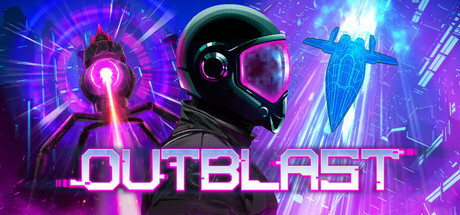
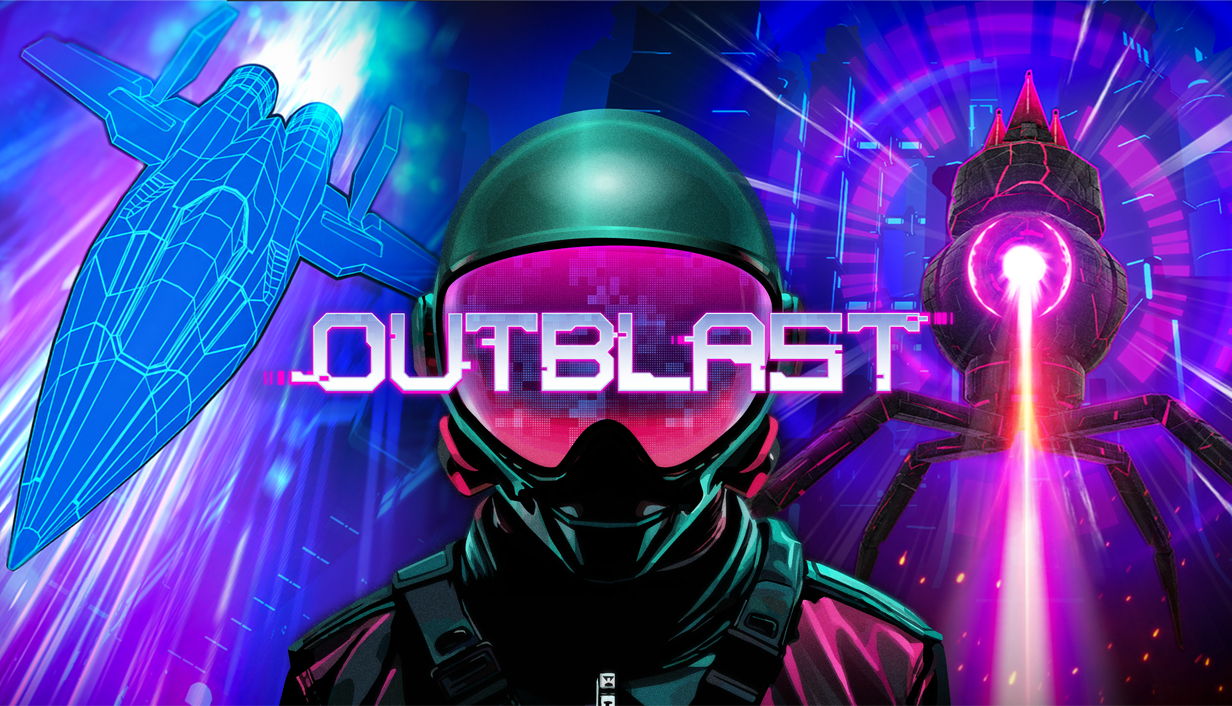
OUTBLAST is a game from Rhino Rock Studios that arrived on Steam, Meta Quest and other platforms on June 4, 2026. It is one of those traditional arcade shooters: you control a ship, shoot everything that moves, avoid waves of enemies and try to survive as long as possible. The beauty, or at least the intention of having one, is that you can play it both on a flat screen and in virtual reality. And it is precisely that duality that has left me with a bittersweet feeling.
On the one hand, I have to admit that in VR things change. But on the other hand, and this is what eats me up inside, the game itself, its essence, seems terribly generic to me. It smells like 2005, like those arcades that filled the arcades and that now, in 2026, feel like a distant echo of an era that has already passed. And it's not that that's bad per se, but OUTBLAST doesn't do anything particularly novel with that legacy. It's as if someone took a classic, gave it a facelift (more or less), and released it to the market in the hopes that nostalgia would do the rest.
The Story: An Excuse to Shoot (and Little Else)
Let's start at the beginning, which in this case is also the weakest part of the game: the story. OUTBLAST places us in the year 4022, in a future where humanity lives as "digital citizens" in the core of Perseon-6. A viral intelligence called Typhon is spreading through the system, corrupting entire districts and destabilizing the planetary core. You are the C11-28 interceptor, the last line of defense. Your mission: destroy the infected constructs, collect data particles, and purge the system before total collapse.
Sounds like textbook science fiction, right? Well it is. The plot is one cliché after another, a flimsy but functional excuse to justify shooting things in space. Don't expect plot twists, characters with depth, or moments that make you think. There is no room for that here. There is a threat, there is a ship and there is a trigger. End of story. And in a game that prides itself on being a tribute to classic arcades, perhaps that shouldn't be a problem. The problem is that, lacking a narrative that captivates you, the entire weight of the experience falls on the gameplay. And that's where things start to falter.
![[Analysis] OUTBLAST — When 2000s Arcade Puts on the VR Goggles (and Still Unimpressed)](https://combogamer.com/wp-content/uploads/2026/06/OUTBLAST-01-1024x576.jpg)
Flat Screen Gameplay: A Competent, But Forgettable Arcade
In its flat screen version, OUTBLAST is exactly what it sounds like: a side-scrolling shooter in a circular setting. You control the ship with the left stick (or the corresponding keys) and shoot left or right with the right stick. You have a dodge boost and a special attack that charges up by collecting data fragments. Enemies appear in waves, and your goal is to survive long enough to reach the boss of each of the five districts.
The controls respond well and the movement of the ship is fluid. You collect power-ups that increase your rate of fire, give you extra lives, or attract data fragments to you. You have a time limit per level, but you gain extra seconds by clearing each wave. The structure is simple, direct and, in its first stages, even entertaining. Remember games likeResoguneitherGeometry Wars, titles that have already done this same thing and, in many cases, better.
The problem, and it is a big problem, is that OUTBLAST stays at that. It is a game that does not take risks, that does not innovate, that limits itself to repeating a formula that we have already seen hundreds of times. Enemy variety is limited, attack patterns become predictable, and as you progress the feeling ofdéjà vuis becoming more and more present. The bosses, although they try to be a challenge, cannot escape the archetypes of the genre: the one who shoots in a chain, the one who moves in patterns, the one who has weak points that must be hit at specific times.
And then there is the issue of duration. OUTBLAST is a short game. Very short. You can complete all five districts in a couple of hours, maybe three if you take your time. Replayability is provided by global leaderboards and the ability to try to improve your score, but the lack of variety in content makes that replayability feel more like an obligation than a genuine desire to play again.
In fact, in my case I didn't even need "replayability." After the first hour, I continued playing just because I wanted it to be over and done with so I could play something else.
![[Analysis] OUTBLAST — When 2000s Arcade Puts on the VR Goggles (and Still Unimpressed)](https://combogamer.com/wp-content/uploads/2026/06/OUTBLAST-02-1024x576.jpg)
The VR Experience: Where the Game (Almost) Makes Sense
And then, you put on the virtual reality glasses. And everything changes.
OUTBLAST is one of those games that, on a flat screen, feels like a product of its time, a functional but soulless arcade. In VR, however, the experience is completely transformed. It's not that the game is different, it's that you are in it.
In VR, the camera no longer follows the ship fixedly. Now, you are part of the scene. You have to turn your head 360 degrees to follow the action, to locate enemies approaching from behind, to anticipate attacks coming from all angles. The ship moves in a cylindrical space, and you are in the center of that cylinder, surrounded by chaos.
It is a sensation of brutal immersion. Enemies that on the flat screen were simple 2D sprites, in VR become volume threats, which move closer and farther away, creating a sensation of depth that the flat screen cannot replicate. The data fragments you collect seem to float around you, and the explosions surround you as if you were in the middle of a storm.
Control in VR also feels more natural. You use the left stick on the controller to move the ship, but now the movement of your head becomes an extension of your eyes. You can follow one enemy while shooting another, a multitasking that is much more complicated on a flat screen.
However, this immersion comes at a price. Constantly turning your head to follow the action can feel dizzy, especially during long sessions. Furthermore, the ship itself, with its neon line design, tends to blend into the background, full of lights and projectiles. On a flat screen it was already a problem; In VR it becomes a real headache. There are times when you lose sight of your ship in the visual chaos, and those seconds of confusion are usually enough for an enemy to catch up to you.
Regardless, the VR experience is, without a doubt, the recommended way to play OUTBLAST. It is in this format where the game finds its reason for being. The question is whether that reason for being is enough to justify the entry price, both financially and physically (you need a VR headset, of course). And that's where the game falters again.
![[Analysis] OUTBLAST — When 2000s Arcade Puts on the VR Goggles (and Still Unimpressed)](https://combogamer.com/wp-content/uploads/2026/06/OUTBLAST-03-1024x576.jpg)
Traditional vs VR Mode: Two Worlds, One Frustration
The comparison between both modes is inevitable. On a flat screen, OUTBLAST is a competent but generic arcade game, offering nothing you haven't seen before. In VR, it's an immersive experience that transforms a generic game into something at least worth trying.
But there is an important nuance: difficulty. In VR, the game is not easier; It's different. On a flat screen, the difficulty comes from the precision of the controls and the ability to anticipate enemy patterns. In VR, an extra layer of complexity is added: 360 space management. Having to constantly turn your head to follow the action is not only immersive; It is also a physical and cognitive challenge that not all players will be willing to take on.
And yet, despite this difference, the game itself remains the same. The same enemies, the same bosses, the same five districts. The immersion of VR cannot hide the lack of depth of the design. It's like putting a luxury wrapper on a product that, deep down, remains the same.
A Technical Section That Doesn't Take Off
Visually, OUTBLAST opts for a retro-futuristic aesthetic inspired bytron- cyberpunk backgrounds, neon outlines and a color palette that ranges between electric blue and purple. It is a style that works, that creates a coherent atmosphere, but it also suffers from being excessively colorful and, to make matters worse, it was not used well. The enemies are not particularly flashy, the explosions are not spectacular and the environments, although varied in name (Hydra, Gorgon, Minotaur, Siren and Typhon), feel more like a background color change than true differentiated environments.
The soundtrack, composed of synthesizers, accompanies the action without standing out. It's functional, it does its job of creating tension, but it doesn't have any memorable theme that stays with you once you turn off the game, and it feels like you're hearing the same thing a thousand times. The sound effects are correct, but they fail to surprise either.
On a technical level, the game works well. The controls are responsive, and both in flat screen and in VR the frame rate remains stable (at least in my configuration). The requirements are low: any PC with a processor from a few years ago and an integrated graphics card should be able to run it without problems. The VR version is compatible with most headsets on the market.
But all this, to be honest, is not enough to save a game that, at its core, feels empty.
![[Analysis] OUTBLAST — When 2000s Arcade Puts on the VR Goggles (and Still Unimpressed)](https://combogamer.com/wp-content/uploads/2026/06/OUTBLAST-04-1024x576.jpg)
A Game That Can't Connect
OUTBLAST has left me cold. It has a clear idea, competent execution and, in VR, an immersive proposal that deserves to be explored. The problem is that it remains just that: an idea. It fails to make the leap to something memorable, to something that deserves to be remembered beyond the gaming session.
It's a game that seems stuck in the past. Not in the past of classic arcades, which is a legitimate inspiration, but in the past of the games of the early 2000s, those that experimented with color and "crazy" effects like 90s music videos and all looked the same. OUTBLAST is an anecdote. An anecdote that, in VR, comes to life somewhat, but remains, deep down, an anecdote.
If you have a VR headset and feel like trying something different, maybe OUTBLAST will offer you a couple of hours of entertainment. But don't expect it to become your favorite game, or even one of your favorite games in the genre. It is a correct, functional and, in the best of cases, immersive arcade. But it's also generic, short, and at worst, forgettable.
In the end, OUTBLAST is like those B movies you watch on a Sunday afternoon: they entertain you while they last, but the next day you barely remember what they were about. And in a market as competitive as video games, that, honestly, is not enough.
OUTBLASTIt is available on PC (Steam), Meta Quest and other platforms. If you have a VR headset, it might be worth checking out. Otherwise, the flat screen version hardly justifies its price. The choice, as always, is yours.
Related Articles
![[Analysis] Mixtape: the narrative adventure that turns a 90s mixtape into an unforgettable video game](https://combogamer.com/wp-content/uploads/2026/07/mixtape-poster-300x160.png)
![[Analysis] Scholar Adventure: Mystery of Silence — A Journey to an Abbey that Whispers Secrets](https://combogamer.com/wp-content/uploads/2026/06/Scholar-Adventure-Mystery-of-Silence_poster-300x169.png)
![[Analysis] NODE: The Last Favor of the Antarii — Program Every Leap to Save the World](https://combogamer.com/wp-content/uploads/2026/06/NODE-poster-300x169.jpeg)
![[Analysis] Echo Generation 2 — When a Sequel Risks Everything](https://combogamer.com/wp-content/uploads/2026/06/Echo-Generation-2-poster-300x169.jpg)
![[Analysis] Swan Song — The Last Melody of a Father Who Built a Music Box to Not Face Death](https://combogamer.com/wp-content/uploads/2026/06/swan_song-poster-300x169.jpg)