

Table of Contents
Most war games lie. They sell you the fantasy that there is something heroic about walking into a machine gun, they hide the corpses behind a layer of level design, and they make you believe that the war is won with well-placed shots instead of lost with poorly made decisions.The Caribou Trail, without making much noise, sits next to all that and dismantles it with the patience of someone who has lost too much.
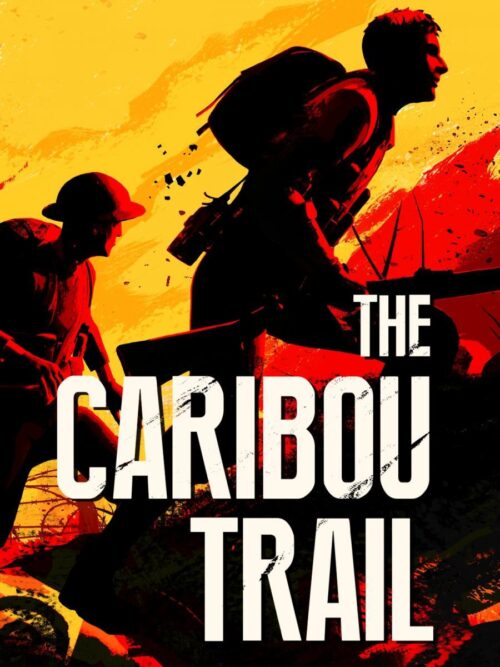
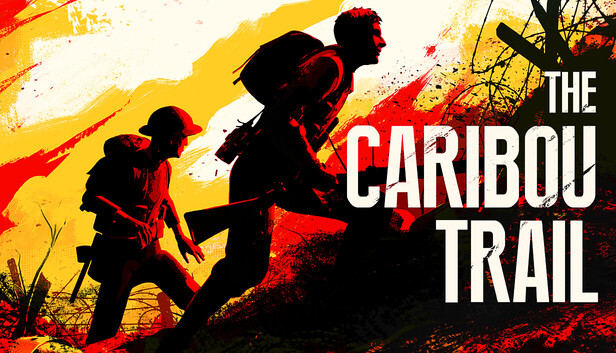
It is the story of Fisher, Gordon and Lonnie: three young people from Newfoundland who in 1915 cross the Atlantic convinced that the war will be an adventure. The Gallipoli campaign, that failed attempt by the Allies to control the Dardanelles and remove the Ottoman Empire from the war, is the scene where that innocence falls apart. And what makes this game special is that it doesn't make you shoot. It makes you dig trenches, cook soup in a rusty can, carry the dog tags of the fallen, and sit around a campfire listening to your friends try not to think about their mothers.
It is not a game for everyone. But for those who can tolerate its slow pace and almost zero motor demands, it is an experience that remains embedded in the ribs.
A Front that Games Usually Ignore
The first success of The Caribou Trail is its setting. The First World War campaigns most represented in video games tend to be those of the Western Front: the muddy trenches of France and Belgium, the Somme, Passchendaele. Gallipoli is a much less traveled front, and the decision by Unreliable Narrators – the Quebec studio behind the game – to focus on the Royal Newfoundland Regiment is a breath of fresh air.
One thousand seventy-six Newfoundland soldiers participated in the campaign. The game puts you in the shoes of Fisher, an orphan who signed up, it seems, because he didn't have much else to leave behind. At his side, Gordon, a charming loudmouth who seems straight out of an Irish folk song and whose only alternative was prison. And Lonnie, the youngest, a dreamy boy who draws in his free time and clearly shouldn't be there.
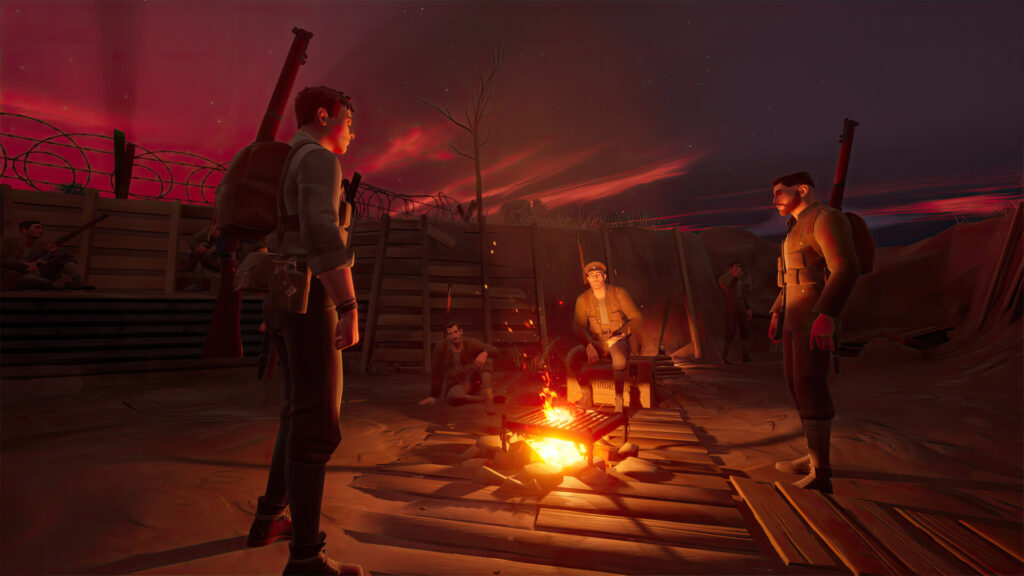
The setting is meticulously crafted. The visual aesthetic of the game is directly inspired by the style ofFirewatchand from the first title of the study,Two Falls- Stylized graphics that prioritize atmosphere over photorealism. Lighting is the big asset here. When you walk at night in no man's land, the light of a flare crossing the sky suddenly illuminates a valley full of barbed wire and unburied bodies. It is not an image that is quickly forgotten.
Sound is another turning point. There is hardly any music in the traditional sense. The soundtrack is built from the whistling of the wind, footsteps on mud, detonations that you never know if they are close or far away. When a shot rings out, it hits with much more force because what predominates is silence. It's a brave design decision and it pays off. And, as an extra, the Newfoundland accents—that dialect with Irish influences that sounds like fishermen and pub songs—give it an authenticity that no Hollywood production could match.
A War Game Without Bullets (Almost)
If you enter The Caribou Trail expecting something likeBattlefield 1, you are going to be colossally disappointed. There are no scores, no kill counter, no moments designed to make you feel like a hero. There's a trench shotgun that you use once, almost by accident. There's a reconnaissance mission where you have to cut barbed wire and pray a sniper doesn't hit you. But combat is not the focus. It never is.
The game is structured around the spaces between battles. The nights around the fire, where Fisher, Gordon and Lonnie eat fish cooked in a dented pot and tell each other ghost stories that may or may not be true. The walks around the back camp, picking up mail from home, listening to other soldiers trying to maintain their sanity between letters. Morality is not a bar to fill, but a thread that is worn out.
Structurally, the game is reminiscent of the idea that war is long periods of boredom interrupted by moments of absolute terror. When the tension explodes—during a chaotic evacuation, finding an injured friend, having to choose what memento to take from a body—the impact is all the greater because you've spent hours getting to know these people in their most trivial moments.
The playable section is deliberately minimal. You walk, run, crouch, occasionally climb, and engage in small interactions that are basicallyQuick Time Eventsfrom the school ofThe Walking Deadfrom Telltale: prepare food, dig latrines, help load ammunition. For some players, this will border onwalking simulator. Personally, I thought it was a decision consistent with the tone of the game. You don't need complex mechanics to convey what it means to be there.
The Decisions That Matter (and Those That Don't)
Another thing that sets The Caribou Trail apart is how it handles consequences. The game presents you with options, but not with the trappings of "this will change everything forever." Rather, they are small questions and therefore more uncomfortable: Who do you want to remember? What do you carry with you when you can't carry everything? Do you leave a companion behind so you can survive?
The interesting thing is that the game doesn't judge you overtly. There is no “this is the right decision” message. There is only the subsequent silence and the few lines of dialogue that follow. It's a subtlety I appreciate, because most games with "moral decisions" treat you like a child who needs to be told if he's been good or bad.
At the end of the campaign, you can also play the prologue again. It's a detail that I won't spoil, but it completely changes how you interpret everything you've experienced.
A Couple of Cracks in the Armor
Not everything is perfect. The pace of the game is slow by its own decision, but in some sections it becomes slow due to lack of direction. In my playthrough, a couple of times I wasn't clear where I needed to go, and the map (which the developers admit can get blurry on GPUs with 4GB of VRAM) didn't help much either. I had to go around areas already explored until, by trial and error, I activated the next dialogue.
Mouse and keyboard controls also have some specific sensitivity problems. Nothing that cannot be adjusted in the options, but it is strange that they come with less than optimal default values. Otherwise, the game worked stable for me at all times, without crashes or progression errors, and with a controller it is controlled without problems.
Duration is another point that will divide opinions. My entire playthrough took around 4 hours, and some report finishing it in 4 and a half if they take their time with the optional collectibles. The introductory price is relatively low, which in my opinion is fair for a short but intense experience, although it may feel lacking for anyone expecting a 10-hour campaign.
My Personal Verdict
The Caribou Trail isn't about winning. It is not about defeating the Ottoman Empire or changing the course of the war. Try to hold on. To get up one more morning, to continue wearing your boots, to continue walking forward even if you don't really know why.
There is a moment in the game, during a truce to collect corpses, where you come face to face with an Ottoman soldier. There is no shooting. There is an exchange of glances, a barely perceptible gesture, and then everyone returns to their trench. That moment encapsulates what the game is trying to say: that war is not the hell of the movies, but something duller and sadder. Ordinary people, sent to a place they don't know, to kill other ordinary people they don't know either.
So do I recommend it? Yes, but with caveats. If your idea of a good game involves complex systems, fast-paced action, or a dizzying pace, this is not for you. If, on the other hand, you're interested in stories that hurt, characters that feel real, and games that ask you uncomfortable questions about what it means to be human, then give it a chance. It's only three or four hours. But you will remember them.
The Caribou TrailIt is available on PC (Steam and Epic Games Store) from May 14, 2026. The PlayStation 5 version will arrive on July 7, 2026.
«They thought they would return home before the leaves fell. "The majority did not make it."
— Official description of the game.
Related Articles
![[Analysis] Mixtape: the narrative adventure that turns a 90s mixtape into an unforgettable video game](https://combogamer.com/wp-content/uploads/2026/07/mixtape-poster-300x160.png)
![[Analysis] Scholar Adventure: Mystery of Silence — A Journey to an Abbey that Whispers Secrets](https://combogamer.com/wp-content/uploads/2026/06/Scholar-Adventure-Mystery-of-Silence_poster-300x169.png)
![[Analysis] OUTBLAST — When 2000s Arcade Puts on the VR Goggles (and Still Unimpressed)](https://combogamer.com/wp-content/uploads/2026/06/OUTBLAST-poster-300x172.jpg)
![[Analysis] NODE: The Last Favor of the Antarii — Program Every Leap to Save the World](https://combogamer.com/wp-content/uploads/2026/06/NODE-poster-300x169.jpeg)
![[Analysis] Echo Generation 2 — When a Sequel Risks Everything](https://combogamer.com/wp-content/uploads/2026/06/Echo-Generation-2-poster-300x169.jpg)