

Table of Contents
Japanese horror has a unique ability to generate discomfort without constantly resorting to jump scares or shocking images. Many of his best works find fear in places that are much harder to define: uncertainty, human obsessions, loss of identity, or the feeling that something is deeply wrong even though it is impossible to explain exactly what it is. Sai It belongs to that category of stories that silently and constantly disturb, building an atmosphere that becomes more and more absorbing as the episodes progress.
The premise revolves around a mysterious figure who appears in the lives of different people who are going through especially difficult times. However, this character has a very particular characteristic: he is never presented in the same way. Your personality, attitude, and even the way you interact with those around you change completely depending on the person in front of you. What at first seems like a curious narrative device ends up becoming the heart of a fascinating story about manipulation, identity and vulnerability.
From the first episode it is clear that we are facing something different. The series is in no rush to explain who this figure really is or what his motivations are. Instead of offering immediate answers, it builds a mystery that becomes increasingly more intriguing and that works precisely because it never allows the viewer to feel completely sure of what they are seeing.
An absolutely extraordinary photograph
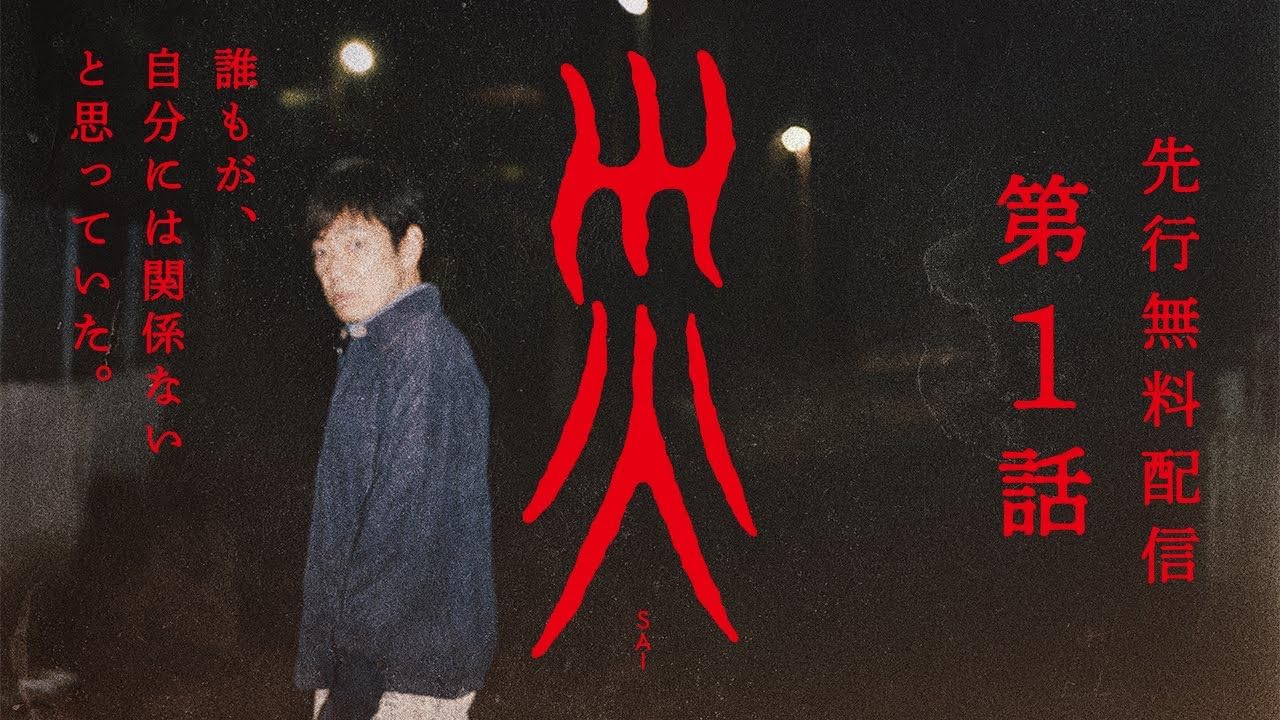
One of the aspects that impressed me most about Sai It was its visual section. We are used to talking about photography when a production looks good, but in this case the image plays a much more important role. The series uses each frame to reinforce the sense of unease that runs through the entire story.
There is a constant visual elegance to the way the scenes are composed. The spaces seem carefully designed to convey isolation, discomfort or uncertainty. Even in moments where apparently nothing strange is happening, the photography manages to maintain an almost imperceptible tension that makes the viewer remain alert.
The lighting also deserves a special mention. Many scenes use shadows, reflections, and empty space to reinforce the feeling that something exists just out of reach. It is not a series that depends on grotesque images to generate impact. Its visual strength comes from precisely the opposite: from subtlety.
More than once I had the sensation of seeing scenes constructed with a level of care unusual even within larger budget productions. There are shots that remain in the memory long after an episode ends, not because of what they directly show, but because of the atmosphere they manage to convey.
![[HorrorScience] Sai: a disturbing masterpiece of recent Japanese horror](https://combogamer.com/wp-content/uploads/2026/05/sai-01.jpg)
A character impossible to forget
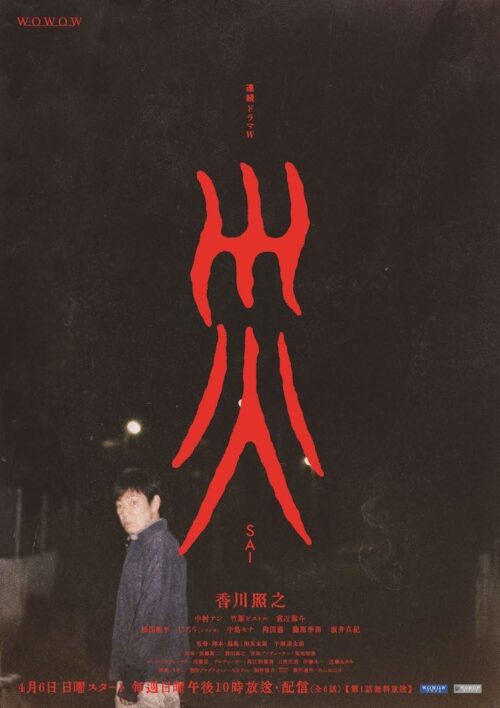
If photography is one of the pillars of Sai, the other is undoubtedly Teruyuki Kagawa's interpretation. Your work here is simply fascinating.
The character he plays is one of those cases where it is difficult to separate the performance from the narrative construction itself. Each appearance generates curiosity because you never know exactly what version you are going to find. He can be kind, vulnerable, sympathetic or deeply disturbing, and he does so with surprising naturalness.
The most impressive thing is that he never seems to be playing wildly different versions of the same person. Each transformation is completely believable. Kagawa makes each interaction have different nuances, constantly adapting to those in front of him. That ability to reinvent the character again and again without losing coherence makes his performance one of the greatest attractions of the series.
There are antagonists who stand out for their violence or their actions. This character stands out for something much more difficult to achieve: his presence. Every time he appears on screen he completely dominates the scene, even when he is apparently not doing anything extraordinary.
Rarely does a performance manage to simultaneously convey charisma, empathy and concern so effectively. It is, without a doubt, one of the most memorable performances I have seen recently within the genre.
![[HorrorScience] Sai: a disturbing masterpiece of recent Japanese horror](https://combogamer.com/wp-content/uploads/2026/05/sai-02-1024x683.webp)
Stories of people on the brink of the abyss
Another of the great successes of Sai It's the way he uses his characters. Each episode introduces individuals who already have important personal conflicts before encountering this mysterious figure. Family problems, frustrations, insecurities and emotional wounds are part of these people's lives long before the story begins.
The series does not propose that the central character creates these problems, but rather finds a way to get into them. This makes horror work in an especially uncomfortable way because it forces you to constantly wonder how much of what happens is the responsibility of this presence and how much really belongs to those around it.
That ambiguity is one of the narrative's greatest strengths. The story avoids simple explanations and prefers to move in a gray area where the answers are never completely satisfactory. Far from being a problem, this ends up enhancing the experience.
An atmosphere that becomes increasingly absorbent
The predominant feeling throughout the series is that of observing something that does not quite reveal its rules. As the episodes progress, the tension constantly grows, but not because the story becomes more aggressive or spectacular. It does so because each new encounter adds more questions and deepens the feeling that there is something impossible to fully understand.
Much of the merit is in the rhythm. Sai It never seems rushed. He takes the time necessary to develop situations, observe the characters and allow the discomfort to grow little by little. This narrative patience may surprise those accustomed to more direct proposals, but it is essential for the atmosphere to work.
At various times I remembered works like Cure, not because the series directly imitates them, but because it shares that ability to generate concern through seemingly simple elements. A normal conversation can be as disturbing as any traditional horror scene.
![[HorrorScience] Sai: a disturbing masterpiece of recent Japanese horror](https://combogamer.com/wp-content/uploads/2026/05/sai-03.jpg)
One of the best recent surprises of the genre
What I liked most about Sai is that it never tries to follow formulas that are too predictable. Its terror is born from uncertainty, psychological manipulation and the impossibility of fully understanding what is before us.
The combination of extraordinary cinematography, an absorbing atmosphere and an absolutely memorable central performance ends up creating an experience that is difficult to forget. It is not a series designed for those looking for constant scares or easy answers. His proposal is much more subtle and, precisely for that reason, much more effective.
When I finished the last episode I felt like I had seen something really special. One of those productions that manage to stay spinning in your head for days, not because it explains too much, but because it leaves enough open questions to continue thinking about them long after the story has ended.
Curiosities
- The main character was conceived to completely modify his personality depending on the person he interacts with, forcing Teruyuki Kagawa to construct multiple different versions of the same individual.
- Those responsible for the series carefully worked on the ambiguity of the central character so that it was never completely clear if he possesses supernatural abilities or if everything is due to an extraordinary capacity for manipulation.
- Several scenes were designed to create discomfort through body language and facial expressions rather than explicit dialogue.
- The production paid special attention to the visual composition of the shots, using empty spaces and asymmetrical frames to reinforce the feeling of isolation.
- The miniseries was edited for cinemas and was presented at festivals such as San Sebastián, under the title "Sai: Disaster«.
Related Articles
![[HorrorScience] Obsession: turning the classic "be careful what you wish for" into a nightmare](https://combogamer.com/wp-content/uploads/2026/07/obsession-poster-300x169.jpg)
![[HorrorScience] Backrooms: the A24 film that turned an internet creepypasta into a horror phenomenon](https://combogamer.com/wp-content/uploads/2026/07/backrooms-poster-300x169.jpg)
![[HorrorScience] Victor Crowley (Hatchet IV): The fourth installment that arrived without warning](https://combogamer.com/wp-content/uploads/2026/06/victor_crowley-poster-300x169.jpg)
![[HorrorScience] Number 23 (2007)](https://combogamer.com/wp-content/uploads/2026/05/El-numero-23-banner-largo-300x169.jpg)
![[HorrorScience] Hokum: When a bitter writer meets an Irish witch](https://combogamer.com/wp-content/uploads/2026/06/hokum-poster-300x169.jpg)
![[HorrorScience] The man who could cheat death](https://combogamer.com/wp-content/uploads/2026/04/The-man-cheated-death-banner-300x165.png)