

Table of Contents
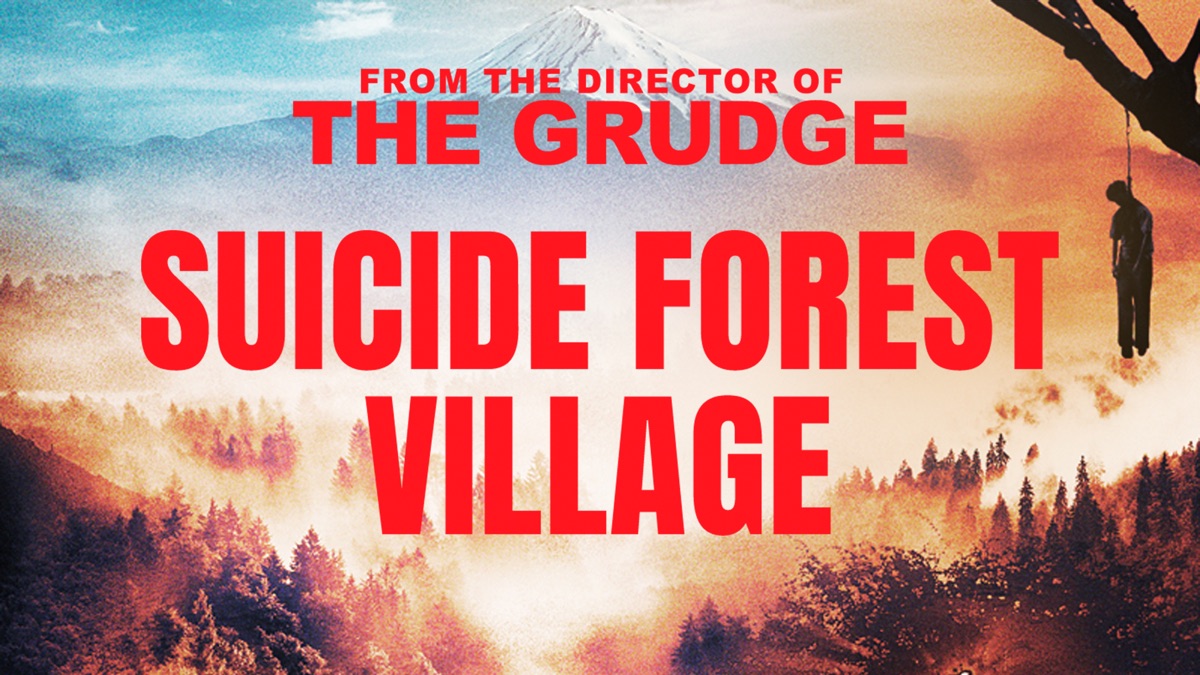
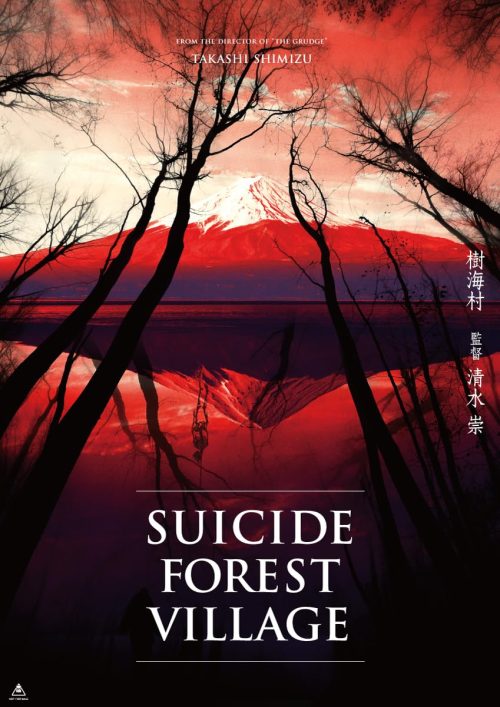
Suicide Forest Village(2021), known asJukai Murain Japan, is a horror film directed by Takashi Shimizu, famous forThe Grudge, which is part of his Village of Horror trilogy and is inspired by urban legends of Aokigahara Forest, the infamous "Suicide Forest" at the foot of Mount Fuji. The film follows a group of characters, centered on two sisters, who become involved in a curse triggered by a mysterious box found deep in the forest, fusing elements of supernatural horror with family drama and exploring themes of isolation, guilt and the weight of the past. Set in contemporary Japan with touches of traditional folklore, it offers an experience that combines visceral scares with a dense and oppressive atmosphere, characteristic of Shimizu's style, while paying homage to Japanese traditions of vengeful spirits and cursed places.
The Discovery of the Cursed Box and the Beginning of Terror
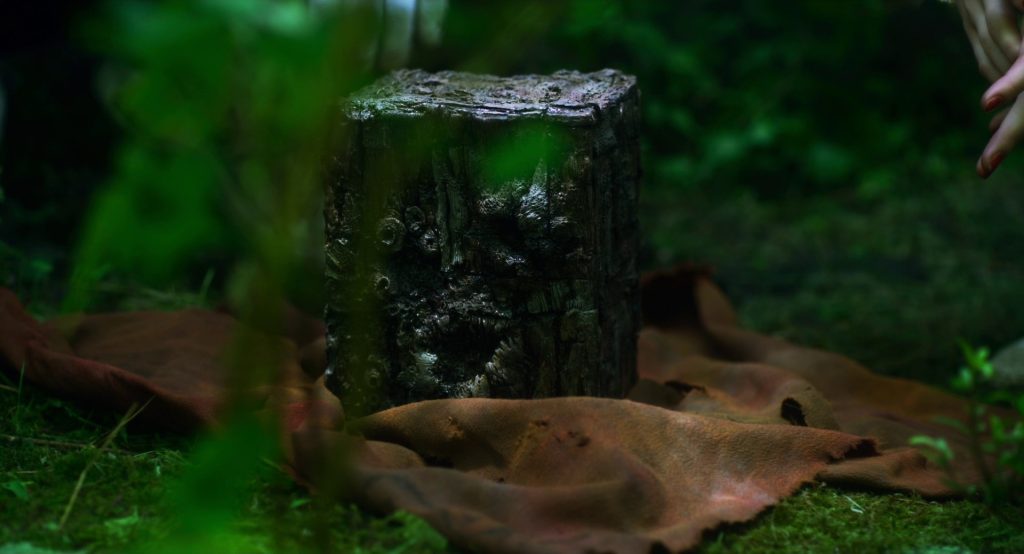
The plot begins with a group of friends who venture to the outskirts of Aokigahara, a dense and labyrinthine forest known for its absolute silence and tragic history, where the sisters Hibiki and Mei stumble upon a buried ancient box, an artifact that seems harmless at first but soon releases a series of inexplicable events that invade their reality. The narrative unfolds in the present tense, interspersed with flashbacks that reveal connections to the forest's past, showing how the box becomes a catalyst for supernatural phenomena that infiltrate their daily lives, from strange noises in the night to shadows that move on their own and visions that evoke past tragedies.
From the beginning, the film establishes a gradual tension that grows with each scene, with the sisters returning to their urban home only for the curse to follow them like an invisible presence, triggering arguments over what to do with the box and failed attempts to get rid of it, while the evil persists and manifests itself in physical forms such as unexplained wounds or hallucinations that blur the line between the real and the supernatural. Hibiki, the eldest, tries to rationalize everything with logical explanations, but Mei, more intuitive, feels a deeper connection to what happened, testing their family relationship and forcing them to confront buried secrets.
The Forest as the Protagonist
The first half of the film focuses on this escalation, where they explore the history of the box through local legends and vague clues from neighbors, making the city feel increasingly oppressive and the forest calling them back with an inevitable magnetism.
Shimizu uses the environment to amplify the anguish, with dense trees blocking the light and paths that confuse the characters, creating a suffocating atmosphere where each scene builds towards the inevitable and terror becomes intertwined with the sisters' familial bond. The curse becomes something that not only lurks in the forest, but takes root in their daily lives and transforms their perception of reality.
Cultural References: Aokigahara and Japanese Folklore
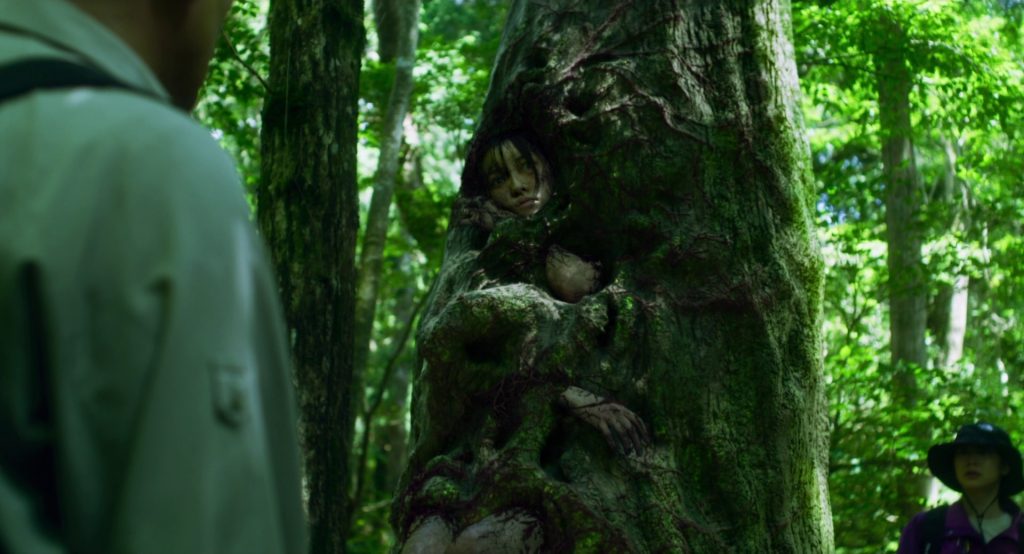
Aokigahara, the Suicide Forest, is central to the film and represents a real place at the foot of Mount Fuji, known for its volcanic density that creates a porous soil capable of absorbing sounds and generating absolute silence, while its magnetic field interferes with compasses, making it a legendary site for suicides since the 1960s. Shimizu uses this to build an oppressive atmosphere, where the forest evokes the yūrei, vengeful ghosts from Japanese folklore who are violent spirits in search of justice or dedicated to tormenting the living, integrating them into the narrative as presences that manifest themselves through the curse.
The film also incorporates theubasute, an ancient practice of abandoning elders in remote forests during famines, associated with Aokigahara, and which Shimizu interweaves with the curse to suggest abandoned spirits seeking companionship in death, adding cultural depth to the horror.
The cursed box evokes possessed objects common in Japanese legends, similar to those ofThe Ring, symbolizing curses that spread and infect entire families, while references to Mount Fuji as a sacred site contrast with the desecration of the forest. Shimizu pays homage to these traditions, blending modern horror with cultural roots to make the film more than a series of scares, but a reflection on isolation in Japanese society and the pressures that lead to despair.
Shimizu's Debut in the Cursed Towns Trilogy
Shimizu transforms a simple curse premise into an immersive experience that balances supernatural scares with emotional tension, with solid performances that capture family conflict and a chemistry between the sisters that makes their descent into chaos believable. Visually, it captures the claustrophobia of the forest with shots that follow spectral apparitions and reinforce isolation, positioning itself in J-Horror as a work that dialogues with classics such asThe Ring, but with a twist of local legends. Its slow pace prioritizes atmospheric building over constant action, although it can feel drawn out at times, but for fans of Japanese horror, it is a disturbing installment that explores guilt and cultural legacy effectively.
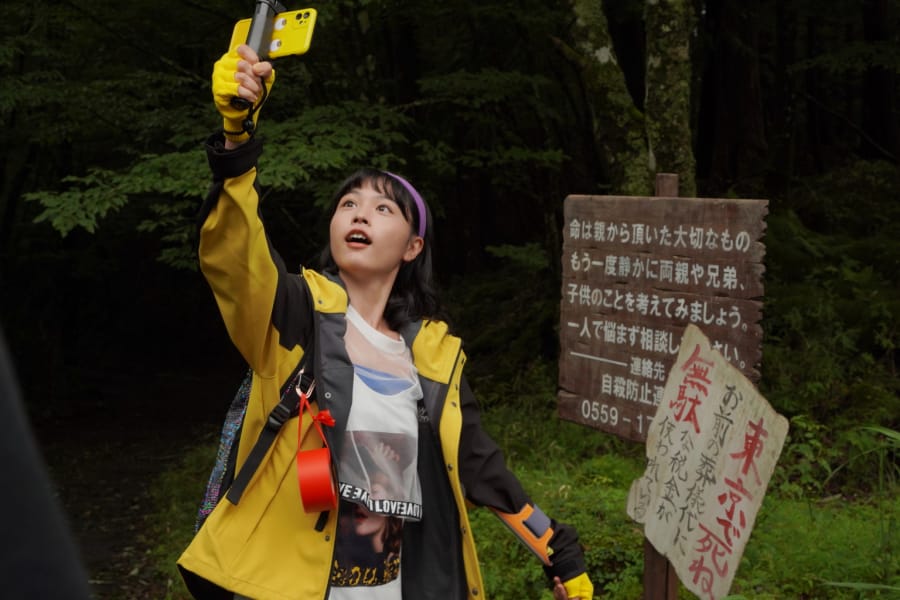
Curiosities aboutSuicide Forest Village
- The film is based on real Aokigahara legends, but Shimizu invented the cursed box to unite folklore elements with modern horror.
- It is part of the Village of Horror trilogy, after Howling Village, exploring cursed towns in Japan with ancient curses.
- Shimizu directed The Grudge, and here incorporates yūrei elements similar to Kayako, but with a focus on forest spirits.
- They filmed in locations reminiscent of Aokigahara, using natural fog and silence to heighten the atmospheric tension.
- The film pays tribute to ubasute, a historical practice that inspires legends of spirits abandoned in remote forests.
If you have seenSuicide Forest VillageWhat did you think? Share in the comments!
Related Articles
![[HorrorScience] Obsession: turning the classic "be careful what you wish for" into a nightmare](https://combogamer.com/wp-content/uploads/2026/07/obsession-poster-300x169.jpg)
![[HorrorScience] Backrooms: the A24 film that turned an internet creepypasta into a horror phenomenon](https://combogamer.com/wp-content/uploads/2026/07/backrooms-poster-300x169.jpg)
![[HorrorScience] Victor Crowley (Hatchet IV): The fourth installment that arrived without warning](https://combogamer.com/wp-content/uploads/2026/06/victor_crowley-poster-300x169.jpg)
![[HorrorScience] Number 23 (2007)](https://combogamer.com/wp-content/uploads/2026/05/El-numero-23-banner-largo-300x169.jpg)
![[HorrorScience] Hokum: When a bitter writer meets an Irish witch](https://combogamer.com/wp-content/uploads/2026/06/hokum-poster-300x169.jpg)
![[HorrorScience] The man who could cheat death](https://combogamer.com/wp-content/uploads/2026/04/The-man-cheated-death-banner-300x165.png)