

Continuing with my habit of playing all those indies that have something to do with the cosmos and space exploration, I couldn't pass up the opportunity to try Q.U.B.E. in its Director's Cut version, which was recently released for Wii U, and is also available on almost all other platforms. For this analysis I have based myself on the Wii U version, so I will not comment on the experience you can have on PC using the virtual reality peripheral.Oculus Rift, for which this game has added support. If you are a PC Gamer and you have the Oculus, take advantage of it, it can be a quite interesting experience.
What is this “Director’s Cut”? Is it like the movies, which means it will be longer but not necessarily better?It is longer, and in this case it's also better.
The original version of Q.U.B.E. is an expansion of the final year project of the now founding members of Toxic Games, and was released in late 2011 for Windows through the Desura platform, and in early January 2012 through the popular Steam platform.
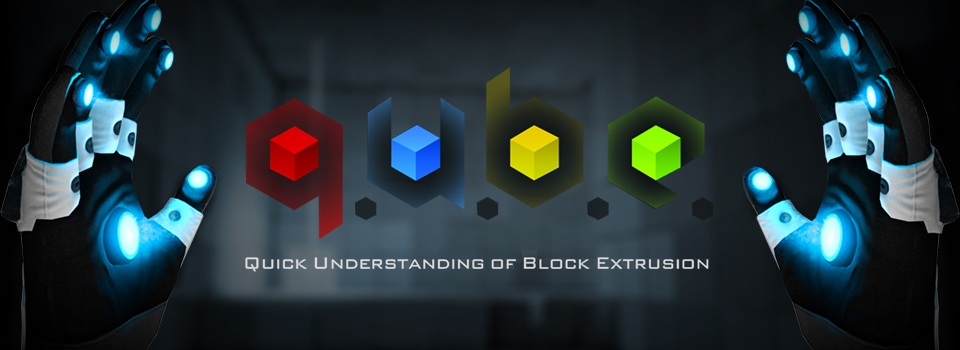
From the beginning it has been compared to the game series Portal, after watching the game's launch trailer in which you can see very clean, white stages and a character's gloved hands from a first-person view. The futuristic and clean aesthetic and the fact that you advance through different phases as “levels” that actually belong to a single, huge place helped fuel the hypothesis that Q.U.B.E. is based on Portal.
![[Analysis] ‘Q.U.B.E. Director's Cut'](https://combogamer.com/wp-content/uploads/2025/10/qube-logo-vertical.png)
Despite this theory, ultimately beneficial in terms of marketing for the game from the guys at Toxic Games, the differences between the two are very noticeable. Clearly we are not facing a game of the graphic or narrative quality of the franchise Portal. Q.U.B.E. It is a more modest proposal, with a remarkable graphic quality taking into account its budget (with some flaws that I will mention later), and some very well executed riddles or puzzles, although the whole thing remains incomplete, losing quite a bit of appeal due to having a short duration, and a non-existent story like the soundtrack.
Taking into account the above, we could say that we are faced with a game that was obviously going to pass without pain or glory on the market, and this is a bit of what happened, with a small but important exception: perhaps because of its aesthetic resemblance to Portal or because of the effort that the people at Toxic Games knew how to give to maintain interest in the game, or simply because the game is good and has a lot of potential, Q.U.B.E. It went on to win some awards and stand out at various indie video game conventions, in addition to having sold many more copies than expected. This same effort by its development company is what led to the game being released almost two and a half years later in its Director's Cut version, which covers almost all of the shortcomings that the original had, this time adding extra stages and puzzles to extend the useful life of the game by giving it a time trial mode, a new story written by Rob Yescombe and with voice performances by Rachel Robinson and Rupert Evans (English TV actor who has appeared in films such as Hellboy and Agora, and is now beginning to venture into horror films), a new soundtrack, a facelift to the graphic section, and finally they also took the opportunity to add Oculus Rift device support.
In the game we will control a human character, presumably an astronaut, who suffers from amnesia and suddenly finds himself in a sterile environment made up almost entirely of white cubes. The gloves on your spacesuit apparently allow you control colored blocks and bases at will as if it were a kind of magnetic reaction, making them stick out from the floor or walls, using them to push other objects that you cannot control or to propel yourself, activate mechanisms, and you can even rotate sections of the stage itself.
Although the length of this game is not enough to celebrate, it is at an acceptable level taking into account the type of game, its successful difficulty curve, its story and the development of the levels in conjunction with the gradual introduction of new elements. For those who need clear information: It lasts about 5 to 7 hours on average, depending on your ability to control the camera, solve the puzzles, and if you start exploring everything in the levels in search of hidden puzzles (which there are) or if you dedicate yourself to moving forward as quickly as possible.
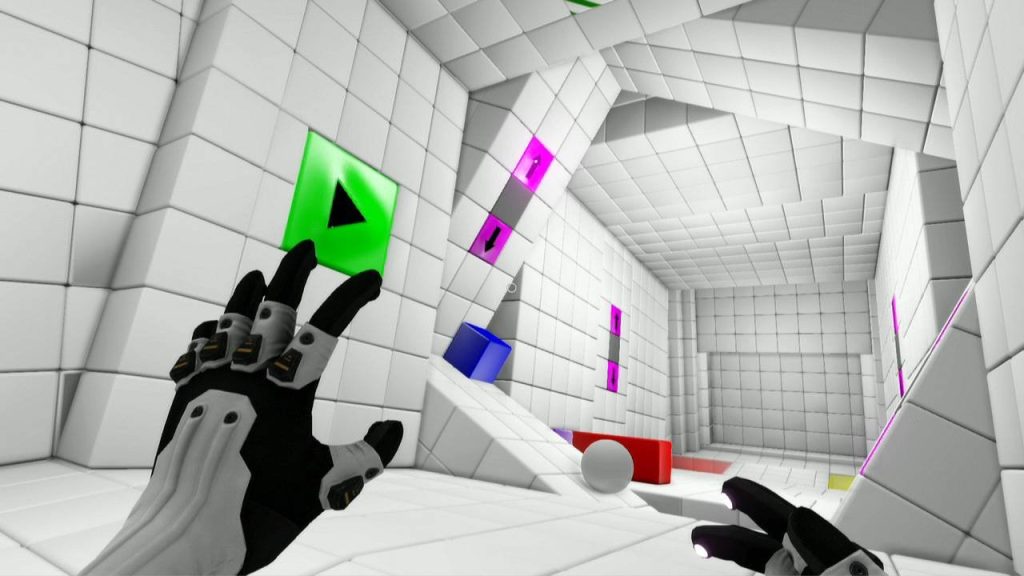
How to play Q.U.B.E.? I will describe it briefly. You will use the two analogs to move the character and the point of view or camera and you will use a couple more buttons: one to attract objects and the other to repel them. But be careful, it should be noted that it is not that you can freely move objects on the stage as you wish, but that you will only be able to move or activate those blocks that are colored, and depending on the color they will move in one way or another.
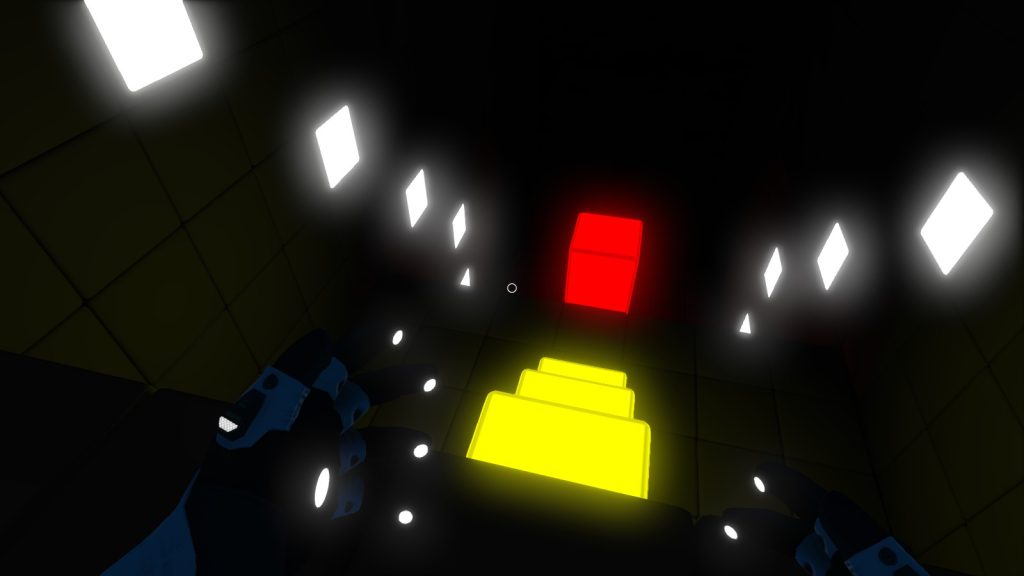
An example of this will make everything easier to understand, since as I have explained before it sounds very basic and even abstract. Pretend that you are inside a cube-shaped well, and that it does not have a top or lid. Your way out is to climb any of the sides of that cube to reach the upper edge and thus continue on your way. This cube is made up of white blocks, both the floor and the walls, except for 3 yellow cubes on the floor that are aligned. If you point your vision towards those yellow cubes, you will see that your gloves react in some way, turning on a type of LED that they have built in and that will also turn yellow. By pressing the activation button, which is the attraction button, the yellow blocks are activated so that stick out of the ground, and if you have touched the correct block, they form 3 steps on which you can then climb and thus reach the upper edge of the well to get out of there. If you have not touched the correct block, the 3 blocks will also come out of the ground, but they will be aligned in a way that will not serve as a staircase, so you will have to use the repel button to make them bury themselves in their initial position and thus try again.
Having experienced this, you will know that the next time you find yourself in a place that has yellow blocks somewhere, the type of reaction of those blocks is the same, pudiendo formar una suerte de escalones. Claro que no todo son bloques amarillos, y tendrás también bloques azules, rojos y verdes, cada uno con sus propias características, además de que más avanzado en el juego encontrarás un switch fotosensible, lo que quiere decir que tendrás que hacerle llegar un haz de luz para que se active; otro switch que te permite girar una sección completa del escenario y otro que deja caer unas esferas que generalmente deberás hacer llegar hasta una cierta zona con ayuda del movimiento de otras piezas.
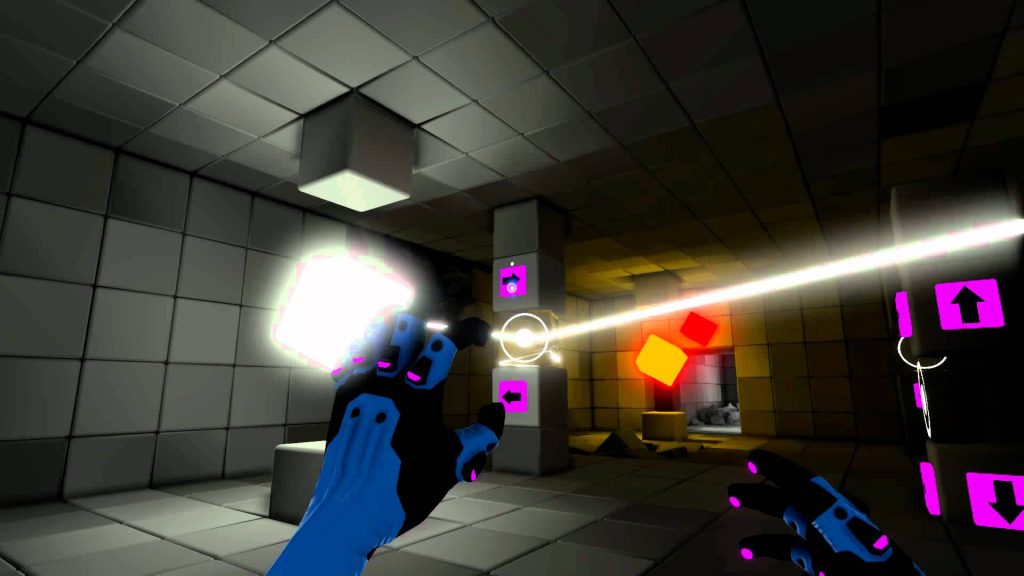
Como he comentado anteriormente, la curva de aprendizaje y dificultad es muy acertada. Lo más interesante de esto es cómo se te presenta el juego en sí desde el inicio. No te explican nada, y no me refiero a la historia sino a la forma de avanzar entre niveles, de controlar los bloques. Simplemente te encuentras en un escenario formado por cubos blancos, y empiezas a moverte y a probar cosas por tu cuenta, y claro, de pronto te encuentras con que unos cubos son de otro color y resaltan entre todo lo demás, y ya sea por casualidad o porque has leído este análisis y te dieron ganas de jugar a este juego (¡qué orgullo!) puede que sepas que esos cubos sirven para algo, aunque lo más probable es que esto suceda gracias a que el diseño minimalista del juego acuda a un instinto primitivo y a experiencias previas que nos indican que por ser diferente y destacar “algo debe hacer”.
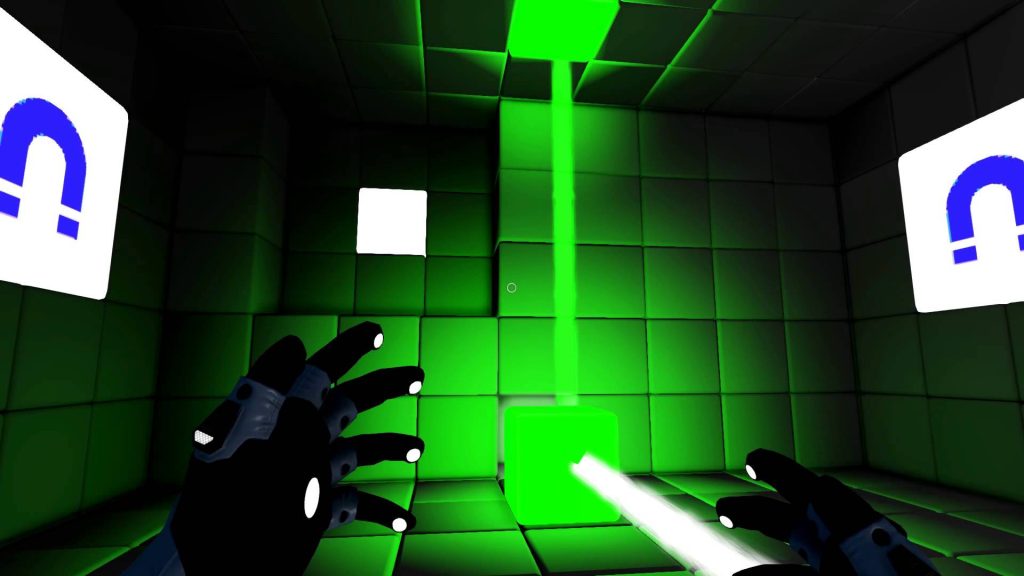
¿Y cómo se ve el juego? He de decir que en el aspecto visual destaca pero no sobresale. Es cierto que su diseño puede hacerlo ver sofisticado, que todo ese blanco y esa prolijidad lo hagan parecer perfecto, pero la verdad es que incluso teniendo en cuenta que es un juego de un estudio indie y que su estilo tampoco requiere más de lo que ya te da, se queda corto en algunas cosas que podrían perfeccionarse fácilmente pero que debido al tiempo que ya ha transcurrido desde su lanzamiento y considerando que ya ha sufrido una mejora gráfica por el camino para su edición Director’s Cut, no podemos esperar que vayan a mejorar. Ciertas texturas se notan dentadas y hasta pixeladas, siendo lo más destacable unos grandes botones verdes sobre las paredes de algunos escenarios, o peor aún los botones que tienen el logo de un imán en el centro, o unos bloques blancos iluminados que se encuentran en algunos niveles avanzados. Para compensar un poco encontramos que la simpleza inicial y lo pulcro de los escenarios va evolucionando a medida que avanzas en el juego, y así terminarás en escenarios que siguen estando formados por bloques pero que ya no son tan pulcros ni tan blancos, y tienen bloques rotos, pilas de escombros y efectos de luces que hacen más llamativo todo el conjunto.
Un detalle que me ha gustado es que en algunos “ascensores” los diseñadores han jugado con las perspectivas haciendo que el movimiento de tu cámara hacia arriba o hacia abajo unido al movimiento de los bloques del escenario forme una imagen simétrica de bloques que se mueven de forma hipnótica, como si estuvieras viendo algo a través de un caleidoscopio. También me parecen dignos de destacar visualmente esos niveles en los que no hay luz ambiental y tendrás que guiarte únicamente con el brillo de los bloques de color que vas activando.
En la variedad está el secreto de este juego, y es por su variedad de situaciones y la forma en que se van combinando los elementos para salir airosos de distintas situaciones y seguir avanzando que no aburre hasta el final. No podríamos decir lo mismo de la banda sonora, que ha sido recreada para esta versión y sin embargo es apenas perceptible. Cuando suena, está bien que esté ahí y acompaña bien al juego, pero prácticamente la olvidas, es algo tan secundario y monótono que luego del inicio del juego sólo volverás a notarla al final del mismo y durante los créditos.
Ya he comentado que el control es simple, dos analógicos y dos botones, pero simple no quiere decir sencillo o que sea fácil de controlar. Si estamos jugando en una consola o con un mando en PC notaremos que el juego está claramente enfocado a apuntar la vista con utilizando un ratón. Mover la cámara con el analógico secundario es, en ciertas situaciones donde se requiere precisión, algo frustrante que provoca incluso que comiences a moverte por el escenario en busca del punto ideal para no tener que mover tanto la cámara. Por suerte nada requiere reflejos rápidos y todo puede reintentarse si sale mal, así que el problema con el control se queda sólo en el fastidio que genera tener que reintentar un par de veces algo no porque no lo supieses hacer sino porque no pudiste controlar la cámara correctamente.
¿Y qué tal la trama que acompaña al avance en el juego? Tu personaje no habla, y no es porque no pueda hablar sino porque decide no hacerlo ya que no hay quien lo escuche. Estás completamente solo, rodeado por pálidos y fríos bloques. Aún así, una científica que se encuentra en la Estación Espacial Internacional se comunicará durante unos segundos y a intervalos regulares contigo, contándote algunas cosas de tu vida y de lo que está sucediendo. Al principio asumes que todo lo que va sucediendo simplemente es así, y tomas a esa voz como una guía. Es lógico. Pero la lógica se rompe cuando otra voz irrumpe en la frecuencia de escucha, una voz masculina que te dice que no confíes en nada de lo que la mujer te dice, y que ni siquiera estás donde crees estar. Entonces, ¿en quién confías ahora?
Un detalle muy importante que aclarar, y en especial para todo el público de habla hispana, es que el juego no está localizado en ninguna de sus versiones. La compañía no se ha dignado en doblar las voces, y tampoco siquiera en poner subtítulos en español, así que quien no tenga conocimiento del idioma inglés podrá jugar el juego sin ningún inconveniente ya que las mecánicas del mismo son absolutamente intuitivas, pero no se enterará de nada de la historia del mismo excepto lo que pueda llegar a intuir que está sucediendo. Eso sí: los actores de doblaje original hacen un excelente trabajo.
Q.U.B.E. Director’s Cut es una aventura de ciencia ficción que te hará pasar un buen rato. Tiene una duración correcta, su punto fuerte es el diseño de los acertijos y los elementos que se van incorporando de a poco, y su punto débil es que se queda a medias en los apartados técnicos, además de que su historia no está al nivel de otros juegos del género, como por ejemplo The Fall, que ya he analizado anteriormente. Tampoco ha sido localizado al español, algo que sin duda le resta puntos en cuanto a disfrutar de la experiencia completa, pero esto, sin embargo, se ve compensado por un destacable diseño jugable, al igual que los fallos del apartado gráfico se ven compensados por algunos efectos visuales llamativos que maquillan un poco los defectos en su conjunto.
Related Articles
![[Analysis] Mixtape: the narrative adventure that turns a 90s mixtape into an unforgettable video game](https://combogamer.com/wp-content/uploads/2026/07/mixtape-poster-300x160.png)
![[Analysis] Scholar Adventure: Mystery of Silence — A Journey to an Abbey that Whispers Secrets](https://combogamer.com/wp-content/uploads/2026/06/Scholar-Adventure-Mystery-of-Silence_poster-300x169.png)
![[Analysis] OUTBLAST — When 2000s Arcade Puts on the VR Goggles (and Still Unimpressed)](https://combogamer.com/wp-content/uploads/2026/06/OUTBLAST-poster-300x172.jpg)
![[Analysis] NODE: The Last Favor of the Antarii — Program Every Leap to Save the World](https://combogamer.com/wp-content/uploads/2026/06/NODE-poster-300x169.jpeg)
![[Analysis] Echo Generation 2 — When a Sequel Risks Everything](https://combogamer.com/wp-content/uploads/2026/06/Echo-Generation-2-poster-300x169.jpg)