
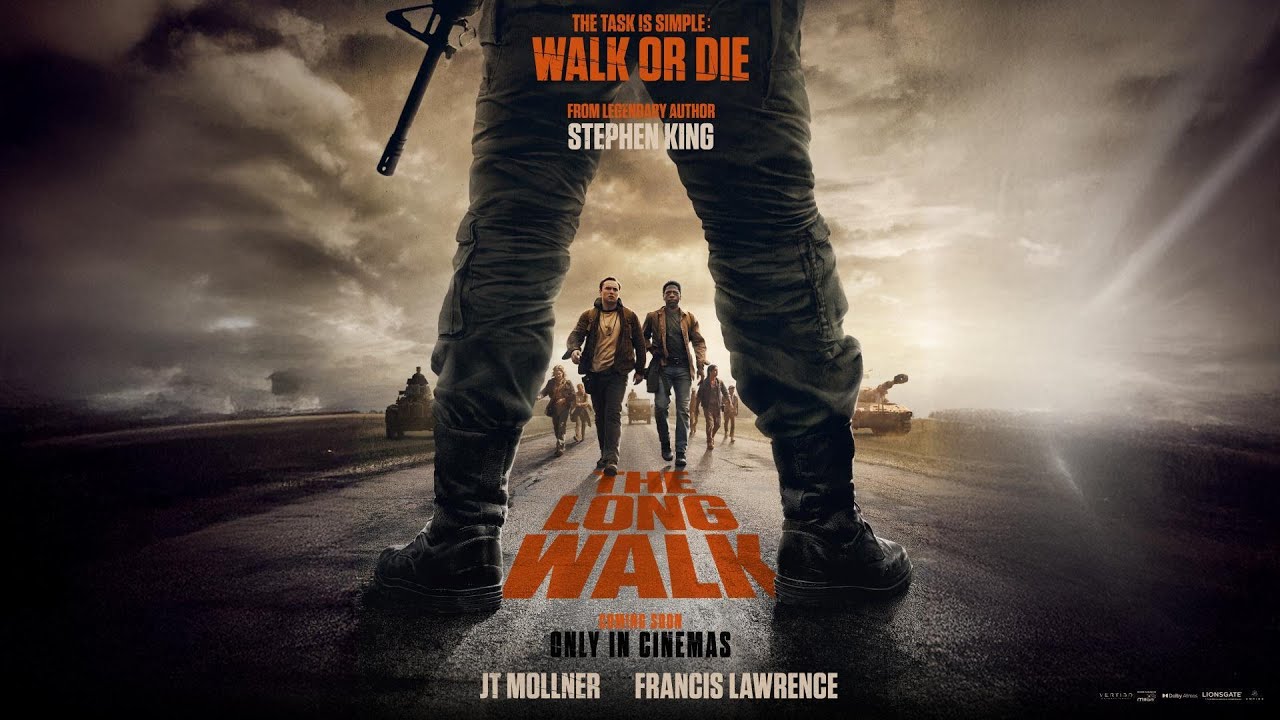

Table of Contents
Walk or Die(The Long Walk, 2025) brings to the screen Stephen King's dystopian novel, written under the pseudonymRichard Bachmanin 1979, with an intensity that captures a world where survival becomes a cruel spectacle. Directed by Francis Lawrence, this adaptation transforms the premise of a death march into a psychological horror thriller that explores human resistance and ephemeral bonds under an oppressive regime.
Set in an alternate 1970s America, the film combines visceral tension with reflections on obedience and sacrifice, without needing supernatural monsters to generate unease. The original book, one of King's first works under his alias, presents a stark, minimalist narrative that focuses on the physical and mental erosion of the participants, and the film maintains that essence while adding visual and emotional layers for a more immersive cinematic experience.
A Deadly March in a Hopeless World
The story follows Ray Garraty, a young man from Maine who joins The Long March, an annual event organized by a totalitarian regime that selects a group of teenagers to walk non-stop along endless highways. The promised prize is a lot of money and a wish, but the rules are unforgiving: stopping or falling below a certain speed results in fatal consequences at the hands of armed soldiers who watch every step. Ray, driven by deep personal motivations (which are revealed late in the plot), embarks on this test that transforms a simple walk into an odyssey of exhaustion and reflection.
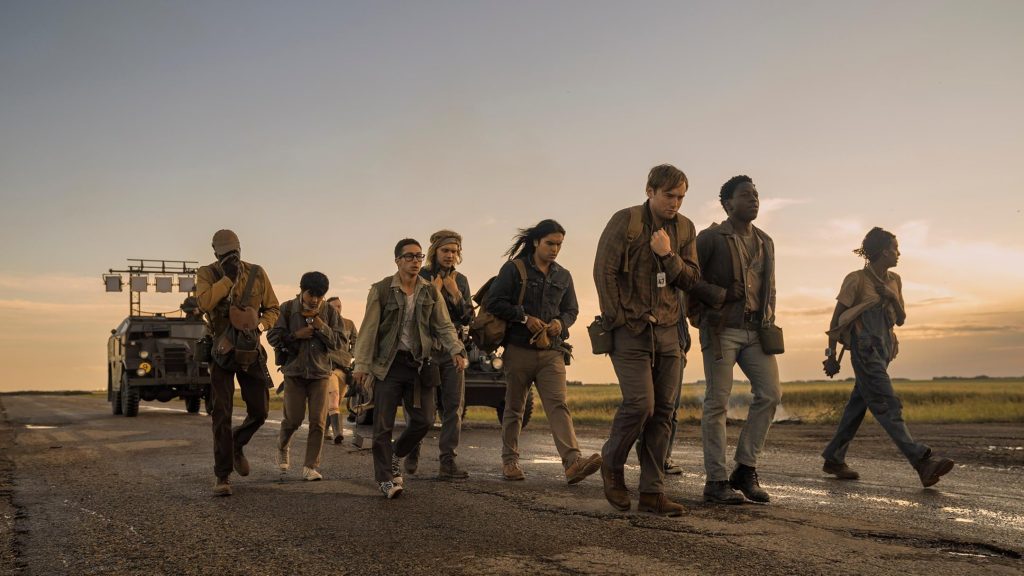
From the beginning, the narrative sets an oppressive tone, with the participants facing not only the physical challenge, but also the emotional weight of their decisions. Ray meets companions like Peter McVries, a charismatic walker with whom he forges a deep bond that adds humanity to the brutality of the event. Other participants bring varied tensions, from defiant attitudes to a resignation that reflects the hopelessness of the world around them. The conversations between them reveal fears, hopes and philosophies of life, while they deal with limited rations, the scorching sun and asphalt that wears down the feet with each kilometer.
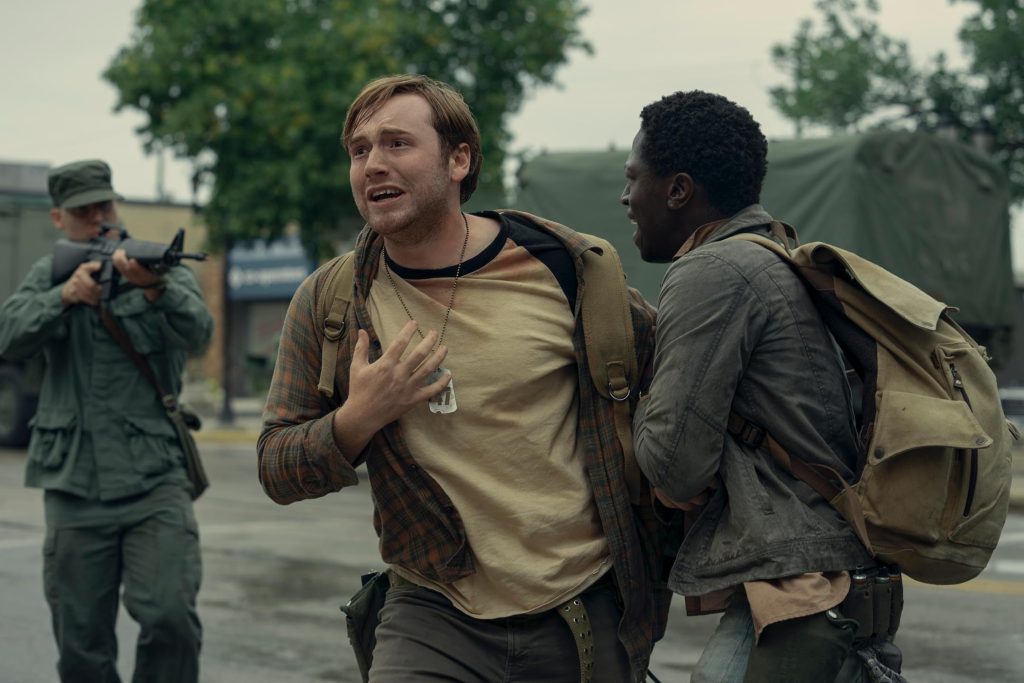
As the march progresses, physical and mental fatigue intensifies, with blisters, hallucinations and collapse constantly threatening. Ray reflects on his past, remembering his mother and girlfriend who tried to dissuade him from participating, which adds layers of internal conflict. The regime uses this televised spectacle to reinforce its narrative of patriotic sacrifice, distracting the population from the social and economic ruin plaguing the country. The first half of the film is spent building up these characters and the dystopian setting, allowing the tension to build organically without rushing towards resolutions. Each step becomes a collective trance, a mirror of the internal traumas of Ray and his companions, where survival depends not only on bodily resistance, but on the mental will to continue forward.
![[HorrorScience] Walk or Die (The Long Walk): Stephen King's Relentless Dystopia on the Big Screen](https://combogamer.com/wp-content/uploads/2025/10/the-long-walk-03-1024x683.jpg)
The march passes through desolate rural landscapes, with crowds cheering, insulting or just watching from the sidelines, creating a contrast between public enthusiasm and the private suffering of the walkers. The dialogues explore deep motivations: some seek personal redemption, others an act of defiance against the system that oppresses them. This initial section, which covers much of the footage, rewards the viewer's patience with total immersion in a world that feels palpable and suffocating, highlighting how the daily routine of walking transforms into an existential battle.
From Book to Screen: Similarities and Differences in King's Vision
Francis Lawrence transforms the book's minimalist premise into an immersive cinematic experience, balancing graphic brutality with moments of emotional connection that humanize the characters. The horror arises from the gradual erosion of body and mind under unforgiving rules, without the need for supernatural elements, making the threat feel real and everyday. Cooper Hoffman plays Ray with raw vulnerability, capturing the inner conflict of a boy on the brink of collapse, while David Jonsson, as Peter, brings charisma and depth, making their relationship the emotional heart of the story.
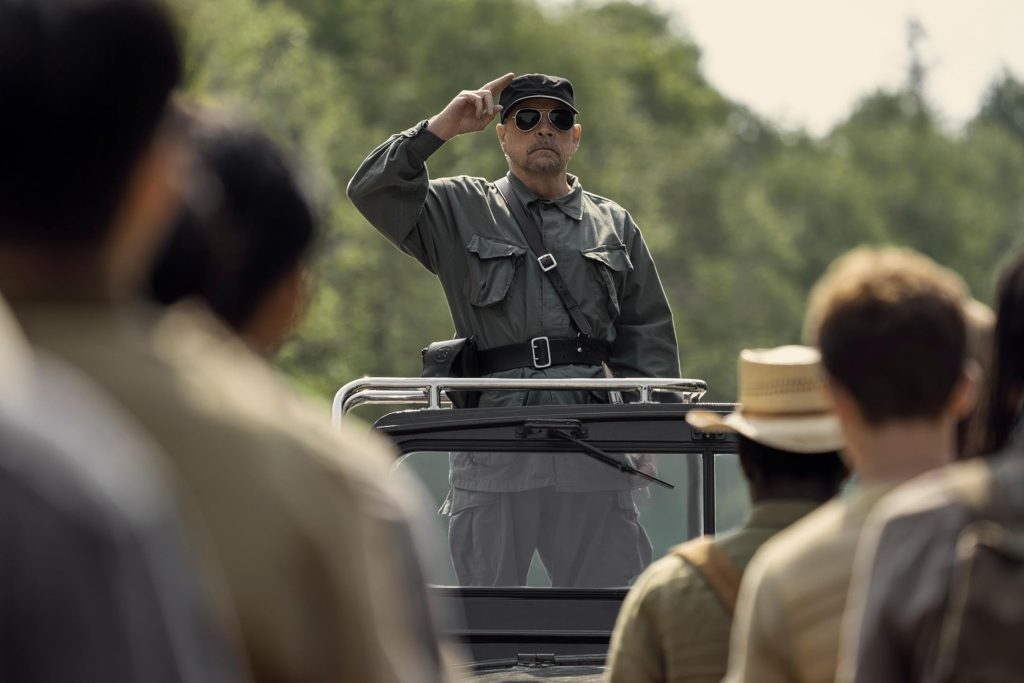
The film explores themes such as obedience as a form of self-destruction, serving as an allegory of generational sacrifices in oppressive systems where youth are trapped in cycles of state violence. The walkers represent a generation sacrificed in the name of a spectacle that distracts from deeper problems, such as poverty and repression. Compared to other King adaptations, this work stands out for its emotional focus, prioritizing human interactions over pure terror.
Adapting the 1979 novel, the film remains faithful to the central plot: a group of young people on an endless march under an authoritarian regime, with strict rules that test human limits. Both versions explore themes of resistance, brotherhood and the cost of conformity, capturing King's minimalist essence where horror comes from the everyday and the inevitable. The book, written in a raw and direct style, focuses on the characters' inner thoughts and the monotony of the walk, creating tension through repetition and psychological isolation.
![[HorrorScience] Walk or Die (The Long Walk): Stephen King's Relentless Dystopia on the Big Screen](https://combogamer.com/wp-content/uploads/2025/10/the-long-walk-01-1024x576.jpg)
However, the adaptation introduces differences that enrich the visual experience without altering the essence. For example, the film expands the relationships between the participants, adding depth to the bonds of friendship and rivalry that are more subtly hinted at in the book, allowing for greater emphasis on the emotional aspect.
Additionally, it updates elements for a contemporary audience, incorporating visual touches that represent social oppression more explicitly, such as watching crowds or the weight of the regime on daily life, which is not as detailed in the novel due to its internal narrative focus.
These variations make the film feel like a natural extension of the book, maintaining its dystopian spirit while taking advantage of the film medium for greater immersion. Ultimately, both the book and the film question the limits of human endurance, but the adaptation adds a layer of visual intimacy that makes the themes resonate freshly.
Some curiosities behind Walk or Die
To close this analysis, here are some curiosities:
- Filming required the actors to walk 15 miles a day in 38-degree heat on concrete without shade, totaling almost 400 miles to capture the authenticity of exhaustion.
- Lionsgate organized a special screening where the audience had to walk on treadmills at 4.8 km/h throughout the film, with the risk of expulsion if they slowed down, imitating the rules of the fictional event.
- The actors visited an ice cream shop weekly to foster the real brotherhood seen on screen, despite the hot weather and long takes.
- In the film, there are 50 participants, one from each State. In the book there are 100, and it is not mentioned where they are from.
If you have seenWalk or DieWhat did you think? Share in the comments!
Related Articles
![[HorrorScience] Obsession: turning the classic "be careful what you wish for" into a nightmare](https://combogamer.com/wp-content/uploads/2026/07/obsession-poster-300x169.jpg)
![[HorrorScience] Backrooms: the A24 film that turned an internet creepypasta into a horror phenomenon](https://combogamer.com/wp-content/uploads/2026/07/backrooms-poster-300x169.jpg)
![[HorrorScience] Victor Crowley (Hatchet IV): The fourth installment that arrived without warning](https://combogamer.com/wp-content/uploads/2026/06/victor_crowley-poster-300x169.jpg)
![[HorrorScience] Number 23 (2007)](https://combogamer.com/wp-content/uploads/2026/05/El-numero-23-banner-largo-300x169.jpg)
![[HorrorScience] Hokum: When a bitter writer meets an Irish witch](https://combogamer.com/wp-content/uploads/2026/06/hokum-poster-300x169.jpg)
![[HorrorScience] The man who could cheat death](https://combogamer.com/wp-content/uploads/2026/04/The-man-cheated-death-banner-300x165.png)