

Port of Alicante, March 28, 1939. A crowd gathers around the pier with a dejected expression and somber looks full of concern. Suddenly, a ship approaches. Due to the sea blockade, this can only mean two things: either it is an enemy warship coming to finish off what they started or a rescue ship. After an initial uncertainty, not without alarm at the possibility of it being the first option, this transforms into desperate joy when verifying that It is a civilian ship. The efforts of the last remaining troops there to put things in order are in vain. A great mass of humans flocks to board. Despite warnings from his subordinate about the possibility that the ship could sink (so many people had already boarded that it tripled its capacity), the captain waits as long as possible to set sail. When he decides to do it, bitterness and remorse are visible on his face. There are still too many who have remained on the ground.
As if it were another plane of reality, we then see raindrops falling copiously on the parked cars while a person absently contemplates the picture from the table in the car. French hotel restaurant. When the waiter brings him out of his reverie by asking him if he wants more coffee, he takes the opportunity to ask him the location of some directions written down in his notebook (Hautville Street). It's not too far away so you can walk there. When he rings the doorbell, a middle-aged man opens the door, but in the house next door, who asks him who he is. The visitor He introduces himself as Paco. He comes from Spain looking for a certain Miguel Ruiz, someone who, apparently, He fought against Nazi Germany in World War II under the command of General Leclerc. His interlocutor does not seem very convinced that the old man wants to talk to him, but, seeing his willingness, he asks him to show up there again the next day at 10, after his morning walk. Despite his reluctance, I would try to convince him...
![[Review] The grooves of chance](https://combogamer.com/wp-content/uploads/2023/01/Los-surcos-del-azar-Salvamento.png)
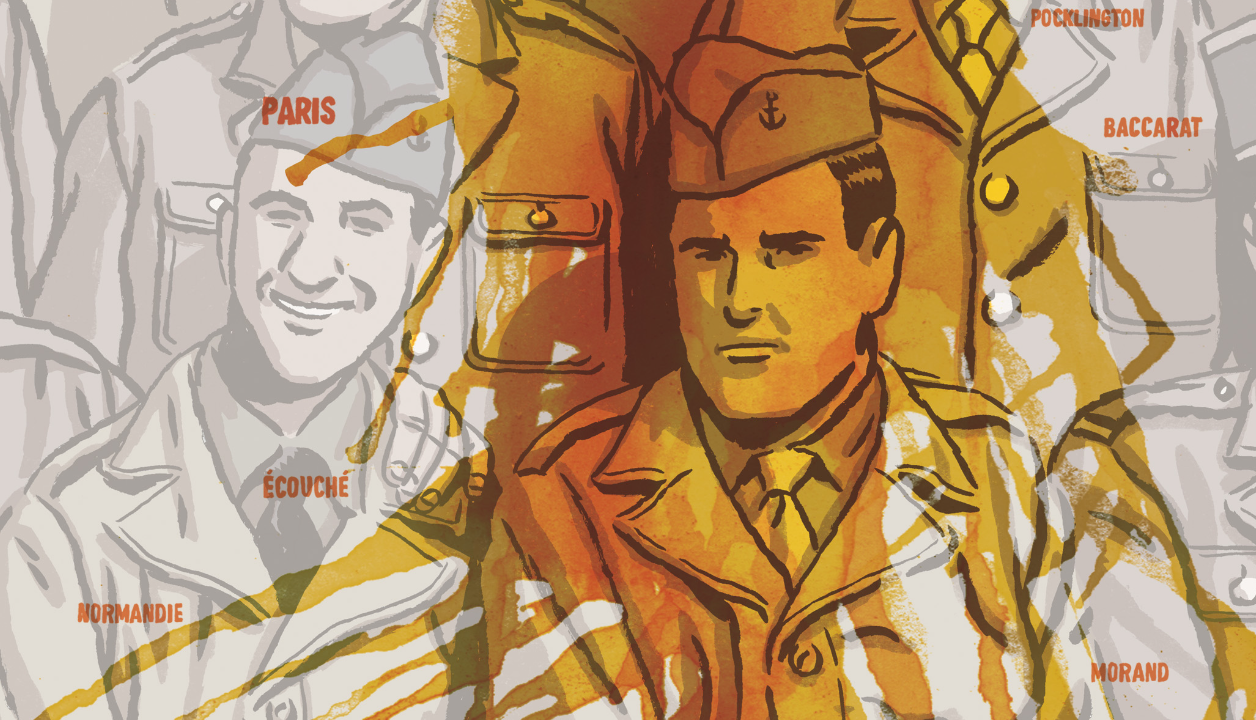
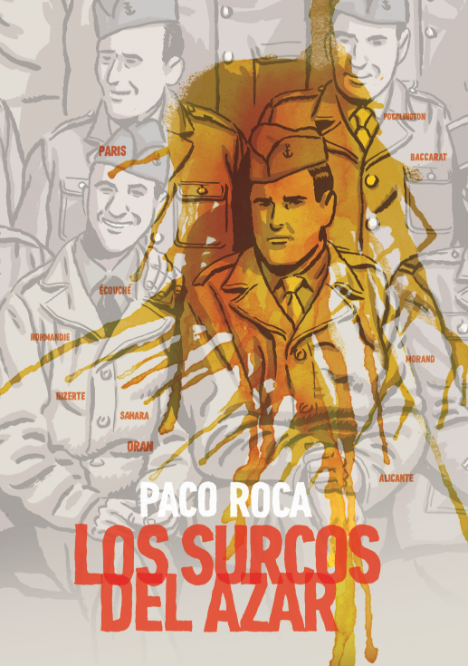
This is how it begins The grooves of chance, the monumental historical graphic novel by Paco Roca, published by Astiberri in 2013. As a result of five years of work, between historical documentation, script and drawing, this work is a marvel in the representation of details of that reality. A harsh, sad and difficult reality, yes, but also full of hope, commitment and perspectives of fighting for a better future. Something that, to the tragedy of many, faded over the years, in a universal phenomenon intertwined with Spanish historical particularities. And an expression of that process is Michael Ruiz. To this fictional republican ex-combatant (well, more specifically anarchist, which is not exactly the same) Something more weighs on him than his advanced age and health problems. Feel on your shoulders all the years of abandonment, oblivion and neglect that he and his people received in exchange for all their years of youth lost in the fight against the Axis powers, first during the Spanish civil war and then in the Second World War. Deeply disenchanted and reluctant to have to remember an unpleasant and traumatic past, he initially resists sharing his experiences with Paco. The latter, by the way, is not a simple namesake of the author, but an incarnation of the same on paper, thus highlighting that feeling of closeness.
We are, therefore, before a story with a fictional thread, but with a powerful charge of verisimilitude because its background is based on real events. The agonizing departure of the Stanbrook (as that was the name of the ship that evacuated all the people it could) from the port of Alicante; how the Western democracies treated them as if they were plagued (which even with the war already lost by the republic, did not abandon that hostile attitude that they showed from the beginning of the fight against Franco's uprising); the fate that awaited many of the men as prisoners in the concentration camps of North Africa (controlled by collaborationist France); the death of the poet Antonio Machado in the misery of exile (the title of the comic, The grooves of chance, is a tribute to him, an allusion to one of his poems); the opportunism of many French commanders, who switched to the Allied side as soon as they saw the opportunity; the dehumanization of the enemy as a means of trying to avoid falling into madness; the survival of old rivalries within the Republican side; the appearance of historical figures such as General Charles de Gaulle (leader of Free France), General Philippe Leclerc (architect of the liberation of French Africa), Captain Raymond Dronne (leader of the 2nd armored division or Leclerc division), or Lieutenant Amado Granell (at the head of the 9th company, “the Nine”, formed for the most part by Spanish republicans) and a long etcetera.
![[Review] The grooves of chance](https://combogamer.com/wp-content/uploads/2023/01/Los-surcos-del-azar-Campos-de-concentracion.png)
He graphics de esta obra es fiel al más puro estilo Paco Roca. El trazado sencillo y minimalista que le caracteriza permite una síntesis visual que resalta aquello que más importa, como unos rostros para los que no necesita grandes alardes a la hora de mostrar sus rasgos más característicos y sus expresiones faciales. O cuando, por ejemplo, sucesivos panoramas similares entre sí, pero con detalles que les diferencian, como el movimiento del oleaje, le confieren una sensación de escena cinematográfica. La distribución de viñetas está cuidada al milímetro, predominando la simetría y homogeneidad en su distribución (por ejemplo, tres filas y dos columnas perfectas de viñetas en una página entera), a menudo con un claro significado narrativo, como contraponer dos realidades cronológicas contrapuestas. A esto último contribuye especialmente la distinta aplicación del color. La actualidad es presentada en blanco y negro, con una escala de grises muy sutil, mientras que los flashbacks aparecen a todo color. De este modo, el pasado resulta mucho más vívido que el presente, una representación gráfica de un anciano Miguel que, en sus propias palabras, apenas recuerda dónde dejó las llaves, pero sí los detalles de sucesos de hace más de setenta años.
In conclusion, The grooves of chance es una novela gráfica extensa, de más de trecientas páginas, con una historia cocinada a fuego lento, en la que pasado y presente se entrelazan en tensión constante bajo un grafismo sencillo, pero tratado con un cuidado exquisito. Su argumento, que combina ficción y realidad histórica, es una ventana de conocimiento a una época dura, pero cargada de esperanza, pero, sobre todo, un homenaje a aquellos que dieron su vida por detener al fascismo y que no recibieron, ni de lejos, el reconocimiento que merecían y merecen.
![[Review] The grooves of chance](https://combogamer.com/wp-content/uploads/2023/01/Los-surcos-del-azar-Composicion-de-las-vinetas.png)
Related Articles
![[Review] Planeta Manga and MANGA ISSHO: Spanish and European manga magazines](https://combogamer.com/wp-content/uploads/2026/06/Planeta-Manga-ISSHO-manga-300x169.png)
![[Review] Mazinger-Z: The Robot of the Stars – The Spanish comic that improved the Taiwanese nonsense on which it was based](https://combogamer.com/wp-content/uploads/2025/08/Mazinger-Z-el-robot-de-las-estrellas-300x198.png)
![[Article] The "comics of the year" (2024 special)](https://combogamer.com/wp-content/uploads/2025/01/Los-comics-del-ano-2024-1-300x169.jpg)
![[Review] Brian the Brain Integral](https://combogamer.com/wp-content/uploads/2024/11/Brian-the-Brain-Integral-Resena-300x179.png)
![[Very Top] Five graphic novels by Paco Roca](https://combogamer.com/wp-content/uploads/2024/09/Muy-Top-Paco-Roca-Portada-300x248.jpg)
![[Meeting…] The mad scientist of 13 Rúe del Percebe](https://combogamer.com/wp-content/uploads/2024/10/Conociendo-a-Cientifico-loco-de-13-Rue-del-Percebe-300x146.png)