

In the early 1990s, the development of the 2D platform genre was not far from its zenith. Since the middle of the previous decade, emblematic sagas had been developed that would mark the subsequent evolution of the titles of the genre. Super Mario Bros. was the title that established many of its primary premises, and its different sequels would give its saga its particular hallmarks, taking into account Super Mario World of SNES as its highlight. It was also at the beginning of the 90s the debut of Sonic, who would ultimately be the mascot par excellence of SEGA, one of the great contenders in the fight for leadership of the third generation of consoles. Sonic the Hedgehog from Mega Drive contributed with its gameplay based on devilish speed as well as fluid to elevate the concept of platforms to a new level. The heyday of this genre was such that it would be very difficult to draw the line that separated it from others, such as action, fighting or exploration, as can be seen in the mythical Metroid, Castlevania either Mega Man, which, like the previous examples, matured over these two decades.

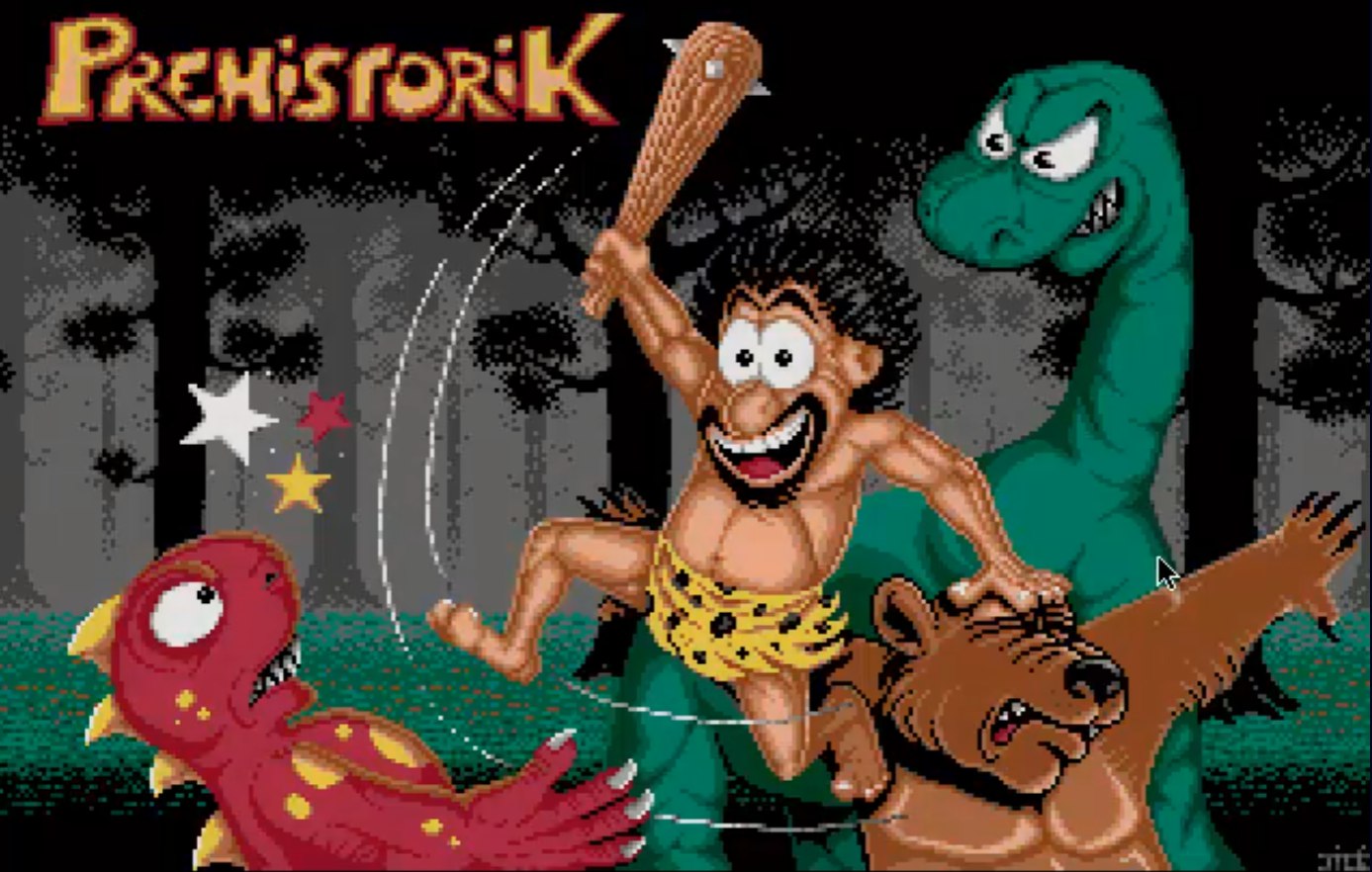
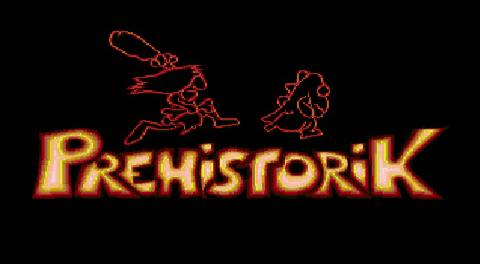
Since all the big companies seemed hell-bent on creating their own particular platform mascot, Titus Interactive He didn't want to be an exception. At the height of 1991, the French developer, at that time relatively modest compared to other industry giants, public Prehistorik for different PC supports and operating systems that existed at the time: Amiga, Atari ST, Amstrad CPC, and DOS. This title marked the debut of a saga starring a friendly Homo neanderthalensis, whose reason for being is pure and simple search for food. Although the present adventure is far from its successors (let alone the greats of the platforms), some of its characteristics make it worthy of review.
![[ComboAnalysis] Prehistorik (1991)](https://combogamer.com/wp-content/uploads/2014/09/Prehistorik-2.jpg)

To begin with, and naturally, one of the elements that first captures our attention are some friendly graphics, pleasing to the eye. These are characterized by the choice of striking colors without being strident and their cartoonish designs. If it is already implausible enough to find the most diverse dinosaurs coexisting with bears, walruses, penguins or with the Neanderthals themselves, their characterization takes us fully into the realm of cartoons. The protagonist himself takes many stereotypes to the extreme, present in rough features and a long beard, as well as the club and the crude clothing made with something similar to the skin of a feline. These attributes, totally foreign to the archaeological record, constitute the perpetuation of the classic image of primitive man inspired by the attributes associated with Hercules, and which is as familiar to us from drawings as those of The Flintstones (1960) or the Spanish comic Hug the Troglodyte (1966), with which it has many similarities.
The scenarios differ from each other with complete clarity, and include a mountain massif, a polar area, a forest environment and a volcanic enclave. As we see, variety and exoticism will be the dominant note of the setting, and could have led to more notable results if the cast of levels had been larger.
The variety of musical themes is considerably high in proportion to the limited repertoire of phases.. Not counting those of the bosses (who have a unified musical theme), each one of them has an individualized melody. The style they follow is consistent with that of the game as a whole; are happy and carefree, with a lively rhythm and a predominance of percussion, recreating a tribal environment, and remote in temporal parameters. They have also not skimped on sound effects, which appear when we hit enemies and during their ingestion, when collecting objects, etc. There are different versions of the themes. The one operated with the CPU's internal speaker lacks sound effects and the music is built on metallic and rudimentary sounds, although the retro character of the title is reinforced.
![[ComboAnalysis] Prehistorik (1991)](https://combogamer.com/wp-content/uploads/2014/09/Prehistorik-6.jpg)

The gameplay of Prehistorik It elevates simplicity to its highest exponent. Our troglodyte eater únicamente podrá caminar hacia la derecha e izquierda, saltar en dirección vertical o diagonal y golpear a los enemigos para noquearlos y zampárselos con objeto de llenar al máximo el medidor de comida. De este modo, los saltos serán exactamente iguales (salvo si adquiere el power-up del muelle), sin la posibilidad de calibrar ni la altura ni la distancia, puesto que será imposible coger carrerilla para tomar impulso. Las únicas variaciones de la jugabilidad serán sumamente esporádicas, reducidas a la utilización de ala delta o los globos para sobrevolar obstáculos acuáticos de grandes dimensiones. A pesar de ello, los controles responden cuando deben hacerlo y su mecánica de juego es perfectamente fluida y funcional. Por lo que se refiere a la cámara, destaca por ser fija. En lugar de seguir al personaje, en cuanto lleguemos al límite del encuadre, ésta se desplazará al siguiente, y así sucesivamente. Este era un recurso habitual cuando un videojuego operaba en un soporte de baja capacidad de procesamiento, empleándose para economizar recursos con el fin de evitar descensos bruscos en el número de frames.
![[ComboAnalysis] Prehistorik (1991)](https://combogamer.com/wp-content/uploads/2014/09/Prehistorik-9.jpg)

El juego se compone de siete niveles, alternándose las fases plataformeras tradicionales con los niveles de combate contra jefes. En las primeras, nuestra misión consistirá en acopiar la mayor cantidad de comida posible, la cual se irá acumulando en un medidor en forma de barra. Una vez colmado, se desbloqueará el final y podremos acceder a la siguiente fase. De lo contrario, será necesario volver sobre nuestros pasos y buscar la comida que falte por adquirir. Para ello, será necesario dejar K.O. a los enemigos y pasar sobre ellos antes de que se repongan, o bien recolectar objetos de lo más diverso (y hasta anacrónicos, como copas de helado o chocolatinas). Por lo que se refiere a las pantallas de jefe, nuestra misión será noquearles reduciendo su barra de energía a cero. Llegado ese momento, pasaremos automáticamente al siguiente nivel. Mientras que en las fases convencionales existe un sistema mixto de vidas y barra de energía (que se irá reduciendo conforme nuestro neandertal sufra daños hasta perder una vida), el más mínimo contacto con un jefe supondrá la muerte automática. El mismo resultado ocurrirá si el cronómetro llega a cero.
La curva de dificultad ha sido medida de forma acertada. Mientras que en el primer nivel bastará con cazar a los enemigos que salgan a nuestro encuentro y recolectar la comida que tengamos más a mano, conforme pasamos a las fases siguientes será necesario explorarlos palmo a palmo. La exploración de cuevas se convertirá así en una de las notas dominantes. Unas grutas que entrañan secretos más o menos agradables, desde comida, enemigos comestibles y power-ups, hasta trampas como arañas que suben y bajan o fogatas. También se verá incrementado el número, fortaleza y peligrosidad de los enemigos (a costa de una reducción considerable de frames en algún caso concreto).
![[ComboAnalysis] Prehistorik (1991)](https://combogamer.com/wp-content/uploads/2014/09/Prehistorik-8.jpg)

A pesar de todo, Prehistorik no destaca por su larga duración. Los niveles convencionales son únicamente cuatro, y los jefes son extremadamente fáciles a pesar de su gran tamaño o de su aspecto amenazante, y carece de jefe final. Los enemigos o bien se encuentran completamente inmóviles o siguen patrones de ataque y movimiento sumamente simples y repetitivos, ofreciendo una inteligencia artificial prácticamente nula. Por ello, en cuanto logremos dominar el juego (algo que no resulta muy difícil), podrá ser completado en unos quince minutos escasos. Por otra parte, su escasez de secretos hará que el único aliciente para su rejugabilidad resida en la superación de récords de puntuación.
Prehistorik constituye un título simple a la par de efímero. Su extremada brevedad y sencillez y el carácter escaso de su elenco de movimientos es apenas compensado con la calidad y amabilidad de sus gráficos, su variedad de temas musicales y la funcionalidad de su sistema de juego. De hecho, hoy en día sería etiquetado como “casual”; haría las delicias de los jugadores más novatos o menos duchos, y quizás los jugadores más avezados encontrarían un pequeño respiro frente a los plataformas de dificultad endiablada de la talla de Plok, si bien no tardaría mucho en saberles a poco. En suma, estamos ante un título agradable de jugar, pero provisto de carencias a varios niveles.
Calificación: 6,5


Martin Fernandez
Prehistorik es un juego de acción y plataformas muy sencillo pero interesante, pues en aquella época, el género de las plataformas era poco común en PC si lo comparábamos con otras plataformas, de manera que juegos como este podían suponer una agradable sorpresa para los jugadores, que veían como las consolas se quedaban con los mejores títulos del género.
Así pues, pese a que este juego no es uno de los grandes de su época, es bastante recomendable, pues pese a su sencillez es muy divertido y ofrece un desarrollo ligeramente variado en algunas partes de sus niveles, además de ser el origen de la corta (pero interesante) saga Prehistorik, en cuyas secuelas se evolucionó y mejoró algunas de las ideas mostradas en este juego.
Calificación: 6
Related Articles
![[Analysis] Mixtape: the narrative adventure that turns a 90s mixtape into an unforgettable video game](https://combogamer.com/wp-content/uploads/2026/07/mixtape-poster-300x160.png)
![[Analysis] Scholar Adventure: Mystery of Silence — A Journey to an Abbey that Whispers Secrets](https://combogamer.com/wp-content/uploads/2026/06/Scholar-Adventure-Mystery-of-Silence_poster-300x169.png)

![[Analysis] OUTBLAST — When 2000s Arcade Puts on the VR Goggles (and Still Unimpressed)](https://combogamer.com/wp-content/uploads/2026/06/OUTBLAST-poster-300x172.jpg)
![[Analysis] NODE: The Last Favor of the Antarii — Program Every Leap to Save the World](https://combogamer.com/wp-content/uploads/2026/06/NODE-poster-300x169.jpeg)
![[Analysis] Echo Generation 2 — When a Sequel Risks Everything](https://combogamer.com/wp-content/uploads/2026/06/Echo-Generation-2-poster-300x169.jpg)