


Table of Contents
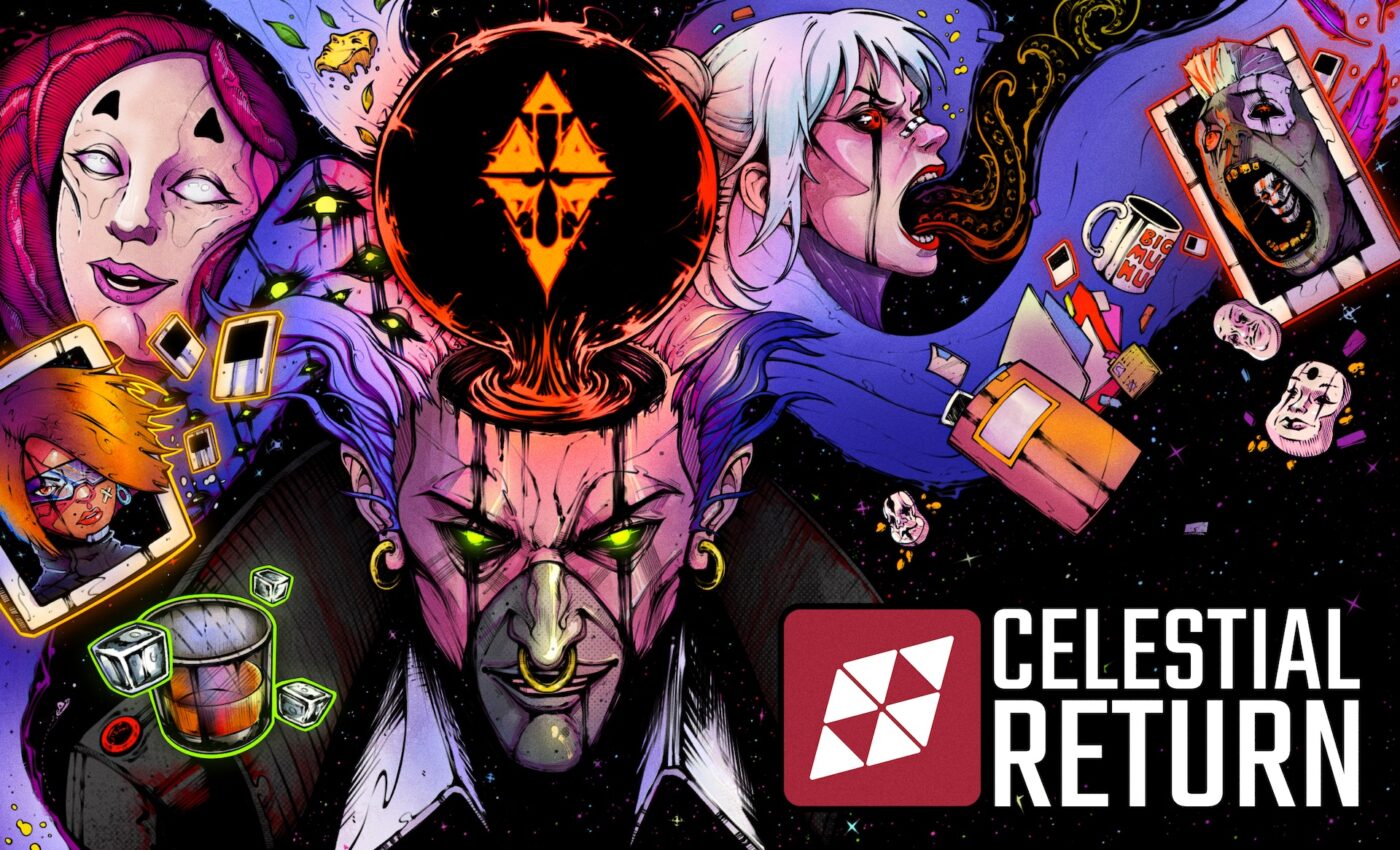
There are projects that arrive with such a marked identity from the first trailer that one already knows, almost without playing them, what type of audience they are going to speak directly to the heart. Celestial Return is one of those cases: a cyberpunk narrative RPG born from aKickstarterwhich far exceeded its funding goal, developed by people who come from the world of narrative board games and who set out to transfer that depth to the video game format. After a delay that moved it from May to July to iron out several technical issues, it finally arrived on Steam, and the experience it leaves behind is as interesting as it is irregular.
Netherveil City, a city that rots in real time
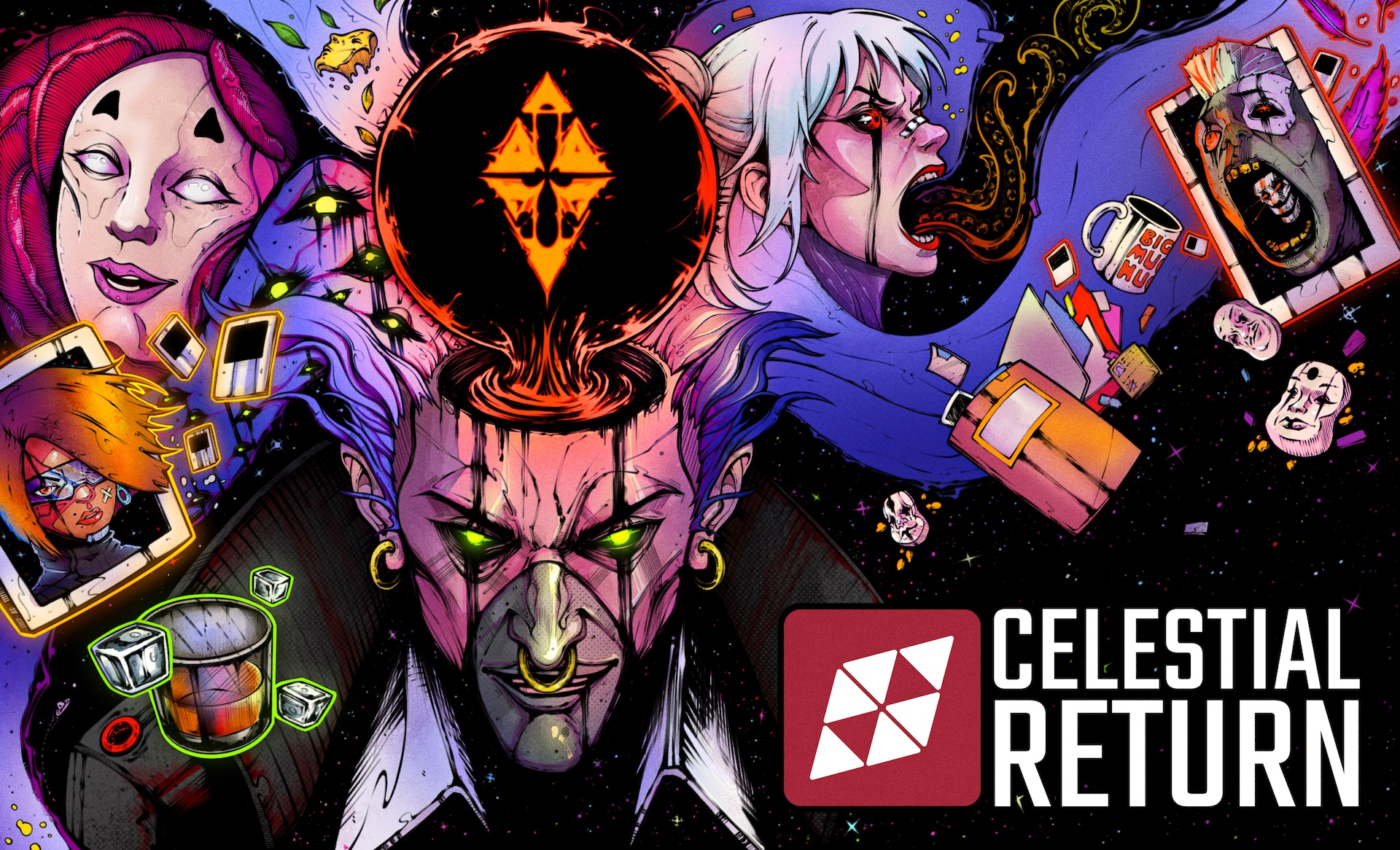
The story takes place in Netherveil City, a decadent cyberpunk metropolis where corporate corruption coexists with phenomena that no authority can fully explain. We play Howard, a broken detective who was once part of the PID, a group in charge of dealing with the Abstracts: entities that move between dream and reality, and whose nature is quite reminiscent of the concept of cosmic horror that usually appears in Lovecraftian fiction, although transferred to an urban and technological context. Three years ago, Howard led a shock team in a raid against one of these Abstracts, an episode that history gradually reveals and that ended up marking both his career and his personal life.
In the present, Howard investigates a series of suicides that begin to show patterns too strange to be a simple coincidence, accompanied by an element as curious as it is memorable: a sentient rose that acts almost as his conscience or his research partner. From there, the plot is built like a classic crime novel transported to a future of neon and hopelessness, with the particularity that a good part of what Howard discovers, and how he reacts to it, depends directly on the decisions one makes throughout the game.
Howard is not a fixed character, he is the result of your decisions

Something that sets Celestial Return apart from other narrative RPGs is that Howard's personality is not written in advance, but is built play by play. The system is based on five central traits (Virtue, Perception, Foolishness, Anger and Intelligence) that are strengthened or weakened depending on the decisions we make in each situation. Those traits, in turn, determine what dialogue and interaction options are available later, much like how the game's skill system works.Elysium Disc, one of the references that the study itself openly recognizes. The text takes up much of the screen, scrolling in a dialogue box as Howard travels through Netherveil, and the decisions we make not only change what he says, but also the type of person he becomes as the game progresses.
Dice as bullets, bribes and oxygen

The playable heart of Celestial Return is in its dice system, which functions as a vital currency within the story. Earning, spending, or losing them directly alters the opportunities available: accumulating too many dice without using them ends up closing certain narrative paths, while spending them recklessly can leave us without resources just when we need them most to bribe a contact, escape from a dangerous situation, or simply survive an encounter with one of the Abstracts. It is a design reminiscent of the concept of limited resources ofCitizen Sleeper, another of the declared references of the study, although applied with its own identity that pushes the player to think of each roll as a real bet, not as a simple procedure of chance.
The problem is that, beyond the interesting concept, the number of truly playable sequences within that mechanic ends up being quite limited for the total duration of the experience. The feeling it leaves is that of a system with a lot of potential that falls short in the number of situations where it is really put to the test, which means that much of the weight ends up falling on the text and the narrative over the gameplay itself. This may be a problem for some players, although if you're like me, you'll place more importance on the story and overall gameplay experience.
An artistic section that owes nothing to anyone

If there is something in which Celestial Return does not give rise to discussion, it is its visual section. The studio was explicit from the Kickstarter about its references: Blade Runner, Berserk and Akira are mentioned as direct influences both narratively and artistically, and the final result lives up to those comparisons. The design combines human silhouettes with abstract mechanical constructions, all hand-drawn with a precision that mixes the tradition of manga with the most marked crudeness of American comics, while the exploration sequences through the city resort to a three-dimensional style that refers directly to the first stage of PlayStation, generating a contrast that, far from feeling dated, reinforces that feeling of urban decay so typical of the cyberpunk genre. The studio also highlighted that no element of the art was generated with artificial intelligence, something that can be seen in the care and visual coherence of each scene.
The music accompanies that identity with a selection that combines noir jazz, techno, industrial sounds and post metal, an unusual cocktail that works surprisingly well to set both the alleys of Netherveil and Howard's most introspective moments. The dubbing is scarce and is reserved almost exclusively for the dream sequences, a decision that, far from feeling like a budget limitation, ends up reinforcing the symbolic weight of those sections compared to the rest of the game, narrated almost entirely through text.
Huge potential
Celestial Return is one of those games that leaves a bittersweet feeling. On the one hand, it builds an atmosphere and a visual and sound identity that few independent narrative RPGs manage to achieve, in addition to a decision and dice system with a really attractive premise. On the other hand, the total duration of the experience and the limited number of moments where that dice system is truly put to the test make the game feel, on its most mechanical side, simpler than its own premise promises. Metaphor Games clearly has something interesting on its hands, and the fact that it's already expanding the Netherveil universe through a comicwebtoonsuggests that this is just beginning. As the first foray of a new studio into the video game format, Celestial Return more than delivers on the atmosphere, although it leaves the feeling that its true playable potential has yet to be fully deployed.
Related Articles
![[Analysis] Mixtape: the narrative adventure that turns a 90s mixtape into an unforgettable video game](https://combogamer.com/wp-content/uploads/2026/07/mixtape-poster-300x160.png)
![[Analysis] Scholar Adventure: Mystery of Silence — A Journey to an Abbey that Whispers Secrets](https://combogamer.com/wp-content/uploads/2026/06/Scholar-Adventure-Mystery-of-Silence_poster-300x169.png)
![[Analysis] OUTBLAST — When 2000s Arcade Puts on the VR Goggles (and Still Unimpressed)](https://combogamer.com/wp-content/uploads/2026/06/OUTBLAST-poster-300x172.jpg)
![[Analysis] NODE: The Last Favor of the Antarii — Program Every Leap to Save the World](https://combogamer.com/wp-content/uploads/2026/06/NODE-poster-300x169.jpeg)
![[Analysis] Echo Generation 2 — When a Sequel Risks Everything](https://combogamer.com/wp-content/uploads/2026/06/Echo-Generation-2-poster-300x169.jpg)