

Table of Contents
There are sequels that are limited to more of the same: same characters, same combat system, same world, just a little bigger. And then there are those who throw the manual out the window and decide to start from scratch, even if that means angering the purists of the first hour.Echo Generation 2It's one of those.
The Canadian studio Cococucumber, responsible for the 2021 original that mixed voxel aesthetics with turn-based combat in the purest styleStranger Things, has dropped anchor from its comfort zone and sailed into much more turbulent waters. The result is a deck-building RPG that arrived onMay 27, 2026to PC, Xbox Series X/S and Game Pass, and that has left me with that bittersweet feeling of having played something brilliant that, at times, eats its own legs.
A Puzzle of Perspectives that Catches You (and Displaces You)
The first thing to understand is thatEcho Generation 2It is not a direct continuation of the story of the first game. It is aJack-centric prequel, the missing father who in the original was little more than a ghostly echo. Now, Jack is the glue that holds together a narrative structure fragmented into six playable characters and five "chapters" that function almost like independent mini-games.
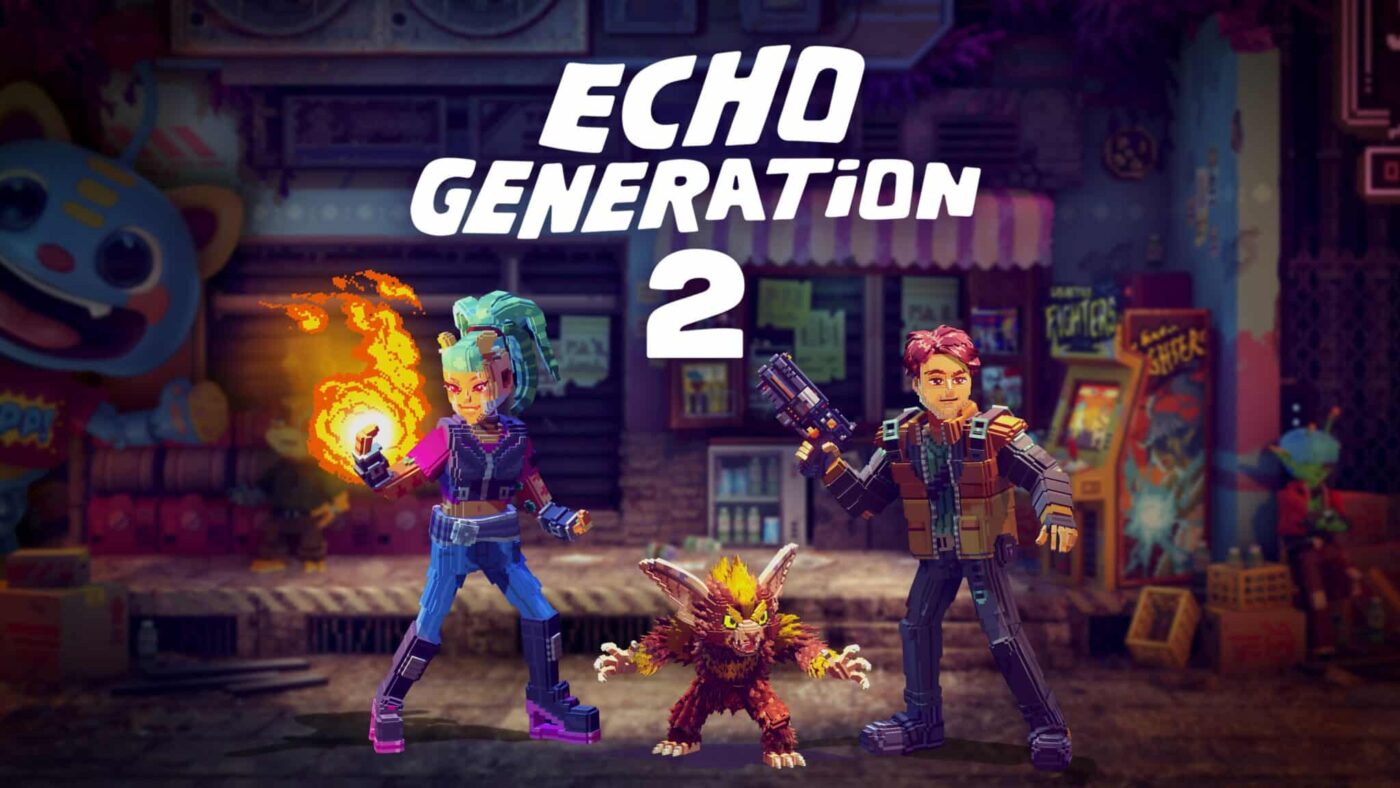
We start by controllingSister M, a girl with psychic powers who escapes from a secret laboratory in 1987. We then jump toAnnata Z, a zombie mother searching for her lost son in a monochromatic and oppressive world. Afterwards, toNoliva and Strix, a duo of bounty hunters in a neon-saturated cyberpunk city. Later, toBulder, an extraterrestrial creature whose loyalty is, to say the least, debatable. And finally, everything converges intoJack.
This “space anthology” structure is, without a doubt, the riskiest move in the game. And also the one that generates the most divided opinions. On the one hand, it works wonderfully as a narrative device. Each character has their own tone (gothic horror, noir, cyberpunk, absurd comedy), their own set of cards and their own way of understanding the world. Going from controlling a scared girl in a laboratory to a cynical bounty hunter in a futuristic city is a sudden change, but it is precisely that discomfort that maintains interest.
The problem is that fragmentation comes with a price. Each chapter lasts between 1.5 and 2 hours, and just when you start to understand the mechanics of a character and feel comfortable with their style, the game takes you away from there and throws you into another completely different scenario. It's like changing the channel every hour: exhilarating, yes, but also exhausting. And when all the threads come together in the final chapter, the feeling is that the pieces fit together, but that some have been lost along the way.
What the narrative does achieve is something that the first game barely touched on: amore adult and darker tone. The stories of these characters are not children's adventures. Annata Z searches for her son as his body decomposes. Sister M discovers that the lab experiments not only gave her powers, but also indelible trauma. There is body horror, there is loss, there are uncomfortable questions about what it means to be human. And that gives it an emotional density that the original, with all its sympathy, did not achieve.
From Timings to Letters: A Change that Starts by Reinventing Yourself
Yes inEcho GenerationThe combat was classic turn-based with precision mini-games, here they have thrown all that away and built a system ofdeckbuildingfrom scratch. And it works. Not perfectly, but with a surprising solidity.
Your team consists of three characters, but instead of choosing attacks from a menu, each character has their own deck of cards, customizable and upgradeable. Each turn, you draw a limited number of cards, have a limited number of actions, and decide what to use and in what order. The action point and resource management system is reminiscent ofSlay the Spire, but with a faster pace and a layer of positional strategy.
And here comes the star system:the «Break System» or rupture system. Enemies display symbols above their heads; certain cards have those same symbols. If you play the cards in the correct order, you break the enemy's defenses, open a temporary breach, and multiply the damage of your subsequent attacks. It is a simple concept to understand, but when you start to master it, battles become a tactical puzzle where the most powerful card is not enough: you have to think about sequences, combos, synergies between characters.
To give depth to the matter, the game includes more than150 collectible cardsdistributed among the six characters. Some are offensive, some defensive, some healing, some status. Each character also has their own skill tree, which you can reset at any time outside of combat without penalty, inviting constant experimentation.
This all sounds great, and it is, but there is a "but": thelack of tutorials. El juego asume que sabes lo que es un mazo, un estado de efecto o una sinergia de cartas desde el minuto uno. Y si no lo sabes, te va a costar. En los primeros compases, especialmente con Sister M, la curva de aprendizaje es tan empinada que más de un jugador novel abandonará antes de llegar al segundo personaje. Hay opciones, hay personalización, hay profundidad, pero el juego te las lanza a la cara sin explicarte bien cómo funcionan. Es un diseño que premia a los veteranos del género y castiga a los recién llegados.
The Last Third Problem (and Why It Hurts)
Llegados a este punto, toca hablar de, como se dice, «el elefante en la habitación»: el tercer acto. Los primeros cinco capítulos, centrados en cada personaje por separado, están muy bien construidos. Hay variedad, hay ritmo, hay momentos de tensión genuina. Pero cuando todas las historias convergen, el juego parece perder el norte. El último tramo se convierte en una sucesión de combates casi ininterrumpidos, sin espacio para la exploración o el diálogo, con una repetición de encuentros que roza lo tedioso.
Es una lástima, porque el sistema de combate da para mucho, pero la falta de variedad en los enemigos del final y la sensación de «apresuramiento» narrativo dejan un regusto amargo. No arruina la experiencia, pero sí la empaña. Es como si Cococucumber hubiera invertido todo su tiempo y cariño en construir los personajes y sus mundos, y luego, al llegar al final, se hubiera encontrado con la fecha de lanzamiento encima y hubiera dicho «bueno, lo rematamos como podamos». Y se nota.
Voxel, Synthwave and a Mesmerizing Soundtrack
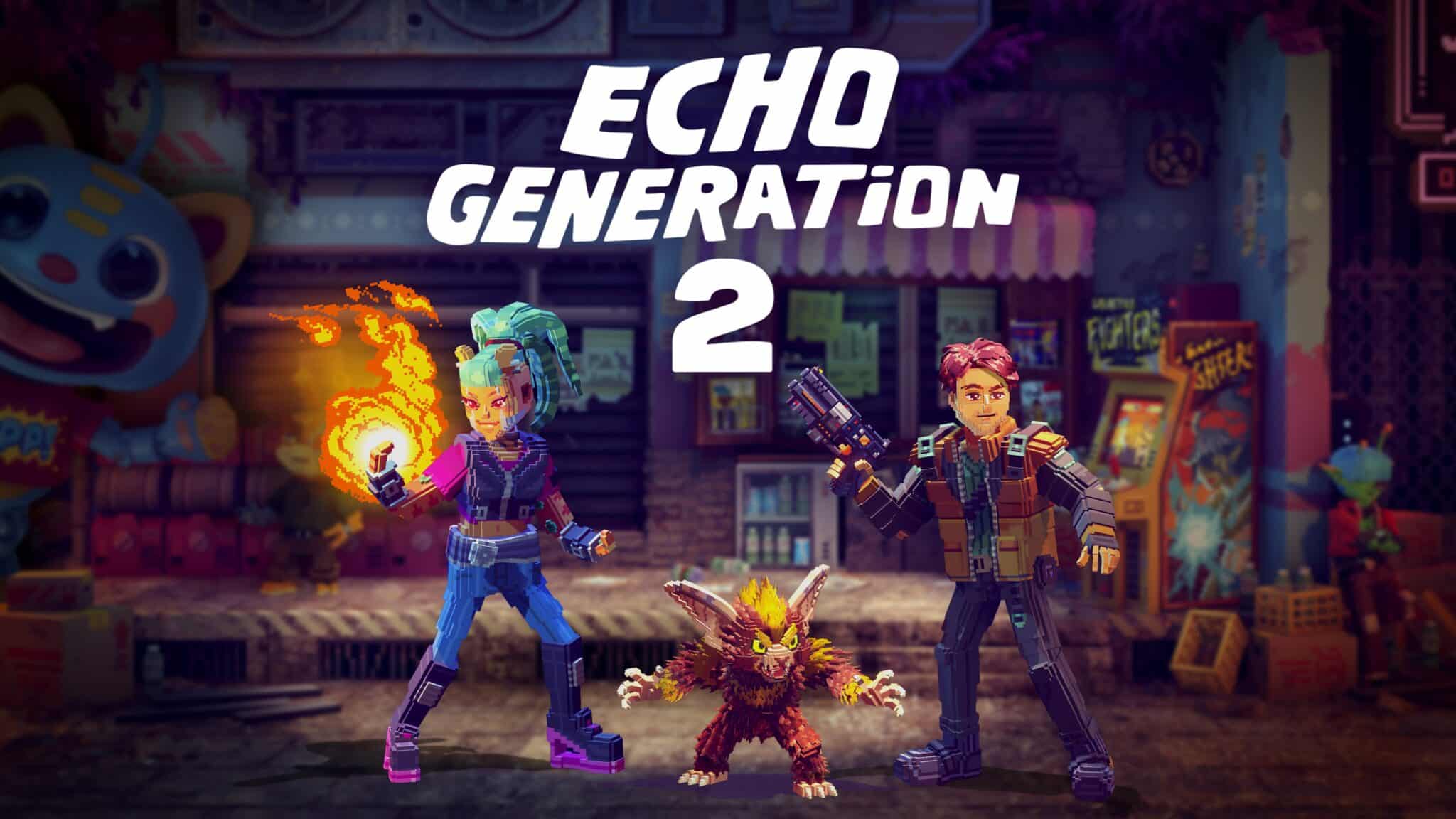
Visually,Echo Generation 2es muy bueno. Cococucumber ha sabido llevar su estilo voxel a entornos mucho más variados y ambiciosos que los del primer juego. Las ciudades cyberpunk con sus neones sobre saturados, los mundos industriales con sus sombras opresivas, los laboratorios con sus pasillos fríos y asépticos… todo está construido con un mimo al detalle que invita a detenerse a mirar. No es realista, ni pretende serlo. Es una estética que mezcla nostalgia de los píxeles de los 90 con una iluminación moderna que le da un cariz casi cinematográfico. Y funciona.
La banda sonora, compuesta porPusher, está inspirada en el synthwave ochentero y va cambiando de tono según el personaje y el escenario. Los sintetizadores cálidos de los niveles de Sister M contrastan con los ritmos industriales y agresivos de los de Annata Z. Y en los momentos de mayor tensión, la música se retira y solo queda el silencio y el sonido de las cartas rompiendo defensas. Es un trabajo sutil, pero efectivo.
A Sequel Better or Worse than the Original?
Responder a esa pregunta es complicado. En términos de ambición y reinvención,Echo Generation 2es superior al original. El salto de un combate por turnos genérico a un sistema de deckbuilding con personalidad es una bocanada de aire fresco. La estructura narrativa fragmentada es arriesgada y, en sus mejores momentos, emocionante. Y la estética y la música están a otro nivel.
Pero en términos de coherencia y pulido, la balanza se inclina del lado del primero. El original era más pequeño, más modesto, pero también más redondo.Echo Generation 2es más grande, más complejo, más ambicioso… y más irregular. El final apresurado, la falta de tutoriales y esa sensación de que ciertos personajes se quedan en el tintero son lastres que pesan.
Conclusion
Dicho esto, y con todas sus imperfecciones,Echo Generation 2es un juego que recomiendo sin dudar a quien busque algo diferente. No es para jugadores casuales que quieran pasar el rato sin pensar. Es para quienes disfrutan construyendo mazos, buscando sinergias, probando combinaciones y aprendiendo de sus derrotas. Es un juego que no te trata con condescendencia, que no te explica todo, que te deja fracasar y espera que te levantes solo.
Si vienes del primer juego, prepárate para un choque frontal. No es más de lo mismo. Es otra cosa. Y aunque esa «otra cosa» tenga imperfecciones, tiene también una personalidad que cuesta encontrar en muchos de los RPG actuales. Y que esté disponible el primer día en Game Pass hace que probarlo sea una decisión de riesgo cero si es que eres suscriptor.
Así que sí: métele unas horas, supera la curva inicial, y cuando llegues al final —con su repetición de combates y todo—, quizá sientas lo mismo que yo: que has jugado algo que, con sus fallos, merece la pena.
Related Articles
![[Analysis] Mixtape: the narrative adventure that turns a 90s mixtape into an unforgettable video game](https://combogamer.com/wp-content/uploads/2026/07/mixtape-poster-300x160.png)
![[Analysis] Scholar Adventure: Mystery of Silence — A Journey to an Abbey that Whispers Secrets](https://combogamer.com/wp-content/uploads/2026/06/Scholar-Adventure-Mystery-of-Silence_poster-300x169.png)
![[Analysis] OUTBLAST — When 2000s Arcade Puts on the VR Goggles (and Still Unimpressed)](https://combogamer.com/wp-content/uploads/2026/06/OUTBLAST-poster-300x172.jpg)
![[Analysis] NODE: The Last Favor of the Antarii — Program Every Leap to Save the World](https://combogamer.com/wp-content/uploads/2026/06/NODE-poster-300x169.jpeg)
![[Analysis] Swan Song — The Last Melody of a Father Who Built a Music Box to Not Face Death](https://combogamer.com/wp-content/uploads/2026/06/swan_song-poster-300x169.jpg)