

Table of Contents
With «Pearl», the prequel to «x» directed by Ti West, West himself in collaboration with the talented Mia Goth (who not only stars but also co-writes the script), immerse us in a world that, at first glance, seems straight out of a Technicolor fairy tale. However, beneath that bright and saturated surface, a darkness hides that little by little will consume our protagonist.
The plot: An American dream dyed red
Pearl, masterfully played by Goth, is a young woman trapped on a family farm during the Spanish flu pandemic. His life is marked by the monotony of rural tasks, caring for a paralyzed father and the oppressive presence of a strict and bitter mother. However, Pearl harbors dreams of greatness: she longs to become a movie star, escape her suffocating reality, and be loved by the masses.
It is in this contrast between brutal reality and dreams of glamor that "Pearl" finds its thematic core. West uses the historical context not only as a backdrop, but as a mirror that reflects contemporary anxieties: isolation, the frustration of dashed dreams, and the desperate search for connection in a world that seems to spin without us.
Aesthetics: A macabre fairy tale
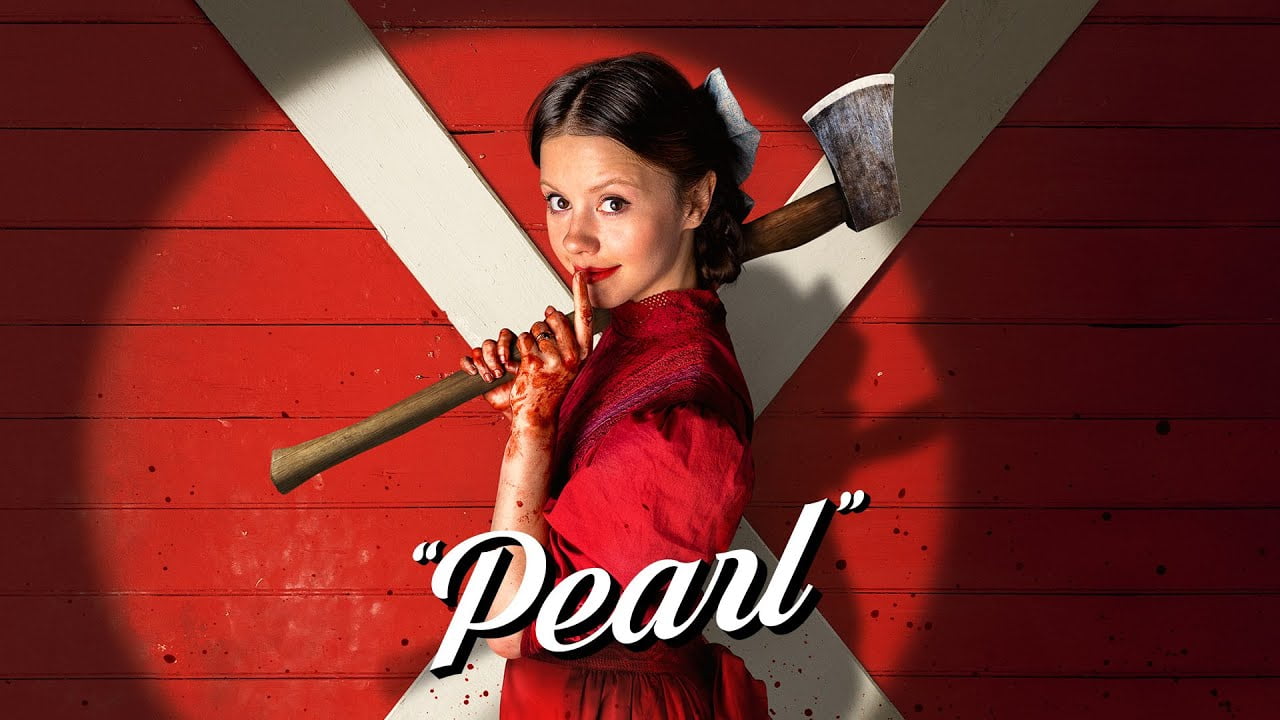
Visually, “Pearl” is a feast for the eyes. Eliot Rockett's cinematography perfectly captures the 1920s aesthetic, from the grain of the film to the color palette reminiscent of classics like "The Wizard of Oz." This aesthetic choice is not accidental: it serves to underline the dichotomy between Pearl's aspirations and the reality that surrounds her.
The use of color is particularly effective. The bright, saturated tones contrast violently with Pearl's increasingly dark deeds, creating a visual dissonance that reflects the protagonist's mental deterioration. It's as if we were watching a fairy tale that little by little turns into a Technicolor nightmare.
The performance: Mia Goth, a force of nature
If there is one element that elevates "Pearl" above many other films of the genre, it is undoubtedly Mia Goth's performance. Her performance as Pearl is a tour de force that oscillates between childish vulnerability and unleashed madness. Goth makes us empathize with Pearl even in her darkest moments, which is quite an achievement given the character's arc.
Particularly impressive is Pearl's final monologue, a heartbreaking confession that Goth delivers in a single sustained shot. It's a moment of pure cinema that will remain etched in viewers' memories long after the credits roll.
Violence: A disturbing spectacle
As expected in a film of this genre, "Pearl" does not skimp on moments of graphic violence. However, what sets this film apart is how West utilizes these moments. The violence in "Pearl" is not gratuitous; Each brutal act is an extension of the protagonist's fractured psyche, a physical manifestation of her repressed desires and frustration.
There are scenes that are difficult to watch, not only because of their graphic content, but because of the emotional charge they carry. West forces us to witness Pearl's transformation, and doesn't allow us to look away, no matter how uncomfortable it may be.
The subtext: Beyond the slasher
Although on the surface "Pearl" may seem like a simple murder movie, there are deeper layers that are thought-provoking. The film explores themes such as sexual repression, social isolation, family expectations, and the toxic nature of stardom.
It is particularly interesting how West uses cinema within cinema. The movies Pearl watches at the local theater are a window into a world she longs for, but they are also a mirror that reflects her own dark desires. This meta-narrative adds an additional layer of complexity to the film, inviting us to reflect on our own consumption of violence and tragedy as entertainment.
Conclusion: A new classic of psychological horror
"Pearl" is not an easy film to digest. It's disturbing, sometimes excessive, and definitely not for everyone's tastes. However, it is precisely its ability to disturb and provoke that makes it such a powerful work.
Ti West and Mia Goth have created something truly unique: a horror film that is at once a deeply psychological character study, a biting social commentary, and an homage to classic Hollywood cinema. "Pearl" stands as a reminder that the horror genre, when handled with intelligence and artistic vision, can be a vehicle for exploring the darkest complexities of the human psyche.
For horror film lovers looking for more than just scares, "Pearl" offers a rich, multifaceted cinematic experience that is sure to spark discussion and analysis for years. It is, without a doubt, one of those rare films that manages to be both an homage to the past and a bold step towards the future of the genre.
And if there is something that will remain engraved in viewers' memories, it is undoubtedly Pearl's final smile, sustained during the closing credits. A moment of pure cinema that perfectly encapsulates the essence of this film: beautiful, disturbing and absolutely unforgettable.
Some curiosities about «Pearl»
- Ti West and Mia Goth collaborated on the script over FaceTime during a mandatory 2-week quarantine (due to the COVID-19 pandemic) in New Zealand before filming X (2022). They were just hoping A24 would agree to make the film. Fortunately, the project was greenlit before filming on X began.
- Tandi Wright, who plays Pearl's mother, was the intimacy coordinator on X (2022) and was offered the role of Ruth as filming wrapped on the first film. According to Ti West, he learned German for the role in a hurry and became so convincing with his accent that he fooled two German crew members.
- To prepare for the tone of this film, director and co-writer Ti West suggested that Mia Goth (Pearl) watch What Ever Happened to Baby Jane? (1962) and The Wizard of Oz (1939).
- It was secretly filmed simultaneously with X (2022). 'Pearl' serves as a prequel to that film, showing the main character's early life in 1918, decades before the events of 'X.'
- It was originally intended to be filmed in black and white, but A24 was against it, so it was made in extremely vivid color. Mia Goth states that another reason for the switch from black and white to bright colors was that the team felt that films made that way had "become their own thing," and she and Ti West wanted to make something "different and unique."
- First writing and producing credits for lead actress Mia Goth.
- At the end of the credits in some territories a trailer for the sequel to "X" (2022) was shown, titled "MaXXXine." The sequel is set in the 1980s.
- The production team had about 50 red swatches to get the bright barn color just right.
- On the Internet, fans of the film often affectionately call it "Joker for Girls", due to how some of the female fans find Pearl relatable, similar to how some male fans ofjokerThey relate to the main character.
Related Articles
![[HorrorScience] Obsession: turning the classic "be careful what you wish for" into a nightmare](https://combogamer.com/wp-content/uploads/2026/07/obsession-poster-300x169.jpg)
![[HorrorScience] Backrooms: the A24 film that turned an internet creepypasta into a horror phenomenon](https://combogamer.com/wp-content/uploads/2026/07/backrooms-poster-300x169.jpg)
![[HorrorScience] Victor Crowley (Hatchet IV): The fourth installment that arrived without warning](https://combogamer.com/wp-content/uploads/2026/06/victor_crowley-poster-300x169.jpg)
![[HorrorScience] Number 23 (2007)](https://combogamer.com/wp-content/uploads/2026/05/El-numero-23-banner-largo-300x169.jpg)
![[HorrorScience] Hokum: When a bitter writer meets an Irish witch](https://combogamer.com/wp-content/uploads/2026/06/hokum-poster-300x169.jpg)
![[HorrorScience] The man who could cheat death](https://combogamer.com/wp-content/uploads/2026/04/The-man-cheated-death-banner-300x165.png)