

Table of Contents
- The Story: A New Chapter in Nosgoth's Fractured Timelines
- The gameplay: Vertical movement, fluid combat and demanding platforming
- Visual style and atmosphere: A mix of styles that generates divided opinions
- Sound and soundtrack: An accompaniment that honors the legacy
- Personal opinion: An expected return that leaves mixed feelings
- Legacy of Kain: Ascendance is a new chapter in Nosgoth that leaves you wanting more
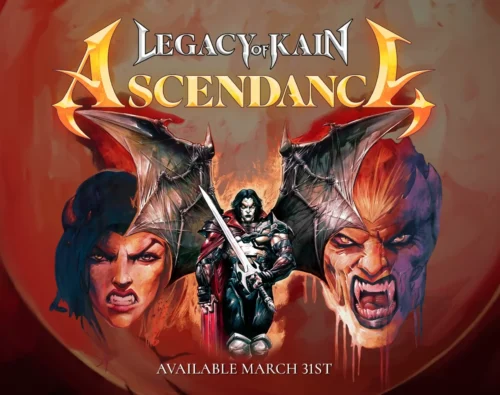
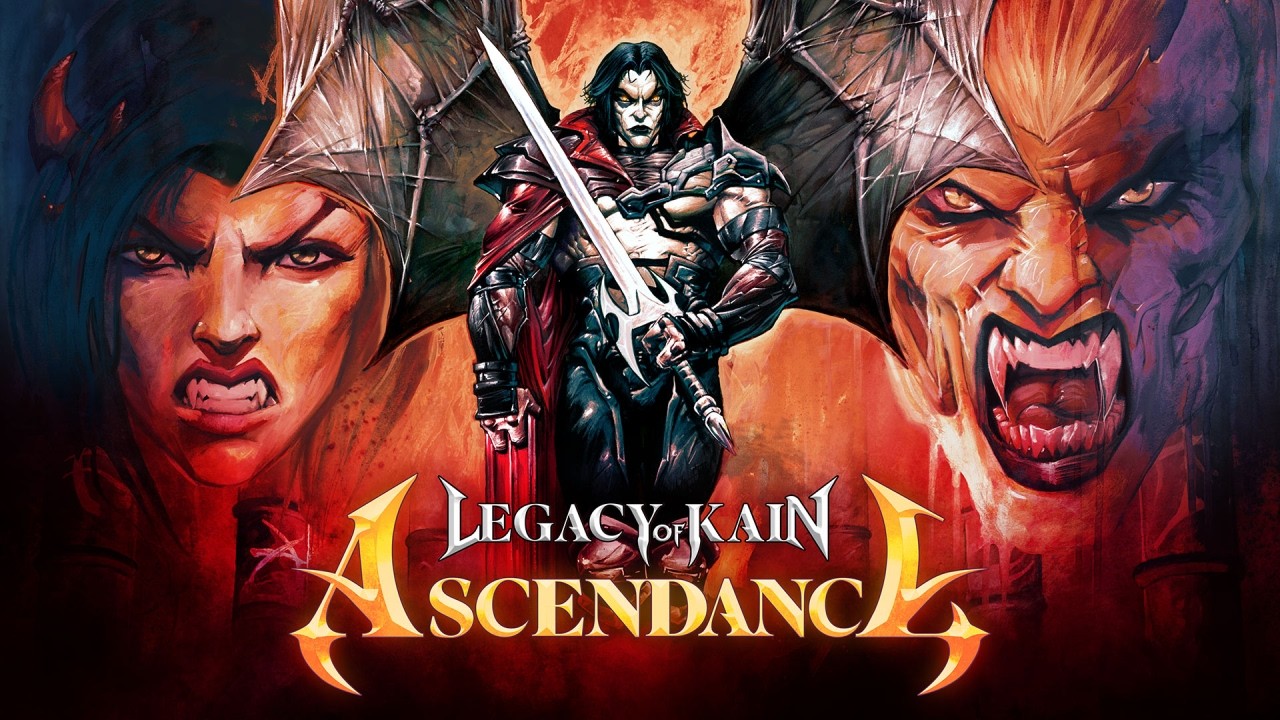
Legacy of Kain: Ascendance marks the first new game in the series in over twenty years, and from the moment I booted it up, it was clear that it attempts to honor the dark, philosophical legacy of Nosgoth while taking on a completely different format. Developed by Bit Bot Media in collaboration with FreakZone Games and published by Crystal Dynamics, the title was released on March 31, 2026 on PC, PlayStation 5, Xbox Series
The game allows you to control several iconic characters, including Kain in his vampire form, Raziel in his vampire and human versions (as leader of the Sarafan), and Elaleth, a new character that adds a more aggressive playstyle. Each has unique abilities that feel distinct: Kain excels at using magic and life drain, Raziel wields the spectral plane and time, and Elaleth focuses on therushdownstraight. This variety is one of the aspects that is most noticeable from the first hours, although it does not always make each character feel equally satisfactory in all scenarios.
The Story: A New Chapter in Nosgoth's Fractured Timelines
The plot is set as a prequel to Soul Reaver and explores events in a Nosgoth full of decaying kingdoms, haunted ruins and broken timelines. The narrative is woven through the gameplay, with anime-style animated cinematics and sequences that attempt to evoke the 3D aesthetic of the PS1 era. The dialogue and interactions bring back some of the original voice cast, including Simon Templeman as Kain and Michael Bell as Raziel, which helps connect with the classic lore.
The focus is on showing how the characters' actions influence the fate of Nosgoth, with themes of betrayal, destiny, and the eternal cycle of vampires and humans. The story progresses through levels representing different times and factions, and while it doesn't reach the philosophical complexity of the original games, it manages to maintain interest by revealing pieces of the puzzle as you explore. Some moments manage to convey that feeling of inevitable tragedy that characterized the saga, but in general the story feels more like an accompaniment to the action than the emotional center of the game.
The gameplay: Vertical movement, fluid combat and demanding platforming
The core of the game is a fast-paced 2D action platformer that places a lot of emphasis on vertical movement. You jump, climb, glide and use vampire abilities to navigate levels that combine precise platforming with combat against groups of enemies and bosses. Combat is direct and skill-based: each character has a set of basic and special attacks that can be chained together, with a life drain system that rewards risk by feeding on fallen enemies.
The movement feels fluid at many times, especially when you master the jump and skill combinations. However, the precision required in certain platforming sections can become frustrating, especially when the controls don't respond as accurately as needed or when enemy hitboxes seem inconsistent. The levels are designed with a good number of secrets and alternate routes, inviting re-exploration, but the repetition of certain enemy patterns and the lack of variety in some sections make the experience feel less fresh after a couple of hours.
Progression is based on unlocking new skills and upgrades that are applied to different characters, allowing you to experiment with different builds. Still, the overall balance is up and down: some bosses require you to learn specific patterns and react quickly, while others are resolved in a more mechanical and predictable way. The game is relatively short (around 4-6 hours for the main story), which makes it feel like a compact experience rather than a big epic adventure.
Visual style and atmosphere: A mix of styles that generates divided opinions
The visual section combines retro pixel art for the main gameplay with animated cinematics in anime style and some sequences that try to recreate the 3D aesthetics of the PS1 era. This mix creates an interesting contrast that some find attractive for its nostalgic nature, but others perceive as incoherent or unpolished. Count me among the last. Also, I never liked that Flash animation-type animated style with characters that breathe with their entire bodies (they inflate and deflate and/or move weird).
The settings feature collapsed ruins, decaying kingdoms, and dark landscapes that convey the gloomy tone of Nosgoth, although sometimes the backgrounds and effects do not fully take advantage of the current capabilities. The atmosphere is built through constant darkness, ambient music, and encounters with creatures and vampires.
The game achieves moments where the feeling of being in an ancient, cursed world is noticeable, but the visual execution does not always maintain that immersion consistently. Performance varies by platform, although on PC it can be adjusted for a smoother experience and runs perfectly on devices like theXbox Rog Ally.
![[Analysis] Legacy of Kain: Ascendance: The return of Nosgoth in 2D format that divides fans](https://combogamer.com/wp-content/uploads/2026/04/legacy-of-kain-ascendance-03-1024x576.jpg)
Sound and soundtrack: An accompaniment that honors the legacy
The soundtrack, composed by Celldweller, incorporates electronic and orchestral elements that fit the dark tone of the saga. The themes accompany the moments of exploration and combat well, although in some levels the repetition is noticeable. The voice acting brings back part of the original cast, which helps connect with fans, but the performances do not always convey the same intensity as in classic games.
The sound effects do their job in combat and exploration, with blows, jumps and skills that sound impressive, although the overall set does not stand out above other titles in the genre.
![[Analysis] Legacy of Kain: Ascendance: The return of Nosgoth in 2D format that divides fans](https://combogamer.com/wp-content/uploads/2026/04/legacy-of-kain-ascendance-04-1024x576.jpg)
Personal opinion: An expected return that leaves mixed feelings
Legacy of Kain: Ascendance is a sincere attempt to bring the saga back after more than two decades, and in several ways it manages to capture some of the dark, mythological spirit of Nosgoth. The variety of playable characters and focus on vertical movement provide fun moments, and the presence of classic voices generates immediate nostalgia. However, the execution presents clear problems: the combat can become repetitive, the levels do not always make good use of the mechanics, and the mixture of visual styles generates a feeling of incoherence that detracts from immersion.
The game feels more like a compact spin-off than a grand epic continuation, and its short length combined with some balance and polish issues means it falls short of the expectations of many fans of the series. It is a proposal that shows respect for the lore (although it changes things and forces others...) and offers fast action, but its technical and design limitations make it feel like an incomplete return. He suffers from "Prince of Persia" syndrome.
If you're a die-hard Legacy of Kain fan, it's worth checking out to see how the universe expands, albeit with adjusted expectations. For those approaching it for the first time, it can serve as a light introduction to the world of Nosgoth, although it does not convey all the philosophical and narrative depth that characterized the original games.
Legacy of Kain: Ascendance is a new chapter in Nosgoth that leaves you wanting more
Legacy of Kain: Ascendance is available on PlayStation 5, Xbox Series X|S, Nintendo Switch, Switch 2, and PC. It is a title that tries to revive a beloved saga with a different approach, and in some aspects it manages to entertain with its vertical action and its well-known characters. Still, its irregularities in combat, variety, and visual coherence make the return feel more modest than many expected. If you decide to venture into this new chapter, prepare for a quick but up-and-down journey. Tell me in the comments which character you liked the most or if a boss forced you to repeat several times!
Related Articles
![[Analysis] Mixtape: the narrative adventure that turns a 90s mixtape into an unforgettable video game](https://combogamer.com/wp-content/uploads/2026/07/mixtape-poster-300x160.png)
![[Analysis] Scholar Adventure: Mystery of Silence — A Journey to an Abbey that Whispers Secrets](https://combogamer.com/wp-content/uploads/2026/06/Scholar-Adventure-Mystery-of-Silence_poster-300x169.png)
![[Analysis] OUTBLAST — When 2000s Arcade Puts on the VR Goggles (and Still Unimpressed)](https://combogamer.com/wp-content/uploads/2026/06/OUTBLAST-poster-300x172.jpg)
![[Analysis] NODE: The Last Favor of the Antarii — Program Every Leap to Save the World](https://combogamer.com/wp-content/uploads/2026/06/NODE-poster-300x169.jpeg)
![[Analysis] Echo Generation 2 — When a Sequel Risks Everything](https://combogamer.com/wp-content/uploads/2026/06/Echo-Generation-2-poster-300x169.jpg)