
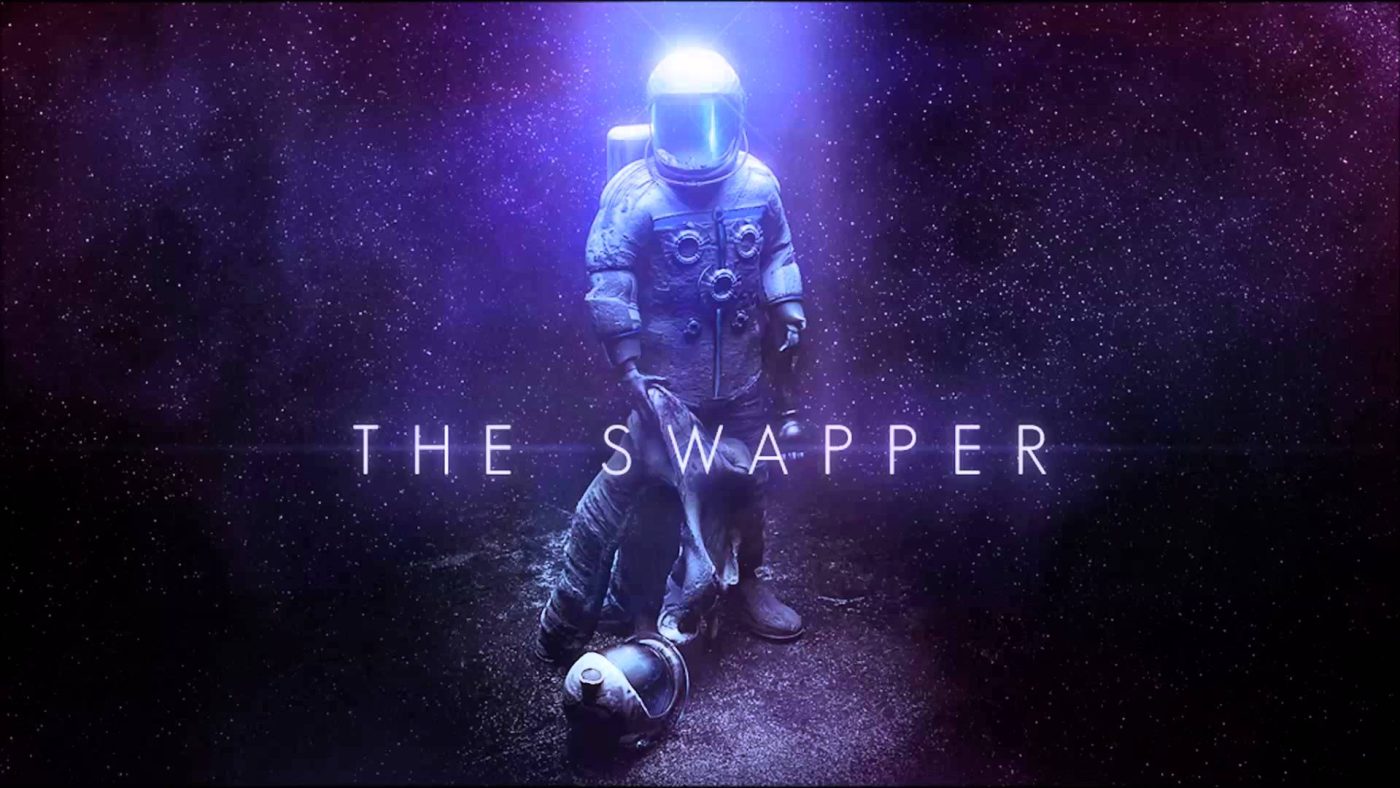

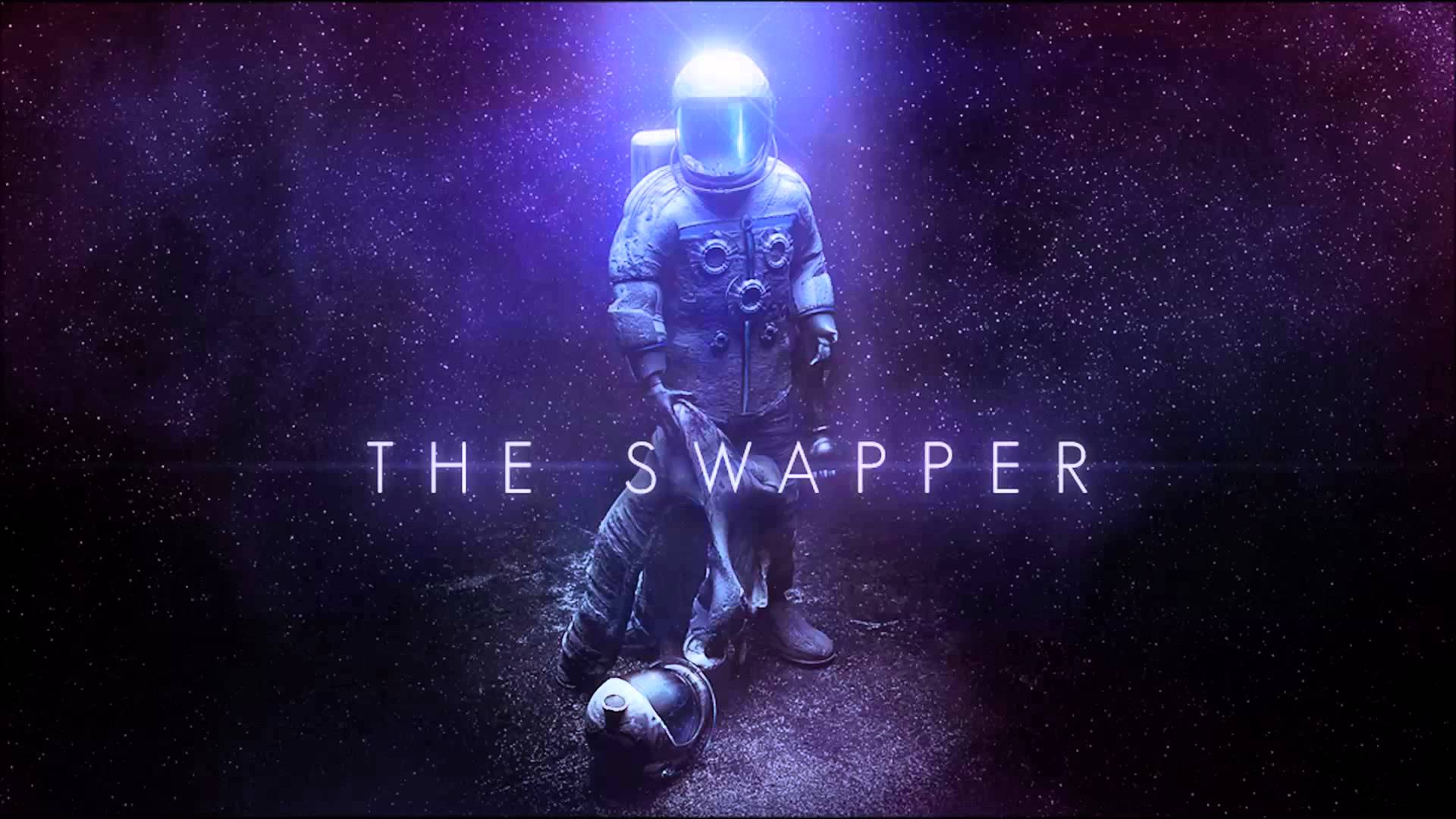
The vacuum of space. The profile of a space station on one side of the screen and the edge of a planet or natural satellite on the other side. In the center, the cold, white light of some distant star, and a space capsule floating, traveling slowly from the space station towards the planet, and the camera turns and turns, everything turns, very slowly, and we realize that there are no coordinates, in infinite space there is no up or down. From the beginning, ambient music plays that helps enhance that feeling. sci-fi, that space atmosphere, and suddenly the letters simply appear in the center: The Swapper. The scene does not last more than 15 seconds, but we immediately understand that we are facing a title that proposes to tell us a story, and that it will use all its resources to do so.
Ever since I saw some screenshots of this game, I've been wanting to play it. It seemed to me similar to The Fall, another that I have played and analyzed on this website and that also has a high narrative content and a similar spatial aesthetic, but when I tried it it turned out that The Swapper belongs to a different genre (or several), which is that of platforms, exploration and puzzles. It is basically a hybrid between the already mentioned The Fall, the classic Super Metroid and even some Portal.
In The Swapper You must control a person dressed in an astronaut suit, who is on a space station where an unknown accident occurs and all the surviving crew members must evacuate the area. Apparently this character is the only one who has managed to evacuate, and after a forced landing on the surface of the planet near the station he decides to walk a section of the terrain, until he finds a portal through which he can teleport back to the surface of the laboratories from where he has just escaped to find out what is happening and what is happening to the others. The evacuated station, called Theseus, is quite damaged, and You will have to find a way to go around the station in search of answers and try to solve the cause of the problems, discovering various events that caused its current state of abandonment, and the death of many members of the crew. On your way you will find data terminals They will give you access to crew records, especially some scientific staff records, and this information received forms one of the resources that the game will use so that you can find out what exactly has happened (and is happening) and why.
To advance through the station you will have to activate the mechanisms of several doors or entrances, and for this you need a certain amount of orbs, which increases as you approach the end of the game. You obtain these orbs within the vast majority of closed areas on the map - rooms in which you enter and the only exit is the same place you entered - where before leaving you must solve a puzzle, which consists of finding a way to collect the orbs that are located in some place inaccessible to you, but which you can reach thanks to your cloning and translation device/tool, and which you get practically when you start the game. This device allows you to create clones of yourself, up to a maximum of 4 interacting on the screen at the same time (5 including yourself), and who will move at the same time and in the same way as you, which means that if you move to the left, they will move forward; If you jump, they will jump. None of your clones can create other clones, only move in the same way as you do, but your translation device allows you to transfer your “soul” (or your consciousness) to the body of one of your clones, and suddenly that clone becomes yourself, and the body you left becomes a clone without a will of its own, like the others. To exemplify the process I will give an easy example: you must reach an area where the orbs you need to collect are, but it is several meters above your head and there are no stairs or elevator. How do you do it? The solution is easy. With your tool you point from below towards the surface that is higher and create a clone of yourself up there. Your clone will move like you, but it can't pick up the orbs for you, so you point your tool up again, this time directly at the clone, and transfer your consciousness to that body, so now you are the one on top and the body below is the clone, making the task of collecting the orbs now as easy as reaching out and touching them.
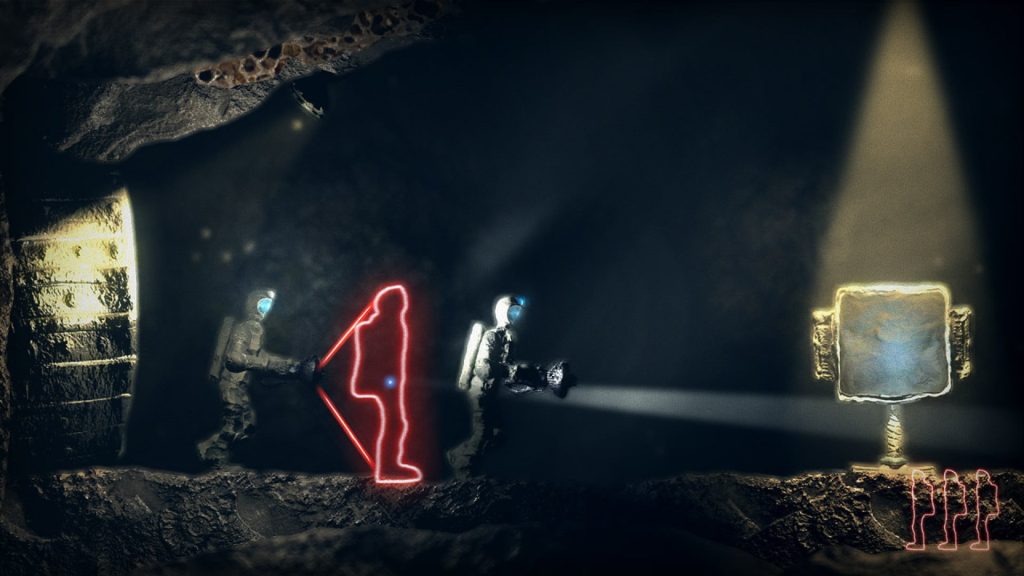
It is with this detail where the plot begins to play a little with philosophy. This game, created by Finns Otto Hantula and Olli Harjola, has a script written by Tom Jubert, also a screenwriter for FTL (Faster Than Light) and Gloom, and within how short it is it contains some great philosophical questions such as what is the mind? Does a clone have a soul? What are we? If you pay attention to the game mechanics, you will notice that from the beginning and to solve the puzzles you will create clones that you will then let die. The clones die in the same way you would die yourself, by being crushed or falling from a great height, although they also disintegrate if you pass through a special light that makes all the clones on the screen disappear, or if the body of a clone touches your own body. What I have mentioned implies that at some point you have created a clone and you have transferred your consciousness to it in order to continue advancing, and in this way you have let your original body die, so Can it be said that you are that being now, that did not exist a few seconds ago? And within what moral scope is it to constantly create clones and then let them die as if they were unimportant objects?
All this philosophical matter is also associated with a way of life? which is located at the station. During the investigation carried out on the desert and uninhabitable planet Chori V in search of minerals, humans discover a life form similar to the silkworm, a metallic alloy with greater resistance than that known so far, and rock formations that emit clear signals of consciousness, although it is contradictory since a rock cannot be alive, can it? Apparently these rocks have conscious thoughts and are telepathic, and when you pass near them you can “hear” their thoughts in your head, so here we have another philosophical dilemma: are these stones living beings or not? We will also see that another type of rock has been found on the planet, of unknown origin and with which some experiments have been attempted. This rock of enormous proportions does not have an irregular shape like the others, but is similar to a human face, and has some details engraved on the top. Like the others, she has a conscious “mind” and is telepathic, and becomes a very important part of the game's plot.
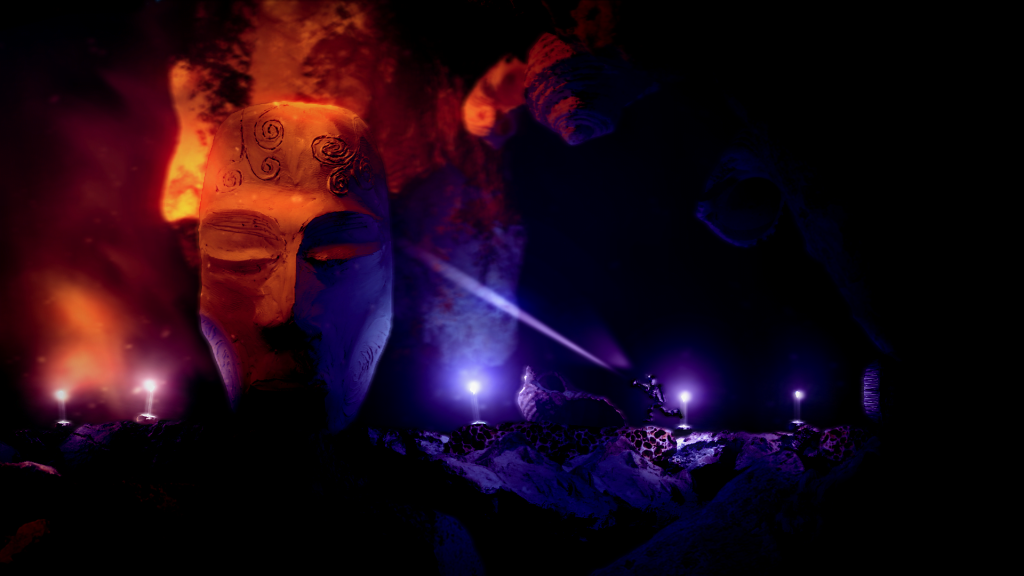
A dialogue that we can read in a moment says:
-A mind here is dying.
-What is “dying”?
-A disconnection, the absence of knowledge.
-What is it for?
-To avoid something worse?
-Will the mind learn something?
-He will stop learning, but he will maintain his identity. At least for a short period of time.
Con este diálogo comprendemos cuál es uno de los objetivos de The Swapper, y que no es sólo entretenernos con su mecánica de juego, sino también contarnos una historia de ciencia ficción y dejarnos unas reflexiones filosóficas abiertas para que podamos elaborarlas (o no) a nuestro criterio, como ¿qué es exactamente la vida? ¿Y la muerte? ¿La conciencia? Al acabar el juego (que además cuenta con dos finales diferentes) llegaremos a la conclusión de que el guión es el motivo por el que este juego ha sido nominado a varios premios importantes y ha ganado muchos otros dentro de la industria del videojuego, aunque sin desmerecer a otros de sus apartados ya que es un producto de muy buena calidad en todas las partes que lo componen.
Algo que no quiero dejar de comentar es un poco el sistema de juego. Con el control (o el teclado y mouse en PC) controlas a nuestro personaje y a su punto de mira, que es donde disparará su haz de luz para crear un clon o para transferir su conciencia. La mira no sólo marca una dirección, sino también distancia, y para asistirnos en saber dónde está exactamente el punto de mira tendremos constantemente en pantalla un pequeño punto iluminado que hará la función de mira de precisión. De esta forma no sólo podemos apuntar por ejemplo hacia la izquierda de la pantalla para ubicar a un clon en esa dirección, sino también a qué distancia nuestra queremos crearlo. Los clones los podremos crear en cualquier espacio que tengamos dentro del campo de vista del personaje, incluyendo en el aire, pero esto significa que no podremos crear clones al otro lado de una pared o una puerta. Como he mencionado antes, no puedes tener más de 4 a la vez, por lo que si quieres hacer aparecer otro en algún otro punto debes eliminar a alguno de los que ya creaste, ya sea absorbiendo a uno que esté cerca tuyo y puedas tocar con tu cuerpo, o dejando morir a uno ya sea aplastado de alguna forma o golpeándose contra el suelo al caer desde una gran altura. En las diferentes secciones que deberás ir superando te encontrarás con distintas fuentes de luz las cuales deberás saber sortear para poder llegar hasta los orbes. La influencia de estas luces es la siguiente: la luz roja puede ser atravesada por tu rayo para crear un clon, pero no puede ser atravesada por tu rayo para transferir tu conciencia a ese clon. La luz azul no permite que tu rayo de creación de clones la atraviese, por lo que no puedes crear clones en ningún lugar iluminado de azul ni crearlo más adelante atravesándolo, pero sí permite que tu rayo de transferencia de conciencia la atraviese. La luz púrpura como es lógico esperarse no permite que ninguno de los dos rayos la atraviese. Sabiendo esto es cuestión de analizar bien cada zona, ver si hay interruptores que pisar y qué función cumple cada uno, y encontrar la forma de colocar un clon cerca de los orbes y transferir nuestra conciencia a él para poder recogerlos.
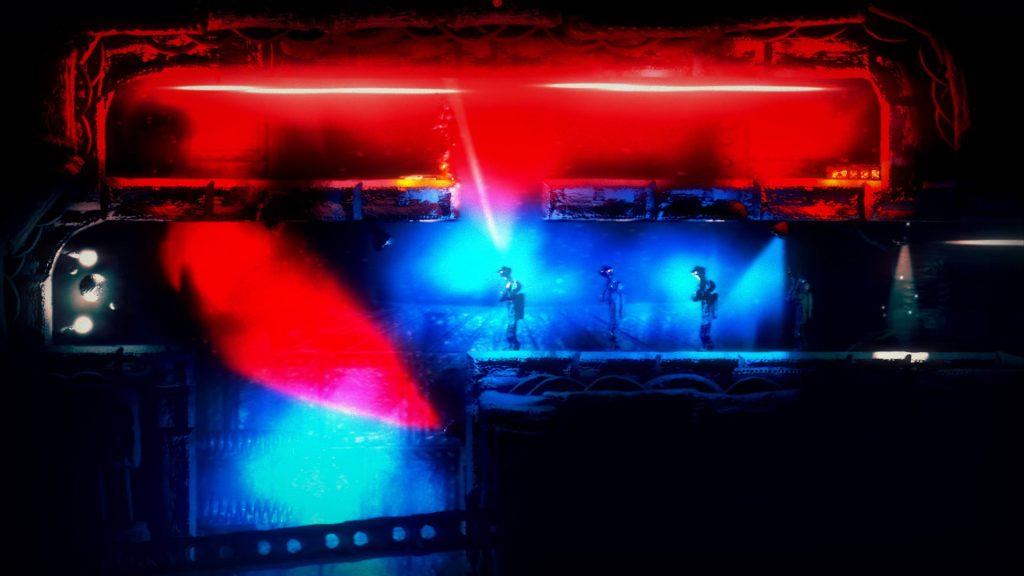
The graphic section of The Swapper es otra de las cosas a destacar. No es impresionante, ni una demostración de potencia gráfica, pero es uno de esos juegos que logran tener una atmósfera única y una identidad propia que difícilmente olvidarás, y esto es gracias a algo que quizás no hayas notado en el principio del juego o incluso nunca hasta haberlo leído ahora mismo, y es que las superficies, muchos de los elementos en el escenario, las piedras y los astronautas, incluyendo tu propio personaje, están modelados artesanalmente en arcilla y barro. Es por eso que la animación de nuestro personaje al correr se ve un poco distinta a lo tradicional. El trabajado de las escenas, la iluminación y los efectos de post-procesado incluyendo un filtro que agrega un poco de ruido a la imagen, dotan al juego de una atmósfera que se siente realista y a su vez un poco artificial, generando esa combinación futurista, familiar y alienígena que termina de complementarse con un apartado musical minimalista y donde imperan las melodías y sonidos “espaciales”. Estas melodías, instrumentales todas, están presentes en algunas partes del juego y ausentes totalmente en otras donde tendremos imágenes y silencio. Ninguna de las canciones que oiremos se nos quedará grabada, pero tampoco es la intención del compositor, ya que la música aquí se usa como un recurso para potenciar el efecto narrativo de las imágenes y eso se puede afirmar que lo han ejecutado muy bien.
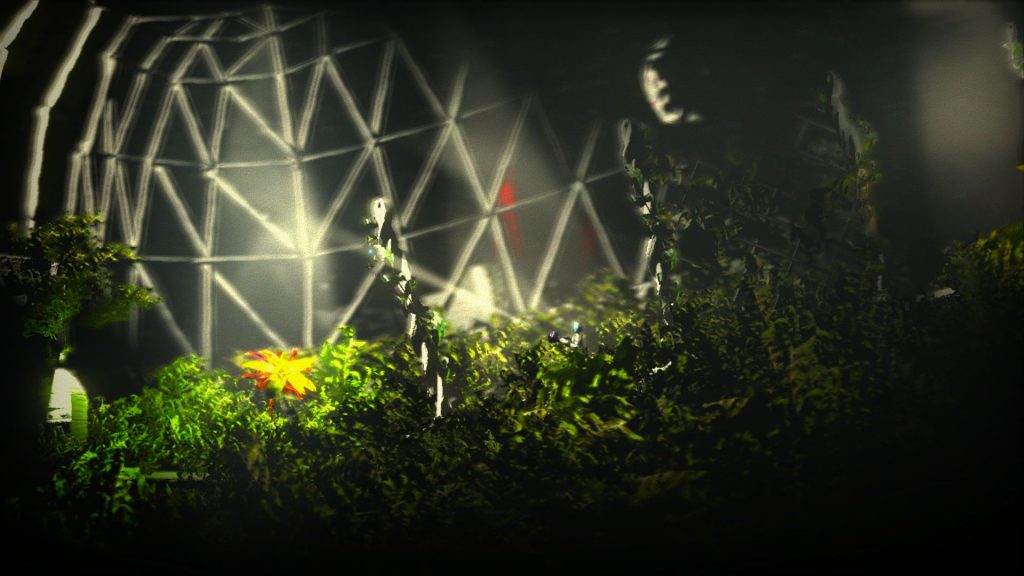
En Theseus tendremos comunicación con una superviviente que está haciendo algunas cosas por su cuenta, lo que nos dará gran parte de los pocos diálogos que oiremos en el juego. Si bien se puede decir que la calidad de los actores de voz es muy buena, varias veces suenan un poco artificiales, asemejándose a una forma de hablar que se considera más propia de un androide que de un humano. Los pensamientos de las piedras los recibiremos como una interferencia en pantalla con un texto en el centro y nada más, y los mensajes de los terminales de datos nos aparecerán como texto en pantalla (en la versión de Wii U aparecen en la pantalla del GamePad, al igual que el mapa, dejando la pantalla principal exclusivamente destinada al juego en sí). Las voces del juego sólo están en inglés, pero los textos de los subtítulos y todos los textos que aparecen en el propio juego están traducidos a diferentes idiomas incluyendo el español, por lo que el idioma no es una barrera para disfrutar de esta aventura en el espacio.
In conclusion, The Swapper conforma una travesía espacial más que interesante, con un apartado gráfico cuidado y único, una historia interesante y llena de reflexiones filosóficas, y un planteamiento de puzles muy bien desarrollado que, si bien no son imposibles en su dificultad, logran muchas veces subir tu ego cuando pudiste superarlos.
![[Analysis] 'The Swapper'](https://combogamer.com/wp-content/uploads/2025/10/the-swapper-combogamer-03-1024x680.jpg)
![[Analysis] 'The Swapper'](https://combogamer.com/wp-content/uploads/2025/10/the-swapper-combogamer-02.png)
![[Analysis] 'The Swapper'](https://combogamer.com/wp-content/uploads/2025/10/the-swapper-combogamer-04-1024x680.jpg)
Related Articles
![[Analysis] Celestial Return: Losing the dice is also losing the game](https://combogamer.com/wp-content/uploads/2026/07/celestialreturn_keyart-300x182.jpg)
![[Analysis] Mixtape: the narrative adventure that turns a 90s mixtape into an unforgettable video game](https://combogamer.com/wp-content/uploads/2026/07/mixtape-poster-300x160.png)
![[Analysis] Scholar Adventure: Mystery of Silence — A Journey to an Abbey that Whispers Secrets](https://combogamer.com/wp-content/uploads/2026/06/Scholar-Adventure-Mystery-of-Silence_poster-300x169.png)
![[Analysis] OUTBLAST — When 2000s Arcade Puts on the VR Goggles (and Still Unimpressed)](https://combogamer.com/wp-content/uploads/2026/06/OUTBLAST-poster-300x172.jpg)
![[Analysis] NODE: The Last Favor of the Antarii — Program Every Leap to Save the World](https://combogamer.com/wp-content/uploads/2026/06/NODE-poster-300x169.jpeg)