

Table of Contents
In the early 90s, with the arrival of the new 16-bit consoles in our country, a certain revolution occurred in the world of video games. The specialized magazines did not stop showing us what we were missing on the other side of the pond, that is, a genre as little known in Spain as thejapanese role playing games. Stupefied, we saw the news in Japan and how they were heading towards the United States without passing through the Old Continent. It seemed impossible to see great sagas likefinal fantasyeitherDragon Questand, indeed, that was the case. Luckily, this situation began to change in the mid-90s and some games of the genre landed in Spain and, if that were not enough, they did so translated into Spanish, which is appreciated in a type of game with such a volume of text.
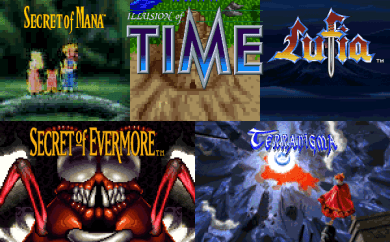
This was possible thanks to the Super Nintendo console, which offered us the possibility of tasting authentic video game gems such asSecret of Mana,Illusion of Time,Lufia,Secret of EvermoreandTerranigma, titles that we will talk about below. Okay, it's true that around here there was no trace of tremendous titles likeFinal Fantasy III,Chrono Trigger,EarthBoundeitherSuper Mario RPG(games that years later we saw in other formats and systems), but hey, it's kind of appreciated that this ace poker player landed in our country and taught us a new genre that we were little or not used to. Do we see them?
Secret of Mana
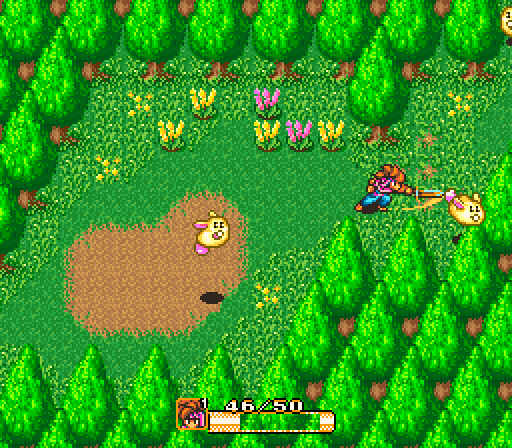
One of the first Japanese role-playing games to reach our consoles, and it did so in 1994 with the help of Square (it came out a year earlier in Japan), the creators of thefinal fantasy. It is an action role-playing game in which combat takes place in real time and in certain aspects it is very reminiscent of what we have already seen in games likeThe Legend of Zelda. InSecret of Mana,the only one on the list that did not arrive translated, they tell us the story of a boy named Randi who, being the victim of harassment by some bad guys, falls down a waterfall, triggering a whole catastrophe when he extracts a sword from a stone. This has to do with a tremendous battle that occurred in the past and whose protagonists were gods, beasts and ancient civilizations who fought for control of mana: a magical substance that springs from a tree and has tremendous power.
As we progress we realize what we have done by keeping the sword, and our task is to undo the mistake and recover seeds from the mana tree throughout the game universe. Of course, we will also have the help of Purim, daughter of a king, and a strange and friendly character called Popoie, who can be controlled by a second and a third player (the pear!). By the way, the names of the characters are the least important thing, since in the American and European versions of the game we can call them whatever we want.
Secret of Mana It is an affordable game within the complexity of this genreBeing an "action RPG" that, in addition, is very enjoyable in the company of two other friends (that very stupid dragon, what a game it was in its day). It has a very good technical section and very colorful graphics, but what really stands out is its tremendous soundtrack, which made the most of the Super Nintendo chip, with melodies that resonate over and over again in our ears. It has an easy-to-learn control system, avoiding the complexity of other titles aimed at more experienced players.
A true gem that has the honor of being one of the first Japanese role-playing games to arrive in Spain. As a curiosity, it should be noted thatSecret of Manawas originally calledSeiken Densetsu 2, being a sequel to the firstSeiken Densetsu, known in the West asMystic Quest, game erroneously linked to the sagafinal fantasy. Besides,Seiken Densetsu 3, continuation ofSecret of Mana, also came out on the Super Nintendo, but stayed in Japan. Years later, more games from the "Mana" saga came out on other systems, the last beingVisions of Mana, released in 2024.
Illusion of Time
It was created by Quintet (produced by Enix) and released in Japan in 1993, although it did not appear here until 1995.Illusion of Time(Illusion of Gaiain the United States andGaia Gensokiin Japan)It was the first Japanese RPG we received translated into Spanishand next to Soul Blazer(which was also released in Europe) and Terranigma(its continuation) form the series Heaven and Earth Saga, although they are independent games. The game we received came in a special pack distributed by Nintendo that included a guide that would help us in our arduous task.
Will is the protagonist of this adventure. An ordinary and cool boy whose adventures begin at school, along with his classmates. Will discovers that he has strange telekinetic powers and will embark on a search for his father, who disappeared some time ago, something that will take him to the Tower of Babel itself. And if that were not enough, there is a comet that wants to destroy the magical world in which Will lives, something that will take us to different and ancient places in the world such as Egypt or China while we look for clues to destroy the comet, find our father and reach the Tower of Babel, where the outcome of this tremendous adventure will take place.
De nuevoestamos ante un RPG de acción, con combates en tiempo real y un sistema de juego muy similar al deSecret of ManaeitherThe Legend of Zelda. Cuenta con unos gráficos muy buenos, muy en la línea de este tipo de juegos en Super Nintendo, con una banda sonora genial y una historia bien hilada, llena de misterios y de personajes memorables, que nos picará para llegar al final.
Por último, hay que mencionarel tremendo trabajo que Nintendo hizo para publicar este juego en España.Illusion of Timefue todo un referente y esto permitió que otros juegos del mismo tipo llegaran a nuestro país completamente traducidos a la lengua de Cervantes, juegos como los que veremos a continuación.
Lufia
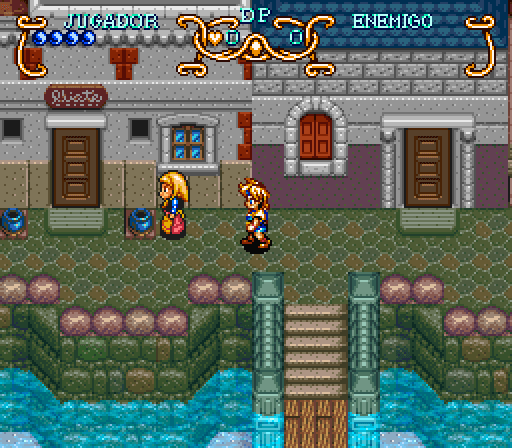
El tercer juego del que hoy hablamos esLufia, segunda parte deLufia & The Fortress of Doom, que no se distribuyó en Europa, y también llamadoLufia II: Rise of the Sinistralsin the United States andEstpolis Denki IIen Japón. Fue creado por Neverland, producido por Natsume y lanzado en Europa por Nintendo. Se lanzó en 1995, pero hasta 1996 no llegó a Europa y a España lo hizo bastante más tarde, en 1998,siendo el último gran RPG para Super Nintendo traducido al castellano.
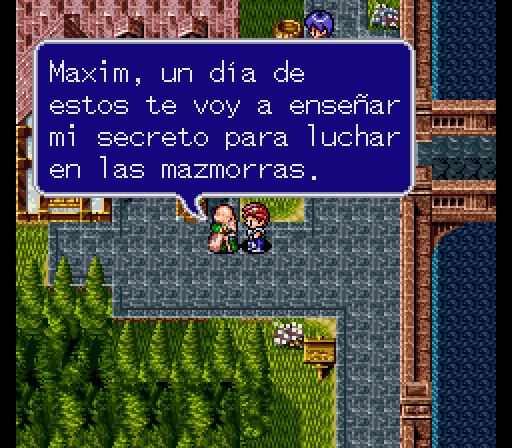
InLufianos cuentan la historia de Maxim, un guerrero que se gana la vida despedazando criaturas que amenazan a su pueblo. Poco a poco Maxim se da cuenta de que el número de monstruos que aparecen va en aumento y un día decide investigar estos hechos. En su aventura conoce a Iris, una extraña muchacha que le dice que estos acontecimientos tienen que ver con una esfera de luz cuyo poder hace que malvadas criaturas surjan para amenazar al mundo. A partir de aquí iremos investigando todo esto, llegando a la conclusión de que unos seres llamados Siniestros están detrás de todo mal.
A simple vista se trata de un argumento un tanto soso y simple para presentarnoseste juego de rol con combates por turnos, pero a medida que jugamos iremos viendo queLufiaes bastante más. Diferentes personajes irán acompañándonos en nuestra aventura, nos ayudarán en todos los combates que disputemos y cada uno tiene sus poderes, que iremos mejorando con el tiempo. Un juego profundo con un sistema sencillo pero efectivo y con un apartado técnico a la altura, y encima traducido al castellano.
Hay que decir, por último, queLufiano se quedó ahí. Aparte del primer juego (que ni lo olimos), surgieron nuevos juegos posteriores a este para consolas portátiles de Nintendo, siendoLufia: Curse of the Sinistralsel último juego de la saga. Es un remake de este mismo juego para Nintendo DS, con mejores gráficos, un sistema de juego distinto y otras mejoras. Quizá esteLufia pasó algo desapercibido en su momento, pero no hay que negar que es otra genial opción en el catálogo de Super Nintendo.
Secret of Evermore
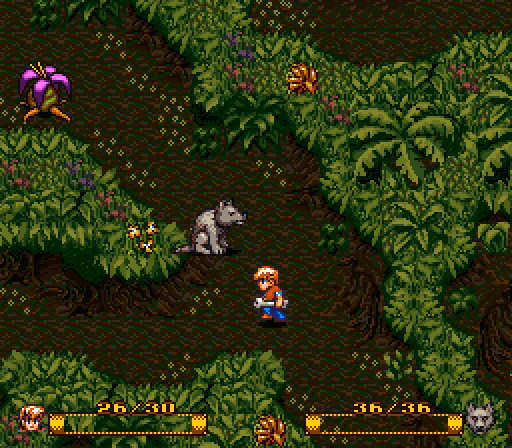
Más rol de la mano de Square. En 1995 nacíaSecret of Evermoreen Estados Unidos y un año más tarde hizo acto de presencia en España y el resto de Europa, de nuevo traducido al castellano. Lo curioso es queSecret of Evermoreno apareció en el mercado japonés, así que nos quedamos con un título exclusivo para el mercado occidental que recuerda mucho aSecret of Mana. De nuevo Nintendo lanzó una versión estupenda para España, acompañada de una guía de 76 páginas que nos ayudaba a lo largo de la aventura.
El juego arranca en el año 1965 en un pequeño pueblo de Estados Unidos. Un científico presenta un experimento en una gran mansión rodeado de sus colegas. De pronto algo sale mal y se produce una espectacular explosión que deja estupefactos a todos los habitantes del pueblo, que no entienden que pudo pasar allí. Años más tarde la gente ya se ha olvidado de aquel incidente y un chaval, acompañado de su perro, sale del dice alucinado. De vuelta a casa, el chico encontró los restos de la mansión en la que había ocurrido el accidente, y sin pensárselo mucho decide adentrarse en ella. Allí descubrió una enorme máquina y ni él ni su perro resistieron la tentación de tocarla. La máquina comenzó a funcionar y el perro comenzó a mutar y desapareció. Y también lo hizo el chico, que fue transportado al extraño y misterioso mundo de Evermore.
Y así comienzaSecret of Evermore, otro juego de rol y acción en el que nuestro protagonista tiene que escapar del mundo de Evermore, mundo compuesto de cuatro esferas que representan cuatro épocas del tiempo distintas (prehistoria, edad antigua, edad media y futuro). Allícon ayuda de su fiel perro, que adopta diferentes formas dependiendo de la época del tiempo en la que estemos, debemos investigar cómo demonios se sale de ahí y quién está detrás de todos estos acontecimientos, enfrentándonos a todo tipo de enemigos en combates en tiempo real.
Secret of Evermorees una pasada de juego.Muchos le pueden achacar mucho parecido conSecret of Mana, pero la verdad es que gracias a su original argumento y a su brutal apartado técnico, este juegazo te llevará sus buenas horas delante de la TV a los mandos de tu Super Nintendo. En serio, una verdadera pasada.
Terranigma
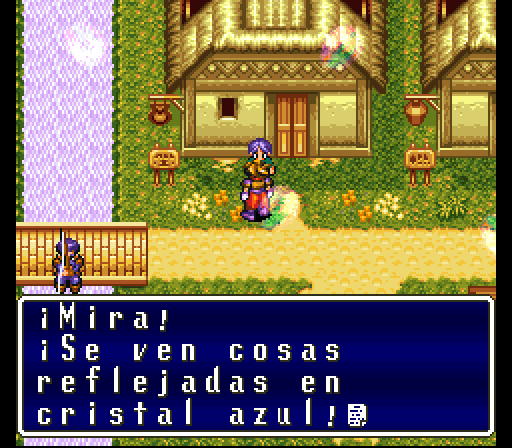
Y por último, aquí estáTerranigma, otro rolazo quetambién vino con guía y traducido al castellano.Terranigmafue creado por Quintet y editado por Enix en Japón (llamadoTenchi Sozoy lanzado en 1995) y Nintendo en Europa (1996), siendo llamativo que el juego no apareciera en Estados Unidos. Estamos ante el último juego de la franquiciaHeaven and Earth Sagay otra vezhablamos de un juego de rol de acción con combates en tiempo real, con un desarrollo y una jugabilidad muy similar aIllusion of Time.
El mundo que conocemos es una esfera que alberga dos partes: la luz y la oscuridad. La luz trae crecimiento y prosperidad, mientras que la oscuridad tiene hueco para el mal y las catástrofes. Ank es un gamberrete que se dedica a dar por saco a sus vecinos todo lo que puede, pero un día la lía parda de narices al abrir una caja prohibida de la que sale una esfera rosa con alas llamada Yomi. Ank descubre que la gente se ha convertido en piedra menos el sabio, que le dice que para parar todo este desastre tiene que llegar a 5 torres dispersas por el mundo para salvar a la humanidad, pero esto es sólo el principio, ya que nuestra misión será ni más ni menos que regenerar el mundo.
Así de místico y de catástrofista esTerranigma, enorme juego con muchas cosas que hacer. Recorreremos el mundo mejorando nuestras habilidades de combate, que se incluyen armas y poderes mágicos que nos ayudarán a llevar a cabo tan complicada misión. Por otro lado, el sistema de juego es muy fácil de aprender, lo quees una gozada mientras nos movemos por los espectaculares parajes del juego. Quizá sea uno de los títulos que más exprimen la Super Nintendo al tener un despliegue visual único, plagado de efectos especiales de los que hace gala la Super Nintendo. Por si fuera poco, la banda sonora es una verdadera delicia, tanto que según hemos visto por ahí fue lanzada en Japón en CD.
Una verdadera obra maestra.Uno de los mejores juegos de rol para Super Nintendogracias a su brutal argumento, a su enorme cantidad de horas de juego y al apartado técnico que posee. ¿Pegas? Quizá la traducción al castellano podría ser mejor, ya que hay algunos errores en los textos que pueden resultar un poco confusos para el jugador.
Related Articles
![[Very Top] 5 fighting games that I would like to see return](https://combogamer.com/wp-content/uploads/2026/02/Muy-Top-juegos-lucha-olvidados-1-300x200.png)
![[Analysis] Echo Generation 2 — When a Sequel Risks Everything](https://combogamer.com/wp-content/uploads/2026/06/Echo-Generation-2-poster-300x169.jpg)
![[Very top] Five weird games from a galaxy far, far away](https://combogamer.com/wp-content/uploads/2026/04/5rarosstarwars_banner-300x186.jpg)
![[Playing…] Shin Megami Tensei V: the original version of the Pokémon-style game in an apocalyptic world](https://combogamer.com/wp-content/uploads/2025/11/Shin-Megami-Tensei-V-Portada-300x158.jpg)
![[Very Top] Five recurring characters in my games of Super Smash Bros. Ultimate (2nd part)](https://combogamer.com/wp-content/uploads/2026/01/Muy-Top-Smash-2-Portada-300x237.jpg)
![[Very top] Five graphic adventures for consoles](https://combogamer.com/wp-content/uploads/2025/12/5aventurasconsolas_banner-300x154.png)