

Table of Contents
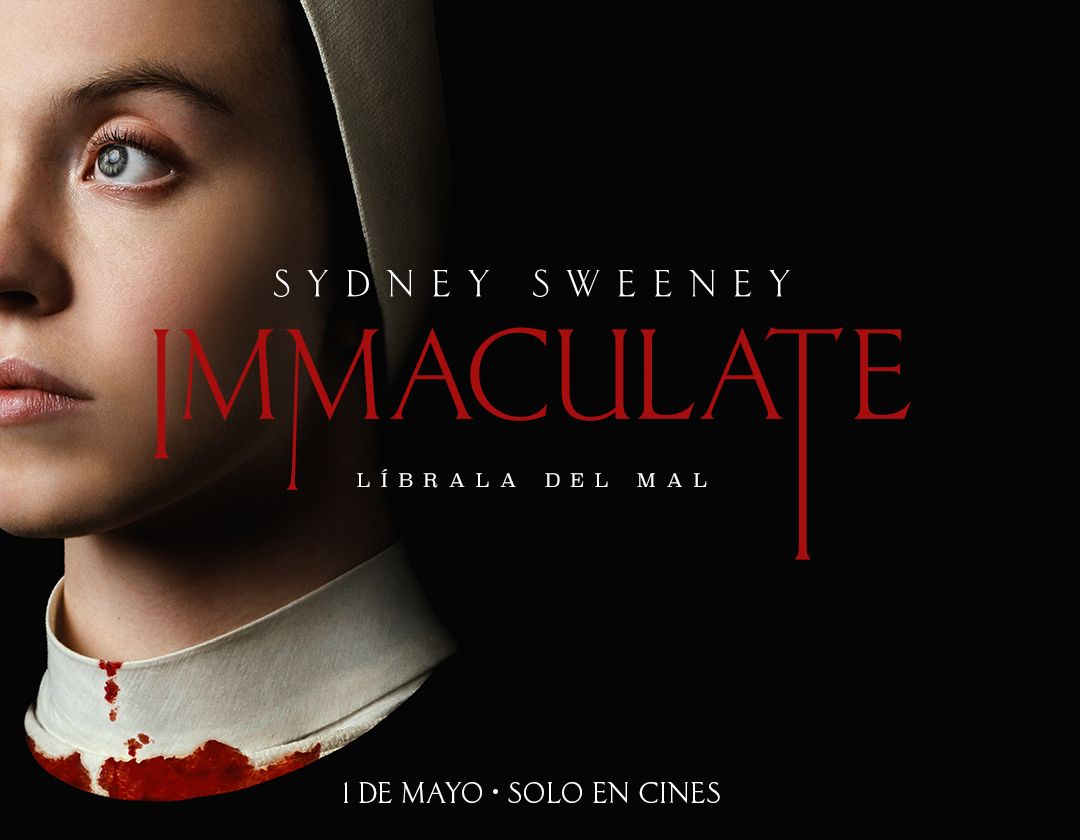
Religious terror has been a pillar of horror cinema since its beginnings, offering us gems such as The Exorcist either The Prophecy. However, for every masterpiece, the genre has given us dozens of failed attempts that fail to rise above their own clichés. Unfortunately, "Immaculata," directed by Michael Mohan and starring Sydney Sweeney, falls into the latter category.
The sin of predictability
The plot of "Immaculata" introduces us to Cecilia (Sweeney), a devout young woman who accepts a position in an Italian convent. As expected, the place hides dark secrets that will test the faith and sanity of our protagonist. So far, nothing we haven't seen before. The problem is that Andrew Lobel's script seems content to follow the religious horror manual to the letter, without daring to innovate or subvert the viewer's expectations.
Actions that fail to save souls
Sydney Sweeney, known for her roles in series such as "Euphoria", makes a valiant effort to bring Cecilia to life. However, his performance oscillates between moments of genuine tension and others of overacting that break immersion. The rest of the cast, including Álvaro Morte as Father Tedeschi, gives performances that range from acceptable to forgettable, failing to elevate the material beyond its inherent mediocrity.
The curse of lack of atmosphere
One of the crucial elements in any horror film is atmosphere, and this is where "Immaculata" fails miserably. Despite having a setting as rich in possibilities as an old Italian convent, the film fails to create that feeling of oppression and constant discomfort that should be the hallmark of a good horror film. Attempts to build tension are undermined by uneven pacing and direction that seems more interested in easy scares than psychological terror.
Gratuitous violence: the false idol of modern horror
In a desperate attempt to compensate for its lack of substance, "Inmaculada" resorts to graphic and bloody violence. However, these scenes often seem gratuitous and disconnected from the main narrative. The film presents us with images of characters being brutally murdered, beaten and burned, but these violent sequences fail to generate true psychological horror, remaining a mere gore spectacle.
The purgatory of character development
Another cardinal sin of "Inmaculada" is its inability to develop three-dimensional characters. Cecilia, despite being the protagonist, lacks the necessary depth for the audience to fully identify with her struggle. Secondary characters, such as the other nuns of the convent and the antagonists, remain underdeveloped archetypes, making it difficult for the viewer to become emotionally invested in their fates.
Conclusion: A less than immaculate experience
In short, "Immaculata" is a disappointing addition to the religious horror genre. Despite having an intriguing concept and a talented cast, the film fails to overcome its shortcomings in terms of screenplay, character development, and atmosphere building. Fans of the genre will find in “Inmaculada” an experience that, while not entirely without merit, is far from being memorable or innovative.
As a final reminder, true horror lies not in graphic violence or sudden jump scares, but in the ability to create an atmosphere of sustained unease and characters that the audience can identify with. “Immaculate,” unfortunately, fails on both counts, remaining on the surface of what could have been a deeper and more disturbing exploration of faith, fear, and the supernatural. At the altar of horror cinema, this film is nothing more than a forgettable offering.
Some curiosities about Inmaculada
- Sydney Sweeney He auditioned for this film in 2014 when he was 17 years old. But the project never materialized. Years later, she took on the role of producer and contacted the writer, acquired and revised the script, hired a director, found financiers, and sold the film to Neon.
- In an interview with IMDb, Sydney revealed that her grandmothers appear in both church scenes. She explained: "In the two church scenes where I walk with the candle down the aisle, they are in the first two rows. And then, in the scene where I am crowned and everyone in the congregation sings, they are standing in the front row next to the Mother Superior.
- Two saints are mentioned in the film. The convent is said to have been built over the catacombs that house Saint Stephen, and Saint Helena is named as the person who brought the stake of the cross from the holy lands. Saint Stephen is considered the first Christian martyr; Stephen, Paul's appointed deacon of the original 12 apostles, was stoned to death shortly after Christ's resurrection for blasphemy after giving a speech condemning the Jewish authorities. The relics of Saint Stephen were brought and buried in Italy. Saint Helena was the mother of Emperor Constantine I. She went on a pilgrimage tour of the Holy Lands to build churches and collect sacred relics around 326-7 AD. According to Christian tradition, he discovered the "true cross" on which Jesus was crucified during this pilgrimage, along with the nails of the crucifixion and many other relics.
Related Articles
![[HorrorScience] Obsession: turning the classic "be careful what you wish for" into a nightmare](https://combogamer.com/wp-content/uploads/2026/07/obsession-poster-300x169.jpg)
![[HorrorScience] Backrooms: the A24 film that turned an internet creepypasta into a horror phenomenon](https://combogamer.com/wp-content/uploads/2026/07/backrooms-poster-300x169.jpg)
![[HorrorScience] Victor Crowley (Hatchet IV): The fourth installment that arrived without warning](https://combogamer.com/wp-content/uploads/2026/06/victor_crowley-poster-300x169.jpg)
![[HorrorScience] Number 23 (2007)](https://combogamer.com/wp-content/uploads/2026/05/El-numero-23-banner-largo-300x169.jpg)
![[HorrorScience] Hokum: When a bitter writer meets an Irish witch](https://combogamer.com/wp-content/uploads/2026/06/hokum-poster-300x169.jpg)
![[HorrorScience] The man who could cheat death](https://combogamer.com/wp-content/uploads/2026/04/The-man-cheated-death-banner-300x165.png)