


Table of Contents
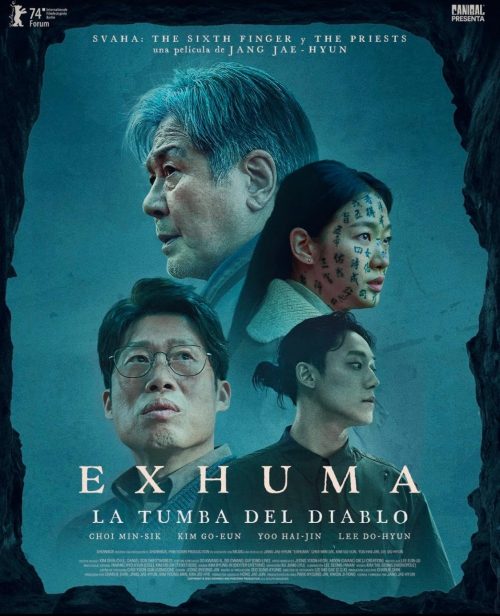
From the moment I dove into Exhuma, director Jang Jae-hyun's new horror film, I knew I was in for something special. The story introduces us to an unconventional team: Hwa-rim, a powerful shaman; Bong-gil, his apprentice; Kim Sang-deok, a feng shui expert; and Yeong-geun, a professional undertaker. Together they embark on a seemingly simple mission that soon turns into a supernatural nightmare.
It all begins when a wealthy Korean-American family seeks Hwa-rim's help to investigate a mysterious illness affecting their newborn baby. The shaman quickly discovers that it is a curse known as "Call of the Grave," caused by the vengeful spirit of an ancestor.
The family patriarch, Park Ji-yong, tasks them with relocating his grandfather's grave to appease the spirit. However, from the beginning you sense that there is something sinister about the whole thing. Sang-deok, the feng shui expert, is reluctant when Ji-yong insists that the body be cremated along with the unopened coffin, unusual considering its remote location near the North Korean border.
Rituals that come to life on the screen
What impressed me most about Exhuma was the way it portrayed theShamanic rituals and traditional Korean ceremonies. These scenes are not mere spectacle; They are the beating heart of the film, loaded with an authenticity that makes your skin crawl.
The first major ceremony occurs when the team begins excavating the tomb. Hwa-rim and Bong-gil perform an elaborate protection ritual to avoid awakening evil forces. The tension is palpable as Hwa-rim executes precise movements and chants invocations, with Bong-gil assisting her with the beat of a ritual drum.
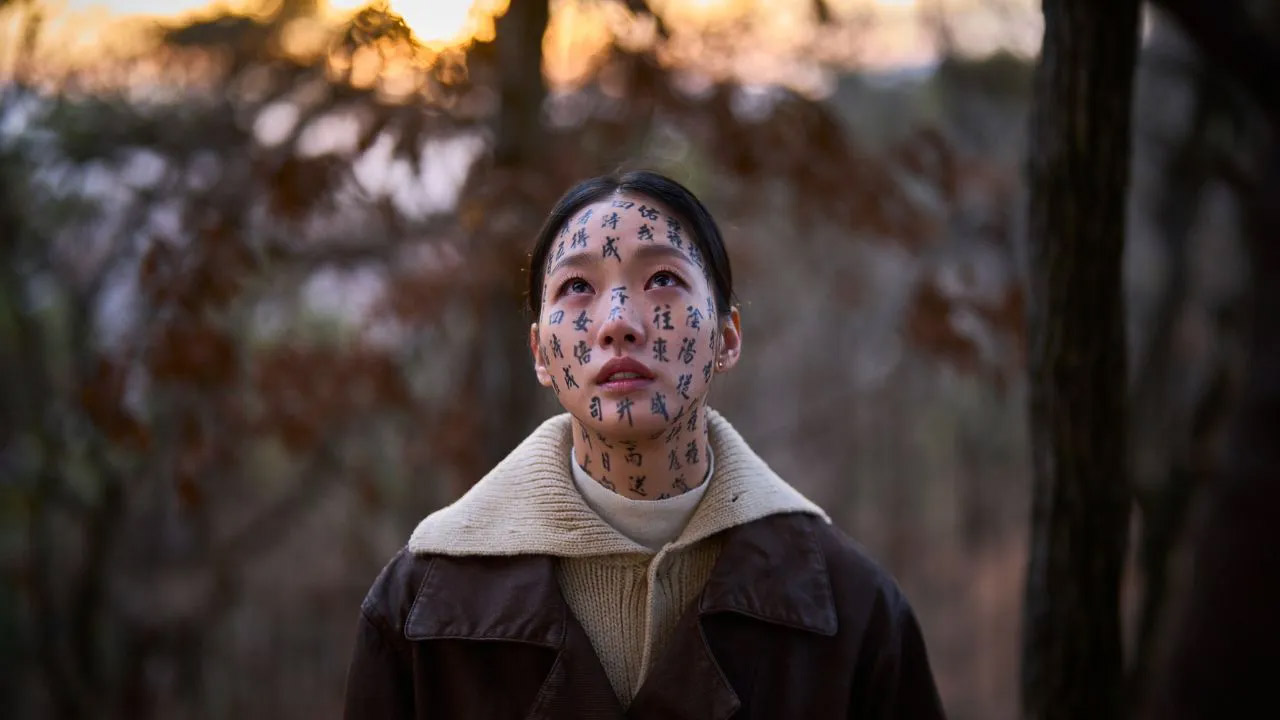
I was surprised to learn that Kim Go-eun, the actress who plays Hwa-rim, prepared extensively for these scenes. He spent months receiving teachings from a famous Korean shaman, learning gestures, movements and even memorizing Buddhist sutras. This commitment is reflected on the screen; Their performances during rituals are hypnotic and chilling in their realism.
One scene that will stick in my memory is when Hwa-rim performs a soul summoning ceremony. Wielding a pair of ritual knives, he performs a frantic dance in an act of divination. The intensity of Kim Go-eun's performance, combined with the atmospheric cinematography, creates a truly disturbing moment.
![[HorrorScience] Exhuma: Ancestral terror and shamanism in a shocking Korean film](https://combogamer.com/wp-content/uploads/2024/12/exhuma-02.jpg)
The horror breaks out
As the plot progresses, Exhuma takes unexpected turns. While cleaning up the excavation site, a worker accidentally decapitates a snake with a human head, triggering a series of ominous events. This incident marks the point at which supernatural forces begin to manifest themselves in a more direct and threatening way.
The tension reaches its peak when the coffin is temporarily stored in a nearby warehouse due to a sudden rain. A local custodian, tempted by rumors of hidden treasure, makes the fatal mistake of opening the coffin. This act releases the vengeful entity who turns out to be Ji-yong's grandfather, a Japanese collaborator during the occupation of Korea.
This revelation adds a layer of complexity to the story. The narrative twist allows the film to explore themes related to Korea's historical trauma and how the sins of the past continue to affect present generations. The spirit begins to attack its own bloodline, killing Ji-yong's parents and Ji-yong himself in scenes of visceral horror.
![[HorrorScience] Exhuma: Ancestral terror and shamanism in a shocking Korean film](https://combogamer.com/wp-content/uploads/2024/12/exhuma-01.jpg)
A deeper mystery is revealed
Just when you thought the story had reached its climax, Exhuma takes a radical turn. Months after the initial events, the team discovers that there is a second burial at the same site: a seven-foot-long upright coffin.
This revelation marks the beginning of what I felt like a “second film” within Exhuma. The tone changes, becoming even darker and more surreal. The team is forced to confront supernatural forces that go beyond their previous experiences, connecting the story with elements of Japanese mythology and revealing a conspiracy that dates back to the time of the occupation.
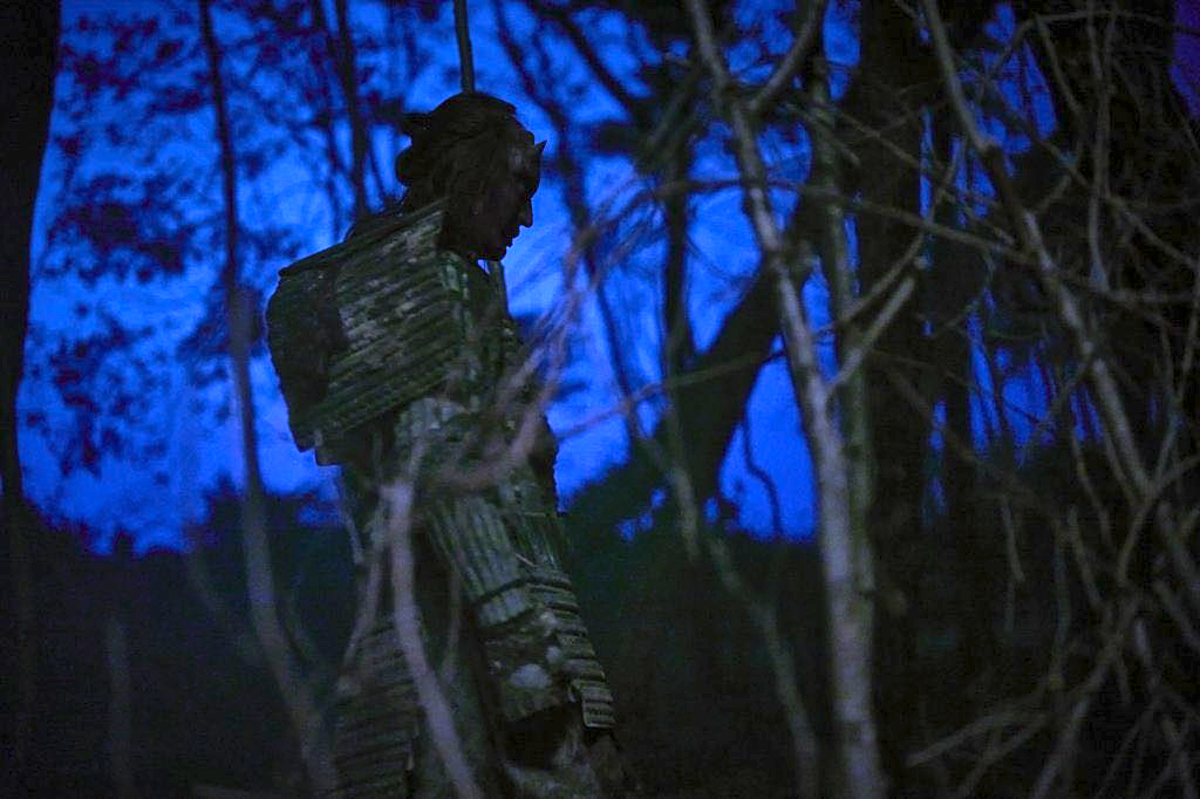
One of the scenes that shocked me the most occurs when Bong-gil witnesses how a supernatural creature, later revealed to be an oni (demon from Japanese mythology), massacres the priest of the local temple and a farmer along with his pigs. The brutality of the scene contrasts with the more atmospheric tone of the first half, signaling that the rules of the game have changed dramatically.
Beyond the superficial terror
As the plot developed, I realized that Exhuma is not just a conventional horror film. Director Jang Jae-hyun uses the genre as a vehicle to explore deeper themes related to Korean history, national identity, and collective trauma.
The figure of the collaborationist grandfather seemed to me a powerful metaphor for the still open wounds left by the Japanese occupation. His tormented spirit, unable to rest due to an improper burial, reflects the way the sins of the past continue to haunt modern Korean society.
The discovery of the second coffin and the revelation that it contains the remains of a cursed samurai expand this historical metaphor. It is revealed that the monk "Gisune" mentioned at the beginning of the film was actually a powerful Japanese shaman named Murayama Junji, known as "The Fox" (Kitsune). This narrative twist connects the plot to Japan's attempts to erase Korean cultural identity during the occupation, symbolized by the cursed samurai buried on Korean soil.
The film also explores the tension between traditional beliefs and modernity. The four protagonists, each with their own specialty (shamanism, feng shui, funeral services), represent different aspects of Korean spirituality and traditions. His fight against supernatural forces that threaten the present can be interpreted as an allegory for how South Korea navigates its cultural identity in a globalized world.
![[HorrorScience] Exhuma: Ancestral terror and shamanism in a shocking Korean film](https://combogamer.com/wp-content/uploads/2024/12/exhuma-04.jpg)
Performances that bring horror to life
The cast, made up of some of Korea's most respected actors, manages to bring complex and believable characters to life despite the supernatural situations in which they find themselves.
Choi Min-sik shines as feng shui expert Kim Sang-deok. His presence on screen is magnetic, bringing gravitas to every scene in which he appears. Choi's performance manages to convey the wisdom and skepticism of a man who has seen too much, but is still overwhelmed by the events of the film.
Kim Go-eun gives a powerful performance as the shaman Hwa-rim. Their dedication to learning the royal rituals results in scenes of astonishing intensity. Particularly memorable is the sequence in which he performs an elaborate ritual to protect the workers from ghosts.
Lee Do-hyun, in his feature film debut, demonstrates why he is considered one of the rising stars of Korean cinema. His portrayal of Bong-gil, the shaman's apprentice, evolves throughout the film, especially when his character becomes possessed by supernatural forces in the second half.
Yoo Hae-jin, best known for his comedic roles, provides subtle comic relief as undertaker Yeong-geun. His presence helps balance the most intense moments of the film without taking away from their seriousness.
Creating a nightmare world
From a technical point of view, I found Exhuma very good. The cinematography, by Lee Moe-gae, creates an oppressive and claustrophobic atmosphere even in the outdoor scenes. Although the CGI is quite noticeable in some scenes, it is not something that ruins the experience.
The use of lighting is effective, playing with shadows and darkness to increase the feeling of constant threat. The night scenes on the mountain where the tomb is located are especially striking, with the fog and gloom creating a nightmarish atmosphere.
The makeup and practical effects deserve a special mention. The decision to avoid digital effects as much as possible in favor of traditional techniques brings a disturbing realism to the supernatural apparitions. The oni creature, in particular, is truly terrifying in its brief but shocking appearances.
A journey into the heart of Korean fear
Exhuma presents itself as much more than a simple horror film. It is a fascinating journey into the depths of Korean culture, history and ancient beliefs. Through its shocking scenes of shamanic rituals and its plot full of unexpected twists, the film immerses us in a world where the supernatural and the earthly intertwine in terrifying and surprising ways.
If you are looking for a horror experience that goes beyond superficial scares, Exhuma is, without a doubt, a film that you should not miss. And the same if you are a fan of oriental culture and even animes: the movie feels like watching a good live action of an excellent anime or manhwa.
![[HorrorScience] Exhuma: Ancestral terror and shamanism in a shocking Korean film](https://combogamer.com/wp-content/uploads/2024/12/exhuma-chaman.jpg)
![[HorrorScience] Exhuma: Ancestral terror and shamanism in a shocking Korean film](https://combogamer.com/wp-content/uploads/2024/12/exhuma-aprendiz.jpg)
![[HorrorScience] Exhuma: Ancestral terror and shamanism in a shocking Korean film](https://combogamer.com/wp-content/uploads/2024/12/exhuma-fengshui.jpg)
![[HorrorScience] Exhuma: Ancestral terror and shamanism in a shocking Korean film](https://combogamer.com/wp-content/uploads/2024/12/exhuma-funebrero.jpg)
Some curiosities about Exhuma
- Lead actress Kim Go-eun said in the interview that she was a little worried about being possessed or other supernatural things she might experience. This was because everything he did in the scene (praying, exorcising, for example) was exactly the same thing that real shamans would do. But a real shaman, who helped produce the film, assured him he needn't worry about that.
- The idea of casting evil spirits into pigs has a long history and has been present in many cultures. As just one example, in Matthew 8:28-34 in the Bible, Jesus casts demons out of two possessed men and throws them into a herd of pigs, which then jump into the sea.
- According to the director, the names of the main characters come from South Korean patriotic martyrs who fought against Japanese colonial rule, namely Kim Sang-deok, Ko Young-geun, Lee Hwa-rim and Yoon Bong-gil.
- The license plate numbers of the main characters are related to South Korea's independence movements.
Related Articles
![[HorrorScience] Obsession: turning the classic "be careful what you wish for" into a nightmare](https://combogamer.com/wp-content/uploads/2026/07/obsession-poster-300x169.jpg)
![[HorrorScience] Backrooms: the A24 film that turned an internet creepypasta into a horror phenomenon](https://combogamer.com/wp-content/uploads/2026/07/backrooms-poster-300x169.jpg)
![[HorrorScience] Victor Crowley (Hatchet IV): The fourth installment that arrived without warning](https://combogamer.com/wp-content/uploads/2026/06/victor_crowley-poster-300x169.jpg)
![[HorrorScience] Number 23 (2007)](https://combogamer.com/wp-content/uploads/2026/05/El-numero-23-banner-largo-300x169.jpg)
![[HorrorScience] Hokum: When a bitter writer meets an Irish witch](https://combogamer.com/wp-content/uploads/2026/06/hokum-poster-300x169.jpg)
![[HorrorScience] The man who could cheat death](https://combogamer.com/wp-content/uploads/2026/04/The-man-cheated-death-banner-300x165.png)