

Table of Contents
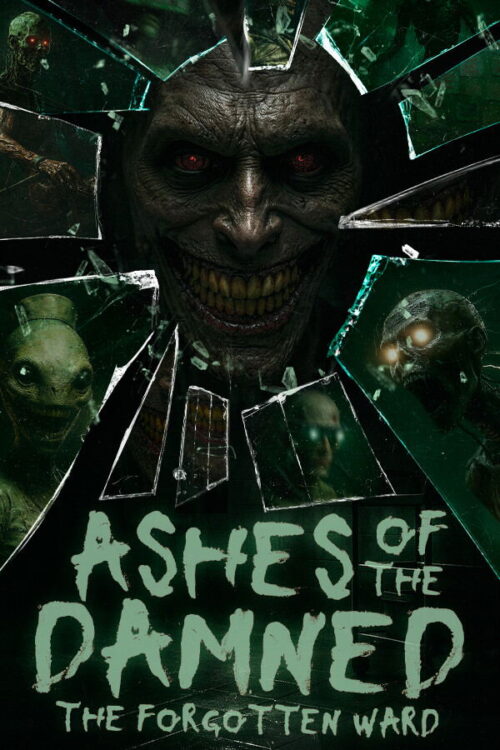
When a solitary developer dares to carry out an entire project in just one year, the least one can do is sit down and play it with the best possible disposition. Ashes of the Damned: The Forgotten Ward, the work of Crimson Cloud Games, comes with a premise that is engaging from the start: an abandoned psychiatric hospital whose corridors repeat in a loop, something in the darkness that seems to remember you, and not a weapon to defend yourself. The problem is that, as one progresses, that initial promise begins to show more seams than I would have liked to find (and I am very permissive with these things).
Waking up without a name in a place that already knows you
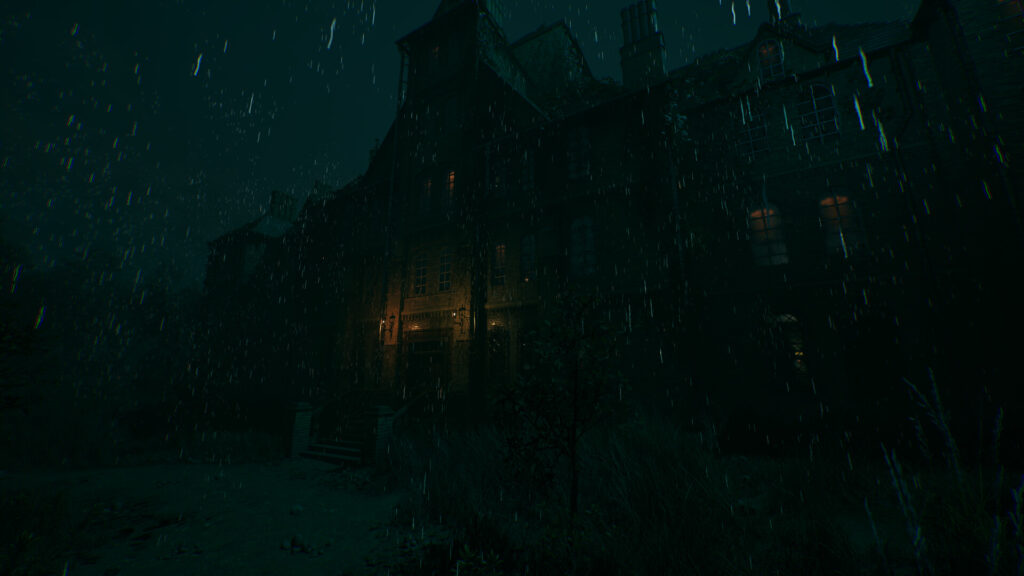
The premise puts us in the shoes of someone who wakes up alone in a dark office of an abandoned psychiatric hospital, armed only with a flashlight. It soon becomes clear that we didn't get there by chance: the game insists, almost like a mantra, that "you didn't just end up in the pavilion, you were always destined to return," and that idea of a personal and still unexplained bond between the protagonist and the place is, for me, the strongest narrative hook of the entire proposal. The Forgotten Ward is also presented as the first chapter of a psychological horror anthology planned for four installments, each telling a different story within the same enchanted universe, something ambitious for the debut of a solo developer.
The central objective is simple to explain: walk through the pavilion looking for the archives of former patients, photographs and personal belongings that gradually reconstruct the history of the place and the reason why it feels so familiar. There are ten different patient profiles to discover, including that of one Walter Cray, and each of those findings adds another layer to a mystery that revolves around guilt, memory, and everything else one would prefer to leave buried.
Without combat, without weapons, and with glasses as the only real tool
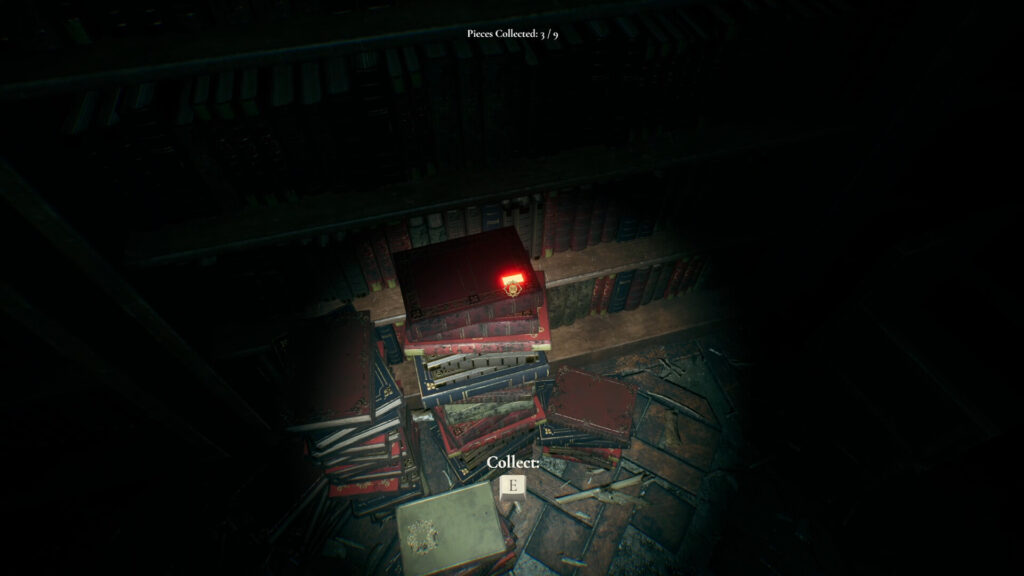
In gameplay terms, Ashes of the Damned is all about helplessness: there's no way to stand up to whatever lurks in the darkness, and all the tension is built from exploration and knowing when to hide or get away in time. The distinctive mechanic of the game is Spiritual Vision, which is activated by finding a strange pair of glasses hidden in some corner of the ward: once obtained, they reveal spectral information superimposed on the environment, useful both for finding hidden clues and for solving the only real puzzle that the game proposes, which consists of collecting nine fragments of paper scattered throughout the hospital to reconstruct a damaged photograph and thus decipher the combination to a safe.
And that's exactly where the problems begin. Finding those glasses means going through the entire hospital, and in my case, as in that of many people who have already played it, they ended up hidden in the least obvious corner of a closet, after having gone through every corner of the map more than once. What sounds on paper like a promise of "puzzles" ends up being, in practice, a single collecting puzzle stretched out to take up most of the game's duration, something that feels quite far from the variety one would expect after reading the description in itssteam page.
A design decision that works against everything else
If I have to point out the biggest problem with Ashes of the Damned, it's not narrative or artistic, but purely design: the game has no save system, and is designed to be completed in a single sitting. In an experience between an hour and a couple of hours long, that decision feels unnecessarily punishing, especially considering that much of that time is spent searching for the same items down the same hallways over and over again. I'm not the only one for whom this caused a lot of frustration: other players who came across the game ended up directly abandoning the game before reaching the end, something that in a game so short and so focused on atmosphere feels like a fairly avoidable stumble.
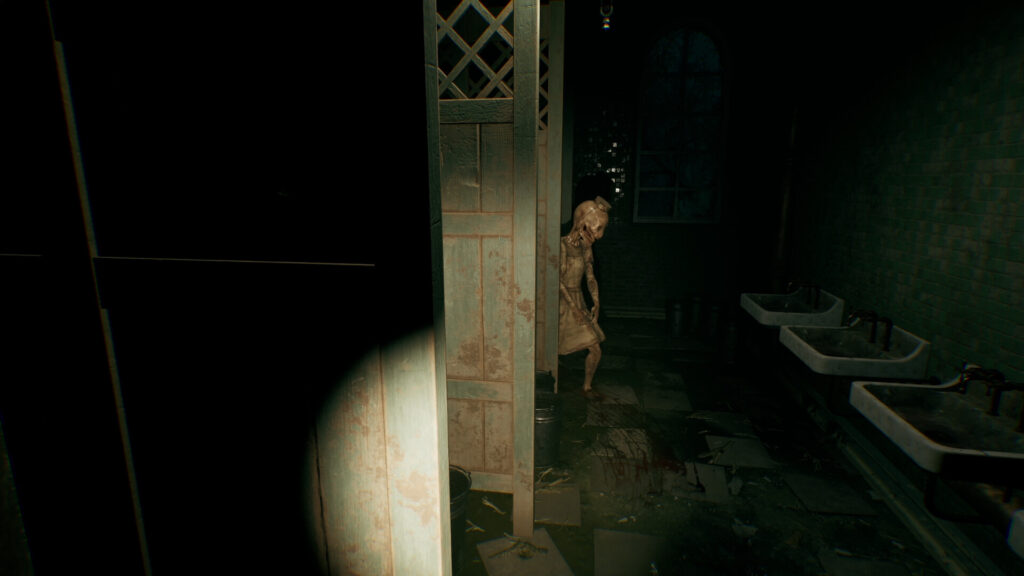
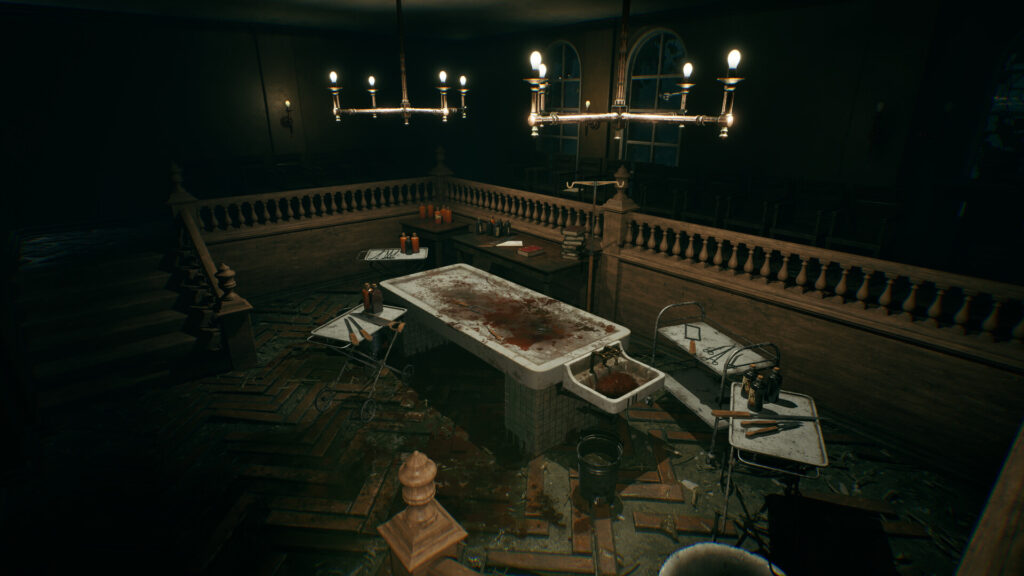
It's a shame, because the beginning really delivers what it promises: the first half hour, with that dark office, the flashlight as the only company, and the constant feeling of being watched, manages to establish a climate of genuine tension. The problem is that that mood is sustained almost entirely by the atmospherics, with encounters with supernatural entities feeling more like scripted warnings than a real, evolving threat, and with nothing else beneath that surface to sustain the rest of the experience once the initial awe wears off.
A promising idea that needs a lot more time in the oven
Ashes of the Damned: The Forgotten Ward leaves me with mixed feelings. As a cover letter from a solitary developer with barely a year of work under his belt, there are genuinely interesting ideas: the premise of the loop, the Spiritual Vision and that emotional anchoring in guilt and memory have plenty of potential to build something much more rounded. But as it stands today, with a single, artificially stretched puzzle, no save system, and horror encounters that feel more like scripted interruptions than an actual threat, the result feels more like a solid proof of concept than a finished game. I'm quite curious to see where the rest of this anthology goes, but this first installment in particular is difficult to recommend without corresponding reservations.
Related Articles
![[Analysis] Aggelos 2 forces an angel to accept his dark side, and the result is an ambitious metroidvania](https://combogamer.com/wp-content/uploads/2026/08/aggelos_2-poster-300x169.jpeg)
![[Analysis] Finding Polka searches for a lost dog and ends up finding something much bigger](https://combogamer.com/wp-content/uploads/2026/08/finding-polka-poster-300x169.jpg)
![[Analysis] Moss: The Forgotten Relic gives Quill a second life outside of virtual reality](https://combogamer.com/wp-content/uploads/2026/08/Moss_KeyArt_Hero_16x9_1920x1080-300x169.jpg)
![[Analysis] Duskfade resurrects the magic of PS2 3D platformers, with a Spanish accent](https://combogamer.com/wp-content/uploads/2026/08/Duskfade-poster-300x169.jpeg)
![[Analysis] Lost & Found: A This Bed We Made Story reunites Sophie Roy on the high seas, with the same curiosity as always](https://combogamer.com/wp-content/uploads/2026/08/lost-found-a-this-bed-we-made-story-poster-300x169.png)
![[Analysis] Kill The Shadow makes you relive the deaths of others to understand the city itself](https://combogamer.com/wp-content/uploads/2026/08/kill-the-shadow-poster-300x169.jpg)