

Table of Contents
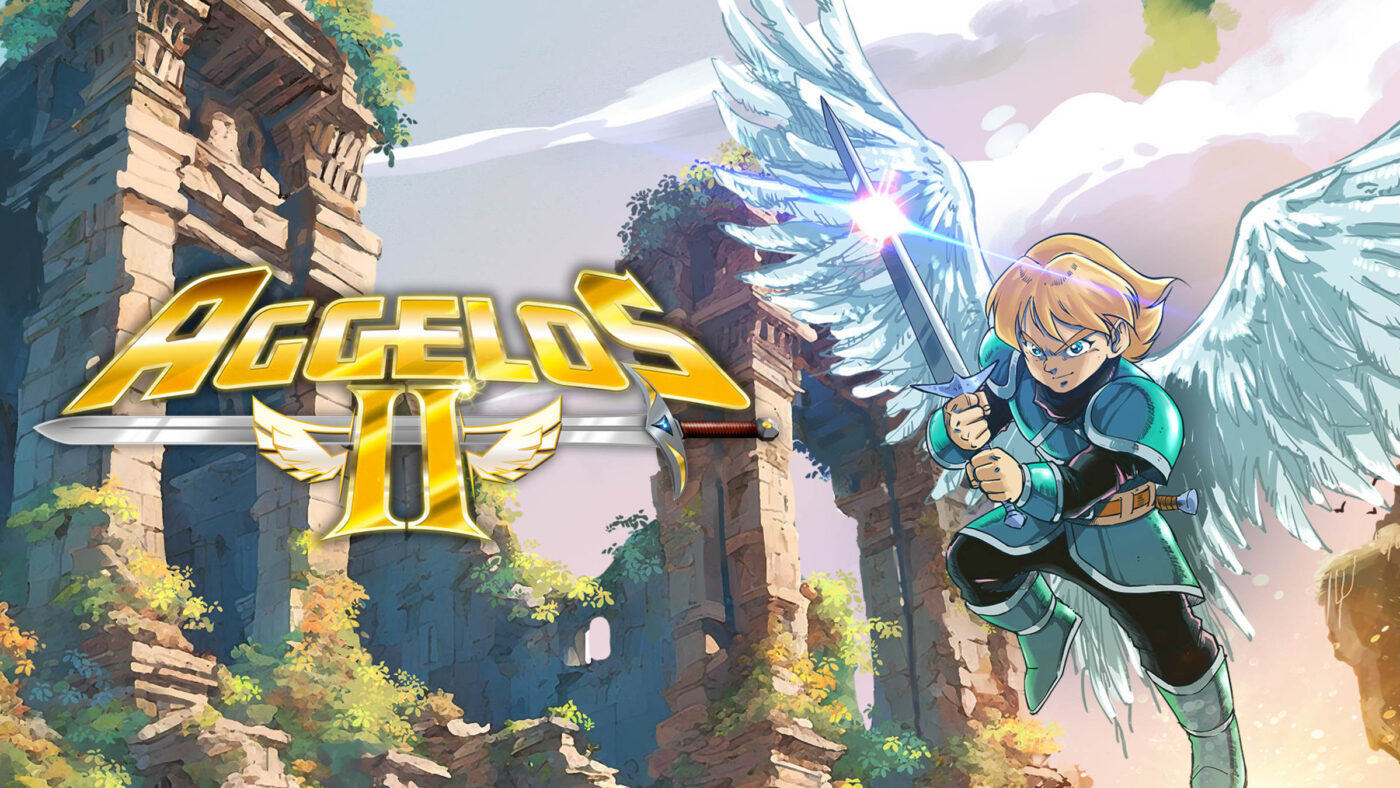
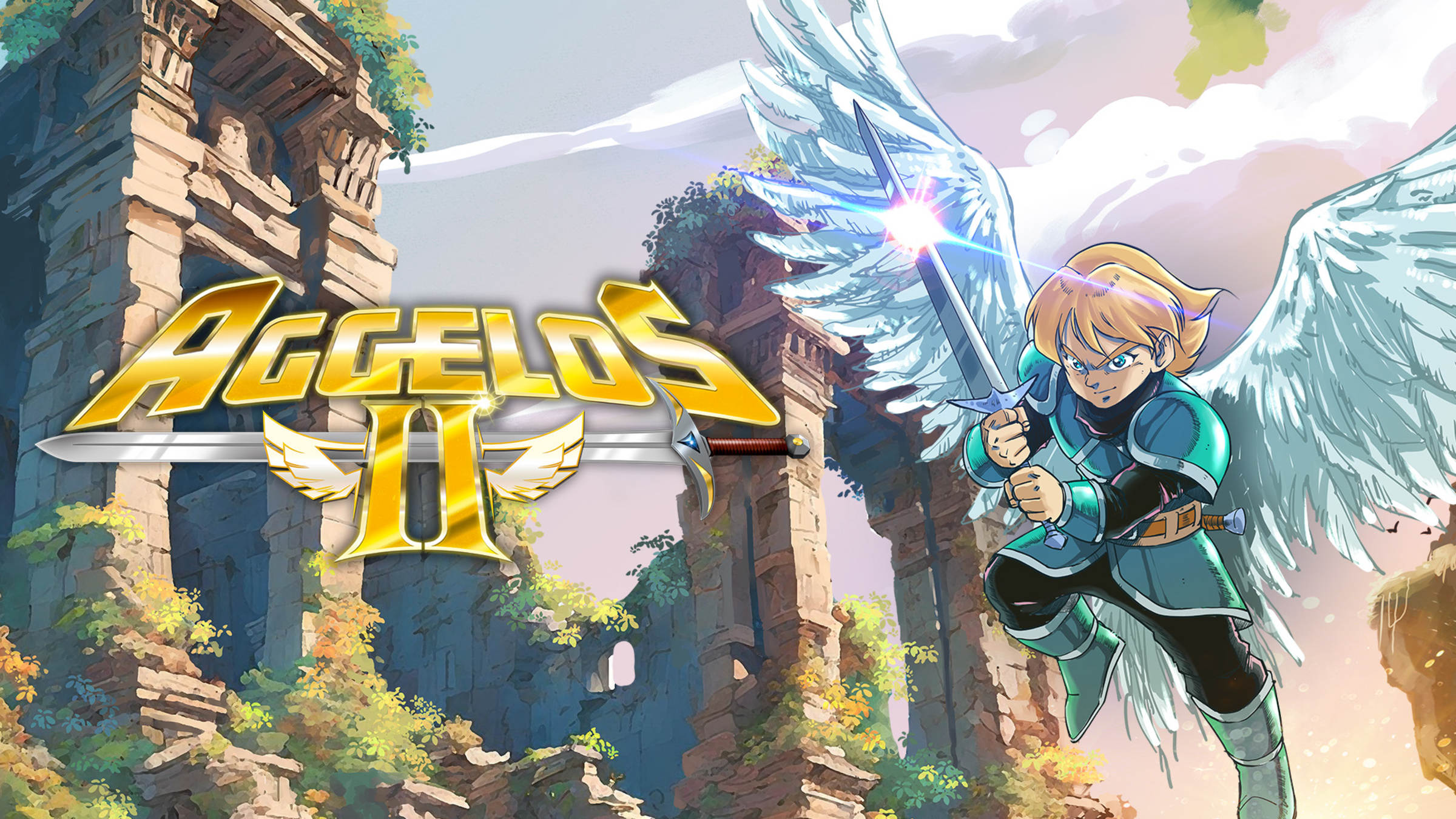
HeAggelosThe 2018 original earned quite genuine affection among retro fans thanks to that particular mix between the exploration of Ys and the adventurous air of Wonder Boy, so the sequel came with a high bar to overcome. Aggelos 2, developed again under the Wonderboy Bobi label and published by PQube together with PixelHeart, has just been released and from the first hours it is clear that the studio decided not to settle for repeating the formula: it made a direct jump to 16 bits and added a completely new central mechanic that changes the way you navigate its world quite a bit.
An angel forced to accept his own darkness
The premise resumes the classic adventure tone that characterized the first game: we play an Aggelos, the highest rank within the angelic hierarchy, chosen by Balro to defend the Kingdom of Lumen, domain of the supreme god of light, against the unstoppable advance of the Army of Darkness. The peculiarity of this sequel is that, very early in the adventure, our protagonist loses much of his angelic power and is forced to accept a new shadowy form to survive the chaos that is unleashed in both kingdoms. That duality between light and darkness is not just a narrative twist: it immediately becomes the heart of the entire playable design, with a world that now exists in two overlapping layers and absolutely everything, from combat to exploration, conditioned by which of the two forms we are standing in at any given moment.
Two ways, the same map, two completely different ways to play it
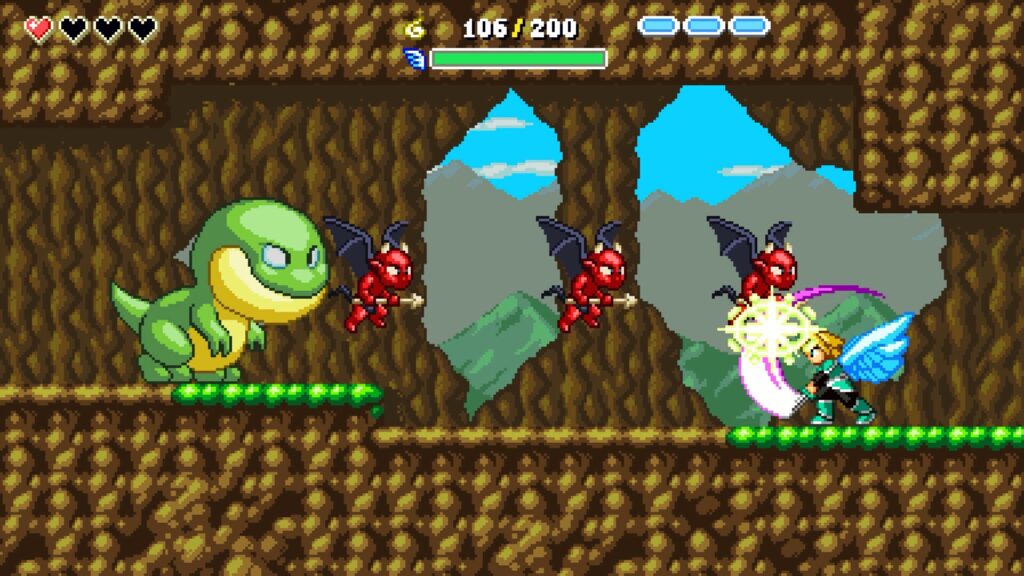
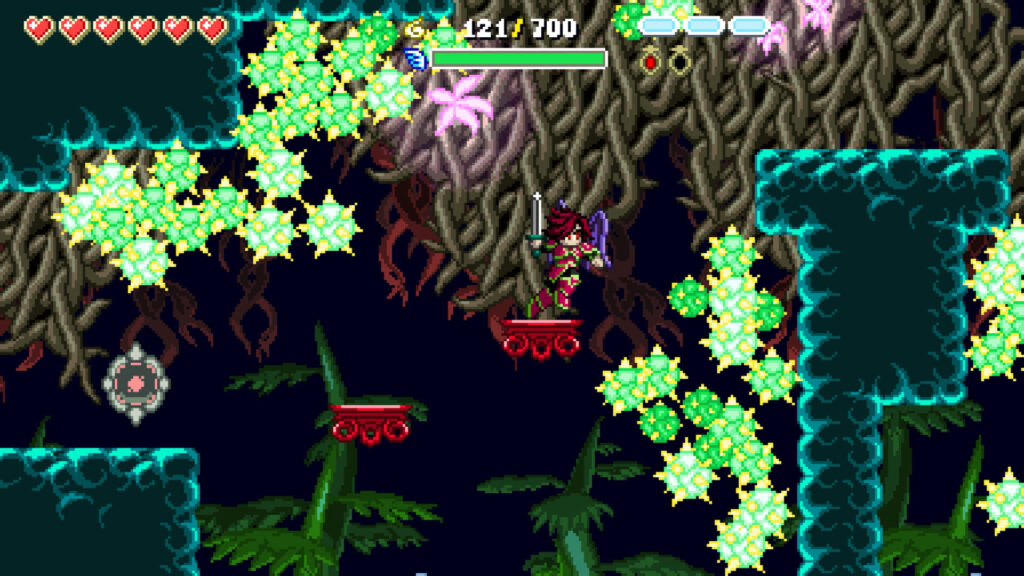
In playable terms, Aggelos 2 is built around that constant alternation between the angelic form, slower and more disciplined, designed for a defensive approach, and the demonic form, much more agile and aggressive, loaded with dark powers. Both share the base map of the Kingdom of Lumen, but each has its own arrangement of enemies and obstacles, and the setting itself changes depending on which form we are using at the time. Finding one of the purple cracks scattered around the world allows you to jump between both realities, and a good part of solving the puzzles involves using those cracks to sneak behind a blocked door or reach an area that the other form cannot reach in any way. It's a really clever design idea, although after several hours of play I quite agree with some of the early reviews that the contrast between both forms feels more marked in their attacks than in their movement itself: the dark form promises speed and aggression, but that change of pace depends too much on temporary potions instead of feeling like a structural difference between both states, something that I would also have liked to see a little more developed.
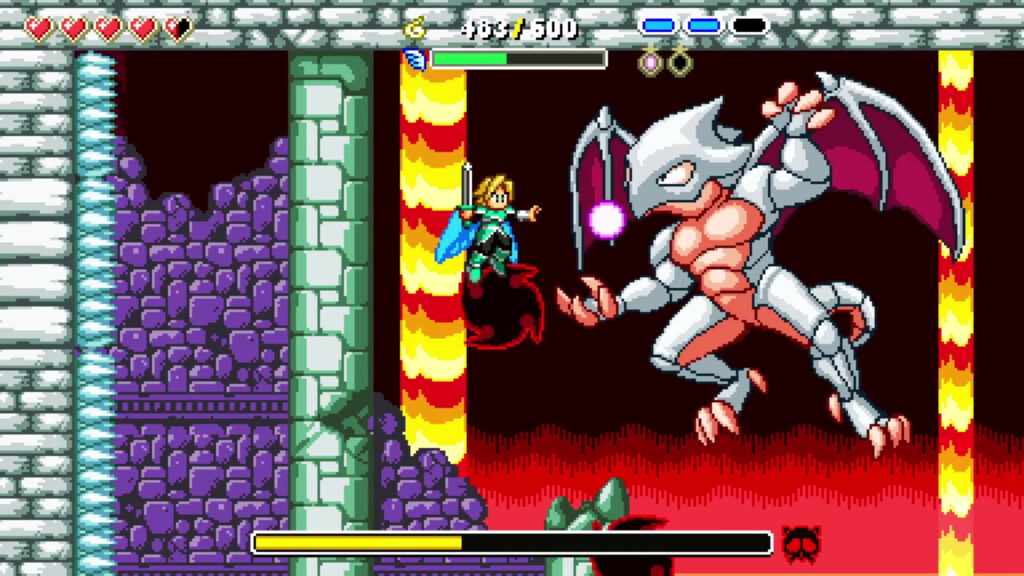
The combat system is based on sword strikes and shots that can be charged, added to spells that consume magic, and there is a design detail that seemed particularly successful to me: the light hero can destroy pink enemy projectiles, while the dark version does the same with red ones, forcing you to pay constant attention to which form is best to have active depending on the type of threat in front of you. This quick reading of the battlefield becomes especially important in the confrontations against bosses, which on more than one occasion come quite close to the aesthetic of the bullets on the screen typical of bullet hell, within a total of thirteen confrontations distributed between both kingdoms.
Flight, dash and wall climbing: an exploration that opens little by little
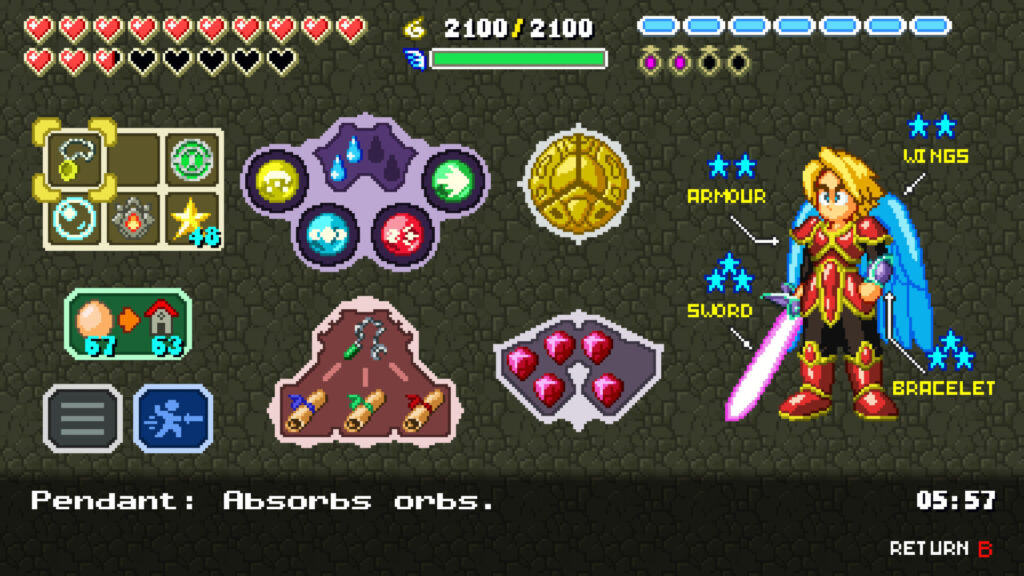
as goodmetroidvania, Aggelos 2 provides new movement abilities as you progress, including flight, wall grabbing and a dash that ends up being key both for combat and for accessing areas that were previously out of reach. This constant progression of tools is one of the points where the general polish of the game is most noticeable, with a well-managed difficulty curve that introduces each new mechanic with enough space to assimilate it before complicating the challenge. Progress is also supported by a system of collectible orbs that allow you to unlock devastating special attacks and improve both the character's strength and survivability, adding an extra tactical layer to exploration that goes far beyond simply memorizing routes.
Now, not everything in the level design is up to this careful progression. Some hallways feel overloaded with enemies to a point that borders on exhausting rather than challenging, and there are specific design decisions that struck me as downright strange, like an easy-to-miss room near a dead end that turns out to be the only way to the game's true endgame, or a currency capacity system that expands in a rather confusing and poorly explained manner. They are minor frictions within the overall experience, but they are noticeable, especially coming from a studio that in the rest of the game shows that it is very clear about what it is doing.
A remarkable visual leap, faithful to the spirit of Wonder Boy
Aesthetically, the jump from the original 8-bit to the 16-bit of this sequel is more than evident, and the result is much more detailed sprites and a color palette that takes great advantage of the contrast between the realms of light and darkness. It still feels like a direct homage to the Wonder Boy saga, both in the character design and in the general pace of the adventure, but with a much larger ambition of scale, thanks to that added verticality and the overlapping of realities that the first Aggelos did not have.
An ambitious sequel that still has some edges to polish
As a fan of the first Aggelos, this sequel leaves me with a mostly positive feeling, although with some buts that should be kept in mind before diving into it. The idea of the two overlapping realities is solid and well-resolved in terms of puzzle design; The boss fight has genuinely memorable moments, and the overall feeling of constant progression keeps you hooked throughout the adventure. But it is also a game that requires patience in the face of some sections of difficulty that are more artificial than genuine, and with a handful of design decisions that feel less polished than the rest of the set. For anyone who enjoyed the original, or anyone in the mood for a retro metroidvania with an interesting twist on the classic formula, Aggelos 2 is absolutely worth it, as long as you arrive knowing that not everything along the way is as well-lit as its angelic protagonist.
Related Articles
![[Analysis] Finding Polka searches for a lost dog and ends up finding something much bigger](https://combogamer.com/wp-content/uploads/2026/08/finding-polka-poster-300x169.jpg)
![[Analysis] Moss: The Forgotten Relic gives Quill a second life outside of virtual reality](https://combogamer.com/wp-content/uploads/2026/08/Moss_KeyArt_Hero_16x9_1920x1080-300x169.jpg)
![[Playing…] Pikmin 2](https://combogamer.com/wp-content/uploads/2025/04/Pikmin-2-banner-2-300x169.png)
![[Analysis] Duskfade resurrects the magic of PS2 3D platformers, with a Spanish accent](https://combogamer.com/wp-content/uploads/2026/08/Duskfade-poster-300x169.jpeg)
![[Analysis] Lost & Found: A This Bed We Made Story reunites Sophie Roy on the high seas, with the same curiosity as always](https://combogamer.com/wp-content/uploads/2026/08/lost-found-a-this-bed-we-made-story-poster-300x169.png)
![[Analysis] Kill The Shadow makes you relive the deaths of others to understand the city itself](https://combogamer.com/wp-content/uploads/2026/08/kill-the-shadow-poster-300x169.jpg)