

Table of Contents
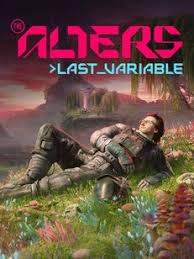
I have already written enough about how muchThe AltersIt blew my mind last year, so I'm not going to repeat here everything I said in that analysis. If you haven't read it, I recommend you stop by before continuing, because Last Variable assumes that you already know the basic premise: Jan Dolski, his clones made of Rapidium, and that very strange mix between a survival simulator and a collective existential crisis that ended up being, without exaggeration, one of the best games I played in a long time. What I want to tell you now is how well it achieves11Bit Studiosexpand that formula without repeating it, because Last Variable could have perfectly been "more of the same" and instead ended up finding a completely different angulation for the same idea.
A scientist who dies to continue researching
Last Variable takes up one of the possible endings of the base game: the one in which Scientific Jan decides not to board the rescue ship and stay on the planet, obsessed with understanding the Oasis, that green and apparently living area that, against all logic, survives intact each cycle of solar calcination that destroys the rest of the land. The DLC starts in a way that I found particularly clever: we don't start with the original Scientific Jan, but with a new version of him, created by the dying Jan himself in his last moments of life, using the cloning machine once again to ensure that the research continues. We literally inherited the project from our previous version, and a lot of getting started is going through your notes, your theory-filled whiteboards, and discovering that much of what you assumed to be true turned out to be completely wrong. It is a simple but effective narrative hook, which also makes the general tone of this expansion quite clear: it is no longer about escaping from anything, but about sustaining an obsession for as long as it takes.
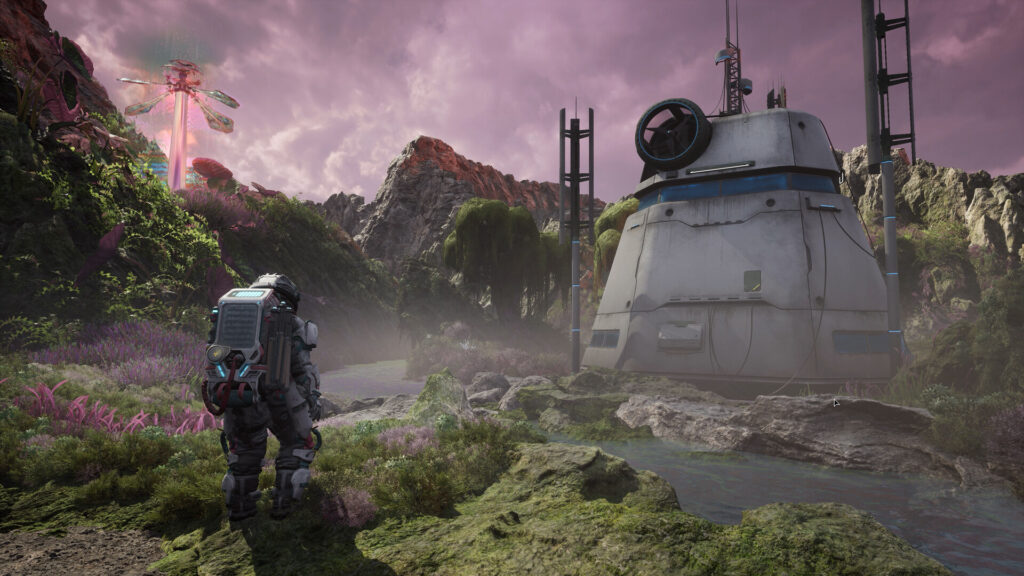
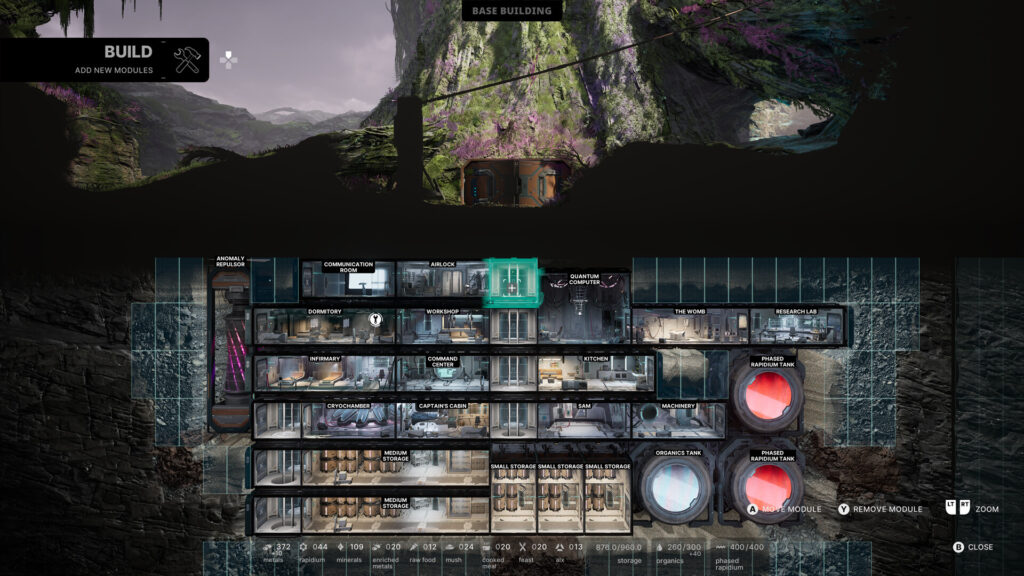
All the action takes place in the final area of the base game, now quite transformed after the seismic activity that shook the planet, and with a fixed underground base that replaces the enormous rolling base of the original game. That fixed base ends up feeling much more similar to that of an
No Timer: The biggest formula change of the entire expansion
If I have to point out Last Variable's boldest design decision, it's removing the constant time pressure that defined the base game (thanks!). In the original The Alters, the threat of the sun worked almost like a stopwatch that never stopped ticking, pushing you to make hasty decisions so as not to end up burned. Here, however, the addition of a cryosleep chamber puts a completely different spin on that same tension: Scientist Jan can choose to sleep for years on end while the rest of his Alters continue working, aging, and living their own lives in real time. It's a change that in practice feels less urgent moment by moment, but that in turn adds a different layer of emotional weight, because every time you decide to skip a few years of sleep, you are also deciding how many years of real life you are going to take away from your companions. The underlying question is no longer “Am I going to survive?” to become something much more uncomfortable: "Do I have the right to ask this of other versions of myself?"
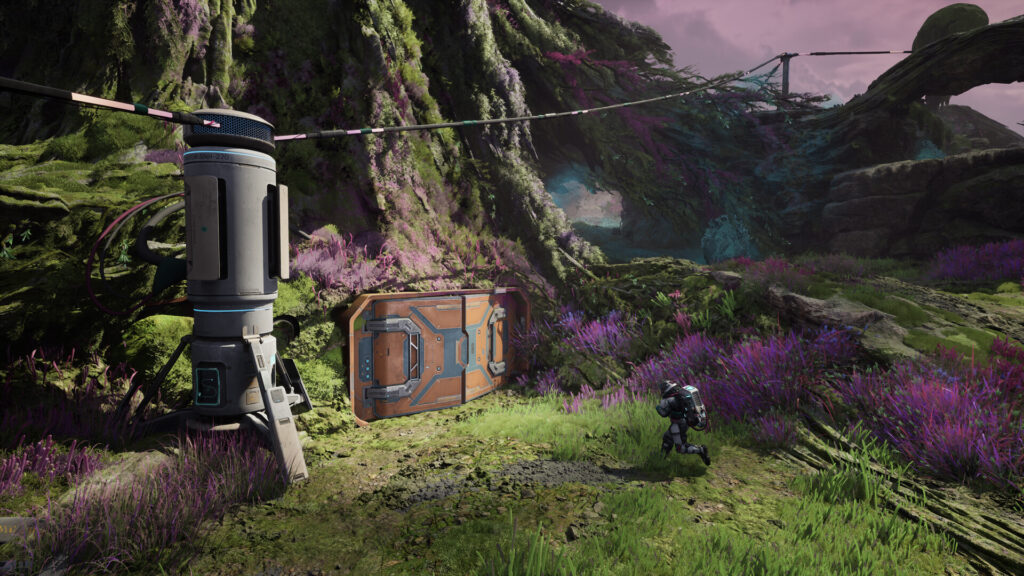
Added to this restructuring is the Terraforming system, the great mechanical addition of this expansion. Terraforming an area causes Samples to appear at the start of the next cycle that can be exchanged in the SAM for permanent passive upgrades, giving exploration a much more tangible sense of progress than in the base game, where much of the resources felt more consumable than cumulative. Combined with new processing chains and geothermal systems, Last Variable ends up feeling less like "the same game with more content" and more like a genuine twist on the original formula, something that expansions of this size don't always achieve.
Four Jans, four sciences, no easy answer
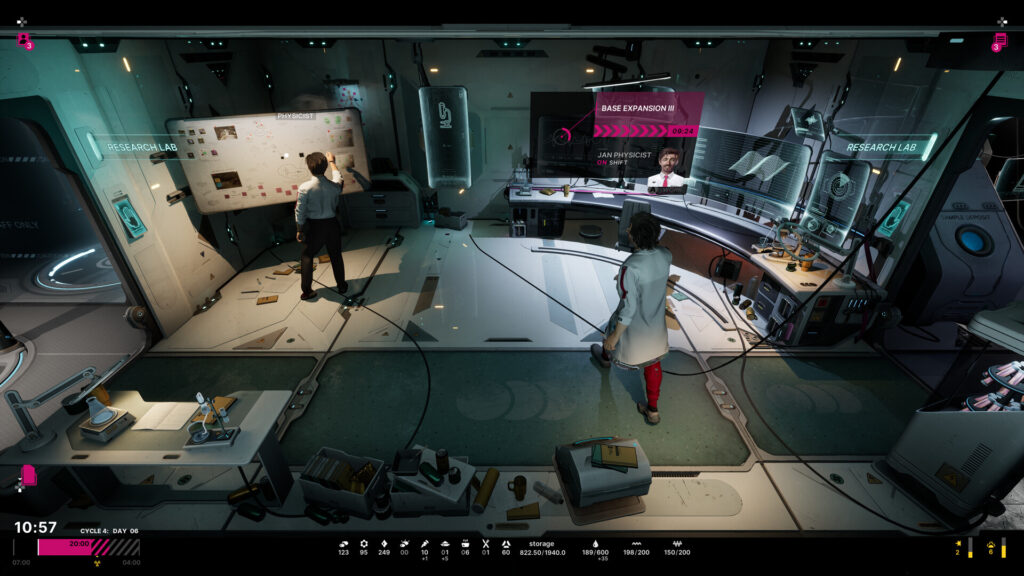
Instead of the enormous range of Alters with completely different lives that we had in the base game, here the cast is reduced to four specific variants: Jan Geologist, Jan Biologist, Jan Chemist and Jan Physicist, each one specialized in a specific area of research and with their own view on what to do with the Oasis and how far it is worth going to understand it. They don't have the "lessons learned" system that the Alters from the original game had, but in exchange each one carries their own line of personal missions, and the way their personalities clash with each other, especially when it comes to deciding how much to sacrifice in the name of science, ends up generating some of the most tense conversations in the entire expansion. Alex Jordan, who voices each and every one of the Jans, once again does a remarkable job differentiating each variant without any ending up sounding interchangeable with the others, not an easy feat considering he's technically playing the same person four times.
If I have to give a but to this small cast, it is that in some sections I felt that the four versions ended up functioning more as if they were different departments of the same research project than as four completely separate lives, that feeling so powerful that the base game did achieve with Alters of professions absolutely opposite to each other, such as the Soldier or the Chef. Here, since everyone is anchored in different branches of science, the contrast between personalities feels a little more subtle, although it is never less present.
An obsession that sometimes stretches too far
In general terms, Last Variable seemed to me to be a solid expansion with its own well-defined identity, although it is not without friction. The almost twenty hours that it lasts from end to end feel, in some sections of the final third, a little more repetitive than I would have liked, with cycles of exploration and management that begin to feel familiar before the story finishes closing its main questions about the Oasis. I also noticed some occasional technical problems, such as interior cameras that do not always fit well into the smaller spaces of the new underground base, something that was rarely noticeable in the original game.
Even with those buts, Last Variable achieves something that few expansions even attempt: changing the entire emotional axis of the story without betraying what made the original game special. If The Alters talked about the urge to escape and about all the paths one did not choose, Last Variable talks about obsession, duty and that very human stubbornness of continuing to investigate even when there is no longer any practical reason to do so. For those who finished the base game and were left wanting more time on that planet - and, above all, wanting more time with Jan and his versions -, Last Variable is one of those expansions that more than justifies a return.
Related Articles
![[Review] Counter-Strike: Source](https://combogamer.com/wp-content/uploads/2026/08/combogamer.com-for-counter-strike-download.net1_-300x169.jpg)
![[Review] Counter-Strike 1.6](https://combogamer.com/wp-content/uploads/2026/08/combogamer.com-for-csget1-300x169.jpg)
![[Analysis] Helix: Descent N Ascent: In white, black and a double that you don't know if it helps or hinders you](https://combogamer.com/wp-content/uploads/2026/07/helix-descent-n-ascent-poster-300x169.jpg)
![[Analysis] Escape from Umbra: A flashlight, a black cat and an Andalusian town that doesn't want to let you go](https://combogamer.com/wp-content/uploads/2026/07/escape-from-umbra-poster-300x169.jpeg)
![[Analysis] The robot anime that never existed comes to life thanks to Geppy-X](https://combogamer.com/wp-content/uploads/2026/07/geppy-x-poster-300x169.jpg)
![[Analysis] Denshattack!: A train that does tricks like a skateboard in a dystopian Japan](https://combogamer.com/wp-content/uploads/2026/03/Denshattack_poster-300x169.jpg)