

Table of Contents
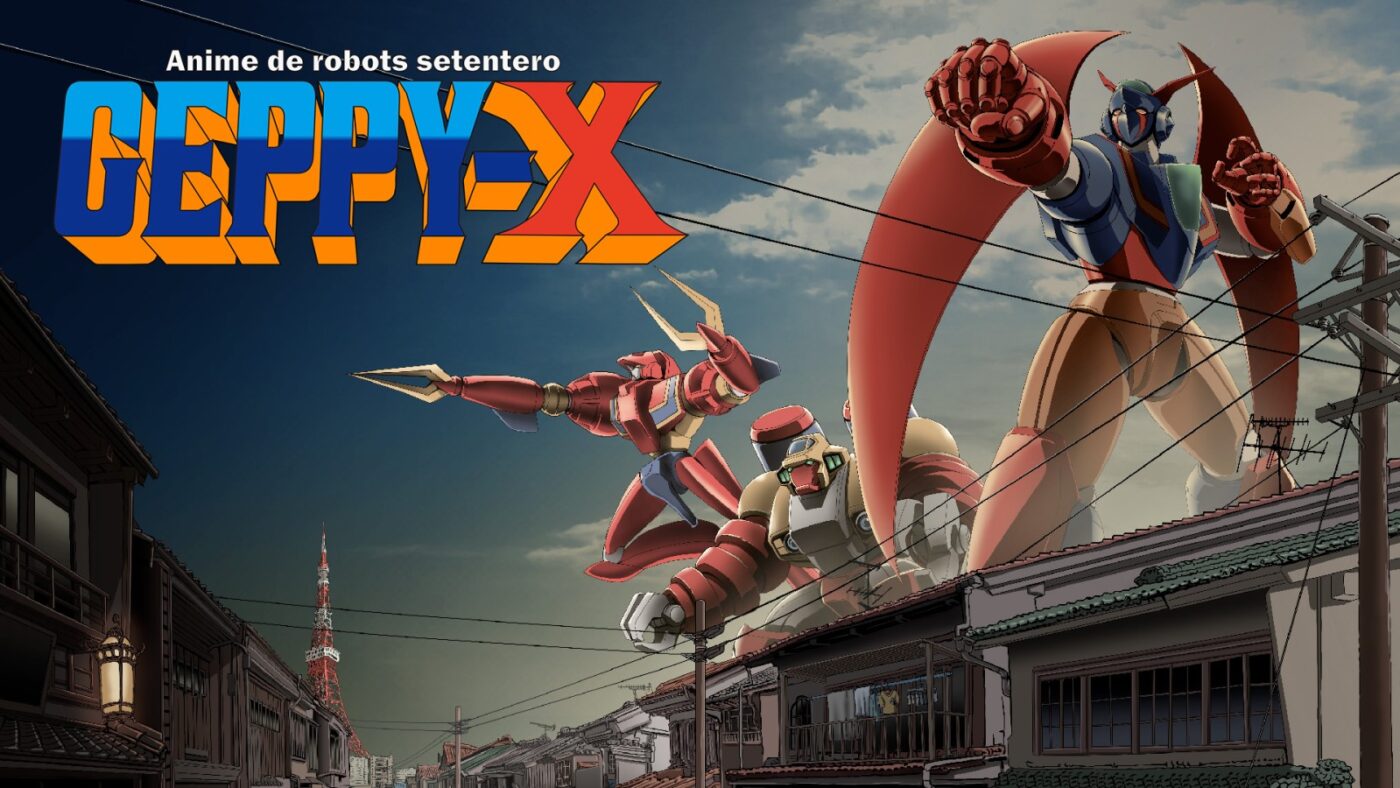
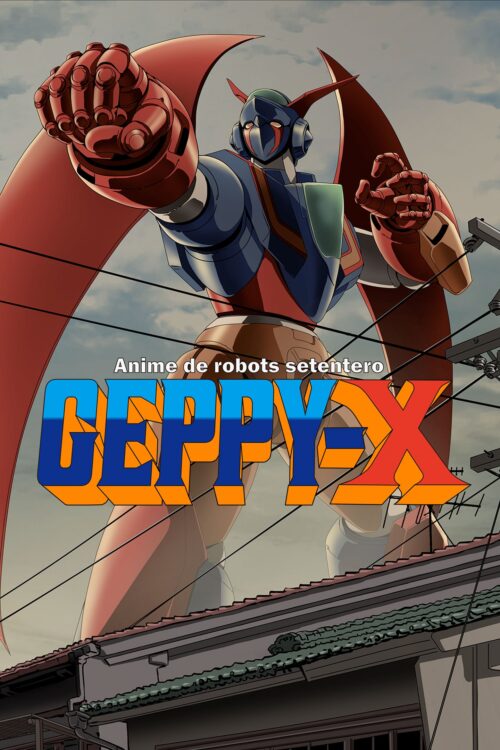
The year is 1996 in the offices of Aroma Co., a Japanese developer that participates in an internal proposal competition almost as a corporate joke. That's where the idea of "Geppy Robo" came from, a concept that would end up becoming, three years later, one of the strangest and most ambitious shooters of the entire PlayStation era: a game that was not satisfied with having animated scenes in between, but rather disguised itself entirely as a robotic anime series from the 70s that, in reality, never existed. Geppy-X was a Japanese exclusive upon its release in 1999, and only now, twenty-seven years later, has Implicit Conversions and Bliss Brain brought it outside of Japan for the first time, restored from tip to tip.
A giant robot against a cosmic empire of monsters
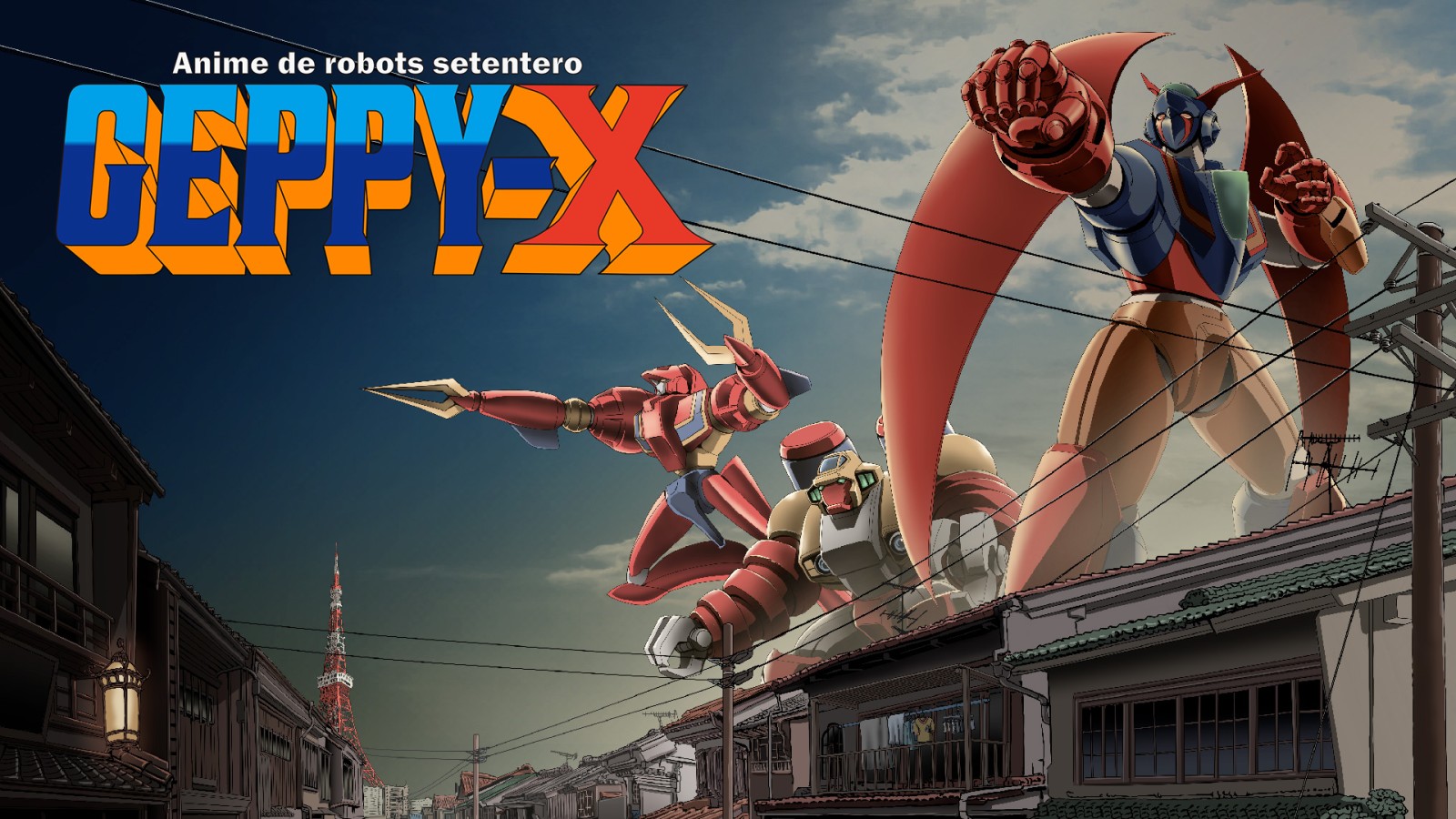
The premise of the game is as crazy as it is sincere in its love for the genre: the year is 197X, and a mysterious force calling itself the Cosmic Demon Empire launches a sudden attack against Earth commanding an army of colossal beast-like war machines, the Space Beasts. In some secret space robot laboratory, somewhere in the Far East, preparations were already being made "in case something like this were to happen", and this is how the newly developed transformable and combinable combat robot Geppy-X comes into action.
There's no need to say much more about the plot itself, because that's not where the real appeal of the game lies: the story works as a perfect and well-intentioned excuse to replicate, with almost obsessive affection, the structure of a classic super robot series, with its cosmic villain, its secret laboratory and its mechanical hero on duty.
A side-scrolling shooter with the soul of a weekly series
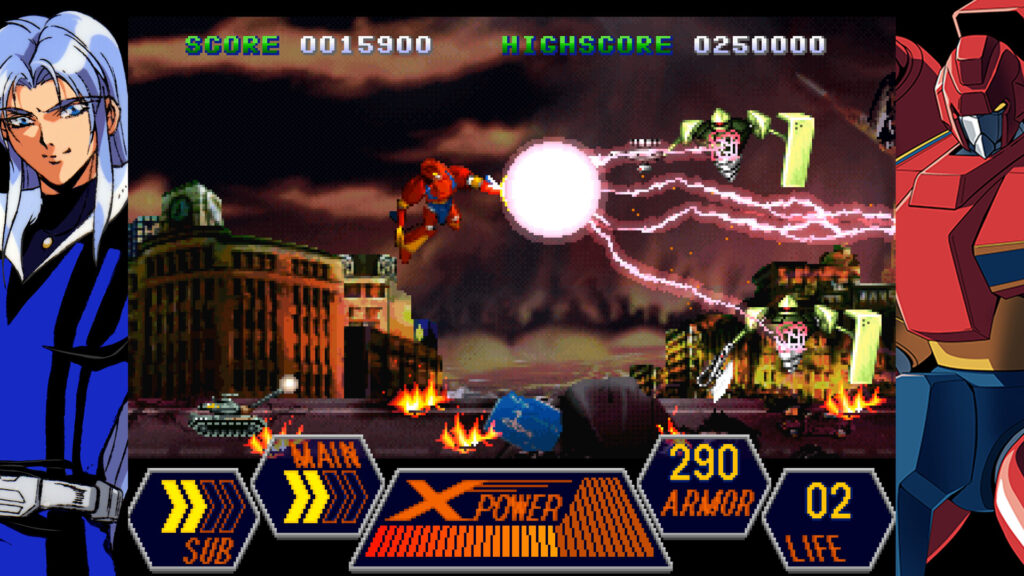
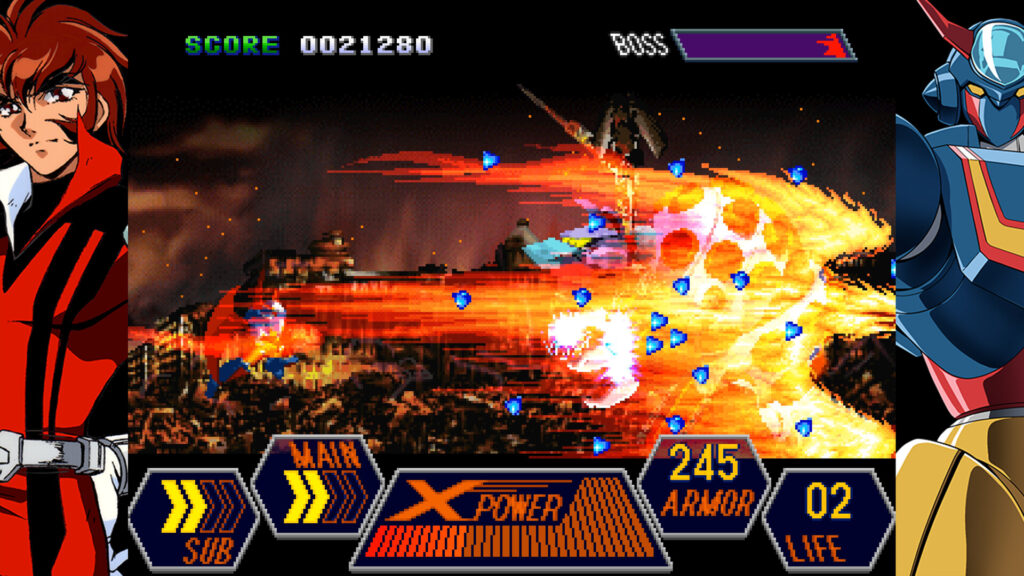
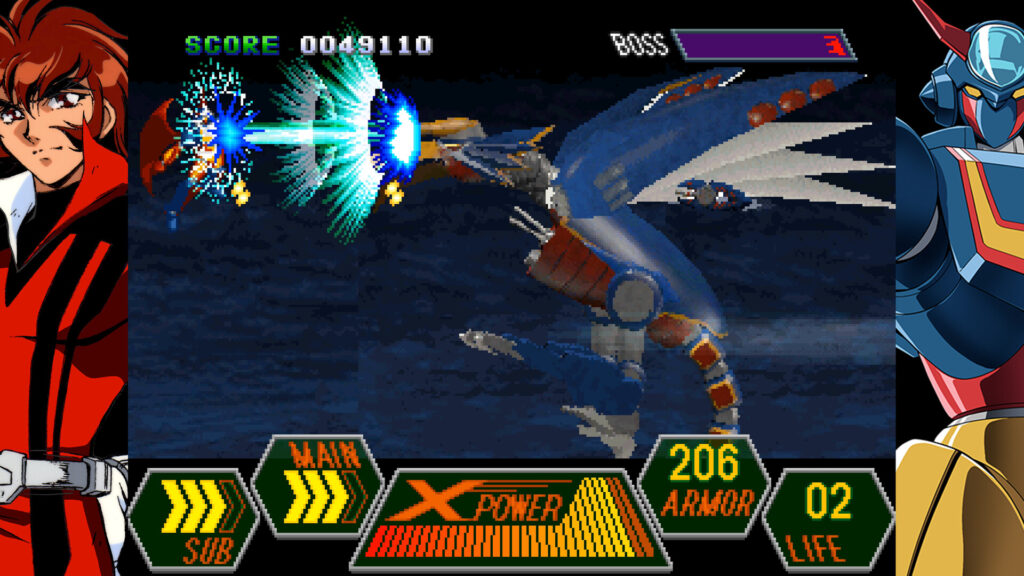
In purely gameplay terms, Geppy-X is a fast and straightforward side-scrolling shooter, the type that any fan of the genre will immediately recognize. What gives it personality within that mold is the transformation system between three different forms of combat, which can be alternated in real time depending on the situation: X1 offers a balanced and versatile shot, X2 prioritizes speed and mobility with the so-called
That constant swing between precision, speed and raw power is what sustains the rhythm of each level, although it must be honestly said that, as a pure shooter, Geppy-X was never nor intended to be a particularly refined experience within its genre: Japanese critics of the time already pointed this out at the time, and reviews of the remaster agree that the action, although solid and enjoyable, feels more functional than outstanding when compared to other shooters of the PlayStation generation.
For this modern version, Implicit Conversions added all the conveniences one would expect from a rescue of this type: reduced loading times, the ability to rewind the action to correct an error, quick saves at any point in the game, achievements, CRT filters for those who want to relive the experience with the aesthetics of a tube television, and a rapid fire option that allows you to hold down the trigger instead of mashing the button endlessly. Added to this are six extra unlockable modes, including a Boss Rush, alternative timelines and experimental variants of certain episodes, designed for those who want to squeeze the game far beyond its main campaign.
Where the game really shines: a real anime production, made for an anime that doesn't exist
What separated Geppy-X from any other shooter of its time, and what remains its biggest draw today, is the level of production that went into the "anime series" façade that surrounds the game.
Each level is presented as a complete episode, with its own title plate, its credits, and even interspersed false advertisements that parody products of the time, from toys to a shampoo with the warning not to apply it in the eyes, in addition to a fairly recognizable parody ofAshita no Joe, among other references to the sports anime of the time.
To sustain that illusion, the team recorded more than 8,000 frames of hand-drawn animation on 35-millimeter tapes, something practically unheard of for what is, in essence, a two-dimensional shooter. The original PlayStation version could barely display that material compressed at 320x240 and 15 frames per second spread over four discs; The remaster went straight to the original Betacam masters and restored each scene to its originally intended 24 frames per second, with the ability to switch at any time between the restored video and the original compressed format, for anyone who wants to compare both versions or simply relive the experience as it was in 1999.
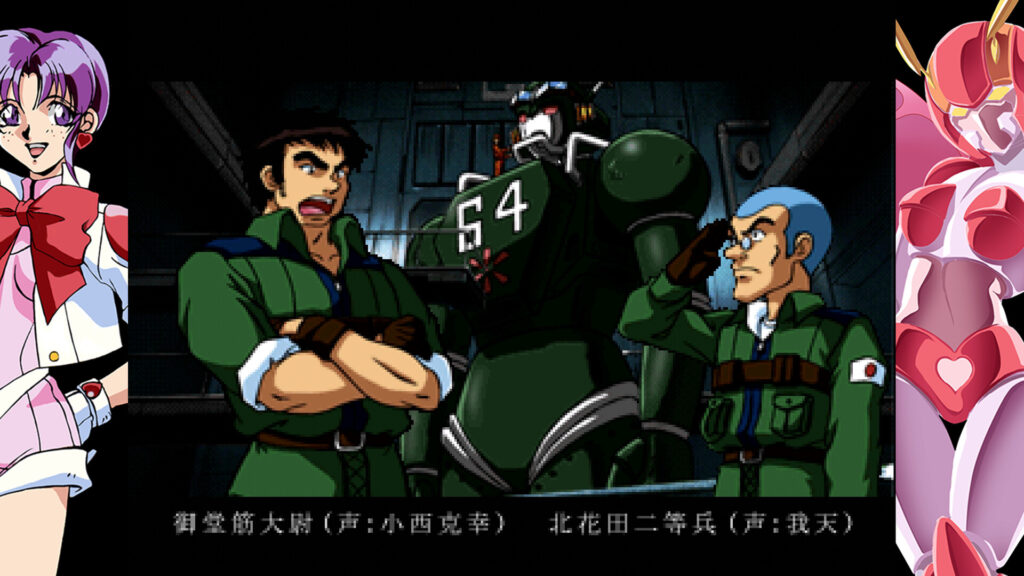
The level of detail is not just visual. The original Japanese dub brought together a voice cast that any classic anime fan will instantly recognize, with names like Akira Kamiya, Shō Hayami, Shūichi Ikeda, Ichirō Nagai, and Gorō Naya, all veterans of iconic series from the '80s and '90s.
The soundtrack, for its part, featured the participation of true legends of anime and tokusatsu music such as Isao Sasaki, Akira Kushida and Hironobu Kageyama, performers historically associated with the themes of the golden age of super robots.
It's that combination of details, more than the gameplay itself, that makes Geppy-X an almost archaeological piece: a game that took the idea of simulating a real anime so seriously that it ended up generating genuine doubts in some of the press at the time about whether that series had actually existed at some point.
A direct tribute to the golden era of Go Nagai
Geppy-X does not hide at all where its inspiration comes from. The aesthetics, the narrative structure and even the general tone of the game draw directly from the super robots created by Go Nagai, the same person responsible for founding series of the genre such as Mazinger Z, Getter Robo or Devilman, as well as other representative classics of robotic animation from the 70s.
This is not a subtle reference or an occasional nod: everything in Geppy-X, from the way in which each episode is presented to the design of the protagonist robot himself, is intended as a direct love letter to that generation of series, something that is even clearer when seeing the amount of production details dedicated to making each game feel like watching a weekly television episode.
A rescue worth a quarter of a century later?
When Geppy-X was originally released in Japan, the reception was quite mixed: Famitsu magazine recognized the level of detail put into recreating a complete seventies robotic anime and noted that anyone familiar with those series was going to feel genuine nostalgia, although without failing to point out that, as a shooter, it was not up to par with other offerings available on PlayStation at the time.
Something similar happens with the remaster: the vast majority of us who play it agree that the action is functional and entertaining, but the real reason to play it is in the production that surrounds it, in those thousands of restored frames and in the evident care put into recreating, with almost documentary precision, something that technically never existed outside of this game.
For those who grew up with the super robot genre (I loved Mazinger), or are simply curious about one of the more unique oddities of the PlayStation era, Geppy-X offers something that few games, old or new, dare to try: completely becoming the thing they are honoring. It's not the most polished shooter you'll find this year, but as an act of preservation and as a design experiment, it's still as unique today as it was in 1999.
Related Articles
![[Analysis] Denshattack!: A train that does tricks like a skateboard in a dystopian Japan](https://combogamer.com/wp-content/uploads/2026/03/Denshattack_poster-300x169.jpg)
![[Analysis] Celestial Return: Losing the dice is also losing the game](https://combogamer.com/wp-content/uploads/2026/07/celestialreturn_keyart-300x182.jpg)
![[Analysis] Mixtape: the narrative adventure that turns a 90s mixtape into an unforgettable video game](https://combogamer.com/wp-content/uploads/2026/07/mixtape-poster-300x160.png)
![[Analysis] Scholar Adventure: Mystery of Silence — A Journey to an Abbey that Whispers Secrets](https://combogamer.com/wp-content/uploads/2026/06/Scholar-Adventure-Mystery-of-Silence_poster-300x169.png)

![[Analysis] OUTBLAST — When 2000s Arcade Puts on the VR Goggles (and Still Unimpressed)](https://combogamer.com/wp-content/uploads/2026/06/OUTBLAST-poster-300x172.jpg)