

Table of Contents
There is a word that any manga fan has read a hundred times without really knowing what it meant. It appears in the cards for Hellsing, in the credits of FLCL, on the old back covers of Tenchi Muyo, even in the first animated adaptation of JoJo's Bizarre Adventure. Three letters: OAV. And although today streaming platforms have diluted them between "specials" and "miniseries", the truth is that this format changed the way in which Japan tells stories in animation. If you grew up watching VHS videos borrowed from a cousin or discovered anime when Crunchyroll didn't exist yet, you already know the format. You just didn't know what it was called.
A story that begins with the video store
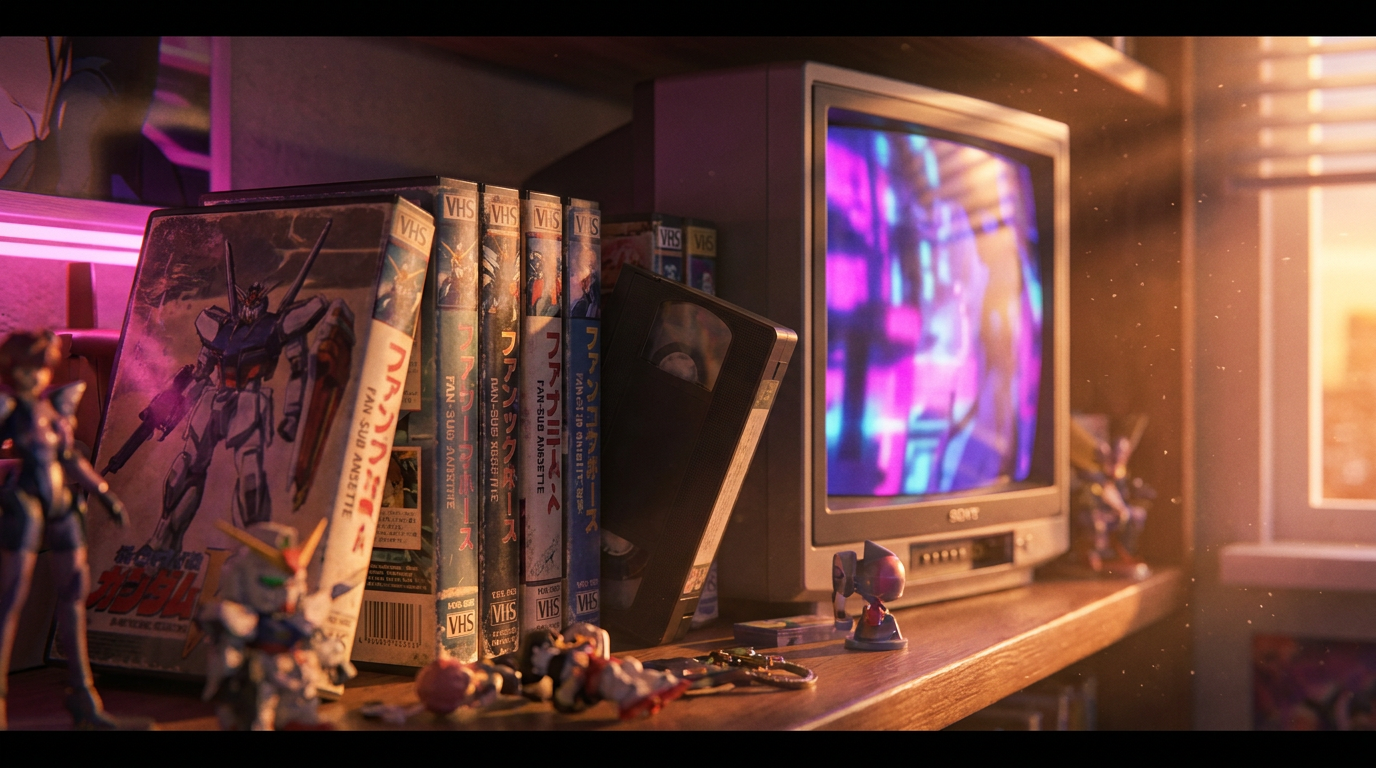
In the early 1980s, Japan was experiencing a domestic boom that changed the entertainment economy: VHS and LaserDisc entered homes and video stores began to multiply. Until then, animation studios worked with two clients: television, which paid little and demanded weekly episodes, and cinema, which paid better but only accepted safe bets. The model left out everything else. The strange stories. The violent ones. The experimental ones. Those that a TV channel would never dare to program at seven in the afternoon.
Then someone had the idea: what if we produced animation directly for video, without going through the TV or the living room? The first official OAV was Dallos, directed by Mamoru Oshii in 1983. Four episodes designed to be watched at home, with a more adult script and creative freedom that television would never have allowed. The formula worked and was replicated.
OAV means Original Anime Video (or, in some catalogs, Original Animation Video). It is animation designed and financed for home video, without prior television broadcast or theatrical release. The basic idea is that: free animation from the television corset.
OAV, OVA, ONA: the mess of acronyms
This is where many people tie themselves in knots. OAV and OVA are often used synonymously, but in reality each acronym has its own nuance. OVA means Original Video Animation and it is the most widespread version in the West, especially in markets like the United States. OAV is the formulation first adopted by European and French-speaking catalogues. There are those who argue that they are the same and those who maintain that they have small differences in use.
Add to this ONA (Original Net Animation), which is the digital cousin of the previous ones: animation designed directly for the internet. Series like Devilman Crybaby on Netflix they are technically ONA, not OAV. The difference is no longer just support; It is consumption context. But the DNA is the same: producing animation without going through traditional chains.
The OAVs that marked a generation
Talking about OAV without mentioning Hellsing Ultimate it would be a crime. Ten episodes produced between 2006 and 2012, with a budget that the 2001 TV version never saw, almost absolute fidelity to Kouta Hirano's manga and action sequences that are still cited as reference today. Hellsing Ultimate only exists in OAV format, and that explains why it is so different from the original anime.
FLCL It's another textbook case. Six episodes produced by Gainax and Production I.G between 2000 and 2001, with an insane rhythm, a soundtrack by The Pillows and a script that seems to have been written while someone was finishing an exam. Only an OAV could afford something like that. Television would have taken it out of the schedule in the second episode.
And there is a case that many forget: the first animation of JoJo's Bizarre Adventure was not the TV series by David Production from 2012, but the OAV directed by Akira Inoue in 1993, which adapted the Stardust Crusaders arc. Thirteen episodes produced for home video that for years were the only way to see Jotaro Kujo in motion. If you want to see to what extent Hirohiko Araki built a universe capable of reinventing itself in different formats, the JoJo animated episodes in OAV format They are an essential piece of the puzzle, and continue to be a topic of conversation among long-time fans.
And then there are the absolute classics. Tenchi Muyo! He practically invented the modern harem subgenre with his first OAVs in 1992. Bubblegum Crisis turned Tokyo into a cyberpunk scene before cyberpunk was mainstream. Read or Die It packed more visual imagination into three episodes than many entire series. Memories, directed by Katsuhiro Otomo, is practically an auteur short film disguised as an OAV. For fans of seinen and eighties action, Hokuto no Ken had several OAVs that expanded the mythology outside of the main manga. For mecha lovers, Patlabor It started as OAV before becoming a movie and a series.
Why OAVs are making a comeback in 2026
During the 2010s it seemed that the OAV format was dead. Streaming platforms absorbed almost all new production, physical formats lost traction in the West and the word "OAV" began to sound vintage. But something is changing.
On the one hand, Japanese studios continue to produce OAVs associated with special editions of manga. When you buy the collector's edition of the latest volume of a shonen, it often includes an exclusive OAV that does not reach streaming. On the other hand, platforms like Crunchyroll and Netflix have begun to finance miniseries that are technically OAVs with another name: short productions, high budget, creative freedom, without commitment to continue. The label changes, but the concept returns.
And then there's the nostalgia factor. A new generation of fans, discovering anime through TikTok and YouTube, are rediscovering titles from the '90s that they had never seen before. Hellsing Ultimate, FLCL, Read or Die: Retrospective videos with millions of views. When someone mentions “that weird format from the nineties”, they are talking about OAV without knowing it.
Why you should know the format if you like manga
Conocer la diferencia entre un anime TV, una película y un OAV cambia cómo ves cualquier obra. No es lo mismo juzgar el ritmo de Hellsing Ultimate sabiendo que cada episodio se hizo con presupuesto de película que verlo pensando que es una serie normal. No es lo mismo entender por qué FLCL salta del slapstick al drama existencial cuando sabes que se diseñó para verse en seis sesiones independientes, no para enganchar semana a semana. No es lo mismo aceptar las decisiones narrativas del primer JoJo OAV cuando entiendes que Akira Inoue tenía trece episodios y un presupuesto fijo, sin posibilidad de extenderse según la audiencia.
El formato condiciona la narrativa. Y por eso los OAV son, históricamente, donde la animación japonesa se ha permitido sus mayores experimentos. Es donde aparecen los estilos visuales más raros, los guiones más arriesgados, las adaptaciones más fieles al material original. Si solo ves anime TV, te estás perdiendo la mitad de lo que la animación japonesa ha tenido para ofrecer en los últimos cuarenta años.
Sitios especializados como Mabell llevan años manteniendo viva la memoria del formato y construyendo un catálogo que incluye desde los clásicos absolutos hasta producciones recientes que aún no han llegado a las plataformas mainstream. Vale la pena perderse un rato dentro.
Si descubriste el anime con Naruto either Attack on Titan, hazte un favor: busca un OAV de los noventa este fin de semana. Cualquiera. Pon FLCL, pon Read or Die, pon el primer episodio de Hellsing Ultimate, pon el JoJo de Inoue. Y prepárate para entender por qué hay fans que llevan treinta años defendiendo que el mejor anime no se hizo nunca para la tele.
Related Articles

![[Very Top] Five animated series for adults](https://combogamer.com/wp-content/uploads/2025/09/Series-animacion-adultos-300x200.png)
![[Article] Recommendations for Halloween 2025](https://combogamer.com/wp-content/uploads/2025/10/Especial-Halloween-2025-1-300x169.jpg)
![[Special] Our recommendations for summer (2024)](https://combogamer.com/wp-content/uploads/2024/10/Especial-Verano-2024-300x169.jpg)
![[Very Top] Five works to remember Akira Toriyama (not counting Dragon Ball)](https://combogamer.com/wp-content/uploads/2024/09/Akira-Toriyama-historias-portada2-300x198.png)
![[Very Top] Five disappointing movies and series](https://combogamer.com/wp-content/uploads/2024/10/Peliculas-decepcinantes-portada-300x225.jpg)