

Table of Contents
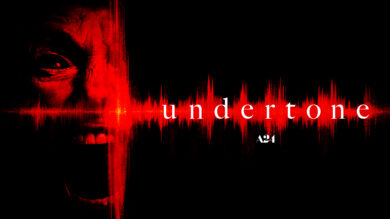
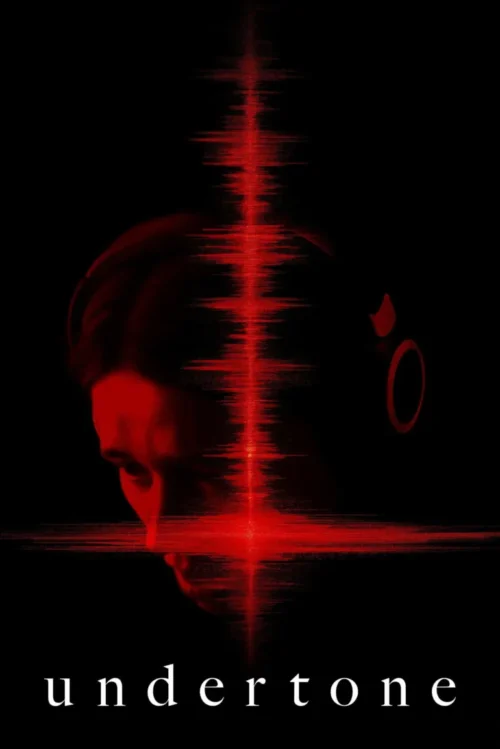
There are films that depend completely on the visual to generate impact, and there are others that understand that what is truly disturbing often does not need to be shown. Undertone It clearly belongs to this second group. From its first minutes it makes it clear that its commitment is not to what is explicit, but to what is suggested, to that uncomfortable space where what is heard does not quite coincide with what should be happening.
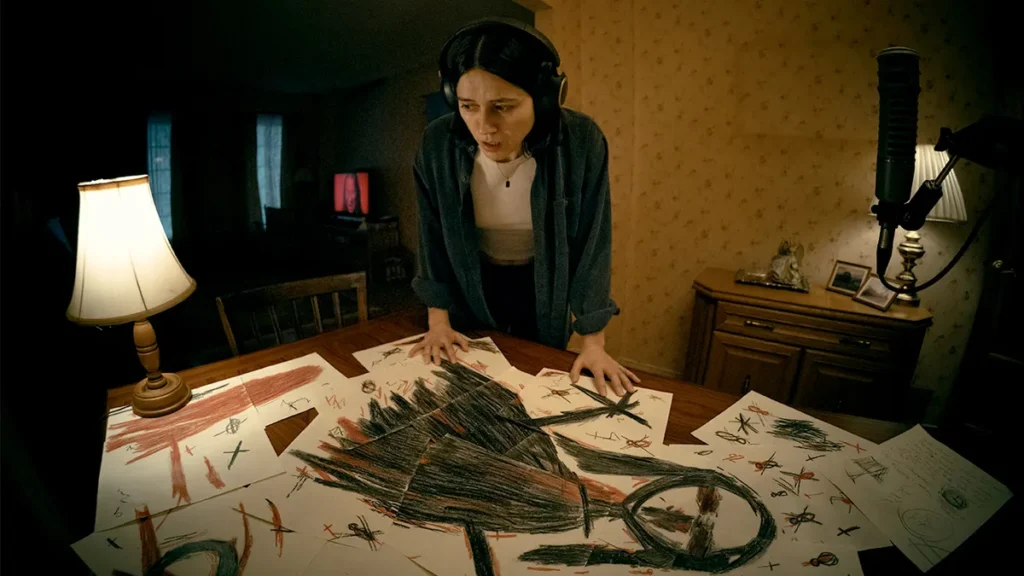
The story follows Evy, a podcaster who is dedicated to analyzing paranormal phenomena from a perspective that mixes curiosity and skepticism. His job consists of listening to other people's stories, reconstructing them and shaping them within his program, always maintaining a certain emotional distance that allows him not to get too involved. However, that distance begins to break when he receives a series of recordings that do not fit with anything he has dealt with before.
The first thing that catches your attention about these audios is their naturalness. They do not seem like prepared testimonies or exaggerated stories to attract attention. They are fragments of everyday life, moments that in another context could go completely unnoticed, but that little by little begin to deform through small details that cannot be fully explained. And that is where the film finds its tone: in the discomfort of the seemingly normal that begins to deviate without warning.
Isolation as a starting point
The moment in which Evy begins to work with these recordings coincides with her return to her mother's house, who is going through a terminal stage. This detail is not minor, because it defines a large part of the atmosphere that the film builds from the beginning. The house is not presented as an openly hostile space, but as an environment where silence has a particular weight, where each sound resonates more than it should and where the feeling of confinement becomes constant.
There are no major external stimuli or interruptions that break that dynamic. Everything feels contained, stopped, as if time moved at a different pace within that space. This narrative decision allows the recordings to occupy a central place, not only within the story, but also within the protagonist's mind.
As the days go by, Evy's routine becomes more and more closed. Its interactions with the outside world are minimal and its attention is almost entirely focused on the audio it receives. The house stops being simply the place where the story takes place and becomes an extension of your mental state, reinforcing that feeling of progressive isolation.
![[HorrorScience] Undertone: the terror that hides in sound](https://combogamer.com/wp-content/uploads/2026/05/undertone-01.jpg)
The recordings: when everyday life begins to fail
The material Evy receives comes from a couple, Mike and Jessa, and at first there doesn't seem to be anything particularly extraordinary about what they record. However, as the audios continue, elements begin to appear that break the logic of those apparently normal scenes.
These are not clear events or obvious manifestations. On the contrary, what is disturbing is the ambiguity. They are sounds that cannot be fully identified, pauses that are too long, interruptions that have no visible cause. The film avoids any type of underlining, which forces us to pay attention to details that in another context could go unnoticed.
This accumulation of small anomalies is what builds tension. There is no moment where horror is imposed directly, but rather a constant progression where each new audio adds another layer of discomfort. And the most interesting thing is that this discomfort does not come from what is confirmed, but from what remains unexplained.
Listening is no longer a passive process
As Evy becomes more involved with the material, her way of relating to the recordings changes. What was initially part of his job becomes an almost compulsive necessity. He listens to the same fragments over and over again, stops at minute details, tries to reconstruct what he doesn't quite understand.
This process does not present itself as a sudden obsession, but rather as something that sets in gradually. Repetition begins to displace other activities, rest becomes irregular, and your perception begins to alter in subtle ways. The film never establishes an exact point where everything changes, but it makes it clear that this transformation is occurring.
The podcast, which initially functioned as an analysis tool, ends up becoming a channel that constantly exposes her to something that she cannot fully process. The more you try to understand, the more involved you become, and the more involved you become, the harder it is to distance yourself.
![[HorrorScience] Undertone: the terror that hides in sound](https://combogamer.com/wp-content/uploads/2026/05/undertone-02.jpg)
Two lines that begin to cross
One of the most effective aspects of the film is the way it builds a parallel between what happens on the recordings and what Evy begins to experience. At first they are subtle coincidences, small details that could be interpreted as coincidences, but over time these similarities become more evident.
The story never establishes a direct connection between both planes, which forces you to constantly interpret what you are seeing and hearing. This ambiguity prevents the story from closing in on a single explanation and maintains the feeling of uncertainty as a central element.
Evy stops being a simple observer and begins to be part of what she analyzes. Not explicitly, but through a series of changes in her behavior and perception that bring her closer and closer to what happens in the recordings.
The body and the inevitable
The presence of the mother introduces a different dimension into the story. His physical deterioration represents something concrete, inevitable, that advances without the possibility of interpretation. In contrast to the ambiguity of the recordings, the illness functions as a clear reference point within an environment where everything else seems unstable.
In parallel, Jessa's pregnancy adds another layer that relates to the idea of transformation. The film does not develop this aspect directly, but uses it as an element that reinforces the feeling of change and vulnerability.
Both elements are presented without the need for an explicit connection, but they generate an interesting tension by placing the physical and the inexplicable within the same narrative space.
![[HorrorScience] Undertone: the terror that hides in sound](https://combogamer.com/wp-content/uploads/2026/05/undertone-03-1024x576.jpg)
Sound as a threat
As the story progresses, the recordings stop feeling like simple records and begin to take on a presence that is harder to define. There is no confirmation that anything exists beyond what is heard, but the way the audios behave suggests that they are not completely passive.
There are moments when they seem to respond, as if the listening itself has some kind of effect on them. This idea is never explicitly developed, but it remains present as a possibility that is difficult to ignore.
The result is a type of terror that cannot be confronted directly, because it has no clear form. Sound cannot be anticipated or contained, and that lack of control is what makes it a constant threat.
When perception is no longer reliable
As time passes, the film begins to blur the lines between what belongs on the recordings and what is part of Evy's reality. There is no clear transition, but rather a series of small shifts that affect the way events are perceived.
The sounds seem to move from one plane to another, situations are repeated with slight variations and the feeling of continuity becomes increasingly diffuse. This device not only reinforces the tension, but also aligns the viewer's experience with that of the character.
At this point, the film abandons any intention of offering clear answers and focuses on sustaining that uncertainty until the end.
A terror that settles in and doesn't go away
Undertone It does not seek immediate impact or clear resolution. His proposal is based on the accumulation of details, on the construction of an atmosphere that becomes increasingly dense and on a very specific idea: what is not understood can be much more disturbing than any explanation.
The use of sound as a central axis is not only a stylistic decision, but the foundation on which the entire experience is built. The film understands that fear does not always need to manifest itself visibly, and takes advantage of that idea to develop a story that remains disturbing even when nothing explicit happens.
It's not a proposition for everyone, especially those looking for a more direct narrative, but it works very well within its approach. It's one of those films that doesn't end when the credits roll, because what they propose keeps spinning around, like a background noise that doesn't quite disappear.
Curiosities about Undertone
- Sound design was treated as the main focus of the film, with several scenes constructed almost exclusively from audio.
- Some layers of sound were designed to be barely perceptible, creating constant doubt as to whether anything was actually heard.
- The narrative structure takes direct inspiration from the format of paranormal podcasts and “found” material.
- Nina Kiri's performance relies on minimal reactions, reinforcing the idea that horror occurs more in perception than in action.
- The film was designed to be enjoyed with headphones, enhancing the immersive experience.
- The central concept revolves around how the repetition of a sound can alter the perception of the listener.
Related Articles
![[HorrorScience] Obsession: turning the classic "be careful what you wish for" into a nightmare](https://combogamer.com/wp-content/uploads/2026/07/obsession-poster-300x169.jpg)
![[HorrorScience] Backrooms: the A24 film that turned an internet creepypasta into a horror phenomenon](https://combogamer.com/wp-content/uploads/2026/07/backrooms-poster-300x169.jpg)
![[HorrorScience] Victor Crowley (Hatchet IV): The fourth installment that arrived without warning](https://combogamer.com/wp-content/uploads/2026/06/victor_crowley-poster-300x169.jpg)
![[HorrorScience] Number 23 (2007)](https://combogamer.com/wp-content/uploads/2026/05/El-numero-23-banner-largo-300x169.jpg)
![[HorrorScience] Hokum: When a bitter writer meets an Irish witch](https://combogamer.com/wp-content/uploads/2026/06/hokum-poster-300x169.jpg)
![[HorrorScience] The man who could cheat death](https://combogamer.com/wp-content/uploads/2026/04/The-man-cheated-death-banner-300x165.png)