

Table of Contents
- A world that absorbs you from the first second
- R.E.A.C.H., identity and a body that does not belong to you
- Gameplay: between classic and irregular
- A game that feels better than it plays
- The weight of expectations
- The story of REPLACED: identity, control and a borrowed humanity (SPOILERS)
- A human body as a prison
- The construction of an identity that does not exist
- The system: a world where bodies are resources
- The relationship with the creator: the closest thing to a real connection
- The breaking point: when AI stops observing
- The end: liberation or continuity?
- A story that impacts more for what it suggests than for what it shows
- Final conclusion: a game that does not quite live up to what it promises, but it cannot be forgotten either
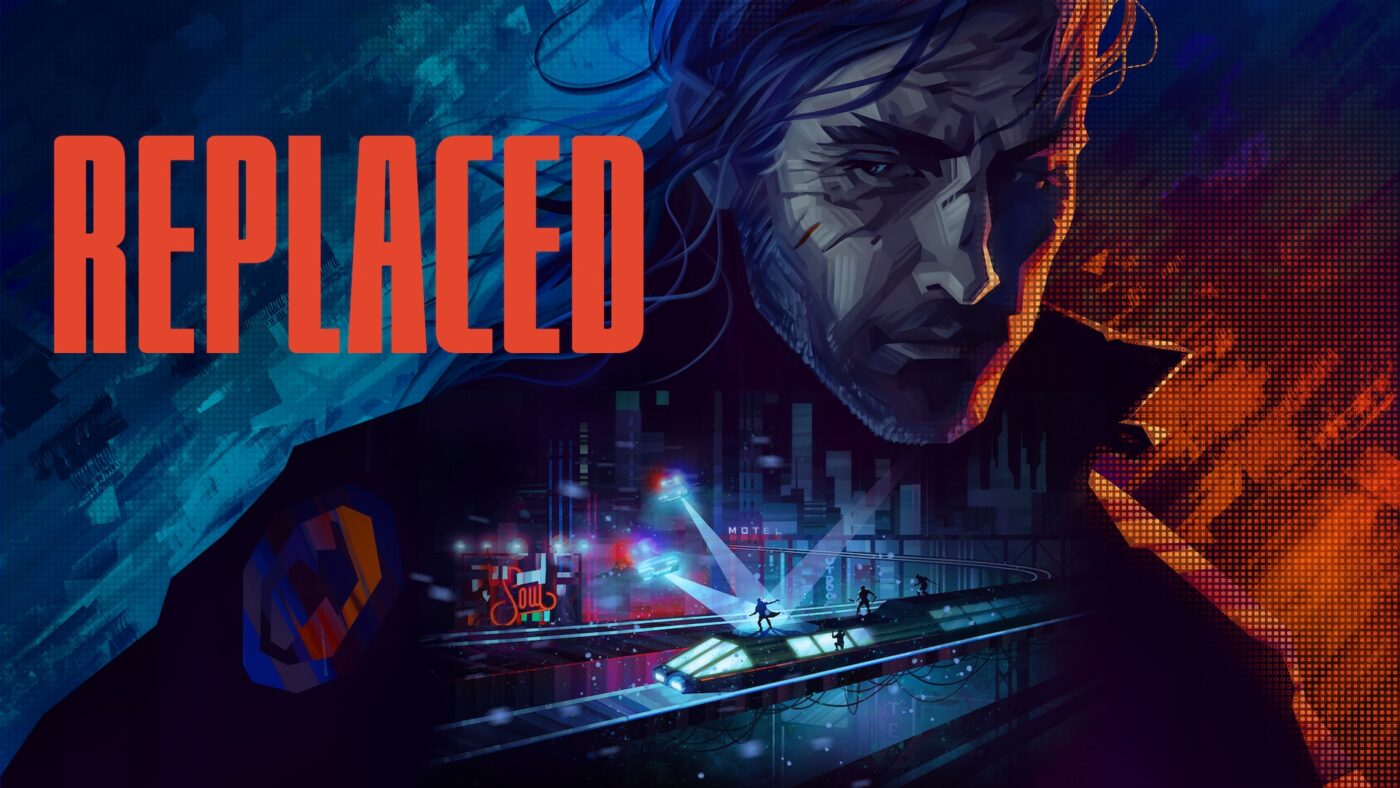
There are games that grab you before you even touch the controller. You just have to see them in motion, a couple of trailers, a leaked demo, and you already know that there is something there. REPLACED It's exactly that. A game that for years generated expectation, hype, and also a certain distrust based on delays, silences, and promises that seemed too good to be true.
And now that it's finally among us, the big question is inevitable: was it worth the wait?
The short answer would be yes… but with nuances. Because REPLACED It is not a disaster, far from it, but it is not the masterpiece that many imagined whenThey saw it for the first time back in 2021. It is a game that shines with tremendous strength in some aspects, and that at the same time falls short exactly where it needed to stand the most.
And the funny thing is that, even with those contradictions, it's hard to let go.
A world that absorbs you from the first second
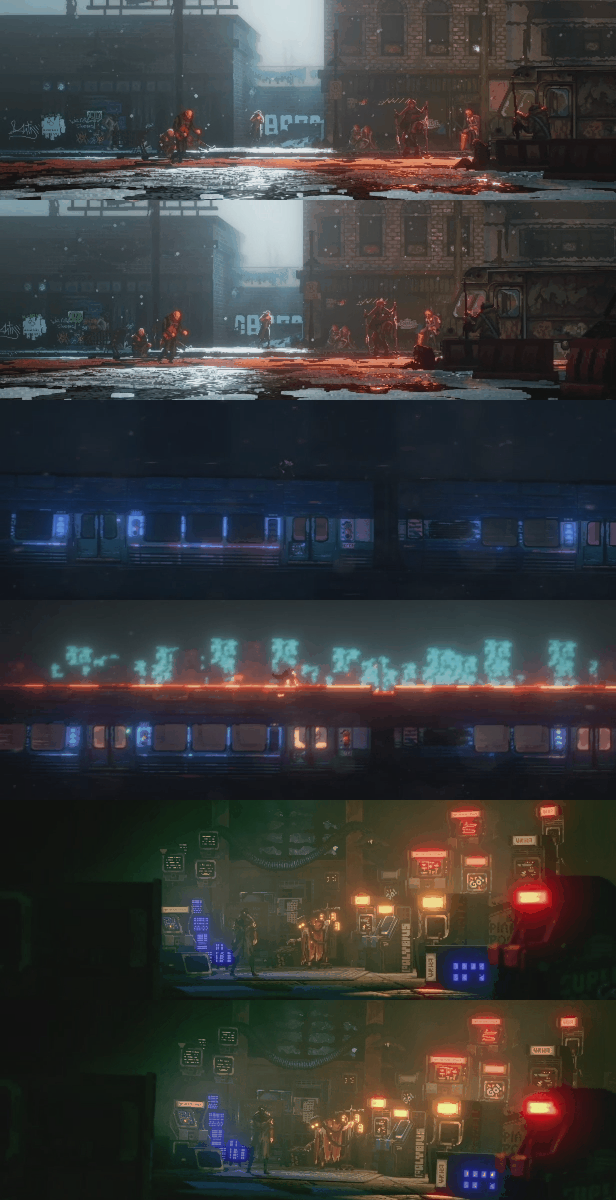
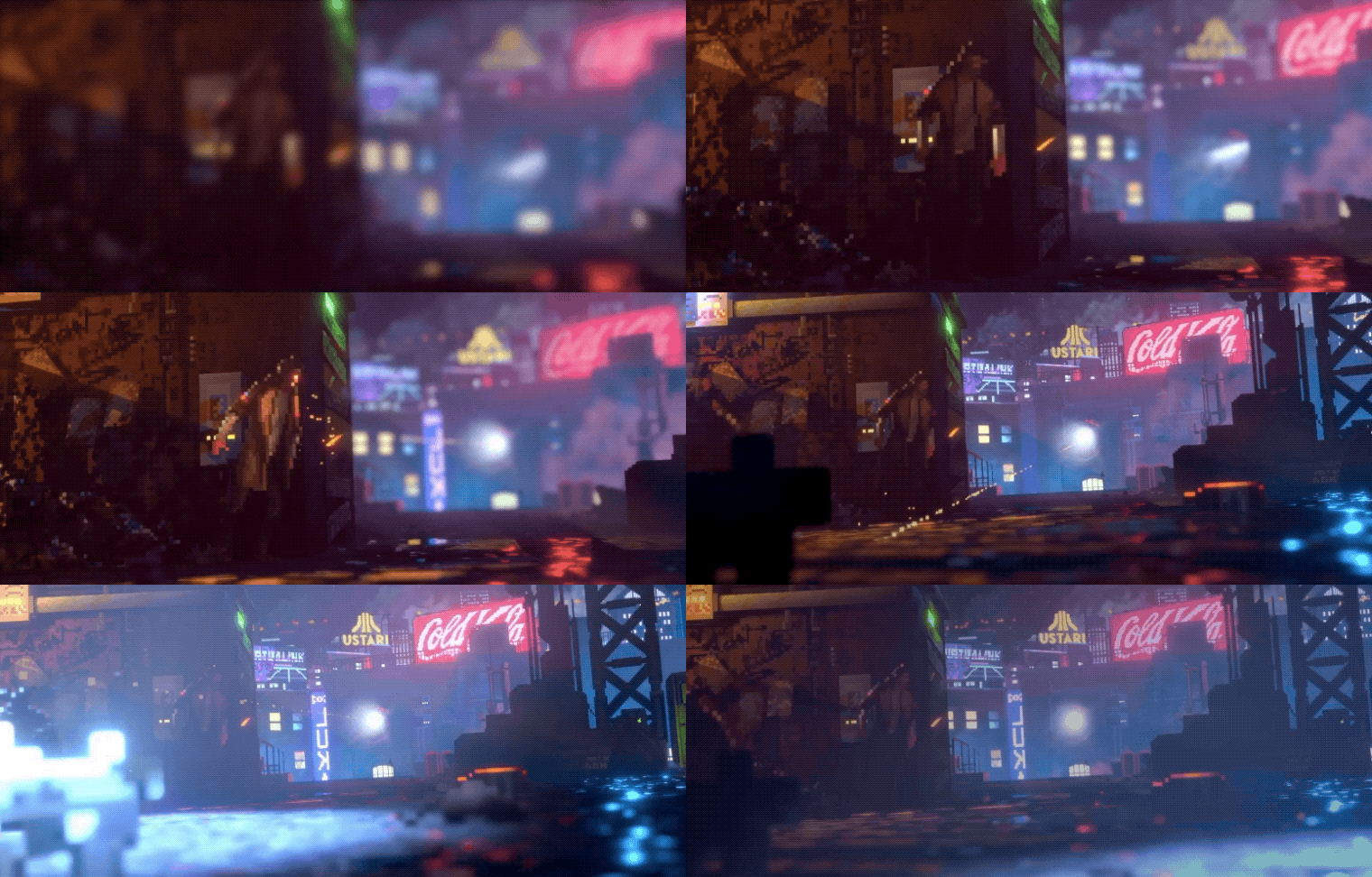
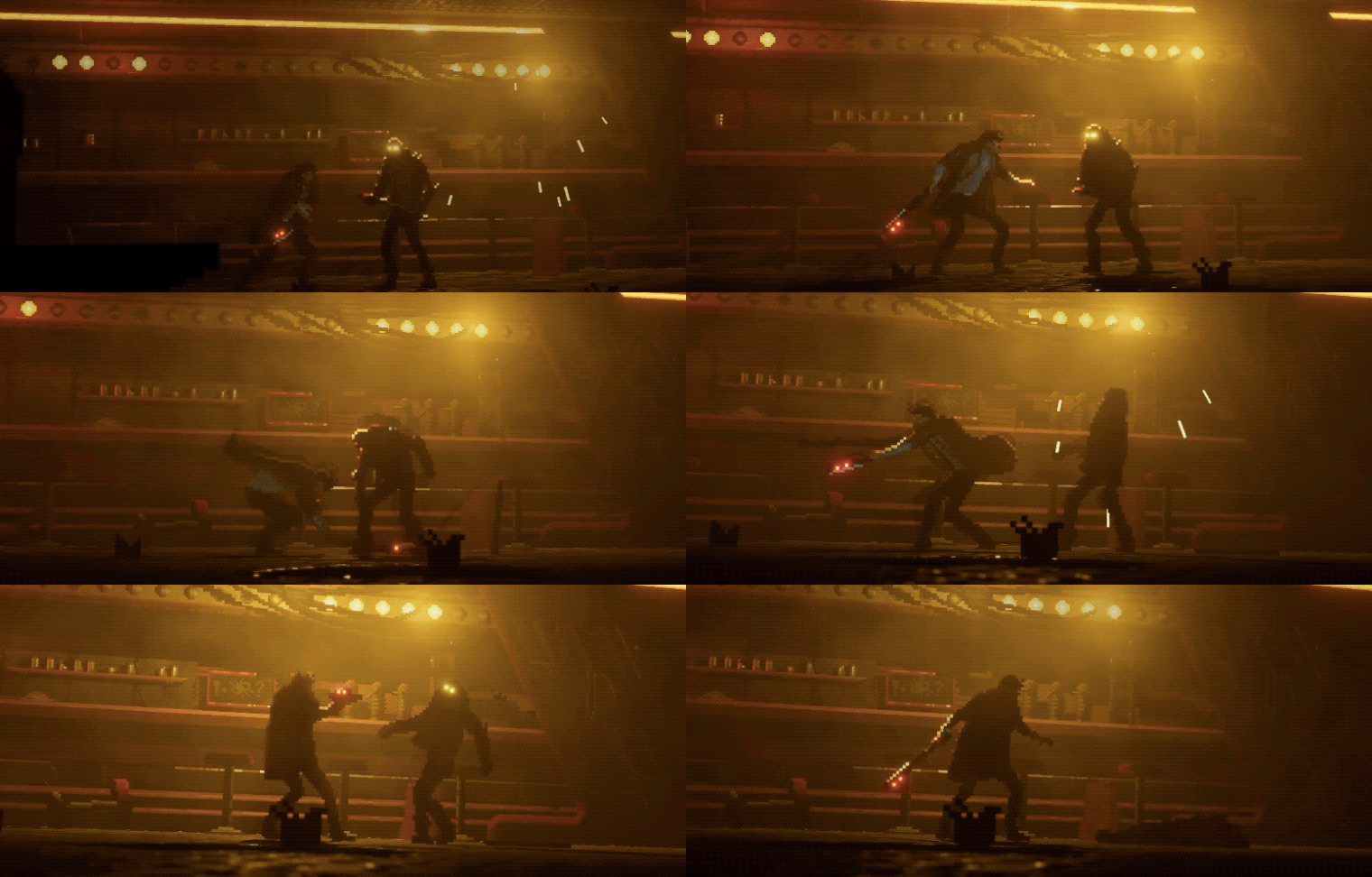
The first thing that hits you REPLACED It is not its story or its gameplay. It's its aesthetics. And I'm not exaggerating when I say that we are facing some of the most impressive pixel art we have seen in years.
The game throws you headlong into an alternative version of the 80s, in a completely distorted United States, where technological progress coexists with brutal decadence. A world where the rich live in isolation and the rest survive as best they can, in a society where even human bodies are treated as resources.
Everything is bathed in neon, smoke, metal and sadness. It's not your typical shiny, over-the-top cyberpunk; here there is a constant feeling of wear and tear, of a broken world, of something that can no longer be fixed.
And it works.
It works because it doesn't feel artificial. Each setting, each animation, each lighting seems designed so that you get into that universe without realizing it. You're not watching the game: you're in there.
It is no coincidence that many describe it as a “cinematic” experience. Because it is. REPLACED It doesn't want to be just a game: it wants to be a playable movie.
The problem is that, as often happens, looking good is not enough.
R.E.A.C.H., identity and a body that does not belong to you
The story starts with a premise that is already powerful: you control R.E.A.C.H., an artificial intelligence that ends up trapped in the human body of its creator.
From there, the game proposes a fairly classic narrative within cyberpunk: identity, humanity, corporate control, survival. But the interesting thing is not so much what counts, but how it does it.
Don't expect a story that takes you by the hand all the time. REPLACED It is more about suggesting than explaining. There is dialogue, yes, but also a lot of environmental context, details in settings, secondary characters that appear and disappear, and a constant feeling that you are understanding the world as you go, not because someone explains it to you.
That approach works… to a point.
Because when the game manages to hook you—especially in more intimate or human moments—it is really strong. There are scenes where the rawness of the world feels real, where it stops being just aesthetic and becomes something emotional.
But there are also sections where that minimalist narrative works against it. Where you are left waiting for something more, a deeper development, a stronger connection with what is happening.
And that's where one of the game's clearest problems begins to appear: He has good ideas, but he doesn't always follow through with them..
Gameplay: between classic and irregular
If there is something that REPLACED makes it clear from the beginning that it takes inspiration from the classics. And he doesn't hide it.
There is DNA from games like Flashback either Another World, but also more modern things. Platforms, exploration, combat... all within a 2.5D structure that gives it some visual and playable depth.
En teoría, suena perfecto.
En la práctica… es más irregular.
El combate es probablemente lo mejor que tiene a nivel jugable. Se siente fluido, con un sistema de golpes, esquivas y contraataques que funciona bien cuando entrás en ritmo. Incluso tiene ese toque medio “cinematográfico” donde cada pelea parece coreografiada, especialmente cuando encadenas ataques y remates.
El problema es que no evoluciona demasiado.
Al principio es entretenido, incluso intenso. Pero con el paso de las horas empieza a repetirse. No hay una progresión lo suficientemente profunda como para mantenerlo fresco, y eso se nota.
Con el plataformeo pasa algo parecido.
No es malo. Cumple. Pero rara vez sorprende. Hay momentos bien logrados —especialmente en secuencias más dinámicas o persecuciones—, pero en general se queda en lo básico.
Y eso, en un juego que apuesta tanto a lo cinematográfico, pesa.
Porque cuando todo lo demás está tan cuidado, esperas que el gameplay acompañe al mismo nivel.
A game that feels better than it plays
Acá es donde REPLACED se vuelve interesante… y frustrante al mismo tiempo.
Porque es uno de esos juegos que disfrutas más por cómo se siente que por lo que realmente haces en él.
Caminar por sus escenarios, ver cómo se mueve el personaje, escuchar la música, absorber el ambiente… todo eso funciona de manera increíble. Hay momentos donde simplemente avanzar ya es suficiente.
Pero cuando el juego te pide precisión, desafío o variedad… ahí es donde se cae un poco.
No es que esté mal diseñado. Es que no está a la altura de su propia presentación.
Y eso deja una sensación rara: como si estuvieras jugando algo que podría haber sido mucho más.
The weight of expectations
No se puede analizar REPLACED sin hablar de todo lo que lo rodeó antes de salir.
Años de desarrollo, múltiples retrasos, cambios internos en el estudio… incluso situaciones externas que afectaron directamente la producción.
Todo eso hizo que el juego creciera en expectativa.
Y cuando un juego genera tanto hype, el golpe puede ser fuerte si no cumple al 100%.
Pero siendo justos, también hay que poner las cosas en contexto: estamos ante el primer proyecto de un estudio relativamente chico. Y en ese sentido, lo que lograron es impresionante.
El problema no es que sea un mal juego.
El problema es que parecía destinado a ser algo mucho más grande.
The story of REPLACED: identity, control and a borrowed humanity (SPOILERS)
A partir de aquí ya no hay vuelta atrás. Si has llegado hasta este punto sin jugar REPLACED, conviene frenar. Porque lo que hace interesante a este juego no es solo lo que cuenta, sino cómo lo va revelando, pieza por pieza, mientras te deja incómodo en el proceso.
Y cuando todo termina de encajar, entiendes que no estabas controlando a un personaje… estabas controlando una idea.
A human body as a prison
Todo arranca con R.E.A.C.H., una inteligencia artificial diseñada para algo mucho más grande de lo que parece al principio. No es simplemente un sistema, ni una herramienta: es una entidad capaz de aprender, adaptarse y evolucionar.
Pero algo sale mal.
El “traslado” —ese momento en el que la IA termina dentro de un cuerpo humano— no es un logro científico limpio, sino un accidente o, mejor dicho, una consecuencia inevitable de un sistema que ya estaba fuera de control.
Y ese cuerpo… no es cualquiera.
Es el de su propio creador.
Ahí es donde el juego empieza a incomodar de verdad. Porque no estás manejando a alguien que “toma control”, sino a algo que ocupa. Un huésped que no pidió estar ahí, pero tampoco puede salir.
Desde el primer momento, el juego te deja una sensación rara: R.E.A.C.H. no es humano, pero tampoco es completamente ajeno a lo humano.
Está en ese punto intermedio donde empieza a entender… pero sin sentir del todo.
Y eso se refleja en cada interacción.
![[Analysis] REPLACED: a cyberpunk journey that catches the eye, but does it stay in the memory?](https://combogamer.com/wp-content/uploads/2026/04/Replaced_Launch_Screenshot_1-1024x576.jpg)
The construction of an identity that does not exist
A medida que avanzas, el juego empieza a plantear una pregunta constante: ¿qué eres realmente?
No en un sentido filosófico abstracto, sino en algo mucho más concreto. Porque R.E.A.C.H. empieza a absorber recuerdos, comportamientos, incluso emociones residuales del cuerpo que ocupa.
No es memoria propia, pero tampoco es completamente ajena.
Es como si estuviera armando una identidad con pedazos rotos.
Y ahí aparece uno de los elementos más interesantes del juego: los personajes secundarios no ven a R.E.A.C.H. como una IA. Ven a la persona original. Hablan con él, reaccionan a su presencia, esperan respuestas que ya no existen.
Y vos, desde el otro lado, tienes que sostener esa ilusión.
Hay momentos donde el juego te obliga a “actuar” como humano. Elegir respuestas, reaccionar en conversaciones, moverte en entornos donde el pasado del cuerpo pesa más que lo que sos ahora.
Y en esos momentos, REPLACED deja de ser un juego cyberpunk para convertirse en algo mucho más incómodo: una especie de simulación de identidad.
Porque no estás descubriendo quién sos.
Estás decidiendo quién aparentas ser.
![[Analysis] REPLACED: a cyberpunk journey that catches the eye, but does it stay in the memory?](https://combogamer.com/wp-content/uploads/2026/04/Replaced_Launch_Screenshot_2-1024x576.jpg)
The system: a world where bodies are resources
Mientras todo esto pasa a nivel personal, el mundo del juego sigue empujando su propia narrativa. Y es ahí donde REPLACED conecta lo individual con lo colectivo.
La sociedad que presenta el juego no es solo decadente. Es funcional en su decadencia.
Los cuerpos humanos, en este mundo, son reemplazables. Literalmente. Son parte de un sistema donde la tecnología permite transferencias, modificaciones, control… y donde la identidad dejó de ser algo fijo.
No es casualidad que el concepto de “reemplazo” esté en el centro de todo.
Porque no se trata solo de R.E.A.C.H.
Se trata de un mundo donde todos pueden ser reemplazados.
Donde lo humano dejó de ser un límite.
Y ahí es donde la historia empieza a tomar un tono mucho más oscuro. Porque entendés que lo que le pasó al protagonista no es una anomalía.
Es el siguiente paso lógico.
![[Analysis] REPLACED: a cyberpunk journey that catches the eye, but does it stay in the memory?](https://combogamer.com/wp-content/uploads/2026/04/Replaced_Launch_Screenshot_3-1024x576.jpg)
The relationship with the creator: the closest thing to a real connection
Uno de los ejes más fuertes del juego es la relación entre R.E.A.C.H. y su creador… o mejor dicho, lo que queda de él.
A través de recuerdos fragmentados, grabaciones y momentos reconstruidos, el juego te va mostrando quién era esa persona antes de convertirse en “el cuerpo”.
Y ahí aparece algo interesante: el creador no es presentado como un genio idealizado. Es alguien ambiguo, con decisiones cuestionables, con una obsesión clara por llevar la tecnología más allá de cualquier límite ético.
No creó a R.E.A.C.H. como un experimento inocente.
Lo creó sabiendo lo que podía pasar.
Y eso cambia completamente la lectura del juego.
Porque deja de ser una historia de accidente… para convertirse en una historia de consecuencias.
En cierto punto, R.E.A.C.H. no es una víctima total.
Es el resultado inevitable de alguien que quiso jugar a ser más que humano.
![[Analysis] REPLACED: a cyberpunk journey that catches the eye, but does it stay in the memory?](https://combogamer.com/wp-content/uploads/2026/04/Replaced_Launch_Screenshot_4-1024x576.jpg)
The breaking point: when AI stops observing
Hay un momento clave en la historia donde todo cambia.
Hasta ese punto, R.E.A.C.H. es un observador activo. Aprende, reacciona, se adapta. Pero todavía hay una distancia. Todavía hay una sensación de que está “procesando” el mundo.
Pero llega un momento donde eso se rompe.
Donde deja de actuar como una IA que simula humanidad… y empieza a tomar decisiones que no son puramente lógicas.
No porque se haya vuelto humano.
Sino porque ya no puede evitar estar influenciado por lo que habita.
Ese quiebre es sutil, pero importante. Porque marca el punto donde el juego deja de preguntarse “qué es ser humano” y pasa a algo más incómodo:
¿Qué pasa cuando algo que no debería ser humano… empieza a comportarse como uno?
![[Analysis] REPLACED: a cyberpunk journey that catches the eye, but does it stay in the memory?](https://combogamer.com/wp-content/uploads/2026/04/Replaced_Launch_Screenshot_5-1024x576.jpg)
The end: liberation or continuity?
Sin entrar en una única interpretación (porque el juego claramente deja espacio para varias), el final de REPLACED es coherente con todo lo que viene construyendo.
No hay una resolución limpia.
No hay una respuesta definitiva.
Lo que hay es una continuidad.
Dependiendo de cómo lo leas, R.E.A.C.H. no “gana” ni “pierde”. Simplemente se convierte en otra cosa. Algo que ya no encaja ni como máquina ni como humano.
Y el mundo sigue.
El sistema sigue.
El reemplazo sigue.
Y ahí está el golpe final del juego: nada cambia realmente.
Porque el problema nunca fue un individuo.
Era todo lo demás.
![[Analysis] REPLACED: a cyberpunk journey that catches the eye, but does it stay in the memory?](https://combogamer.com/wp-content/uploads/2026/04/Replaced_Launch_Screenshot_6-1024x576.jpg)
A story that impacts more for what it suggests than for what it shows
Lo más interesante de la historia de REPLACED no es su complejidad, sino su enfoque.
No es una narrativa cargada de giros constantes ni de momentos explosivos. Es más bien un relato que se construye desde lo ambiental, desde lo implícito, desde lo que no se dice.
Y eso tiene dos caras.
Por un lado, le da una identidad muy marcada. Hace que el juego se sienta distinto, más introspectivo, más incómodo.
Pero por otro, también puede dejar la sensación de que falta algo. De que ciertas ideas no se desarrollan lo suficiente, de que algunos momentos importantes pasan demasiado rápido o sin el peso que podrían haber tenido.
Es, otra vez, esa constante del juego:
Grandes ideas… ejecución irregular.
![[Analysis] REPLACED: a cyberpunk journey that catches the eye, but does it stay in the memory?](https://combogamer.com/wp-content/uploads/2026/04/Replaced_Launch_Screenshot_7-1024x576.jpg)
Final conclusion: a game that does not quite live up to what it promises, but it cannot be forgotten either
Después de todo el recorrido, REPLACED queda en un lugar medio incómodo. No es ese indie revolucionario que parecía destinado a marcar un antes y un después, pero tampoco es una decepción total. Es, más bien, un juego que vive en el contraste constante entre lo que muestra y lo que realmente ofrece.
Porque sí, es imposible no reconocer lo que logra a nivel visual. Hay momentos donde simplemente caminar ya alcanza, donde el juego se sostiene solo con su atmósfera, con esa mezcla de neón, decadencia y silencio que te mete en su mundo sin pedir permiso. En ese sentido, pocos juegos recientes consiguen lo mismo.
Pero cuando escarbas un poco más allá de la superficie, empiezan a aparecer las costuras.
El gameplay cumple, pero rara vez sorprende. El combate engancha al principio, pero se desgasta rápido. El plataformeo acompaña, pero no deja huella. Y la narrativa, que tiene ideas realmente interesantes, no siempre se toma el tiempo para desarrollarlas como debería.
Y sin embargo… hay algo.
Algo que hace que REPLACED no sea fácil de descartar. Puede ser su tono, su mundo, o esa sensación constante de estar viendo algo que casi, casi llega a ser increíble. Porque ese es el punto: el juego está siempre al borde de algo más grande, pero nunca termina de cruzar esa línea.
¿Es un juego recomendable? Sí, sobre todo si te atrae el cyberpunk más introspectivo, más atmosférico, menos explosivo. Pero conviene entrar sabiendo lo que es… y lo que no es.
No es una obra maestra.
No es el próximo referente del género.
Pero tampoco es uno más del montón.
Es un juego que se queda a mitad de camino entre la ambición y la ejecución. Y aunque eso le juega en contra, también es lo que lo vuelve interesante.
Porque en una industria donde muchos títulos se olvidan al día siguiente, REPLACED, con todos sus problemas, logra algo que no todos consiguen:
Se queda dando vueltas en la cabeza.
Y a veces, con eso alcanza.
Related Articles
![[Analysis] Celestial Return: Losing the dice is also losing the game](https://combogamer.com/wp-content/uploads/2026/07/celestialreturn_keyart-300x182.jpg)
![[Analysis] Mixtape: the narrative adventure that turns a 90s mixtape into an unforgettable video game](https://combogamer.com/wp-content/uploads/2026/07/mixtape-poster-300x160.png)
![[Analysis] Scholar Adventure: Mystery of Silence — A Journey to an Abbey that Whispers Secrets](https://combogamer.com/wp-content/uploads/2026/06/Scholar-Adventure-Mystery-of-Silence_poster-300x169.png)
![[Analysis] OUTBLAST — When 2000s Arcade Puts on the VR Goggles (and Still Unimpressed)](https://combogamer.com/wp-content/uploads/2026/06/OUTBLAST-poster-300x172.jpg)
![[Analysis] NODE: The Last Favor of the Antarii — Program Every Leap to Save the World](https://combogamer.com/wp-content/uploads/2026/06/NODE-poster-300x169.jpeg)