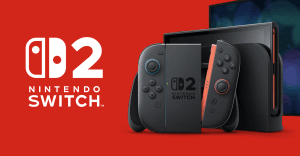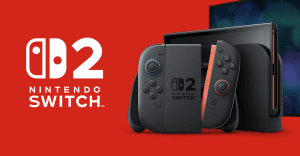

Wii U was first promoted as a super powerful console, which drew on Nintendo's "old" tradition of making powerful consoles loaded with software for all types of gamers, always also offering innovation in terms of playing style. In the latter they have not failed, since despite not having exploited it much yet, the gameplay is really different with Wii U in games that know how to make good use of the GamePad. On the other points, however, Nintendo has stayed halfway.
It is a powerful console, but not the most powerful. Although I consider the power of the console as secondary, it plays a very important role for a certain group of potential clients and software development companies.
In its software, it has sinned by wasting a year without competition, and having ports from previous generation consoles, some of which even work better on those other consoles, that is, without framerate drops or bugs that affect the progress of the game.
They have also wanted to give third parties a privileged place, leaving the launch period to the third parties themselves so that they can launch exclusives that in turn do not have to compete with Nintendo's own franchises. They have trusted the third parties, and the only one that has responded, although in a quite questionable and controversial way, has been Ubisoft. Sometimes they have abandoned development on the console, or have not even been interested in it, and Nintendo itself has had to start (and late) to develop its own titles for some of its most interesting franchises to try to keep its console afloat.
In a question and answer session regarding this year's financial results with Mr. Satoru Iwata, current president of Nintendo Japan, he has made certain statements that have revealed a change in the company's attitude towards the focus on its most recent desktop console.
What they have done is a policy of reaction to a specific fact such as low sales. They take advantage of the boost in sales caused by Christmas to massify their presence in homes, since it is the right season where parents buy toys for their children, and Wii U will be nominated as the best “toy” for them and even for the entire family. A “toy” that allows all family members to enjoy spending hours of fun doing a joint activity.
After the base of consoles in existence in people's homes has increased, they assume that they will have more support and will begin to launch their leading titles to sell a greater amount of software and attract the more adult and traditional video gamer, who consumes these products regardless of the time of year.
It's a two-pronged approach to the console's identity, which will shift from something for kids or casual gamers around the holidays to something more serious and strong during next year's first season.
Obviously, Nintendo has realized that it can no longer trust third parties, and this is the only way it can lift its own console off the ground, to try to turn it into a product that begins to be profitable.
Going to Wii consumers to buy Wii U shows something else: an escape maneuver. They have wanted to get out of that dogma in their image that was caused by the Wii and that condemned Nintendo to be seen as something for children when compared to the catalog of games on competing consoles, and they have promoted (and badly) the Wii U as something sophisticated and much more adult. The marketing campaign was horrendous and did not know how to efficiently communicate the product, and now they find themselves with a console that lacks identity, that is not focused on one group of players or another, nor on the group of geeks who buy technological products for the novelty and multimedia, since the console is only useful for playing and little else.
They have failed miserably in generating a change of business image, and now they go to the same type of casual, child, and/or family customer so that, as I said before, they increase the base of consoles sold, and then try to generate a call for attention again to the most classic video gamers and try again to generate an image change but gradually and with a console already on the market.
I highly doubt the success of the operation in terms of this change of social or business image, although I am sure that they will achieve the increase in sales they are expecting.
In any case, this is a long-term job, and a lesson that must be learned by other companies and especially by Nintendo itself, which is now struggling to get out of the commercial vortex generated by itself in its previous generation.
What do you think? Leave us your comments.
Related Articles
![[Very Top] Five recurring characters in my games of Super Smash Bros. Ultimate (2nd part)](https://combogamer.com/wp-content/uploads/2026/01/Muy-Top-Smash-2-Portada-300x237.jpg)
![[Playing…] Our 2025 games (whether or not they were released that year)](https://combogamer.com/wp-content/uploads/2026/01/Especial-2025-portada2-300x169.jpg)
![[Playing…] Xenoblade Chronicles 3: The most emotional, dark and deep installment of the franchise](https://combogamer.com/wp-content/uploads/2025/07/Xenoblade-Chronicles-3-portada-300x169.avif)
![[Playing…] Pikmin 3](https://combogamer.com/wp-content/uploads/2025/03/Pikmin-3-banner-300x150.jpg)