
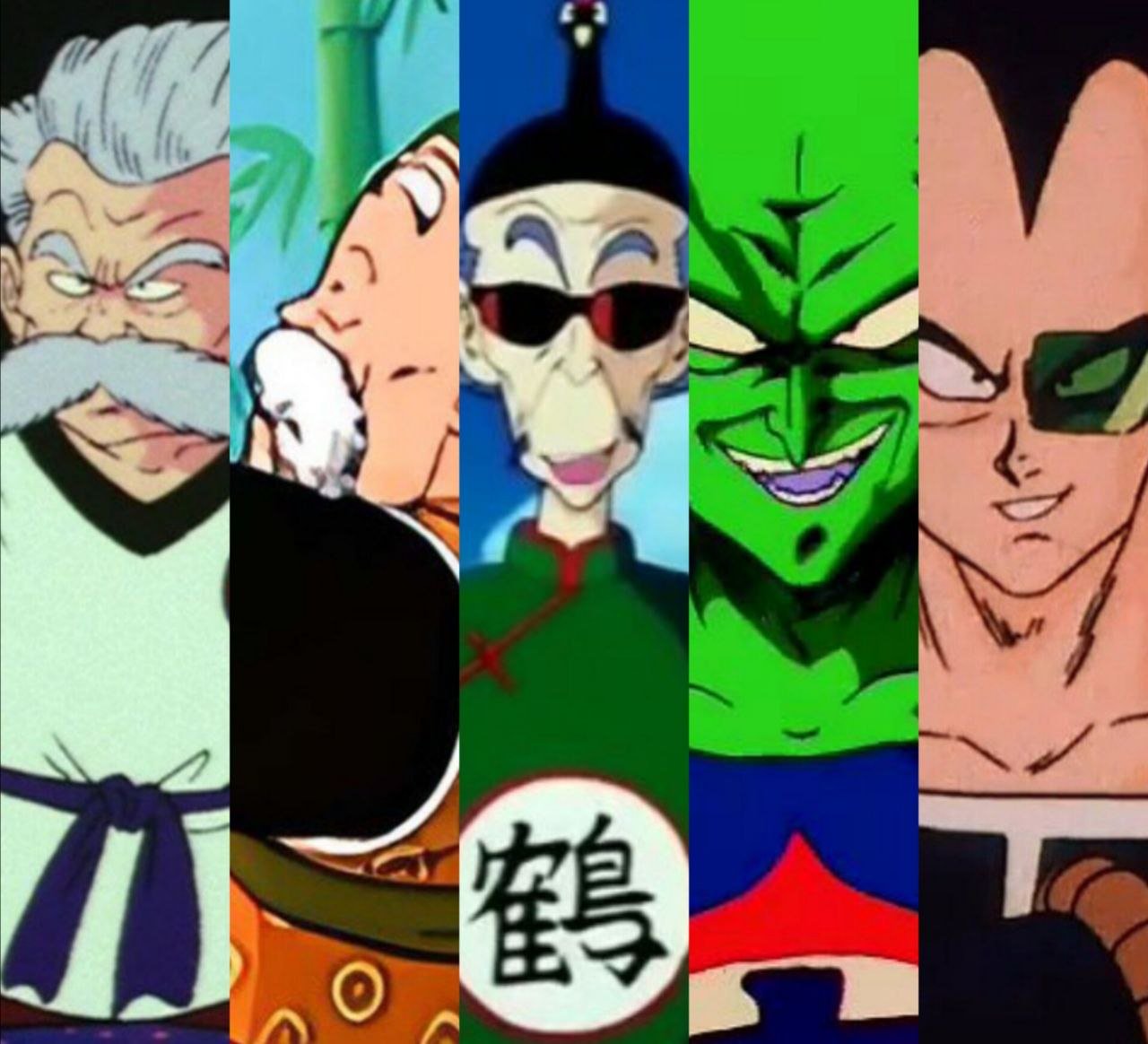

No sooner had we finished with the series of articles that make up the Ibanez Special, on the occasion of the death of the Barcelona cartoonist, to see us again in a series of articles to pay tribute to the works of another great cartoonist: the legendary mangaka Akira Toriyama which, as we will remember, died on March 1at the age of 68, although the news would not go around the world until a week later.
If Martín's article consisted of reviewing several relevant series by the Japanese manga artist without counting what is his best-known work, dragon ball, I will immerse myself fully in this listing what I believe are the characters who have contributed the most to forging the saga to make it as we know it today. Curiously, most of these characters were half forgotten by the general public at best (with notable exceptions, such as Master Roshi), so I consider it a good idea to refresh your memory by bringing up his existence in the series.
MASTER MUTAITO
![[Very Top] Five important characters for the development of Dragon Ball who were forgotten](https://combogamer.com/wp-content/uploads/2024/09/Maestro-Mutaito.png)
In the more than ten years of publication of the first stage of the manga dragon ball, from 1984 to 1995 (in the manga there is no division between normal Dragon Ball and Dragon Ball Z) there was an enormous transformation between the style of the first bars of the series and the era of the Z warriors in which it would be enough for them to sneeze loudly to blow up the entire Solar System. At first, Dragon Ball was based quite a bit, on the one hand, on the series that would be its prototype, dragon boy (including both Goku's own ancestors, Bulma and Roshi) and the 16th century Chinese epic novel Journey to the West from another. Goku would be based, specifically, on the Monkey King, from whom Goku would take his tail, the sacred staff and the flying cloud. Parodies of pop culture icons and political issues such as Mao's China were everywhere, as was absurd humor, and the fights were based on very elaborate martial arts movements.
It was Master Roshi who would instruct little Goku in the control of ki (something like the “life energy” of the fighter) with his iconic Kamehameha technique. That very powerful burst of energy would evolve in forms and concepts until the apocalyptic fights of today. As we already saw, Master Roshi is by no means forgotten, but the one to whom he owes what he is is: Master Mutaito.
Mutaito is of capital importance in the events that develop later, which we will touch on with almost all the characters in this article, but that relevance does not correspond to what we see of him in the series. Leaving that out, we can only say that he lived about 300 years before the events of dragon ball, that He was the most powerful fighter on Earth at that time and who taught Roshi the Kenpo martial arts.
SON GOHAN (GRANDPA)
![[Very Top] Five important characters for the development of Dragon Ball who were forgotten](https://combogamer.com/wp-content/uploads/2024/09/Son-Gohan-abuelo-1024x576.jpeg)
Son Gohan was Goku's adoptive grandfather., whom he took care of since he found him in the mountains when he was a baby. He himself was a disciple of Master Roshi, so he was skilled in martial arts, although he would not be able to teach Goku everything he would later learn in Kame House. Its aesthetic was in line with the tone that the series had at that time, inspired by ancient China, as can be seen in their traditional clothing.
The importance of this character lies basically in being that, Goku's adoptive grandfather, someone whom Goku loved so much that would give his name to his first-born son, to the Shon Gohan that the general public knows so much, the one who had Saiyan powers at such an early age, but who disappointed many due to his later stagnation (although many of his fans find his later paternal and professional obligations as justification, which I think makes sense).
In any case, Gohan is, above all, a catalyst. Firstly, was the character with which we got an idea of the enormous power of Goku in his Ozaru form, the fearsome giant ape who is only moved by animal instincts, when the boy looked directly at the full moon. If such a strong fighter died at the hands of that beast, what wouldn't he be able to do? Then, his story would take a twist in stage Z, cuando se rebeló que gracias a que dejó caer por error a Goku de bebé, éste se golpearía la cabeza, perdiendo su agresividad saiyajin para volverse un pequeño apacible y alegre, siendo aún más vital su intervención.
Este personaje está aún más olvidado que Mutaito. Mientras que, al parecer, éste apareció brevemente en Super durante un viaje en el tiempo, de Gohan desaparecería todo rastro desde la aventura de Goku y Chi-Chi en el Horno de las Ocho Divisiones, antes de que su primer hijo naciese. Es decir, con anterioridad a la saga Z. Antes de eso, sí tuvo una aparición relevante en el torneo de monstruos de la bruja Uranai Baba, aunque pasase la mayor parte del tiempo como un misterioso luchador enmascarado con aureola.
TSURU-SEN'NIN
![[Very Top] Five important characters for the development of Dragon Ball who were forgotten](https://combogamer.com/wp-content/uploads/2024/09/Tsuru-Sennin.jpg)
Hoy en día, estamos acostumbrados a ver volar a los guerreros Z de aquí para allá. Para ellos, volar de un extremo a otro del planeta Tierra en cuestión de muy poco tiempo es algo rutinario. Esta habilidad es aplicada, además, en los combates. ¿Contra qué enemigo no ha combatido Goku y sus amigos en el aire, intercambiando patadas y puños poderosísimos y esquivando, parando o contrarrestando devastadoras ráfagas de ki? Pero, en realidad, hubo un tiempo en el que, si nuestro protagonista quería volar, debía utilizar invariablemente su nube voladora. ¿En qué momento se produjo ese cambio?
Pues bien, todo esto se remonta al Maestro Tsuru-Sen’nin. Y aquí vuelve a aparecer de manera tangencial el Mestro Mutaito, puesto que, si Roshi (o Kame Sen’nin) fue el discípulo que siguió el camino del honor y del bien, Tsuru-Sen’nin hizo justo lo contrario, tomar la vía del crimen y la maldad. Este maestro de artes marciales era tremendamente poderoso en tanto que enseñó a sus discípulos técnicas tan potentes como la telepatía (aunque su antiguo compañero y rival también sabe utilizarla), el Ataque de Velocidad y, especialmente, el Dodonpa (la técnica especial de la Escuela de la Grulla, que propina una ráfaga de ki concentrada, de importante poder destructivo), el Kikoho (una descarga de energía bestial que volatiliza lo que toca, y que en Z frenaría hasta al mismísimo Cell en su segunda forma) y, cómo no, el vuelo. Todas esas habilidades serían inculcadas a Ten Shin Han, quien continuaría su legado en las etapas más recientes de la serie, pero estrictamente en cuanto a técnicas, pues renegaría de la maldad y la deshonorabilidad de su antiguo maestro. Éste, además, fue el primer personaje en sentir el ki del rival, algo que luego sería una costumbre.
Imaginaos por un momento lo que sintieron los personajes de esa etapa (y, con ellos, nosotros, los espectadores) cuando vieron a Ten Shin Han y a su compañero y amigo Chaoz elevarse por primera vez, en el arco del 22 torneo de artes marciales. Sólo ese detalle ya nos predisponía a pensar que estaban ante enemigos realmente excepcionales.
THE GREAT DEMON KING PICCOLO
![[Very Top] Five important characters for the development of Dragon Ball who were forgotten](https://combogamer.com/wp-content/uploads/2024/09/Piccolo-Daimaku.jpg)
Dragon Ball seguía la premisa de cualquier manga shonen de peleas, esto es, la de enfrentarse a enemigos cada vez más poderosos y temibles. La Patrulla Roja contaba con guerreros de poder y habilidades considerables. Por ejemplo, el general Blue, pero fuimos atónitos testigos de cómo el terrible luchador marcial Tao Pai Pai (hermano de Tsuru-Sen’nin, por cierto) acabó con su vida tan sólo utilizando su lengua. Más adelante, aparecieron enemigos con poderes aún más sobrenaturales, como vimos en el apartado anterior: Ten Shin Han y Chaoz, los discípulos de Tsuru-Sen’nin. Pero el salto cualitativo llegaría con el regreso a la Tierra del maléfico Gran Rey Demonio Piccolo, a quien Mutaito había encerrado en un termo con su técnica Mafuba a costa de su propia vida.
El Rey Piccolo fue el primer villano en infundir verdadero terror, un ser maligno hasta la médula. Disfrutaba haciendo el mal, sembrando el caos, la destrucción y la muerte allá por donde iba. Uno de sus secuaces, que en realidad eran sus hijos (nacían de huevos que escupía por la boca de manera repugnante) llegó a asesinar a Krilin, lo cual supuso un shock para muchos debido al tono menos serio que había seguido la serie hasta ese instante. Además, fue también el primer portador de un poder desmesurado. Era capaz de reducir a un cráter vastas zonas sin esfuerzo aparente. Es decir, fue con él con el que uno de los planteamientos básicos de Dragon Ball Z (los combates de trasfondo apocalíptico) dieron comienzo. Tras este arco, ya nada volvería a ser igual.
Es paradójico que ponga a este personaje entre los olvidados, pero hay que tener en cuenta que los derivados de éste han contribuido a sepultar su memoria. De un lado Kamisama se impondría como el “Piccolo bueno” (pues luego se supo que su versión malvada sólo era la maldad residual de la que se había deshecho para poder ser digno de ocupar el trono de Dios de la Tierra) y, del otro, su hijo del mismo nombre (conocido popularmente como Piccolo Jr) se terminaría redimiendo, pasándose al bando de los buenos.
RADITZ
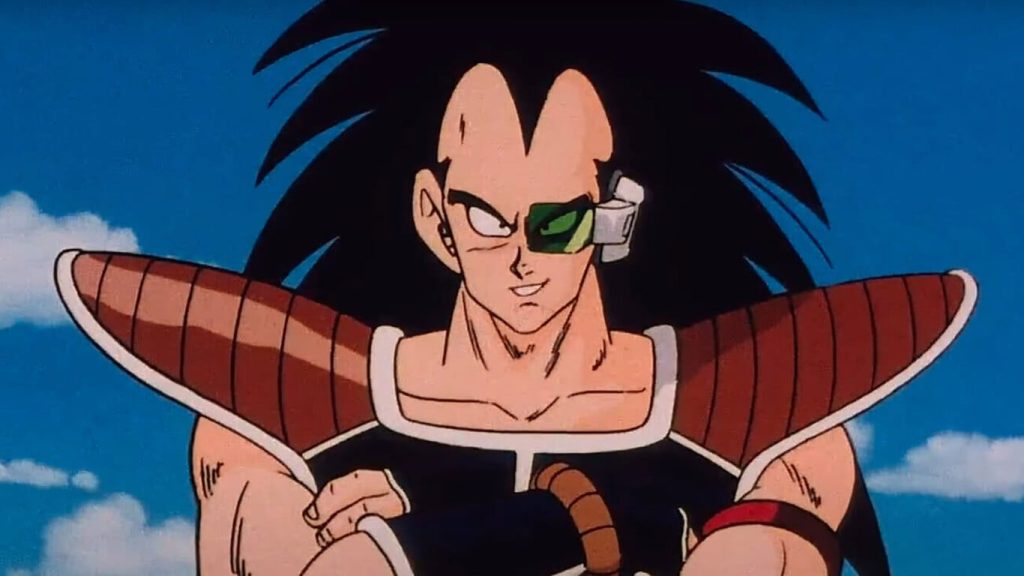
Si bien ya he mencionado que en el manga no hay distinción alguna entre dragon ball normal y Dragon Ball Z, me parece acertado que en el anime sí lo hicieran. Ya hemos visto cómo durante la primera saga las cosas fueron escalando hasta conformar los elementos necesarios para hacer ésta posible (poderes sobrenaturales como el vuelo y los ataques e ki devastadores, el tono serio, el peso de los combates sobre las aventuras, enemigos maléficos que desencadenan combates con trasfondo apocalíptico), pero cristalizaría en el giro copernicano que toma la trama al comienzo de Z.
Fue aquí donde supimos que en realidad Goku no era simplemente un terrícola muy fuerte con rabo de mono y capacidad de transformarse en un gigantesco Ozaru (algo que tampoco sería tan extraordinario si tenemos en cuenta que el universo de dragon ball estaba lleno de monstruos, animales antropomorfos, etc.), sino un saiyajin, un habitante del planeta Vegeta, destruido por un meteorito como en superman (o eso es lo que se decía entonces). Uno de los últimos representantes de una estirpe guerrera, conquistadora, sanguinaria y tremendamente poderosa. Y todo eso lo supimos de la boca de Raditz, el vil hermano mayor de Goku (que en realidad se llamaba Kakarotto), que había venido a la Tierra para intentar reclutar a su hermano.
Raditz no sólo sirve para introducir ese nuevo paradigma. Tras dejarnos boquiabiertos con su poder, rebela que existen dos camaradas suyos mucho más fuertes y malvados que él (Nappa y Vegeta), lo cual sentará la costumbre de “asustarnos” con un enemigo aparentemente poderoso que en realidad resulta un mero aperitivo del verdadero villano del arco (véase, por ejemplo, la miríada de androides que precedieron a Cell o cómo el que parecía ser un diablo todopoderoso como Dabura fue humillado por Majin Boo).
Aunque Raditz no puede considerarse un personaje olvidado en términos absolutos, considero que sí lo está en relación con la importancia que éste tuvo para el desarrollo de la trama.
Related Articles
![[Very Top] 5 fighting games that I would like to see return](https://combogamer.com/wp-content/uploads/2026/02/Muy-Top-juegos-lucha-olvidados-1-300x200.png)
![[Very top] Five weird games from a galaxy far, far away](https://combogamer.com/wp-content/uploads/2026/04/5rarosstarwars_banner-300x186.jpg)
![[Very Top] Five recurring characters in my games of Super Smash Bros. Ultimate (2nd part)](https://combogamer.com/wp-content/uploads/2026/01/Muy-Top-Smash-2-Portada-300x237.jpg)
![[Playing…] Dragon Ball Gekishin Squadra](https://combogamer.com/wp-content/uploads/2026/01/Dragon-Ball-Gekishin-Squadra-logo-300x133.png)
![[Very top] Five graphic adventures for consoles](https://combogamer.com/wp-content/uploads/2025/12/5aventurasconsolas_banner-300x154.png)
![[Playing…] Our 2025 games (whether or not they were released that year)](https://combogamer.com/wp-content/uploads/2026/01/Especial-2025-portada2-300x169.jpg)