
Table of Contents
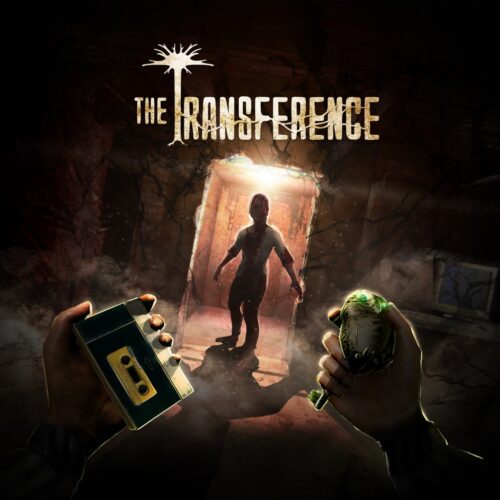
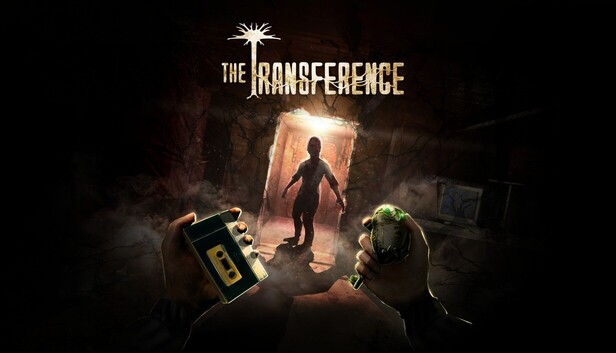
Imagine that you wake up in your own home and discover that the doors and windows have been boarded up from the inside. No one has entered by force: whoever did it was inside, or still is. That is the image that opens The Transference, a first-person mystery thriller that came out on October 29, 2026 and that turns home, the safest place by definition, into a trap full of riddles. And a clarification so as not to confuse you when searching for it: it has nothing to do with theTransferencefrom Ubisoft and 2018's SpectreVision, the virtual reality game with Elijah Wood as producer.
A small project that was seen in time
The Transference is the debut feature of Kuraishisama, a Spanish studio founded in 2023 in Malaga, and is published by JanduSoft. The curious thing is that it didn't appear suddenly. In 2024 the studio was already presenting it as an "escape room horror game" on the Epic developer forums, and that same October it released a free demo at the Steam Festival of Fear.That demo is still available, and I think it's an honest gesture in such a short game: you can try out how the startup, movement, and type of puzzle feel before deciding.
It can be played on PC (Steam, with Steam Deck support), PlayStation 5, Xbox Series X|S and Nintendo Switch. It has complete dubbing in Spanish and English, and texts also in German, French, Italian and Portuguese. On Steam it includes achievements, cloud saving, Remote Play and Family Sharing, and you can play with a keyboard or controller.
Marcos and a house that hides something
You control Marcos, who wakes up trapped in his home in northern Andalusia in the late 90s. He doesn't know how he got there or who locked him up, but someone has left riddles around the rooms and has turned every corner into part of the confinement. The objective is twofold and is solved at the same time: escape and discover who was behind it and why.
The story is reconstructed like another puzzle. There are no long cinematics that tell you what happened: you find out by examining objects, reading documents, listening to recordings and comparing testimonies that sometimes do not coincide with each other. At its heart are family secrets and old betrayals, and that gives the game a tone closer to domestic drama than monster horror. I think it's a good foundation, because it turns each room into a clue about the people who lived there and not just an obstacle to overcome.
I really like the nineties election. A house from that time is full of analog objects, cassettes, printed photographs and mechanisms that hide information without needing a single screen. It fits perfectly with a protagonist who is, above all, a forced investigator. The main setting is the house, with an underground bunker as a second space, and that limitation plays in favor of the feeling of confinement.
Puzzles with a Spanish accent
The Transference has puzzles that are not the typical padlocks with arbitrary codes, but rather rely on concrete references:
- Classic logic: puzzles inspired by the Tower of Hanoi and the problem of the diner philosophers, two classics of reasoning that are hidden here within objects and mechanisms of the house.
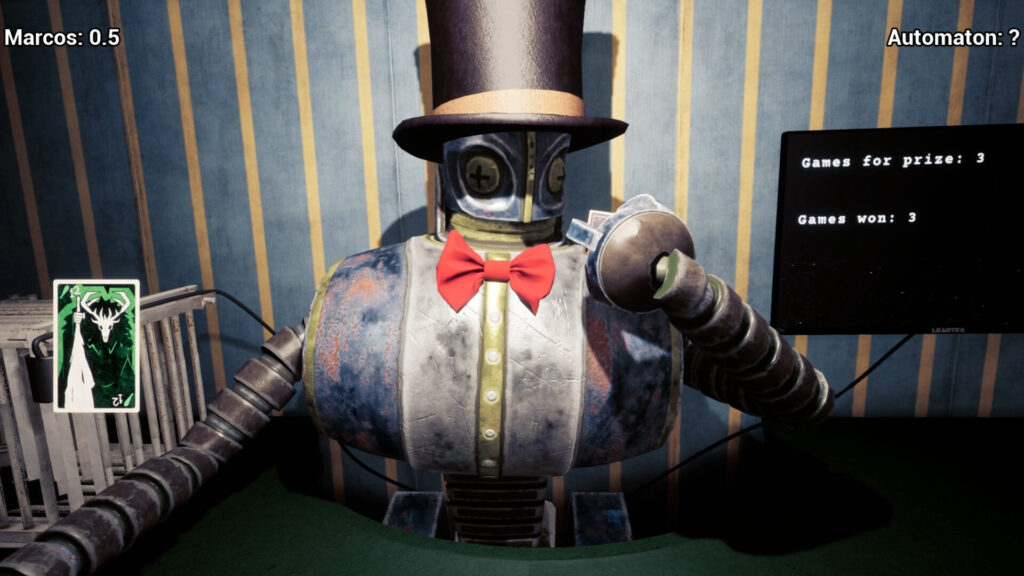
- Spanish deck: a game of Seven and a half against an automaton. The dealer robot is, for me, the best idea in the game, and in one of the puzzles you have to beat it three rounds.
- Poetry and literature: enigmas based on Spanish poets and their works, including a puzzle built on the verse "Walker, there is no path" by Antonio Machado.
- History and culture: references to Andalusia and Spain, to traditional games, inventions and automata, with nods such as the Enigma machine and its relationship with the Civil War.
A game that uses Seven Thirty and Spanish poets as puzzle material has its own personality, something that is appreciated in a genre where generic mansions abound. Plus, the clues are in the documents and photographs you collect, so the reward is observing and deducing, not trying random combinations. And there is a detail that I especially like: culture is not an ornament, it is the key itself. If you don't recognize the verse, the game or the invention, you will have to deduce it, and that makes it closer for those who grew up with those references and more curious for those who didn't.
Stealth and adjustable tension
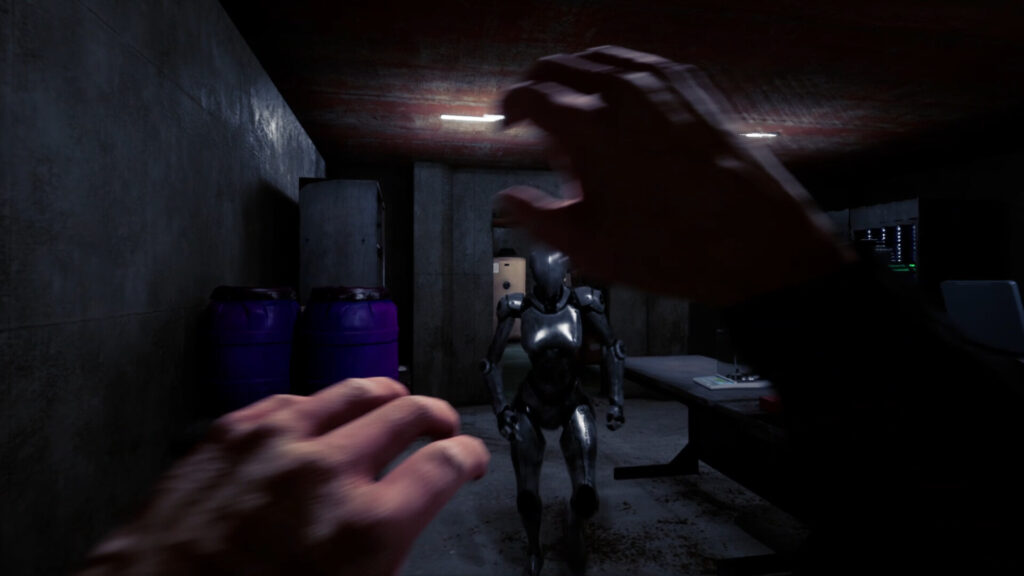
The fear here goes another way. The house is not empty: there are sinister inhabitants roaming around it, and the only response is to hide, crouch, observe their movements and bide your time, with closets and bathtubs as refuges. A figure called Subject 13 appears, who chases you, and a character called Samuel, who poses a direct threat. If the pursuer sees you, he opens the hiding place, a detail that raises the tension just when you thought you were safe.
There are no jumpscares, and the tension level is adjustable: from the menu you can reduce how much the pursuer appears, although it will still be present at fixed moments in the story. I think it's a smart decision, because it lets those who prefer to solve puzzles calmly do so, and those who seek more pressure to maintain it.
The chases are, in my opinion, the weakest part of the whole: they are short, predictable and cut off the pace of the investigation, which is where the good part is. That is why it is appreciated that they can be reduced.
Influences and duration
The game descriptions mention Clock Tower, for its run-and-hide tension, and the more recent numbered Resident Evils, for its backtracking puzzles and some designs, such as robotic mannequins, a dollhouse, or the dealer robot itself. The structure of retracing your steps with a new object, opening previously blocked areas, is a direct inheritance from that school, and here it applies to a private house and not a movie mansion.
In terms of duration, it is about three hours without filler, a size that works in its favor: the game is over before the house's resource is exhausted, and it can be finished in one afternoon or spread over two sessions. With a reasonable price, it seems like a pretty reasonable relationship to me.
Who is it for and who is not?
I recommend it, above all, to those who enjoy the moment when a puzzle fits and the house rewards you with a new door. The controls are simple, progress is saved when you exit and the inventory is managed with the arrows, so there are no barriers to entry if you have never touched a survival horror. It is also a good gateway to the genre for those who flee from scares, precisely because fear can be graduated.
On the other hand, if you are looking for action, spectacular monsters or a story with constant twists, you will not find them here. It is a game of patience, of looking carefully and connecting the dots, and its difficulty depends more on your observation than on your reflexes.
An escape room with character
The Transference does not intend to compete with the great horror productions, and its greatest virtue is that: betting on a simple idea, a home converted into a prison, and dressing it with puzzles that smell of Spanish culture. If you enjoy narrative escape rooms and family stories that hide something shady, it is a proposal that deserves a chance, as long as you accept that here the fear is tension and not fright, and that chases are not the best thing about the house.
Related Articles