

Table of Contents
It's been a while since I sat down to play a 3D platformer that reminded me so much of that golden age of PlayStation 2, when each studio seemed to have its own charismatic mascot ready to jump, dodge and solve some cosmic disaster with a smile. Duskfade, the debut feature from the Spanish studio Weird Beluga, bets directly on that nostalgia, and does so with such evident sincerity that it is impossible not to get carried away by it, even in the sections where the game is still finding itself.
A watchmaker's apprentice against a night that should not exist
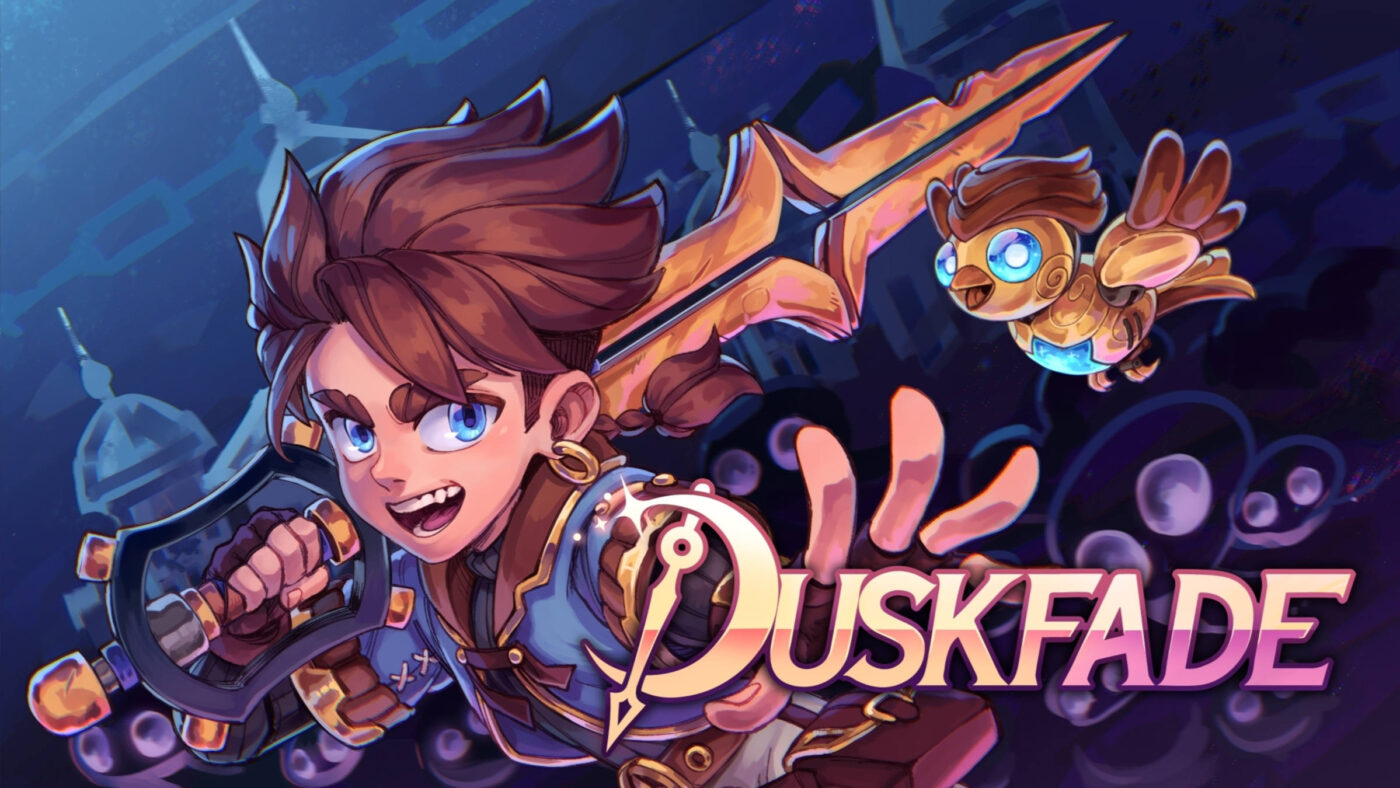
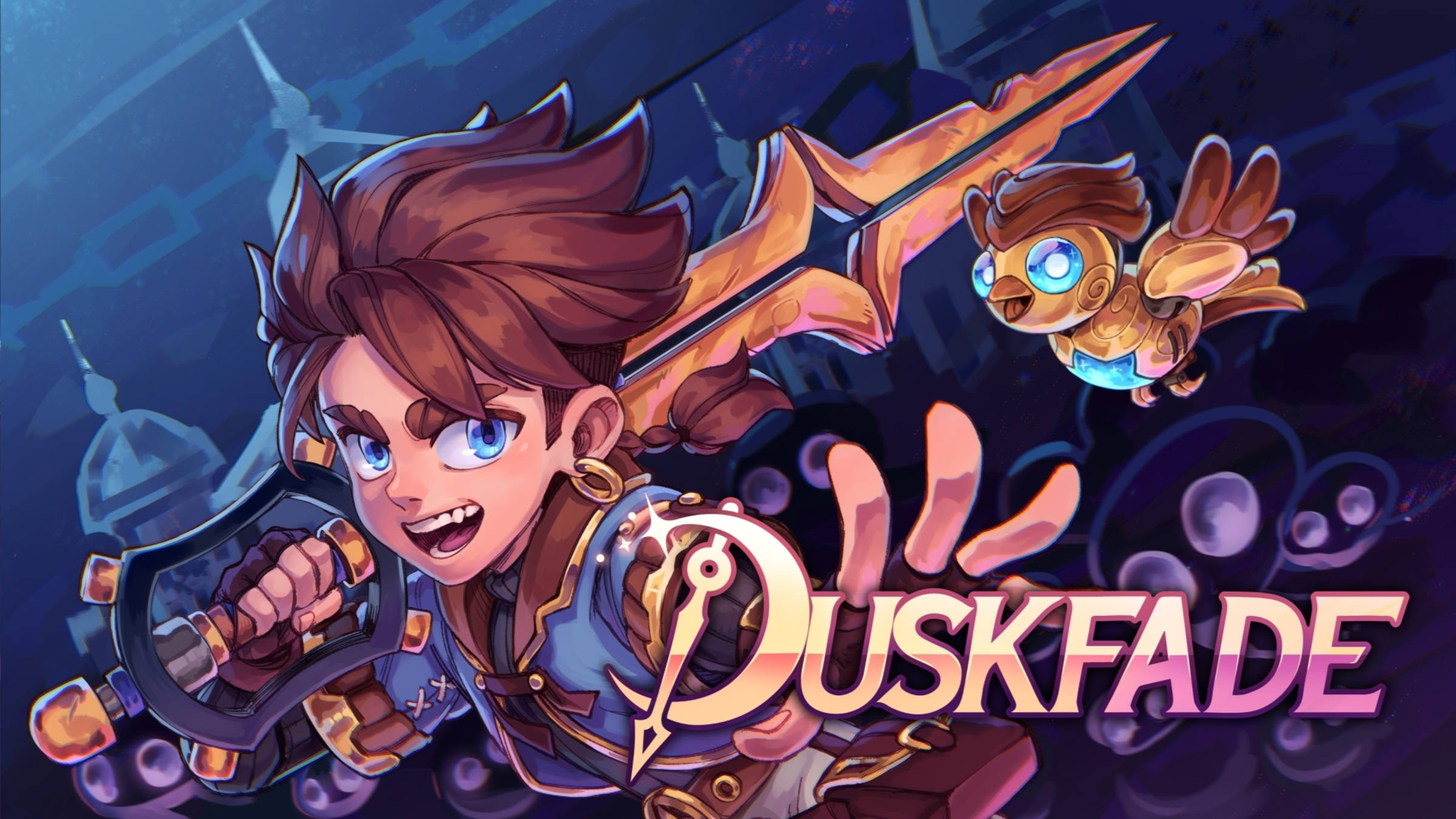
We play Zirian, a young workshop apprentice whose daily life falls apart when his sister, Allira, becomes trapped in a strange reality connected to a mysterious Clock Tower. That tower, dominated by an entity called Despair, plunged the entire world into an eternal night, and the only way to rescue Allira is to restore the fabric of time and discover the secrets left behind by the ancient Master Clockmakers. Accompanying Zirian at all times is Cuco, his mechanical companion, whose relationship with the protagonist works almost as a direct mirror of the bond between Jak and Daxter: sarcastic comments, unconditional support, and that endearing duo dynamic that suited the platformers of that generation so well.
What I liked most about the premise is that, underneath all the fantasyclockpunkand colorful kingdoms, Duskfade dares to deal with much more mature themes than its cheerful aesthetic might suggest at first glance: grief, loss, and that uncomfortable transition towards maturity that involves facing something much bigger than oneself. The enemies that Zirian encounters along the journey are not simply generic obstacles, but end up functioning as personifications of different emotional difficulties, a device that the game handles more delicately than one would initially expect.
Jump, slide and chain combos with a watch sword
On the playable level, Duskfade combines the classic DNA of three-dimensional action platforms with its own quite resolved combat system. Zirian has the Minuteman, a transformable mechanical sword shaped like a clock hand, capable of adapting to different combat situations and chaining attacks while moving between moving platforms and slopes. The movement repertoire includes jumps, slides and a hook that allows you to cover long distances or reach high points, and the trick is to combine all these tools with each other: a long jump linked to a hook impulse, followed by a glide towards the next platform, generates the type of fluid sequences that are the reason for all good platforms of this style.
There is also a customization system that is very appreciated: you can modify the appearance of the Timer with different color schemes and discover in the Cloudphaestus workshop the possibility of giving it the same palette as Sora's Keyblade in Kingdom Hearts. It is one of those nods that make it quite clear where the inspiration of the study comes from, without ever being invasive or forced. If I have to point out a weaker side, it is that the combat itself, although it fulfills its function perfectly, feels a bit rough in certain sections: the target lock system does not always respond with the precision one would expect, and some confrontations against faster enemies end up feeling more clumsy than the rest of the game suggests.
Four kingdoms, a world of clockwork and much to explore
The level design is, without a doubt, one of the highest points of Duskfade. Each of the kingdoms shaped by the Master Watchmakers has a well-differentiated visual and playable identity: ethereal forests shrouded in mist, underwater kingdoms, sunny dunes and cloudy peaks, all built with that cartoonish and colorful style so characteristic of the genre. The game does not include a minimap, which at first can be disconcerting, but it ends up being a wise design decision: it forces you to pay real attention to the environment and memorize the geography of each kingdom, something that reinforces that feeling of genuine exploration that the best exponents of the genre had at the time.
The number of secrets hidden in each setting, added to a cast of quite sympathetic secondary characters, with light humor full of references and winks, makes it worth deviating from the main path more than once. It is true that the start of the game takes a little longer than ideal to find its own rhythm, and some initial sections feel slower than I would have liked, but once Duskfade finishes establishing its mechanics, that rhythm improves noticeably.
A clockpunk world that sounds as good as it looks
I use that term again, yes. But what is "clockpunk"? As he correctly tells usGoogle: Clockpunk is a subgenre of speculative fiction and retrofuturism similar to steampunk, but which imagines a world where advanced technology is based on complex clockwork mechanisms, gears, springs and kinetic force, drawing heavily from the Renaissance and the Baroque era.
The artistic and sound section of Duskfade lives up to its ambitions. The clockpunk aesthetic, with gears, clock towers and a vibrant color palette that contrasts with the premise of eternal night, gives the game a recognizable visual identity from the first minute. The soundtrack accompanies that tone with quite accomplished themes that vary depending on the kingdom being explored, and the English dubbing, with texts and subtitles in Spanish, maintains a solid level of acting throughout the adventure, something that helps a lot to make the most emotional moments of the story really land.
A sincere tribute, with some chains still to be broken
Duskfade is, in short, the type of debut that is appreciated to find within the Spanish indie scene: an action platformer that perfectly understands what made its references tick, and that dares to pay tribute to them without falling into simple copying. Not everything is perfect: the combat could be more polished, the target lock needs tweaking, and the opening stretch takes longer than it needs to fully get going. But the amount of love put into every corner of its kingdoms, added to a story that dares to talk about grief and growth without ever losing its funniest side, make Duskfade one of the pleasant surprises of the year for anyone who has grown up with Jak and Daxter, Ratchet & Clank or Kingdom Hearts under their arm.
Related Articles
![[Analysis] Lost & Found: A This Bed We Made Story reunites Sophie Roy on the high seas, with the same curiosity as always](https://combogamer.com/wp-content/uploads/2026/08/lost-found-a-this-bed-we-made-story-poster-300x169.png)
![[Analysis] Kill The Shadow makes you relive the deaths of others to understand the city itself](https://combogamer.com/wp-content/uploads/2026/08/kill-the-shadow-poster-300x169.jpg)
![[Analysis] This Bed We Made turned me into a nosy maid, and I don't regret it](https://combogamer.com/wp-content/uploads/2026/08/this_bed_we_made-poster-300x169.jpg)
![[Analysis] The Alters: Last Variable turns a scientist's obsession into the best expansion of the year](https://combogamer.com/wp-content/uploads/2026/08/the_alters_last_variable-poster-300x169.webp)
![[Review] Counter-Strike: Source](https://combogamer.com/wp-content/uploads/2026/08/combogamer.com-for-counter-strike-download.net1_-300x169.jpg)
![[Review] Counter-Strike 1.6](https://combogamer.com/wp-content/uploads/2026/08/combogamer.com-for-csget1-300x169.jpg)