


Table of Contents
- The story does not revolve around a giant mystery, but about an exhausted person
- Navigating ends up being more absorbing than many “complex” systems
- The Arctic becomes a constant presence
- Exploration has more emotional than mechanical weight
- The pace is going to divide the players a lot
- The most valuable thing about the game is that it never seems desperate to please.
- Conclusion: WILL Follow the Light makes isolation the true center of the entire experience
There's something uncomfortable about the first few hours of WILL: Follow The Light. Not uncomfortable because the game is broken or because it constantly seeks to scare, but because it conveys a very specific loneliness. One that rarely appears in modern narrative video games.
Most try to keep you constantly stimulated: constant dialogue, music pushing emotions, goals every few seconds. WILL does practically the opposite.
It lets you breathe.
Or rather: it forces you to live with silence.
And the more time you spend navigating through storms, ice, and abandoned structures, the more it becomes clear that that decision absolutely defines the entire experience.
The story does not revolve around a giant mystery, but about an exhausted person
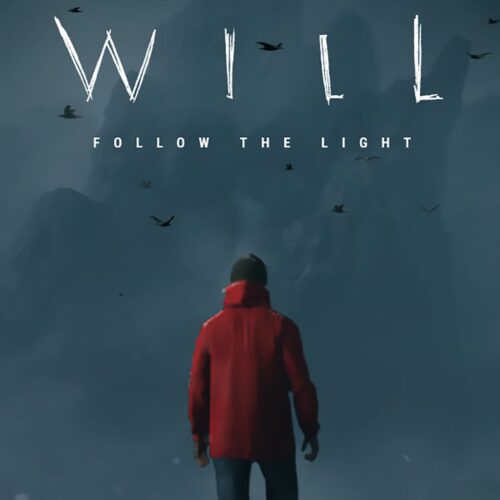
Will lives isolated in a lighthouse in the Arctic. His routine seems frozen in time until he receives a message that forces him to return to the outside world and go through an extremely hostile journey to reunite with someone important from his past.
On paper it could sound like another “emotional” drama of those that forces sadness every twenty minutes. But the game pretty much avoids that problem.
It doesn't constantly try to convince you that the protagonist is suffering. It just shows him living.
Preparing the boat. Repairing tools. Watching the sea from deck. Standing still too long as the wind hits the windows.
There's a pretty interesting naturalness to how WILL handles grief and emotional wear and tear. He does not transform each scene into a traumatic confession or fill the script with phrases designed to seem profound.
Much of the story works precisely because it feels contained.
Navigating ends up being more absorbing than many “complex” systems
When you hear that a game includes navigation and light survival, it's easy to imagine hunger bars, overly technical systems, and mechanics designed to constantly complicate your life.
WILL is not pointing there.
The navigation has enough depth to make you feel responsible for the ship, but it never becomes a heavy simulation. Adjusting direction, controlling speed and reacting to the weather generates tension without making each journey exhausting.
And there is also something important: the game understands very well the rhythm it needs.
Crossing a storm doesn't feel like an explosive action sequence. It feels like trying to maintain control as the environment slowly begins to become more hostile than you can handle.
That changes the overall feel of the gameplay a lot.
Danger here rarely comes from enemies. It comes from fatigue, the weather and the constant feeling of fragility.
![[Analysis] WILL: Follow The Light doesn't try to impress you all the time, and that's where it finds its strength](https://combogamer.com/wp-content/uploads/2026/05/will_follow_the_light-03-1024x576.jpg)
![[Analysis] WILL: Follow The Light doesn't try to impress you all the time, and that's where it finds its strength](https://combogamer.com/wp-content/uploads/2026/05/will_follow_the_light-04-1024x576.jpg)
The Arctic becomes a constant presence
Many games use snow simply for aesthetics. WILL uses it as an emotional state.
Storms reduce visibility to the point of making you feel completely isolated. The sound of ice hitting the hull of the ship creates anxiety even when technically nothing serious is happening. And the open spaces transmit a scale that constantly makes the protagonist look tiny in front of the environment.
What's interesting is that the game never tries to artificially exaggerate that danger.
You do not need to fill out the threat map because the environment itself already transmits permanent wear and tear. Even walking through certain abandoned structures produces a strange feeling of vulnerability, as if everything could collapse or freeze around Will at any moment.
Exploration has more emotional than mechanical weight
There are puzzles and survival elements, yes. Also resources to manage and optional areas to investigate. But honestly, none of that seems to be the main focus.
WILL uses gameplay more as a narrative tool than as a traditional challenge.
Exploring a station lost in the snow doesn't feel like completing side content. It feels like entering places abandoned by people who have probably also become consumed by isolation.
And that changes the experience quite a bit.
Because even the simplest activities—turning on a generator, checking maps, or repairing parts of the ship—end up having a much stronger emotional charge thanks to the context.
![[Analysis] WILL: Follow The Light doesn't try to impress you all the time, and that's where it finds its strength](https://combogamer.com/wp-content/uploads/2026/05/will_follow_the_light-05-1024x576.jpg)
![[Analysis] WILL: Follow The Light doesn't try to impress you all the time, and that's where it finds its strength](https://combogamer.com/wp-content/uploads/2026/05/will_follow_the_light-06-1024x576.jpg)
The pace is going to divide the players a lot
That's inevitable.
WILL is slow. Deliberately slow. There are long journeys where practically the only thing you do is navigate while you listen to the sound of the ocean and see snow covering the horizon. I can totally understand why some people are going to tune out quickly.
The game doesn't try to keep your adrenaline going constantly or reward you every few minutes. Several previews have already pointed out just that: it depends a lot on how much each player connects with the atmosphere and contemplative tone.
But I think reducing it to “walk slowly and cruise” would also be unfair.
Because behind that calm there is a very clear intention. WILL wants the trip to weigh. Let the distances feel long. That the protagonist's emotional exhaustion also ends up affecting the player's rhythm.
And while that clearly isn't going to work for everyone, it at least feels consistent with the game's identity.
The most valuable thing about the game is that it never seems desperate to please.
There are many modern narrative adventures that are constantly afraid of boring the player. Then they fill everything with dialogue, dramatic events or unnecessary mechanics.
WILL conveys exactly the opposite.
He seems completely comfortable leaving entire scenes sustained only by the sound of the wind and the feeling of emptiness. It relies a lot on the setting and the player's ability to get emotionally involved without the need for permanent stimuli. This makes it feel much more mature than many stories that forcefully try to be “emotional.”
![[Analysis] WILL: Follow The Light doesn't try to impress you all the time, and that's where it finds its strength](https://combogamer.com/wp-content/uploads/2026/05/will_follow_the_light-07-1024x576.jpg)
![[Analysis] WILL: Follow The Light doesn't try to impress you all the time, and that's where it finds its strength](https://combogamer.com/wp-content/uploads/2026/05/will_follow_the_light-08-1024x576.jpg)
Conclusion: WILL Follow the Light makes isolation the true center of the entire experience
After a few hours sailing through storms and abandoned structures, what ends up being left is neither a great spectacular scene nor a gigantic narrative twist.
It's a sensation.
The feeling of having accompanied someone who is trying to rebuild themselves while going through one of the most hostile places possible.
WILL: Follow The Light understands that silence can also tell a story. That a trip does not need constant action to transmit tension. And that exploration can be much more powerful when the environment emotionally reflects the character who goes through it.
It is not a game designed for impatient players. It also doesn't seem interested in becoming a traditional survival adventure. It works more like an introspective experience where gameplay, weather, and narrative end up slowly merging.
Y aunque por momentos el ritmo puede acercarse demasiado a la monotonía, nunca da la impresión de estar traicionando aquello que quiere transmitir.
Eso hace que WILL no se sienta simplemente como “otro indie atmosférico”.
Se siente como un viaje largo, frío y agotador del que probablemente no salgas exactamente igual que cuando empezaste.

Related Articles
![[Analysis] Celestial Return: Losing the dice is also losing the game](https://combogamer.com/wp-content/uploads/2026/07/celestialreturn_keyart-300x182.jpg)
![[Analysis] Mixtape: the narrative adventure that turns a 90s mixtape into an unforgettable video game](https://combogamer.com/wp-content/uploads/2026/07/mixtape-poster-300x160.png)
![[Analysis] Scholar Adventure: Mystery of Silence — A Journey to an Abbey that Whispers Secrets](https://combogamer.com/wp-content/uploads/2026/06/Scholar-Adventure-Mystery-of-Silence_poster-300x169.png)

![[Analysis] OUTBLAST — When 2000s Arcade Puts on the VR Goggles (and Still Unimpressed)](https://combogamer.com/wp-content/uploads/2026/06/OUTBLAST-poster-300x172.jpg)
![[Analysis] NODE: The Last Favor of the Antarii — Program Every Leap to Save the World](https://combogamer.com/wp-content/uploads/2026/06/NODE-poster-300x169.jpeg)