

Table of Contents
- Origins and Ancient History: From Chaturanga to Shatranj
- Evolution in Europe and the Birth of Modern Chess
- Electronic Chess: From Machines to the Digital Revolution
- Chess in Video Games: Animations, Battles and Mini-Games
- Thematic Versions: Characters from Series, Movies and Pop Culture
- The Adaptation in Star Trek: Tri-Dimensional Chess
- Variants, Cultural Impact and the Future
- Conclusion: An Eternal Game
Chess is much more than a board game. It is one of the most enduring human creations, a reflection of military strategy, intelligence, psychology and culture over more than 1,500 years. From its humble origins as a war simulation in ancient India to its reign in the digital world, through epic battles in video games, thematic sets inspired by film sagas and its iconic three-dimensional adaptation inStar Trek, chess has evolved without losing its essence: two minds facing each other on a board of 64 squares (or more), where each move can change the course of history.
In this extensive article we will explore his entire career. Although talking about its entire history and its almost infinite variants would be equivalent to at least a complete book (and could be written by dividing it into volumes), here I present a deep and detailed analysis that covers all the requested aspects, with historical rigor, cultural anecdotes and concrete examples. Divided into clear sections for easy reading, this text goes far beyond the standards of a conventional article and serves as a comprehensive reference. Prepare for a journey that spans ancient empires, technological revolutions, and the pop imagination.
Origins and Ancient History: From Chaturanga to Shatranj
Chess was not born in Europe or in the Renaissance, but in the Indian subcontinent. The version most accepted by historians places it in India in the 6th century AD, during the Gupta Empire, under the name ofChaturanga. The Sanskrit wordchaturangaIt means “four divisions” and referred to the four elements of the ancient army: infantry (pawns), cavalry (horses), elephants (bishops) and war chariots (rooks). The king and his advisor (the future queen, then a weak vizier) completed the set.
Chaturanga was played on an 8x8 board (similar to today's, sometimes calledashtāpada), but with one key difference: it incorporated dice in some variants to determine which piece to move, making it a game of chance and skill. The rules were more restrictive: the bishop (elephant) only jumped two squares diagonally, the vizier (queen's predecessor) advanced only one square diagonally, and there was no castling or pawn promotion. The goal was to capture the enemy king or, in some versions, leave him without moves. Later Persian and Arab sources confirm this Indian origin, although recent debates suggest possible Chinese or Central Asian influences around the 3rd century BC.
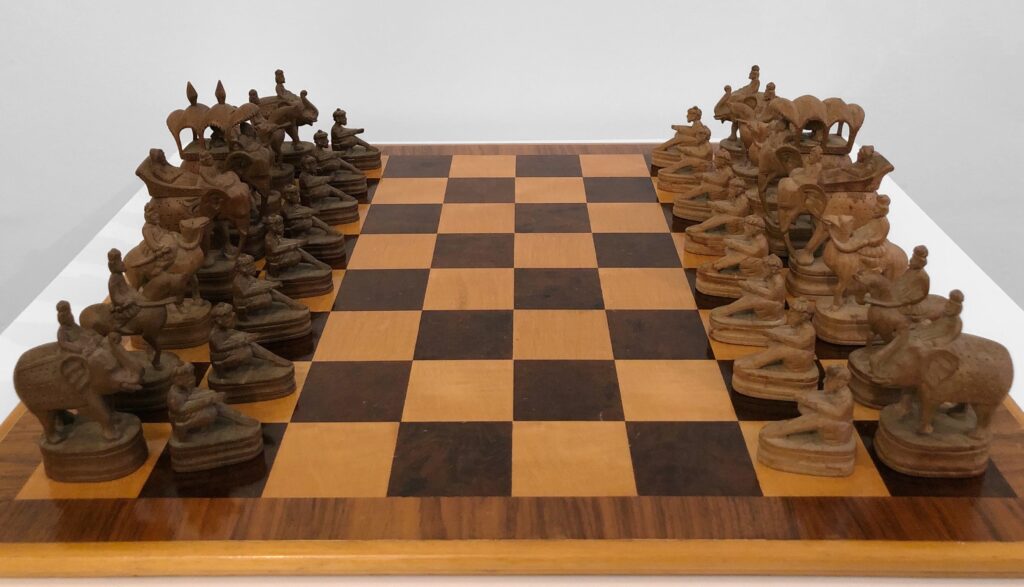
Around the 6th century, the game crossed to Persia (present-day Iran) and becameShatranj(eitherchatrangin Persian). The Persians eliminated the dice, emphasizing pure strategy, and refined the pieces: the king (shah), the vizier (farzin), the knight, the elephant, the rook and the pawns (piyada). The term “checkmate” comes from Persianshah mat(“the king is dead” or “the king is defenseless”). Shatranj became a pastime of the Sassanid court and spread throughout the Islamic world after the Arab conquest in the 7th century. The Arabs called itash-shatranjand they enriched it with theoretical treatises: Al-Adli (9th century) wrote one of the first books on openings and endings, while Al-Razi and others analyzed mathematical problems.
In the Muslim world, chess became popular among scholars, poets and caliphs. It was temporarily banned for religious reasons (due to the initial use of dice), but was allowed as a mental exercise. He traveled along the Silk Road to China (where he influenced xiangqi) and Russia. It arrived in Europe around the 9th-10th century through Muslim Spain (Al-Andalus) and Sicily. The Europeans adopted it aschesseitherchess, adapting names:queendue to the influence of the female figure in the medieval court, although initially the queen was weak.
Evolution in Europe and the Birth of Modern Chess
During the European Middle Ages, chess was played with Shatranj rules: slow moves, long battles, and attrition tactics. Appears in literature asRoman de la Roseor chronicles of kings (Alfonso X of Castile commissioned a treaty in 1283, theBook of Games). The crusaders spread it, and it became a symbol of nobility and education.
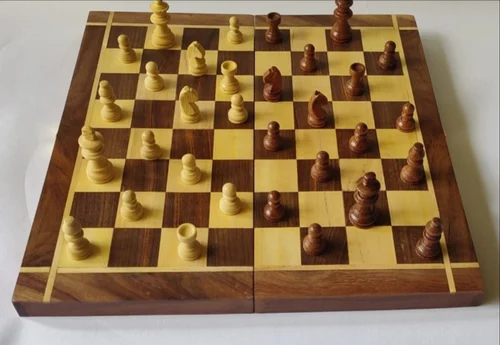
The great change occurred between the 15th and 16th centuries in Italy, Spain and France: therevolución de las reglas modernas. La reina ganó poder (movimiento completo en cualquier dirección), el alfil se liberó (diagonales completas) y el peón pudo avanzar dos casillas en su primera jugada. Surgió el enroque (para proteger al rey) y la promoción del peón a reina. Estas modificaciones aceleraron el juego, lo hicieron más dinámico y estratégico, y permitieron combinaciones espectaculares. Se conoce como “la locura de la reina loca” (mad queen chess).
En 1497, Luis Ramírez de Lucena publicó el primer libro impreso de ajedrez moderno en España (Repetición de Amores y Arte de Ajedrez). Le siguieron Ruy López (1561), quien popularizó la apertura que lleva su nombre, y Gioachino Greco. El ajedrez pasó de ser un arte cortesano a una ciencia. En el siglo XVIII, Philidor (Francia) enfatizó los peones como “alma del ajedrez”, y en el XIX surgieron los primeros torneos internacionales (Londres 1851, ganado por Adolf Anderssen).
Figuras legendarias marcaron la era romántica: Paul Morphy (EE.UU., 1850s), el “genio del ajedrez” que combinaba ataque brillante con precisión; Wilhelm Steinitz (primer campeón mundial oficial, 1886), quien introdujo el enfoque posicional. El siglo XX vio a Emanuel Lasker (27 años como campeón), José Raúl Capablanca (el “invencible”), Alexander Alekhine y la escuela soviética (Mikhail Botvinnik, Anatoly Karpov, Garry Kasparov). Bobby Fischer (1972) rompió la dominancia soviética en un match épico contra Boris Spassky. Hoy, Magnus Carlsen domina con un estilo universal.
El ajedrez se convirtió en deporte mental: la FIDE (Federación Internacional de Ajedrez, fundada en 1924) regula campeonatos mundiales. Su impacto cultural es inmenso: aparece enEl nombre de la rosa,La reina de KatweeitherThe Queen’s Gambit(serie de Netflix que impulsó un boom global en 2020).
Electronic Chess: From Machines to the Digital Revolution
El siglo XX trajo la fusión con la tecnología. En 1950, Claude Shannon propuso el primer programa de ajedrez. Los primeros computadores jugaban mal, pero en los 70-80 surgieron máquinas dedicadas: Chess Challenger (1977), Fidelity Electronics.
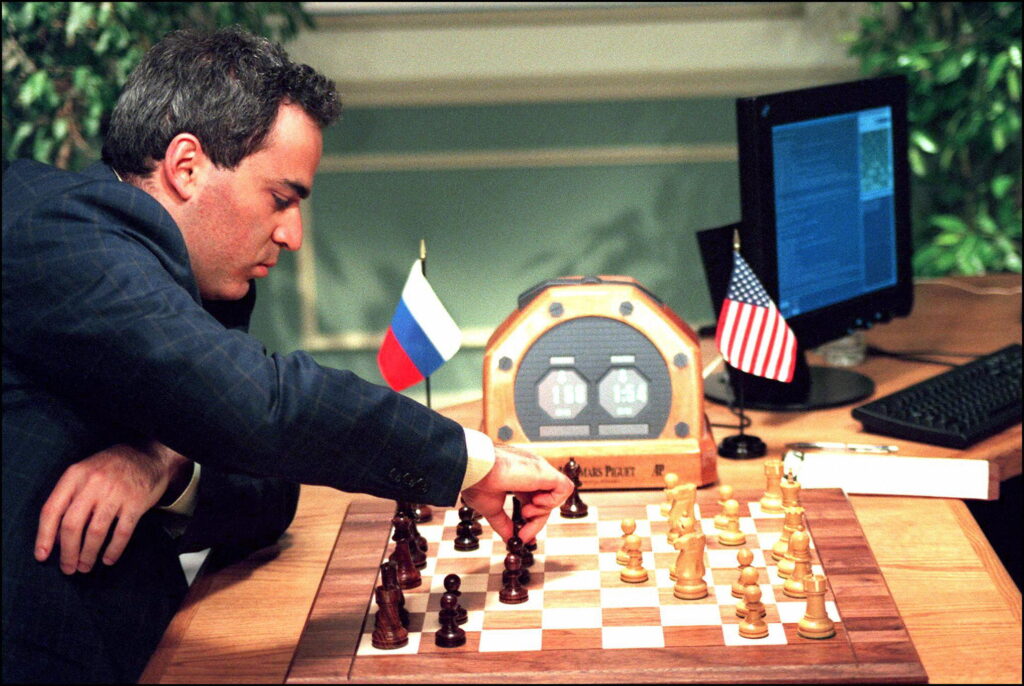
El hito fueDeep Blue de IBM. En 1996, Garry Kasparov derrotó a Deep Blue en Filadelfia (4-2), pero en la revancha de 1997 en Nueva York, la máquina ganó 3,5-2,5. Fue la primera vez que una computadora vencía a un campeón mundial en match clásico. Deep Blue evaluaba 200 millones de posiciones por segundo. Kasparov acusó (sin pruebas) de trampa humana, pero el evento simbolizó el triunfo de la IA. Hoy, engines como Stockfish (open source) superan a cualquier humano; en Lichess o Chess.com, alcanzan +3500 Elo.
El software revolucionó el entrenamiento: ChessBase (1987), Fritz, Rybka y hoy Chess.com, Lichess (lanzado en 2010 por Thibault Duplessis, gratuito y open source con millones de usuarios). Durante la pandemia de 2020, Lichess registró picos de 10 millones de partidas diarias. Apps móviles, streaming (Twitch con Hikaru Nakamura o Levy Rozman “GothamChess”) y torneos online (Champions Chess Tour) democratizaron el juego. El ajedrez electrónico incluye variantes: bullet (1 minuto), blitz, rapid, y modos como “Chess960” (Fischer Random, 960 posiciones iniciales aleatorias para evitar memorización).
Chess in Video Games: Animations, Battles and Mini-Games
El ajedrez trascendió el tablero físico al pixel.Battle Chess(Interplay, 1988) para PC, Amiga y consolas fue revolucionario: un ajedrez con animaciones 3D donde las piezas luchaban al capturarse (peones espadachines, caballos con animaciones épicas, reina decapitando). Vendió millones y generó secuelas (Battle Chess II: Chinese Chess, 1990). Inspirado enArchon(1983), convirtió el ajedrez en espectáculo.
La serieChessmaster(The Software Toolworks, desde 1986 hasta 2007) ofreció tutoriales, engines fuertes y gráficos mejorados. Otros clásicos:Chessmaster 3000,Battle Chess: Game of Kings(remake moderno). En los 90-2000, juegos comoMicrosoft ChesseitherFritzintegraron IA.
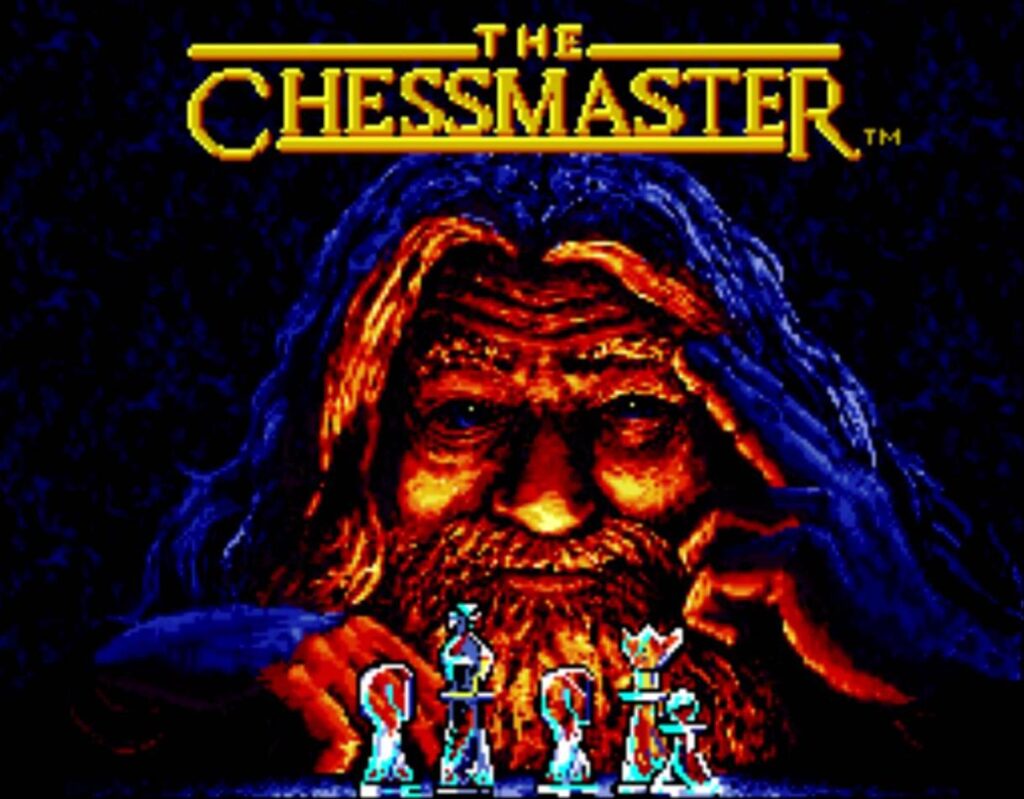
En videojuegos mayores, el ajedrez es mini-juego o mecánica: aparece en RPGs comofinal fantasy(tableros opcionales),The Witcher 3(gwent es variante, pero hay ajedrez),Assassin’s CreedeitherBaldur’s Gate.Clash of Chess 3D(móvil) añade batallas. EnThe Lego Movieo parodias animadas, se bromea con versiones locas. Juegos indie como5D Chess with Multiverse Time Travel(2020) añaden dimensiones temporales. En eSports, el ajedrez competitivo online es enorme: PogChamps (Chess.com) mezcla streamers y pros.
Thematic Versions: Characters from Series, Movies and Pop Culture
El ajedrez se volvió merchandising cultural. Existen cientos de sets temáticos oficiales:
- Star Wars: Sets oficiales Hasbro, Danbury Mint (pewter) y United Labels (2012). Piezas como Darth Vader (rey negro), Luke Skywalker (rey blanco), stormtroopers (peones), X-Wings (torres). Tableros con cristal o Death Star. Hay versiones 3D y coleccionables de Episodios I-VI.
- Lord of the Rings / El Hobbit: Sets premium con Gandalf (rey), Aragorn, orcos vs. elfos/hobbits. Ediciones “Battle for Middle-Earth” (2025) con figuras detalladas de películas de Peter Jackson.
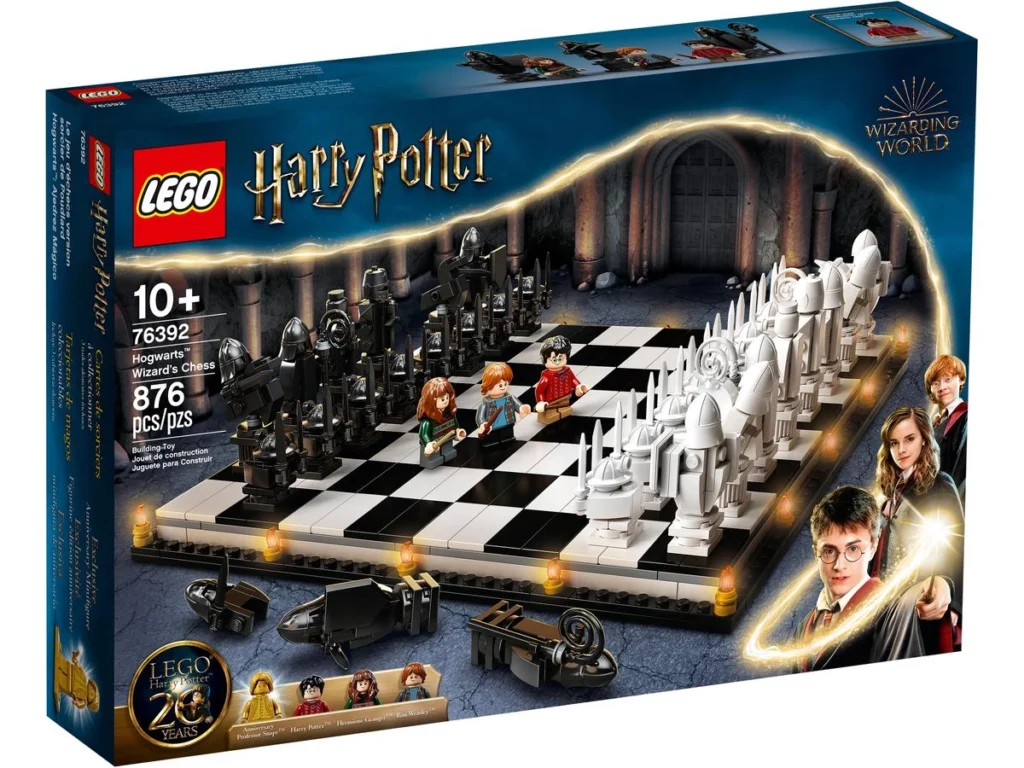
- Harry Potter: Wizard Chess con magos, piezas animadas (como en la película), casas de Hogwarts (Gryffindor vs. Slytherin).
- Marvel: Avengers vs. Villains; piezas como Iron Man (torre), Thanos (rey).
- Otros:Game of Thrones(trono de hierro como tablero),The Big Bang Theory(parodia),Doctor Who, Disney (princesas vs. villanos),Terminator,Batman. Marcas como Chess House o Etsy venden ediciones limitadas de resina, metal o madera tallada. Estos sets no solo decoran; muchos mantienen reglas estándar, convirtiendo partidas en inmersión narrativa.
- Tiendas online especializadas comoChess and Boardvenden también distintas ediciones, desde las tradicionales hasta unas basadas ensagas como Harry Potter, Minions o Star Trek.
The Adaptation in Star Trek: Tri-Dimensional Chess
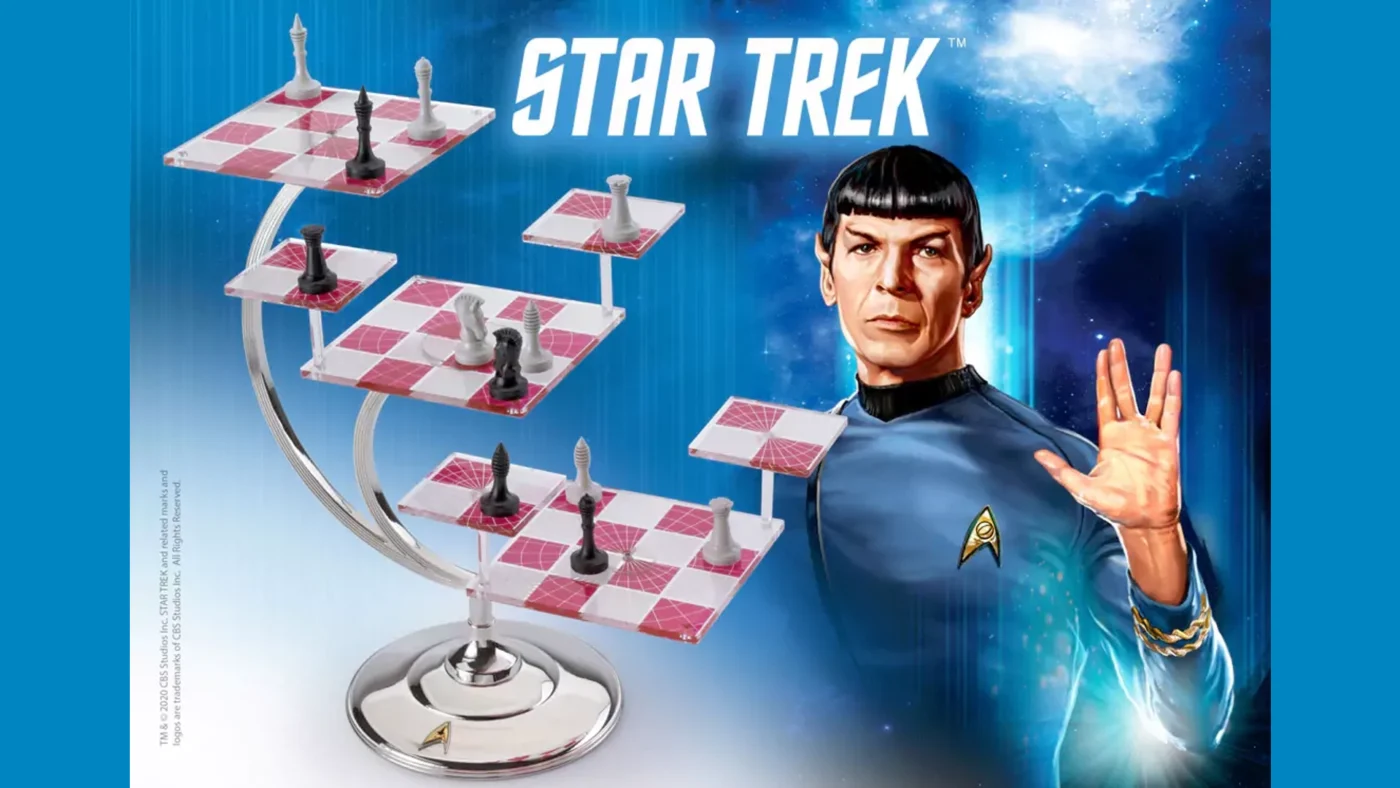
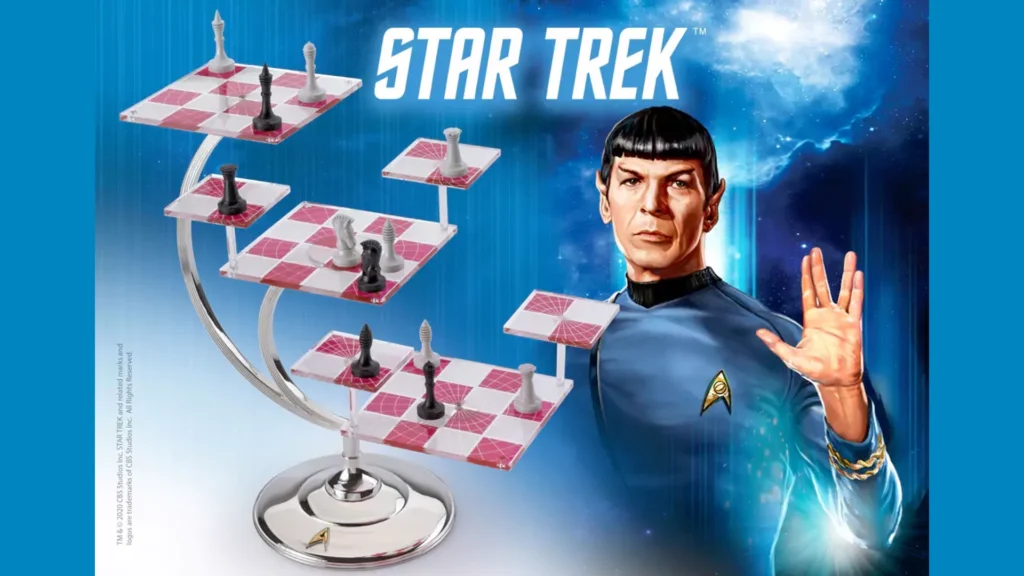
EnStar Trek: The Original Series(1966-1969), elajedrez tridimensionales el pasatiempo favorito de Spock y Kirk. Aparece en episodios como “Charlie X”, “Court Martial”, “Amok Time”, “Mirror, Mirror” y películas. No era un juego real preexistente: los diseñadores usaron tableros de damas 3D y tic-tac-toe 3D de tiendas, con piezas futuristas de Peter Ganine. Los tableros variaban entre escenas, y las reglas nunca se definieron en canon.
Fans llenaron el vacío. Franz Joseph (enStar Trek Star Fleet Technical Manual, 1975) dio la primera descripción. Andrew Bartmess (1976) creó reglas estándar completas (aprobadas por Joseph), expandidas después. Marco Bresciani tradujo y programó una versión en italiano bajo Creative Commons.
Cómo se juega (reglas estándar Bartmess): Tablero de 64 casillas distribuidas en tres niveles principales (4×4 cada uno) más cuatro plataformas de ataque pequeñas (2×2) que se mueven en “pines”.
- Nivel inferior: base blanca.
- Nivel superior: base negra.
- Nivel medio: neutral.
- Las plataformas de ataque se colocan en posiciones traseras y pueden moverse una distancia de pin (si tienen exactamente una pieza) o rotar 180°.
Las piezas siguen movimientos del ajedrez clásico, pero pueden cambiar de nivel (horizontalmente a través de casillas alineadas por color). Reinas y torres saltan vacíos entre plataformas; el rey puede enrocar a través del vacío. No se puede enrocar en el primer turno. Spock menciona: “Los principios del ajedrez tridimensional son básicamente matemáticos”. Kirk y Spock lo jugaron en 5 episodios; Spock ganó casi siempre, excepto contra Kirk en algunos casos.
Se venden sets oficiales (United Labels, etc.) y apps para PC/móvil. Aparece enThe Big Bang Theory(Sheldon y Leonard lo juegan) y parodias. Representa el futuro: estrategia en tres dimensiones para mentes del siglo XXIII.
Otras variantes 3D incluyen Raumschach (1907, 5x5x5) o Glinski’s Hexagonal Chess, pero el Tri-D deStar Trekes el más icónico de la cultura pop.
Variants, Cultural Impact and the Future
Además del Tri-D, existen cientos de variantes: Fischer Random (960), ajedrez hexagonal, circular, Alicia (cambio de planos), Dunsany (ejércitos desiguales). En cultura: películas (Searching for Bobby Fischer), libros (El jugador de ajedrezde Zweig), IA (AlphaZero de DeepMind, que reinventó aperturas en 2017).
El futuro: realidad virtual (VR Chess), IA colaborativa, ajedrez cuántico (teórico), integración con metaverso. Sigue creciendo: más de 600 millones de jugadores estimados. En 2026, con IA accesible, el ajedrez es más vivo que nunca.
Conclusion: An Eternal Game
Desde el Chaturanga hasta el Tri-Dimensional Chess deStar Trek, pasando por Deep Blue, Battle Chess y sets deStar WarseitherLord of the Rings, el ajedrez evoluciona pero conserva su alma: confrontación pura de intelectos. Es historia, tecnología, arte y diversión. Ya sea en un tablero de madera, una app o un holograma futurista, invita a pensar varios movimientos adelante. ¿Todo listo para tu próxima partida? El ajedrez, como el universo, es infinito. ♟️