

Table of Contents
- Lucas, a former police officer and the creature he carries on his back
- A city divided by memory, not just by social class
- Strength, Spirit or Charm: three ways to get the truth out of people
- Justice, revenge and the uncomfortable possibility of a kiss
- A patient noir that is worth it for those who like to really investigate
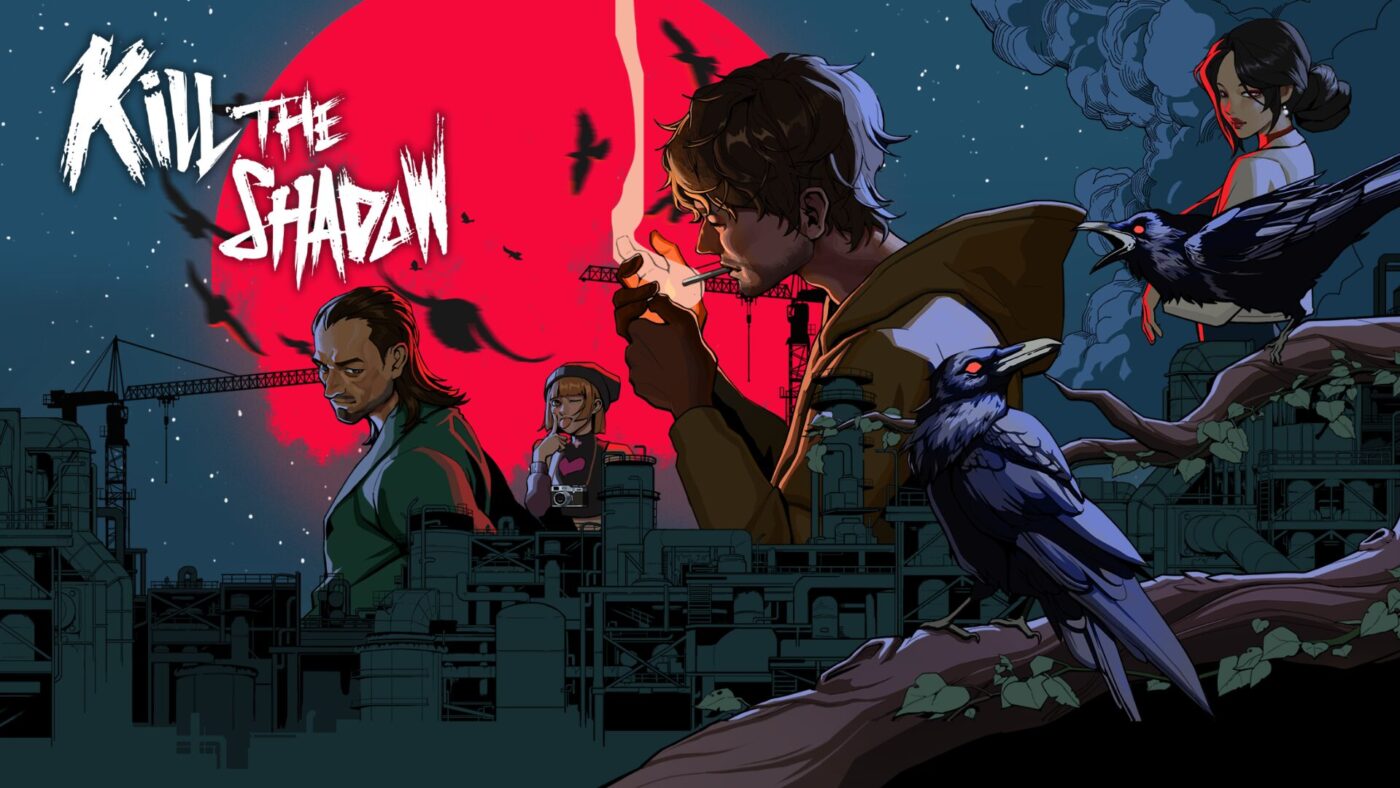
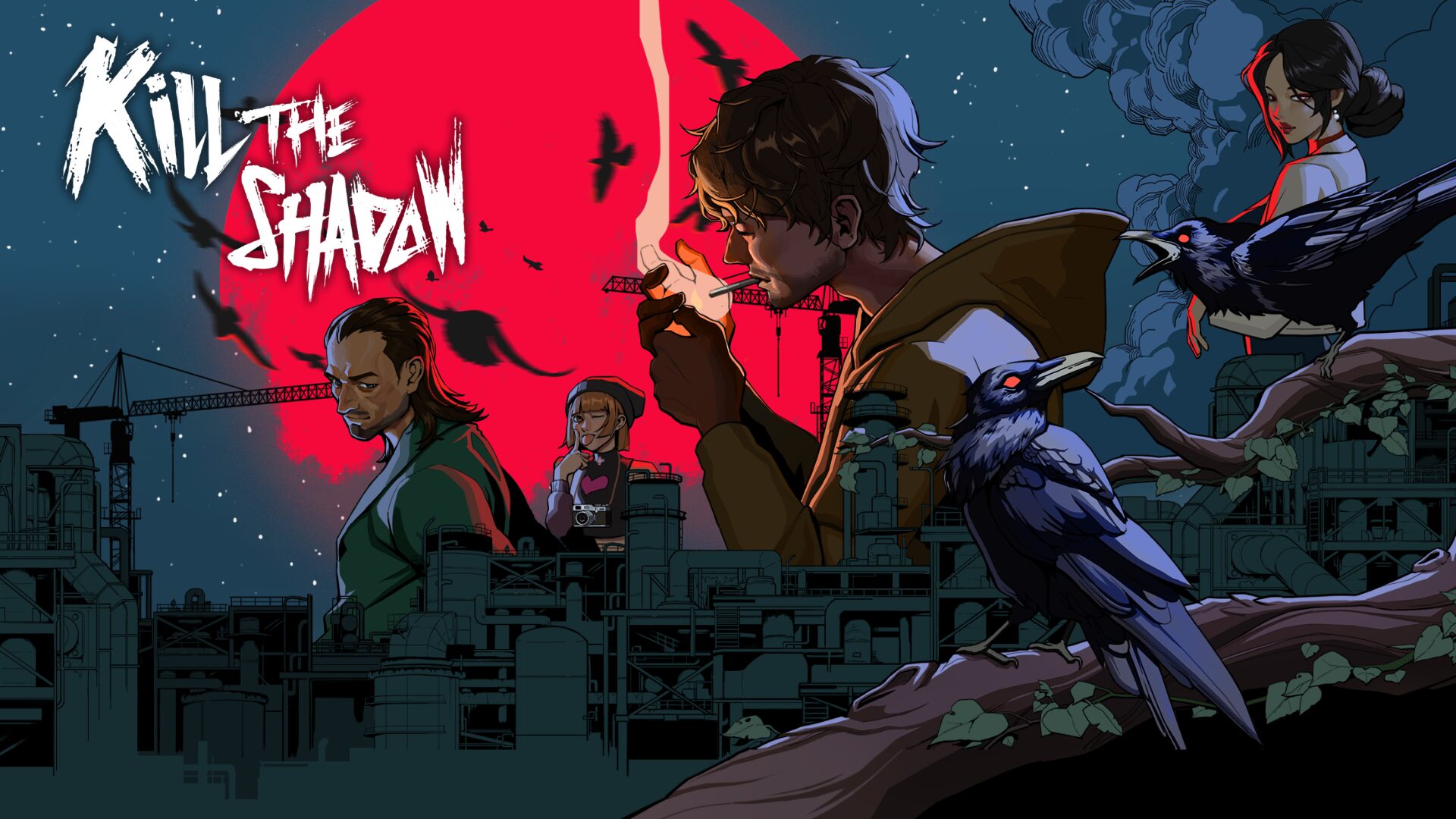
I had been waiting for some time for some study to dare to mix classic criminal investigation with a system of supernatural reconstruction of crime scenes without falling into the easy comparison withReturn of the Obra Dinn, and Kill The Shadow achieves this by finding its own voice. The Shanghai studio Shadowlight, with Phoenix Game as publisher, launched the game at the beginning of August, and from the first investigation it is clear that it is not a simple clone of anything: it is a detective noir with 2.5D aesthetics that takes very seriously both the case-solving mechanics and the social fabric of the city where everything takes place.
Lucas, a former police officer and the creature he carries on his back

We play Lucas, a former police officer who returns to investigate in Dark Tide City accompanied by a very particular presence: Shadow, a supernatural creature attached to his back, capable of reading the memories of the dead and reconstructing their last moments alive. The relationship between the two is far from being a simple narrative tool at the player's service: Shadow has his own personality, a rather macabre humor, and makes it quite clear from the beginning that the help he offers is not entirely disinterested. "We're just using each other," he tells Lucas at one point in the game, hinting that what Shadow is most interested in is feeding on the strangest stories that appear along the way, rather than doing justice for justice's sake.
This reconstruction mechanic, baptized as Rewind within the game, is the heart of each investigation: Lucas activates the power of Shadow at the scene of a crime and can witness, superimposed on the explorable scenario itself, how the events that led to the death of the victim unfolded. The interesting thing is that these reconstructions are not always clear or complete: they can be fragmented, confused with each other, or directly influenced by Shadow's own nature as an entity, which forces us to contrast what is seen with the physical clues of the environment instead of taking the vision as an absolute truth. Each district of the city also determines how these reconstructions feel: in the abandoned factory the rhythm of the machinery sets the tempo of the scene, in the Shipwreck Dock the creaks of the structures on stilts and the coming and going of the tide are filtered, and in the tumult of the Old Town the reconstruction is filled with secondary figures that you have to learn to filter out from the rest.
A city divided by memory, not just by social class

Dark Tide City is, without exaggeration, as much of a protagonist as Lucas himself. The map is divided into distinct and fairly freely explorable districts: the rusting and now closed factory, the Shipwreck Dock built on wooden stilts, the Walled City of the Pig Cage, a floating slum where traditional Chinese architecture coexists with neon lights and improvised constructions, and the bustling Old Town. That semi-open structure is not just an aesthetic flourish: it gives the game time to show that the city continues to exist between cases, that the merchants recognize you, that the neighbors have their own accumulated tensions, and that each resident carries their own version of what happened ten years ago, when something fractured the entire city in a way that the game slowly reveals.
That background of a city divided not only by social class but also by collective memory is, for me, the most interesting thing about the entire proposal. There are those who desperately want to know what happened a decade ago, and there are those who built their entire social position or personal peace of mind precisely on the silence of that episode. The cases that Lucas investigates (a little dog named Teddy found dead under strange circumstances, the disappearance of a certain Master Reed in the middle of a temple fair, grudges accumulated over years at the Dock, handwritten notes from a prison that no one can identify) function as entry points to that larger wound, and they rarely feel like isolated cases thrown in there just to justify more hours of play.

Strength, Spirit or Charm: three ways to get the truth out of people
At the playable level, Kill The Shadow adds to the investigation a progression system with three central attributes: Strength, Spirit and Charm, which determine what options you have available when pressuring a suspect or obtaining information. Depending on how you develop Lucas, you can choose to directly intimidate someone into extracting a confession, play with the mind of the interrogated by appealing to logic and contradiction, or directly bribe or socially seduce them into revealing what they know. None of these paths is intended as the "correct" option: each one opens different doors and closes others, which gives a lot of sense to the possibility of replaying the same cases with a Lucas built in a different way to see what changes.
Added to this is a deduction system that works almost like a classic investigation cork: you have to put together clues, testimonies and fragments of Shadow's reconstructions, and manually connect them to put together a coherent theory about what happened. The game doesn't solve it for you automatically, and that, added to the fairly slow pace and the enormous amount of dialogue that you have to go through in each district, makes Kill The Shadow an experience that requires patience. It is not a game for those looking for immediate action, but for those who enjoy investigative adventures with a lot of text and well-developed secondary characters, that slow pace ends up working in their favor.

Justice, revenge and the uncomfortable possibility of a kiss
Kill The Shadow takes the moral ambiguity of its decisions quite far. Once a case is solved, the real question is never just “who did it?”, but what to do with that truth: hand over the evidence to the authorities, hide it, or use it as leverage against someone else. The game takes the trouble to show that a guilty person may have committed something terrible after years of abuse, and that a formally innocent person may have unwittingly contributed to creating the conditions that led to the tragedy. That increasingly blurred border between justice and revenge runs through a good part of the cases and explains why the game's own promotional material summarizes the final options in such a particular way: kill, judge, or perhaps, even kiss the mastermind behind everything. It is not a marketing exaggeration: the game actually contemplates much more ambiguous outcomes than simply "catching the culprit", with multiple endings that depend both on the decisions made and on Lucas's own development throughout the game.
This, honestly, seems fantastic to me, and added to its investigation system, I can't stop thinking about the Sherlock Holmes games, with which it shares many of these characteristics.

A patient noir that is worth it for those who like to really investigate
Kill The Shadow is not a game for everyone, and it must be said clearly: the slow pace, the amount of dialogue, and the need to connect information on your own keep it away from anyone looking for a more immediate experience. But for those who genuinely enjoy investigative adventures, with a world that feels truly inhabited and secondary characters that hide much more than what they show at first sight, I found Kill The Shadow one of the most interesting detective proposals that I played so far this year. The combination between the 2.5D aesthetic, so recognizable with its high-definition environments and pixel art characters, and a city that feels divided both economically and emotionally, ends up building something much more ambitious than the typical "solve the case and move on." Here solving the case is just the first step; What you do next with that truth is ultimately what the game really wants you to think.
Related Articles
![[Analysis] This Bed We Made turned me into a nosy maid, and I don't regret it](https://combogamer.com/wp-content/uploads/2026/08/this_bed_we_made-poster-300x169.jpg)
![[Analysis] The Alters: Last Variable turns a scientist's obsession into the best expansion of the year](https://combogamer.com/wp-content/uploads/2026/08/the_alters_last_variable-poster-300x169.webp)
![[Review] Counter-Strike: Source](https://combogamer.com/wp-content/uploads/2026/08/combogamer.com-for-counter-strike-download.net1_-300x169.jpg)
![[Review] Counter-Strike 1.6](https://combogamer.com/wp-content/uploads/2026/08/combogamer.com-for-csget1-300x169.jpg)
![[Analysis] Helix: Descent N Ascent: In white, black and a double that you don't know if it helps or hinders you](https://combogamer.com/wp-content/uploads/2026/07/helix-descent-n-ascent-poster-300x169.jpg)
![[Analysis] Escape from Umbra: A flashlight, a black cat and an Andalusian town that doesn't want to let you go](https://combogamer.com/wp-content/uploads/2026/07/escape-from-umbra-poster-300x169.jpeg)