

Table of Contents
- The mod system is the real heart of the game
- Exploring Aspida constantly rewards curiosity
- Mobility takes a while to take off, but when it does the game improves a lot
- Pixel art has much more work than it seems at first glance
- Where problems do appear is in the general polishing
- Iris works precisely because the game does not try to overwrite it
- Conclusion: a metroidvania built around experimenting, not repeating formulas
There is a very specific moment where Clockwork Ambrosia finishes showing what it really wants to be.
It doesn't happen during an important cutscene or when you unlock a new mobility skill. It happens when you start combining absurd mods on weapons and suddenly the entire combat transforms into a chaos of projectiles, explosions and chained effects that practically cover the screen.
That's where the game stops feeling like “another indie metroidvania” and starts to find its own personality.
Because yes, Clockwork Ambrosia has many of the typical bases of the genre: backtracking, new abilities, blocked routes and non-linear exploration. But what really sets it apart is how it turns combat into a constant space for experimentation.
After so many metroidvanias obsessed with copying the formula of Hollow Knight(which I never grew fond of) it feels quite refreshing to play something that tries to move in another direction.
The mod system is the real heart of the game
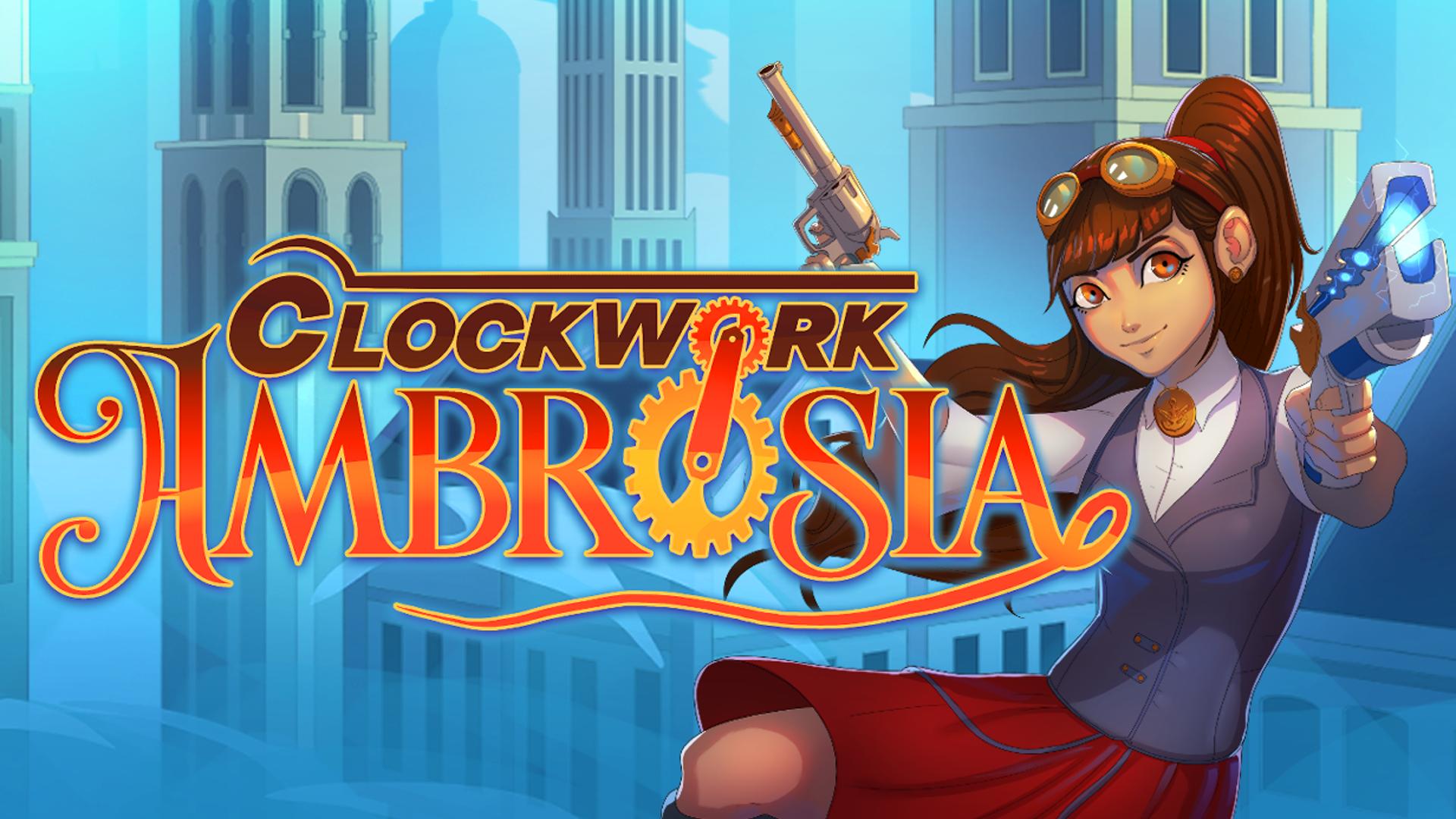
The idea seems relatively simple at first. Iris, the protagonist, has four main weapons and each one can be modified using different modules that alter the behavior of the shots.
But the game quickly turns that into madness.
There are mods that duplicate shots, others that remove ammunition to boost damage, some that generate secondary projectiles, and others that react depending on specific conditions. The interesting thing is that everything begins to link together in unexpected ways.
And that completely changes how progress feels.
In manymetroidvania, upgrades often feel linear: more damage, more health, more mobility. Progress here revolves more around discovering ridiculous combinations and building your own playstyle.
The best thing is that the system does not take too long to open. After a few hours you can begin to break the balance of combat in quite exaggerated ways. And I think the game works much better when it embraces just that.
Exploring Aspida constantly rewards curiosity
Clockwork Ambrosia has a huge map, full of secrets, hidden routes and optional upgrades. But the interesting thing is that it rarely rewards solely with higher numbers.
You almost always find something that really changes how you play.
That makes exploring much more tempting than usual. Entering a hidden room can completely change a build you've been using for hours. And because the game constantly gives you new pieces to experiment with, the journey never ends up feeling static.
Now, there is also a pretty clear cost behind that freedom.
The game gives practically no instructions. There are times where progress can become confusing and where exploration goes from interesting to frustrating. In fact, it is one of the most repeated criticisms among players who have already finished it. And having played it myself, I completely understand why.
In certain sections, Clockwork Ambrosia seems to assume that constantly getting lost is a natural part of the genre. The same thing happened with the already mentionedHollow Knight. Sometimes it works because it enhances the feeling of adventure. Other times it just breaks the rhythm and forces you to check the map trying to figure out which door you forgot three hours ago.
Mobility takes a while to take off, but when it does the game improves a lot
The first few hours are relatively traditional. Basic jumping, simple combat, and fairly controlled exploration.
But as you unlock movement skills, the game begins to gain a lot of dynamism. Wall jumps, air travel, and stranger tools—like gloves that allow you to walk on ceilings—end up transforming navigation in some pretty interesting ways.
And there appears another of the things that Clockwork Ambrosia does best: it understands that movement must also fuel exploration, not only serve to cross obstacles.
Several areas start to feel almost like little mobility puzzles, especially when you combine abilities with specific weapons.
It does not reach the level of extreme precision of other references of the genre, but it does not seem to seek that either. The focus is more on improvising and experimenting than on executing millimeter platforms, and it is appreciated.
Pixel art has much more work than it seems at first glance
Visually, Clockwork Ambrosia catches the eye quickly. But the interesting thing is that pixel art is not designed solely to look pretty.
There's quite a bit of intention behind how it uses depth, lighting, and set design to hide secrets or visually direct the player. Something that even several other reviews highlighted as soon as the game came out.
Plus, the world has enough variety to keep the tour fresh for quite a few hours. Steampunk cities suspended above the clouds, giant mushroom forests, mechanical laboratories and industrial structures are constantly changing the atmosphere.
It doesn't try to become an ultra-detailed visual spectacle. Rather, it conveys the feeling of a game built with great artisanal care.
And that fits perfectly with the type of experience it proposes.
Where problems do appear is in the general polishing
Although the foundation of the game is very solid, there are several things that still need work.
The map, for example, can quickly become uncomfortable. The lack of zoom was one of the most repeated criticisms during the first days and even the developers themselves confirmed that they are already working on solving it. In fact, they have a huge list of bugs and pending improvements that they shared with us, the press.
There are also some bugs and minor technical problems. Nothing that completely destroys the experience, but enough small details to constantly remind us that this is a fairly ambitious indie project made by a relatively small team.
And perhaps the most irregular point is in the balance.
Some builds can completely break certain bosses, while other fights seem designed without considering the level of insanity that mod combinations allow.
But strangely, that never ended up bothering me too much.
Because Clockwork Ambrosia doesn't convey the feeling of wanting to be a perfectly balanced and competitive game. It feels more like an experimental sandbox disguised as a metroidvania.
Iris works precisely because the game does not try to overwrite it
La historia existe, hay personajes secundarios y un misterio relacionado con Aspida y sus habitantes mecánicos. Pero el juego rara vez interrumpe demasiado el ritmo para imponerte narrativa constantemente.
Y creo que fue la decisión correcta.
Iris tiene personalidad suficiente para sostener la aventura sin convertirse en uno de esos protagonistas que hablan cada veinte segundos para explicar exactamente lo que siente. El mundo y la exploración tienen mucho más peso que el drama narrativo tradicional.
Eso ayuda muchísimo al pacing general.
Clockwork Ambrosia entiende bastante bien cuándo tiene que callarse y dejar que el jugador simplemente explore.
Conclusion: a metroidvania built around experimenting, not repeating formulas
Clockwork Ambrosia probablemente no vaya a redefinir el género ni convertirse automáticamente en el nuevo referente indie de los metroidvania, pero tampoco parece interesado en competir desde ese lugar.
Lo que hace es tomar una estructura extremadamente conocida y encontrar dentro de ella una idea suficientemente fuerte como para darle identidad propia. El sistema de mods cambia completamente la forma en que se siente el combate, y alrededor de eso el juego construye todo lo demás: exploración, progresión y movilidad.
Sí, todavía necesita bastante pulido. Hay problemas de balance, momentos donde el mapa resulta frustrante y algunos detalles técnicos claramente necesitan ajustes. Pero incluso con esas imperfecciones, el juego transmite algo que muchos metroidvania modernos perdieron hace tiempo: ganas genuinas de experimentar.
No de optimizar una build perfecta siguiendo una guía.
Experimentar porque descubrir combinaciones absurdas simplemente resulta divertido.
Después de tantas fórmulas recicladas dentro del género, eso ya hace que Clockwork Ambrosia se sienta muchísimo más vivo que muchos juegos bastante más grandes.
Related Articles
![[Analysis] Mixtape: the narrative adventure that turns a 90s mixtape into an unforgettable video game](https://combogamer.com/wp-content/uploads/2026/07/mixtape-poster-300x160.png)
![[Analysis] Scholar Adventure: Mystery of Silence — A Journey to an Abbey that Whispers Secrets](https://combogamer.com/wp-content/uploads/2026/06/Scholar-Adventure-Mystery-of-Silence_poster-300x169.png)

![[Analysis] OUTBLAST — When 2000s Arcade Puts on the VR Goggles (and Still Unimpressed)](https://combogamer.com/wp-content/uploads/2026/06/OUTBLAST-poster-300x172.jpg)
![[Analysis] NODE: The Last Favor of the Antarii — Program Every Leap to Save the World](https://combogamer.com/wp-content/uploads/2026/06/NODE-poster-300x169.jpeg)
![[Analysis] Echo Generation 2 — When a Sequel Risks Everything](https://combogamer.com/wp-content/uploads/2026/06/Echo-Generation-2-poster-300x169.jpg)