
Table of Contents
Thegamescozy(cozy) usually have a problem: they promise tranquility and end up being a list of repetitive tasks with a beautiful aesthetic.Kitaria Fables, Twin Hearts' 2021 action RPG, had a simple approach that at times felt repetitive, and the announcement of its sequel itself insists on reducing grinding, so I found it interesting to try it and see in detail what changes. Kitaria Fables 2 is not on sale yet: it will arrive in spring 2027 on Steam, PlayStation 5, Xbox Series X|S and Nintendo Switch 2, and a demo is already available on Steam. So I'm not going to treat it as a finished game, but as what it is today: a clear bet, with ideas that are worth reviewing calmly.
From Paw Village to Arkadera Peninsula
To understand the sequel it is worth remembering what the first was. Kitaria Fables was released on September 2, 2021, by Twin Hearts, an Indonesian indie studio, and published by PQube. You followed the cat Nyanza, sent by the Empire to protect Paw Village while a horde of monsters defeated a hundred years ago returned due to a calamity. It was a third-person action RPG with simple combat (one button to attack, another to dodge and another to cast spells), with equipment upgrades thanks to monster materials and with a farm whose function was, above all, to recover health. More than 400,000 copies were sold worldwide, a figure that explains why there is a continuation.
The second part is set after the events of the first, but moves to another place, the Arkadera peninsula. It was the western limit of the Empire, until the imperial presence weakened and nature regained its outposts. What remains of the community takes refuge in Whitewall Town, a walled town. I really like the starting point, because it turns the setting into a situation and not just a set: a territory that was lost and that must be re-conquered through patience, not sword blows.
Two protagonists, two ways to play
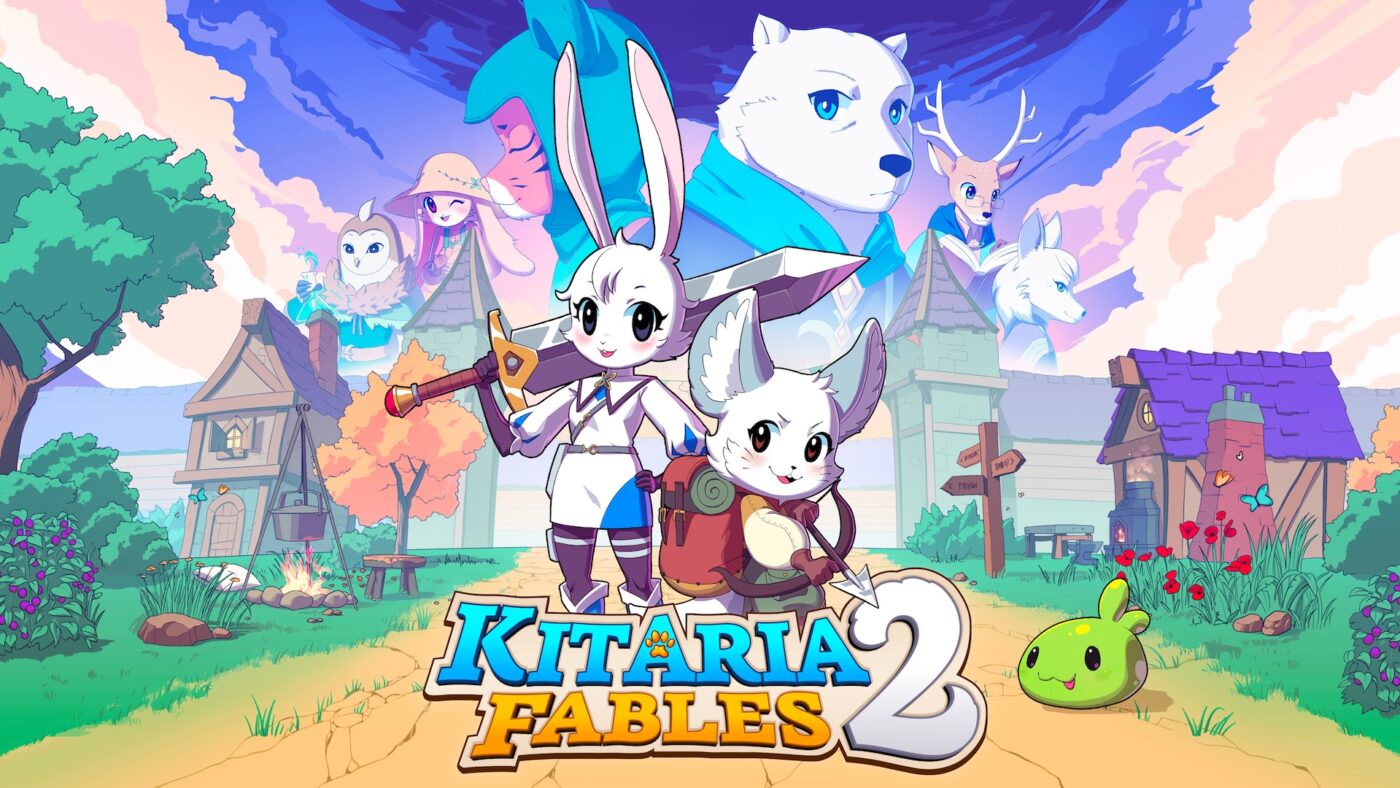
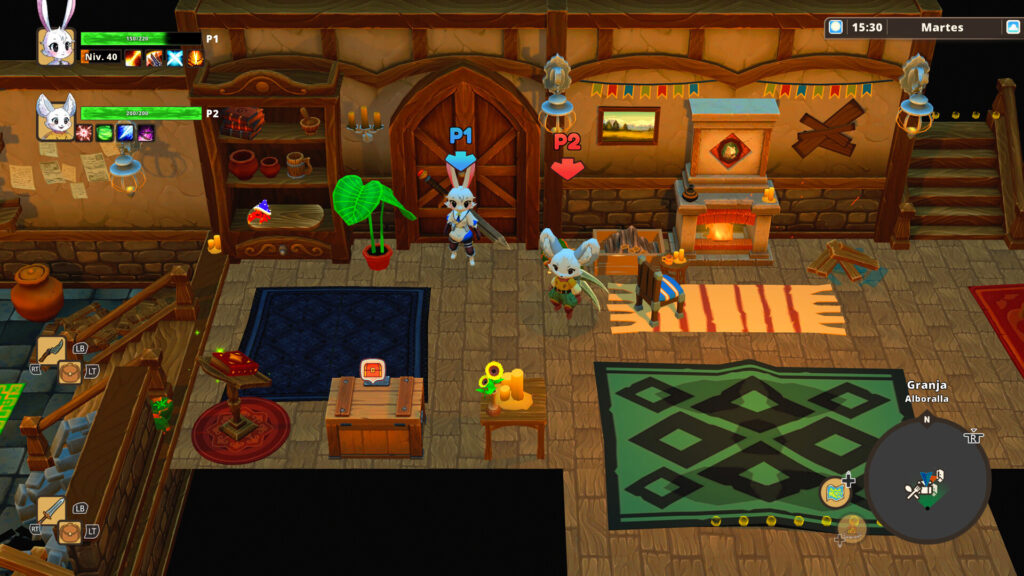
The new heroes are Alice Skylar, a recently graduated young Royal Army scout, and Dusty Tuftkin, a local guide who knows the terrain. The two join an expedition of the Royal Academy, led by Fawn, whose mission is to reopen the old Whitewall errand house, explore the peninsula and restore the forgotten outposts. As you advance north, rumors begin to circulate about a mysterious figure deep in the wilderness, and that thread promises to be the main hook of the plot.
The most relevant thing is that they are not two skins of the same character. Each one has their own combat style, their skill tree and their own story. Skill Points unlock special attacks, elemental spells, and ultimate abilities, so progression is no longer limited to increasing numbers. For me it is a fundamental change compared to the first, which renounced classes and relied on personalized movements: here the variety comes through the characters. Around him there is a cast with names like Kiki, Maya, Periwinkle, Louis and Wisteria, and Ash, and we will have to see what role each one has when the game comes out.
Restore positions, not just defeat monsters
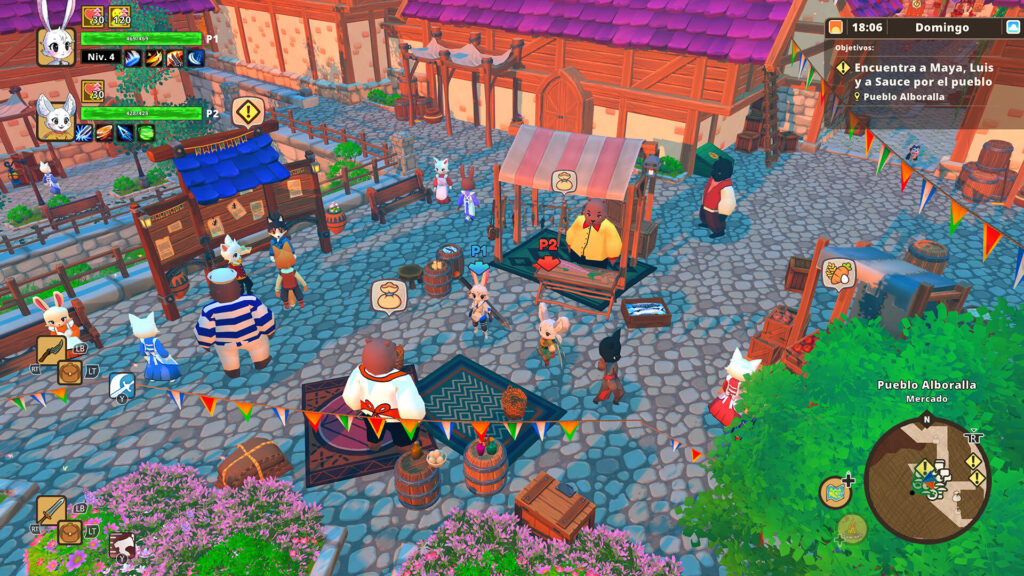
There is an idea that seems very well chosen for a cozy game: the objective of the expedition is not to kill a final boss, but to repair. Each outpost you restore reclaims a piece of territory for Whitewall, and that gives the exploration a tangible meaning, because you see how the peninsula goes from being a hostile place to an inhabited place. The secondary missions also lead to getting to know the neighbors in the area, and this community building is one of the lines on which the game places the most emphasis.
The combat, for its part, mixes sword attacks, special abilities, elemental spells and definitive techniques, and with a different skill tree for each hero there is room for two people to play the same adventure in very different ways. It's just what I would ask of a cooperative: that you and your partner not do the same thing.
A free camera and a bigger world
The design change that caught my attention the most is the camera. The first game had a fixed view, intended to order the action from above, and the sequel switches to a non-fixed camera, with a wider view of the world. It seems like a technical detail, but it determines the entire experience: a moving camera allows you to truly explore, look into the distance, discover a hidden settlement or find an alternative path, instead of walking through corridors disguised as open fields.
With it, the environments are larger. Forests, swamps, highlands and snowy mountains are traversed, and fast travel is improved so that moving through that territory is not a burden. This goes hand in hand with another promise: less grinding. Leveling becomes experience-based, and exploration is rewarded with crafting materials and remote settlements that offer rare rewards. If the balance goes well, the sensation will be that of moving forward because you want to see what is behind the next hill, not because you need to repeat an area until completing the bar.
Aunt Kiki's Farm
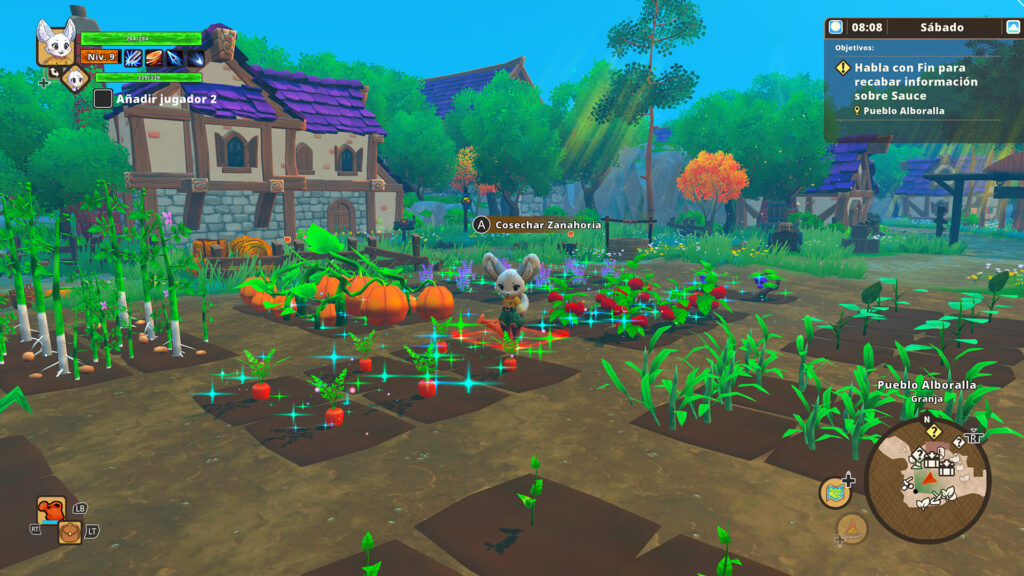
The farm is no longer an accessory. In Kitaria Fables 2 you have to restore Aunt Kiki's farm, search for rare seeds, grow crops and expand the facility to make profits, with more types of crops and the ability to rebuild and customize it. It was one of the most discreet parts of the first, so it seems right to me that it now has its own entity.
It joins the crafting of Whitewall Town, where together with the town's artisans you collect materials, craft and upgrade equipment, prepare potions and cook. The scheme is the same as always in games of this style (go out, fight, collect, return, improve, go out again), and what I would like to see is that each part feeds off the others: what you grow is cooked, what you bring from outside improves the farm and what you make helps you go further. It is a simple idea, but if it is well connected it can give rhythm to the adventure.
Play it as a couple
The other great addition is the cooperative. Two people can complete the entire story together, locally or online, with Alice and Dusty fighting side by side. That it is the complete story and not a separate mode seems like a success to me, and that the two protagonists are playable at the same time gives meaning to the existence of both. It is a game with an aesthetic that fits naturally with playing as a couple or as a family, and I think that there it can find an audience that the first one did not reach.
It can also be played alone, of course, and the texts come in Spanish, as well as ten other languages, although without dubbing.
What do I expect from him?
Before the launch there was a closed beta in September 2026 on Steam that covered more than half of the story, with about ten hours of gameplay, an indication of the size the full adventure is looking for. And the public demo allows you to see if the mix of combat, exploration and farming works in your hands.
What I like about Kitaria Fables 2 is that it doesn't try to reinvent the genre, but rather correct what was missed most: a world with more freedom of movement, heroes with identity, a farm with weight and a cooperative that tells the whole story. From what I was able to play in the demo, if the full game manages to make those pieces fit together without falling into repetitive work, it can become one of the most complete cozy proposals of 2027. And if it doesn't, it will remain a very nice sequel.
Related Articles